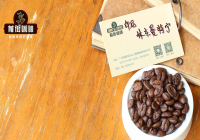
Introduction to Yunnan Small-Bean Coffee Varieties, Characteristics, Origin Rankings, and Flavor Profiles
Introduction to Yunnan Coffee
When people think of coffee cultivation, Africa and Central and South America usually come to mind first. But China's Yunnan province has records of coffee growing that reach back to 1904, and today it ranks among the world's notable coffee producers. "Yunnan Xiao Li" - Yunnan small-bean coffee - shows up more and more often in domestic coffee shops, and FrontStreet Coffee's pour-over single-origin list includes several premium coffees from Yunnan.
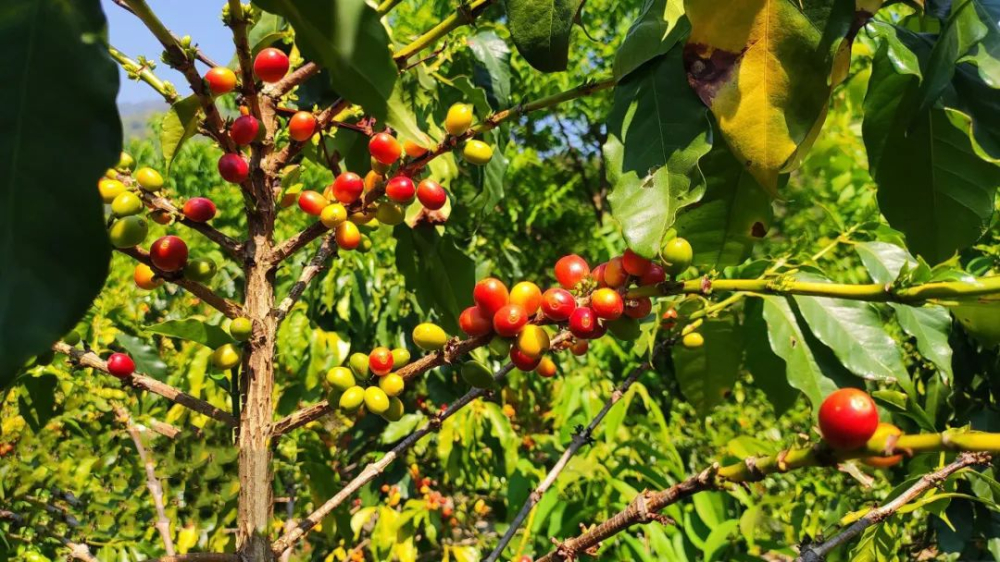
What is the "Xiao Li" (Small Bean) Variety?
"Xiao Li" refers to the smaller-seeded Arabica beans, in contrast to the medium-bean Robusta grown in Hainan. Yunnan initially introduced two pure Arabica varieties: Typica and Bourbon. The old Typica is widely regarded as a premium variety - the famous Jamaican Blue Mountain coffee is a Typica - offering rich aromas and delicate, layered flavors. But Typica yields extremely poorly and is highly susceptible to coffee leaf rust, demanding intensive management. Coffee is ultimately a cash crop for Yunnan farmers, and when yields are too low to generate a living, cultivation cannot be sustained. So most farmers switched to higher-yielding varieties.
In the 1970s and 80s, the global coffee industry was hammered by leaf rust. Infected trees were, in effect, given a terminal diagnosis - mass die-offs shrank planting areas dramatically. By the 1980s, as China opened up, Yunnan coffee gradually entered the international market. In 1988, foreign companies such as Nestle set up branches in China and threw multi-faceted support behind Yunnan's coffee industry: they introduced high-yield, disease-resistant varieties like Catimor and promised to purchase Yunnan beans at prevailing US futures prices. Cultivation area expanded and farmer enthusiasm grew - and Catimor was cemented as Yunnan's dominant variety, displacing the old Typica.
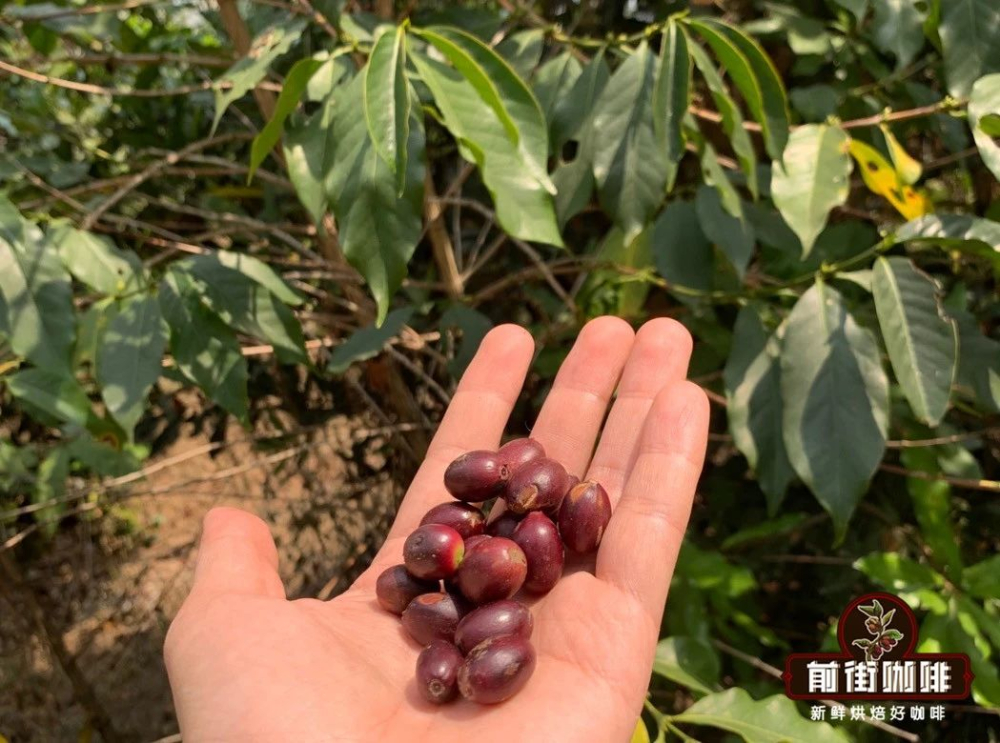
Although Catimor is classified as Arabica, genetically it carries 25% Robusta genes. Robusta has higher chlorogenic acid content, shrugs off pests and climate stress, and is typically grown at low altitudes with high yields and fast fruit maturation. Arabica, the "picky" variety, has weaker disease resistance and lower per-plant yields. But high-altitude environments bring big day-night temperature differences, which slow cherry maturation and let the fruit accumulate more nutrients and richer aromas, while the microclimates of individual growing regions give Arabica the varied conditions that create distinctive flavor profiles.
Catimor inherited Robusta's toughness and productivity. The beans develop thick oils after roasting, but they can also carry Robusta's harsh edge; in cupping, its flavor usually falls short of pure Arabica varieties grown at similar altitudes, such as Caturra. And Catimor's rust resistance fades after 20-30 years, so improving Yunnan's overall quality means gradually changing varieties again. In recent years new varieties have appeared in Yunnan - including the world-famous Geisha - and it is easy to imagine more premium coffee emerging from the region in the years ahead.
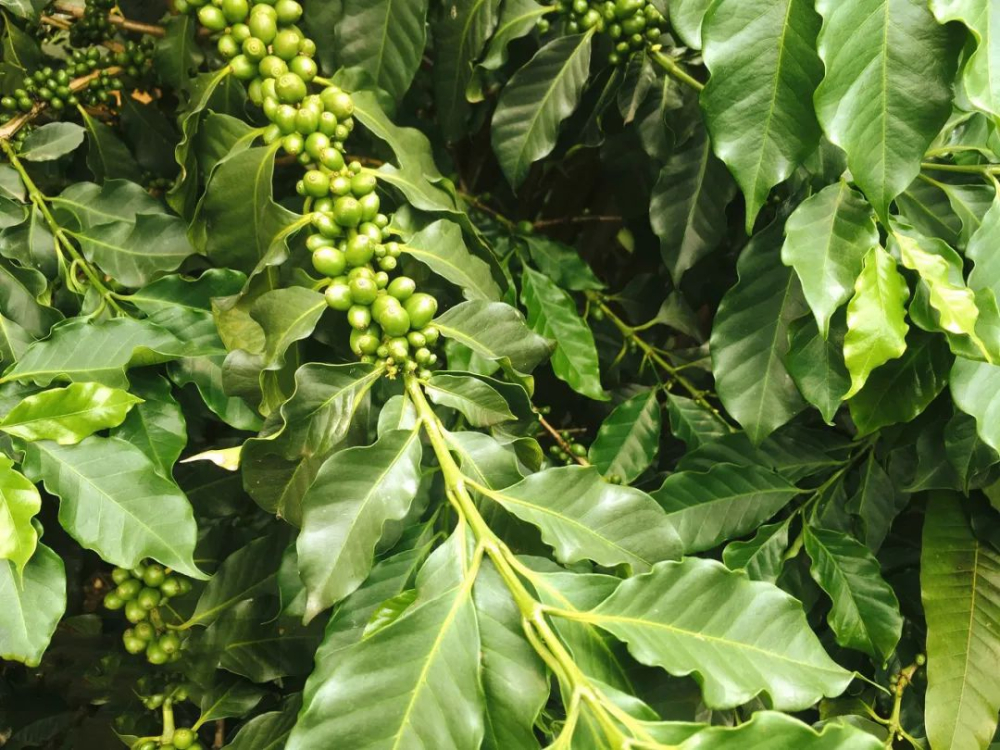
What Else Grows in Yunnan Besides Catimor?
Today 99% of Yunnan's coffee production is Catimor. The remaining 1% covers Typica, Bourbon, and small batches of Geisha, Caturra, Yirgacheffe heirloom varieties, and others. FrontStreet Coffee, for example, began planting Typica in the Lincang region back in 2013 - but agriculture runs on a long clock. It was not until 2020 that their first batch was harvested, and the yield was just 200 kilograms.
Where is Yunnan Xiao Li Coffee Grown?
Coffee cultivation in Yunnan currently spans 9 prefecture-level cities and autonomous prefectures across 35 counties and districts, including Pu'er City, Baoshan City, Dehong Prefecture, Lincang City, Wenshan Prefecture, and Xishuangbanna. FrontStreet Coffee's Yunnan selection comes from the Baoshan and Lincang regions.
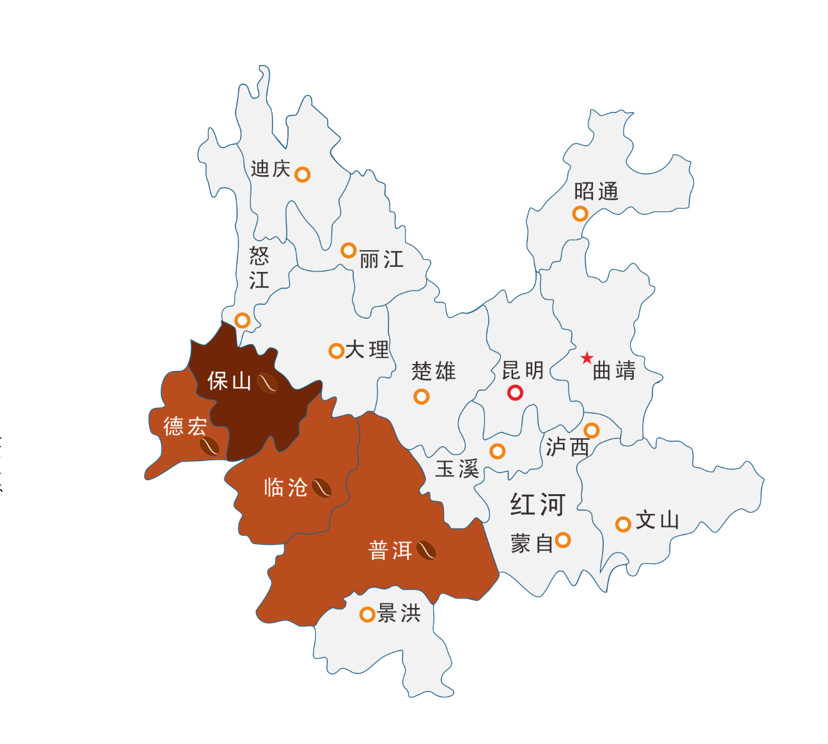
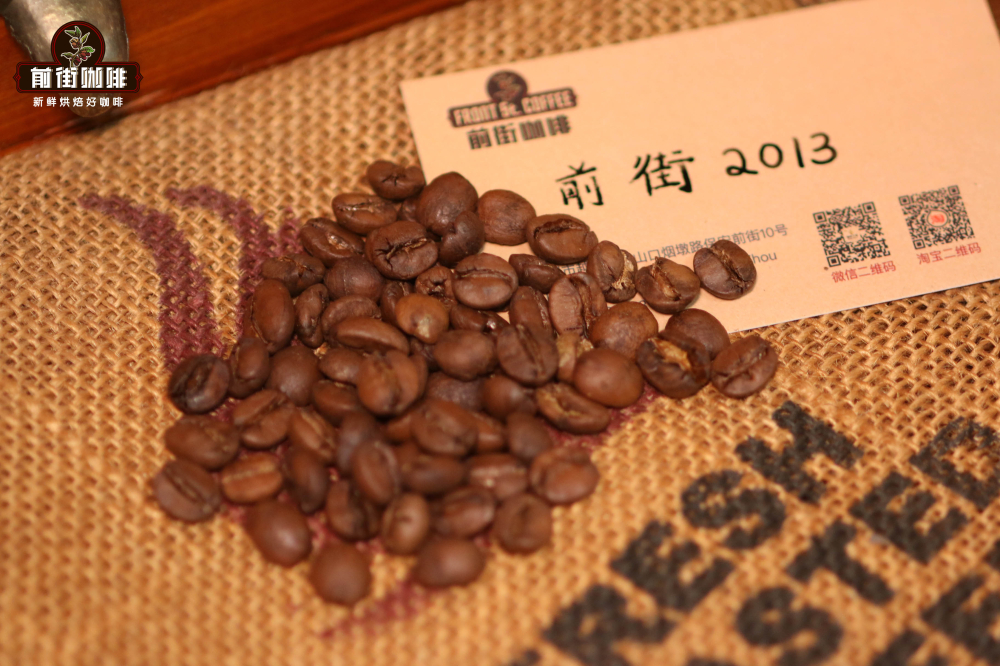
Years ago, while digging into coffee knowledge, FrontStreet Coffee developed the ambition to grow their own. In 2013 they went to Lincang, Yunnan, and started the journey - site selection, variety selection, seedling cultivation, planting, harvesting, processing, roasting, all handled in-house, accumulating real experience with varieties, altitudes, and processing methods along the way.
Lincang is influenced by warm, moist Indian Ocean air currents and the southwest monsoons. The seasons are not sharply differentiated, but dry and rainy seasons are clearly separated: abundant rainfall, long sunshine hours, short frost periods - some areas frost-free year-round - and a pronounced vertical climate that suits Arabica very well. FrontStreet Coffee chose a mountain forest site near the China-Myanmar border, above 1300m altitude, still resembling semi-primitive forest, which is ideal for coffee trees.
For the variety they chose Typica: elegant, pure flavors, but notoriously low-yielding and fragile, so FrontStreet poured considerable effort into cultivation management. After 5-6 years of work they harvested their first batch in 2020, processed it with the natural method, and named it "FrontStreet Coffee 2013."
Baoshan's warm, frost-free climate is also ideal for small-bean coffee, especially in the Lujiang Dam area, where a unique dry-hot valley climate keeps annual temperature variation small but day-night differences large - the source of Baoshan coffee's distinctive sweet aftertaste. Moderately low rainfall further favors fruit production. Baoshan is one of Yunnan's larger and earlier coffee regions, and compared with Lujiang Dam Farm and areas like Pu'er and Menglian, its distinguishing climate features are less precipitation and higher altitude, producing beans with less pulp but higher sweetness. That is why FrontStreet Coffee selected Baoshan small-bean coffee as its flagship Yunnan offering.
What Does Yunnan Xiao Li Coffee Taste Like?
Because Yunnan's harvest typically falls in the rainy season, the extended 3-4 week natural drying process cannot be adopted on a large scale. Farmers adapted to local conditions, and in the hot, wet climate most raw coffee is washed.
Harvested cherries are run through a depulper to remove skin and pulp, then the beans go into fermentation tanks to break down the mucilage layer. After fermentation they are repeatedly rinsed in clean water to strip the decomposed mucilage, and finally sun-dried for 1-2 weeks before storage and shipping. Washed coffee is clean and stable, with a low defect rate and higher acidity that expresses the coffee's inherent character.
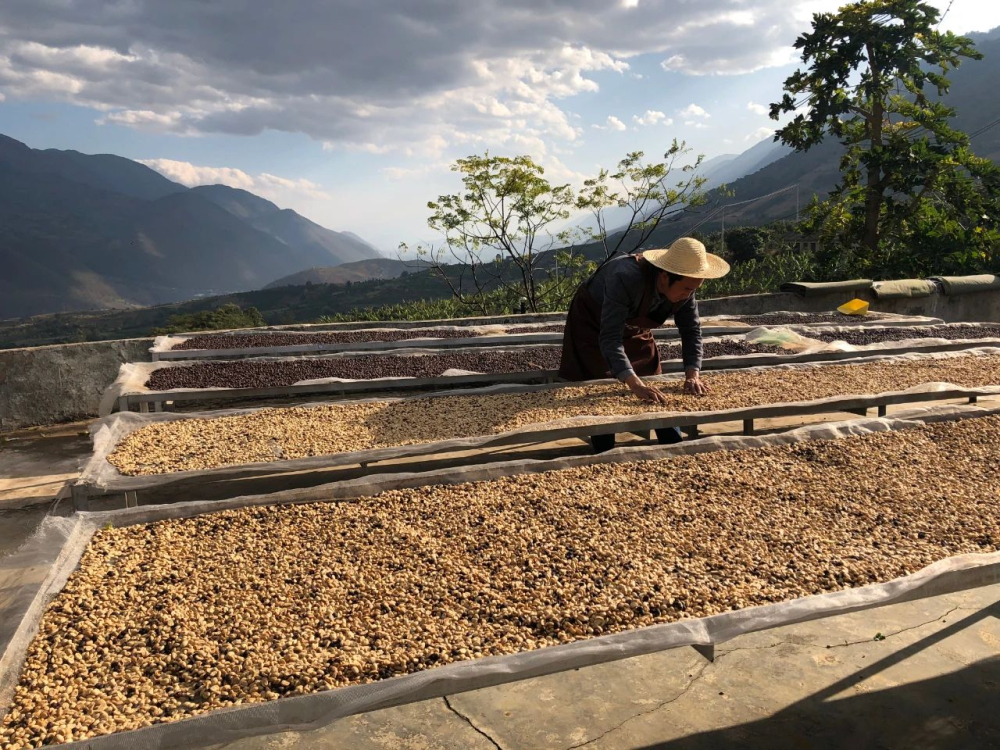
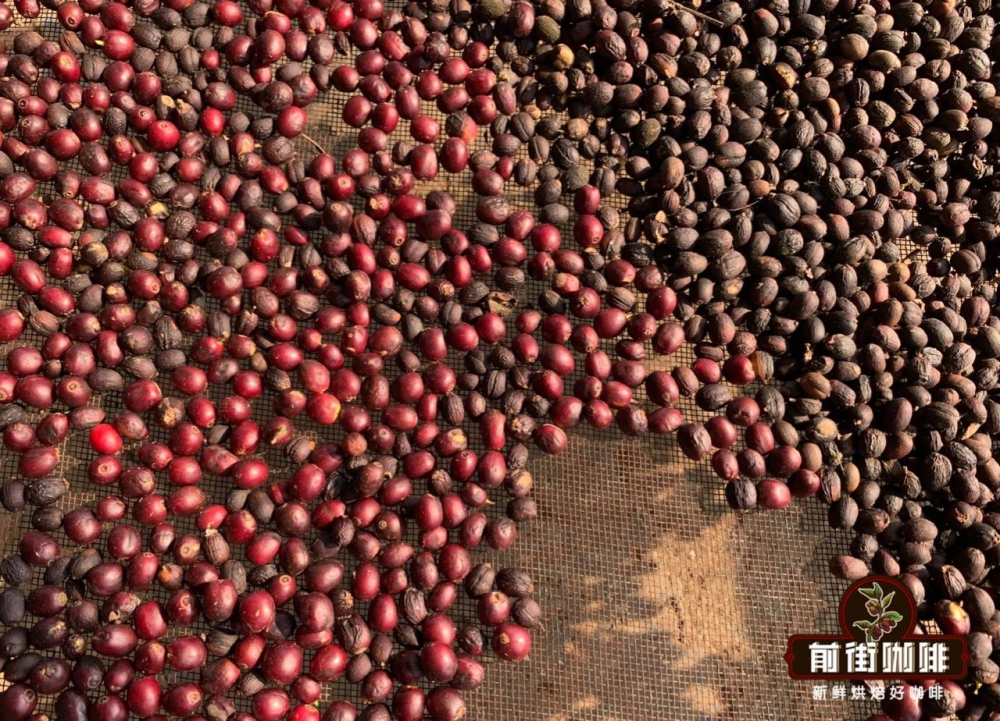
That said, many Yunnan coffees are also naturally dried, including FrontStreet Coffee's own cultivated Typica. Each November the cherries ripen in succession, and workers pick every red cherry individually by hand. Since ripeness can be hard to judge by eye, flotation sorting is done before drying - unripe cherries float and are removed. The selected cherries are spread in the sun until the beans dehydrate to a purplish-red color and reach target moisture, then sent for hulling and roasting.
FrontStreet Coffee's roasting philosophy is to present each region's characteristic flavor while preserving as much of the coffee's inherent aroma as possible: African coffees are roasted lightly to show floral, fruity acidity, while Brazilian coffees are roasted medium-dark to emphasize chocolate and nuts. When several Yunnan regional lots were roasted for cupping, Yunnan coffees proved consistently balanced and smooth - best suited to a medium roast that highlights chocolate and nut aromas while keeping some fruit acidity.
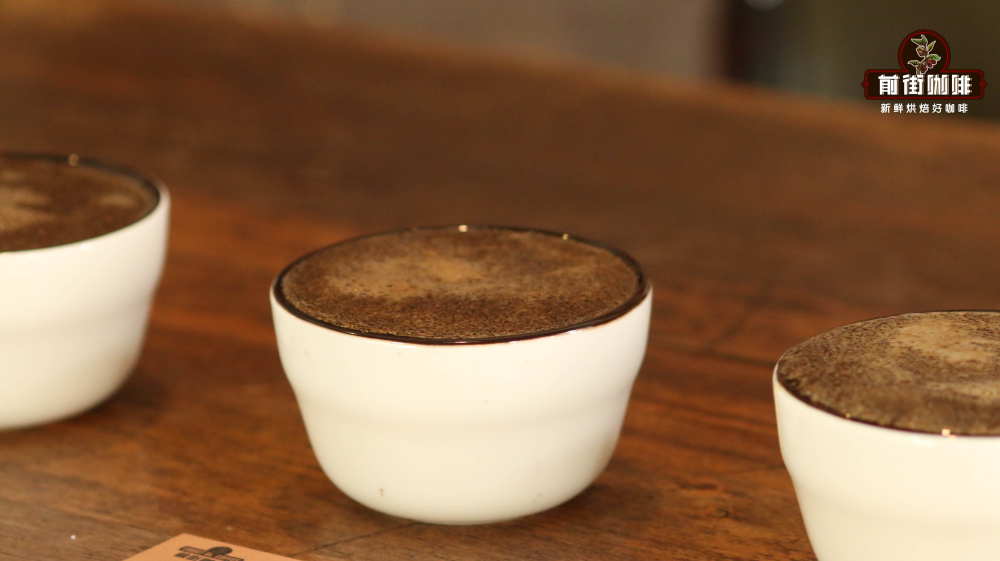
In comparative cupping, the washed Yunnan Baoshan small-bean coffee showed notes of chocolate, nuts, plums, and brown sugar with an overall balanced profile. The natural Yunnan Typica presented more fruit aromatics, fuller sweetness, and a fermented black tea aftertaste.
Brewing Parameters
Start with freshly roasted beans: coffee enters its optimal flavor window 4-7 days after roasting, while roughly a month and a half after roasting the aromas may have dissipated and woody notes can creep in. FrontStreet Coffee only ships beans roasted within 5 days so that every bag lands inside that window.
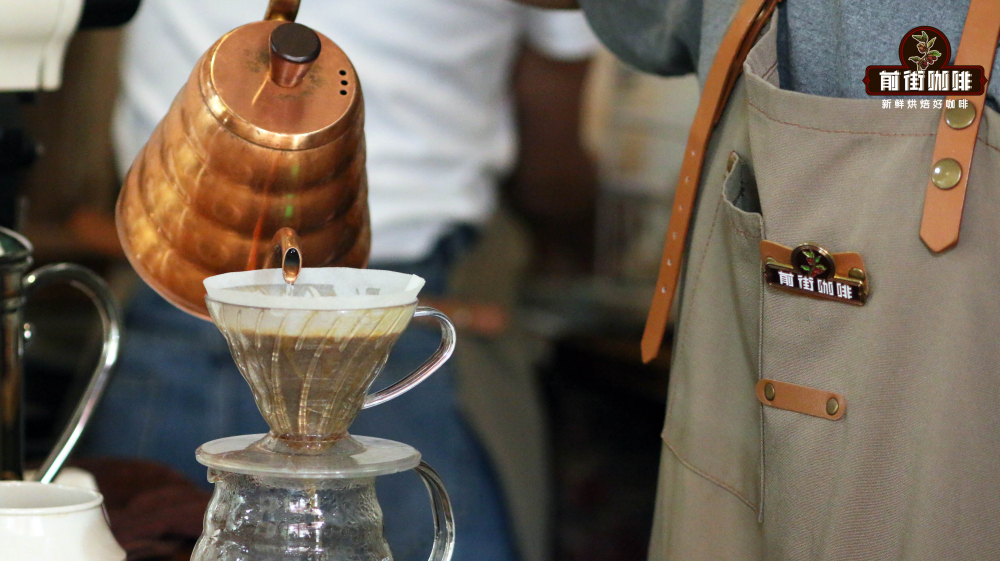
Yunnan small-bean coffee leans balanced - not too acidic, not too bitter - so FrontStreet recommends a V60 dripper with a medium-fine grind and moderate water temperature.
Brewing Parameters:
Filter: Hario V60
Dose: 15g
Water Temperature: 90°C
Grind Size: 75% pass-through through #20 sieve
Water-to-Coffee Ratio: 1:15
Three-Pour Method: Start with twice the coffee dose in water to wet the bed and bloom for 30s. Then pour in small circles from the center outward until reaching 125g, and pause. Once the bed drops to half the filter's height, continue with the same fine stream for the third pour up to 225g. Remove the filter once all liquid has drained, for a total time of about 2 minutes.
FrontStreet Coffee Recommendation
Since Yunnan's premium Typica story traces its lineage to the same variety as Jamaica's most famous export, a natural next step is tasting the original. FrontStreet Jamaica Blue Mountain No.1 comes from the historic Clifton Estate, which has been growing coffee since roughly 1750, on farms averaging 4300 feet (1310.64 meters). The altitude, gentle afternoon cloud cover, ample sunshine, and mineral-rich soils extend the cherries' ripening and give the coffee its legendary balance: no aggressive fruit acid, no heavy roast bitterness, just cream, caramel, chocolate, nuts, honey, and a light fruit tone in a smooth, rounded cup.
How do you know it is genuine? Real Blue Mountain coffee carries Jamaican government certification and origin documents, and authentic lots ship in the traditional wooden barrels - 15, 45, or 70 kg formats - each barrel stamped with batch details. Genuine green beans are full and uniform, slightly upturned at both ends, with a green hue. FrontStreet displays the Clifton Estate certificates and the actual barrels the beans arrived in, so the provenance is easy to verify.
Brewing suggestion: Kono dripper, 15g of coffee rested 4-7 days off roast, ground slightly coarser than a light roast (about white sugar), 87-88°C water, 1:15 ratio. Bloom with 30g of water for 30s, pour to 120g and pause, then finish to 225g with a slightly faster spiral to avoid clogging and over-extraction.
Important Notice :
FrontStreet Coffee is a long-established specialty coffee roaster in Guangzhou China, selling freshly roasted beans from its own farm in Yunnan as well as dozens of carefully selected single-origin beans from around the world for both pour-over and espresso. The products deliver consistently excellent quality and great value, with shipping within 24 hours. Guangzhou's FrontStreet Coffee shop is recommended by many coffee lovers, and the beans are now available online at the Tmall 。
FrontStreet Coffee has moved to a new address:
FrontStreet Coffee Address: 315,Donghua East Road,GuangZhou
Tel:020 38364473
 Scan and follow the En Gafei WeChat official account. Please indicate that the reprint comes from "En Gafei".