Introduction to Colombian Coffee Bean Grading and Classification - Colombian Coffee Varieties Flavor and Taste Characteristics Description

Colombian Coffee Cultivation
Colombian coffee boasts rich, robust aromas, bright acidity, excellent balance, and an endless aftertaste. The production of such high-quality coffee is attributed to Colombia's ideal growing environment.
Located in northwestern South America, Colombia's coffee cultivation is distributed along the Andes Mountains. Geographically, Colombia's coffee-producing regions resemble a cat's paw, with three strips extending down the western side of the country. Because the growing areas are so widely distributed, different geographical factors and climate characteristics create varying production seasons, making it possible to harvest coffee year-round in Colombia.

Along the central mountain range lies a very important coffee-growing area consisting of Medellin, Armenia, and Manizales. Locals call this the MAM region, also translated as the Coffee Golden Triangle. Among these, the Medellin region produces the highest quality coffee, with full, plump beans, rich aromas, and a gentle sweet-sour balance, making it suitable for dark roasting and beloved by coffee enthusiasts.
Located in the eastern mountains, the Santander region is the most renowned. It sits in northern Colombia with a dry climate and growing altitudes between 1,400-1,600 meters. Most coffee trees here are grown in forests with appropriate shade, allowing longer cherry maturation, fertile soil, and significant temperature differences. The coffee produced presents rich, intense aromas, a persistent aftertaste, and unique herbal fragrances. The Rose Valley on FrontStreet Coffee's bean menu originates from the Santander region, and its pleasant peach flavor is loved by many customers.
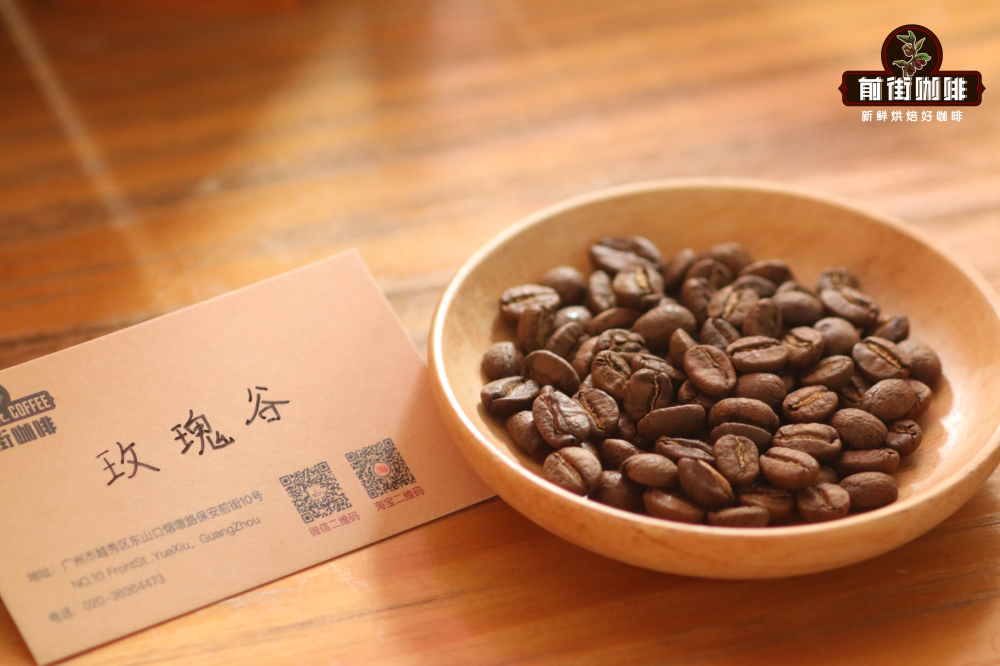
FrontStreet Coffee: Colombia Rose Valley Coffee Beans
Region: Santander
Estate: Dashu Estate
Processing Method: Anaerobic Enzyme Washed
Altitude: 1,700m
Variety: Caturra
Brewing Flavor Notes: Rose, peach, chocolate liqueur, cream, cranberry
Huila, located in southern Colombia, is one of the important specialty coffee growing regions, accounting for 12% of Colombia's total coffee production. This area is surrounded by diverse hills and mountains, with elevations above 1,500 meters, where the Magdalena River converges, providing ample water resources for coffee tree growth. Unlike the classic, rich flavor profile typically associated with Colombian coffee, the Huila region primarily features micro-lot coffees from small farmers, with different microclimates and unique green bean processing methods that present their own distinctive flavor characteristics. FrontStreet Coffee believes that washed Huila coffee best represents the fundamental flavor profile of Colombian coffee, which is why it has been added to the daily brew series.

FrontStreet Coffee: Colombia Huila Coffee Beans
Region: Huila
Altitude: 1,500-1,800 meters
Processing Method: Washed
Variety: Caturra
Flavor Notes: Nuts, dark chocolate, caramel, gentle fruit acidity
Colombian Coffee Varieties
As one of the world's largest producers of high-quality coffee, Colombia naturally grows numerous coffee varieties, primarily featuring six main ones.

Caturra is the most widely planted coffee variety in Colombia, belonging to a natural mutation of Bourbon, with similar flavor characteristics. Caturra coffee trees don't require shade, have multiple branches resulting in high yields, and are dwarf-sized for easy harvesting. Colombia introduced Caturra in 1952 and began widespread cultivation in the 1960s.
At the end of the 16th century, the Typica variety was introduced to Colombia, giving it a long planting history. Typica features elegant flavors with light floral notes and excellent sweet-acid balance, but it has poor disease resistance and therefore lower yields, causing most coffee farmers to choose higher-yielding varieties. The Bourbon mutation of Typica has fresher, cleaner acidity and was introduced to Colombia relatively late, so its cultivation is not widespread.
In response to the severe impact of leaf rust disease, Colombia's Cenicafe research center hybridized Caturra and Timor varieties in 1982 to develop the Colombia variety, which has strong leaf rust resistance and high yields. However, its cupping quality doesn't match that of premium Caturra, so it is generally used for commercial blends.

The Colombian National Federation of Coffee Growers (FNC) and research centers jointly developed new generation varieties: Castillo and Tabi. Due to their high resistance and continuously optimized flavor quality, the Colombian government began promoting their cultivation in 2005.
Colombian Coffee Grading
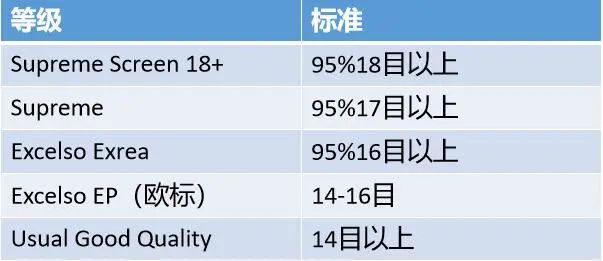
Colombian exported coffee beans undergo manual screening for defective beans, with layers of strict inspection before packaging for export. Colombia's green bean grading is based on defect rate and bean size. As shown in the diagram, the highest grade is Supreme, featuring the largest, fullest beans, with 95% above size 17, and no more than 8 defective beans in a 500-gram sample. Among Supreme grade, beans selected above size 18 are classified as Supreme 18+.
Processing Methods
Most Colombian coffee uses washed processing, with small farms equipped with machines to remove coffee fruit skin and pulp. Farmers pour harvested coffee cherries into these machines, add a small amount of water, then place the beans with minimal mucilage into small tiled pools or containers for overnight fermentation, allowing the mucilage layer to detach. They then rinse with clean water and place the beans outdoors for natural drying. If rainy weather affects the process, locals use drying machines, placing them in temperature-controlled spaces at fifty degrees Celsius for dehydration until the moisture content reaches requirements before packaging and storage.

FrontStreet Coffee's Colombian Huila region daily brew beans use washed processing. FrontStreet Coffee believes that washed processing best presents the region's fundamental flavors, while natural and other processing methods add fermentation flavors on top of this foundation.
However, as micro-lot specialty coffee becomes increasingly popular, many small farms in Colombia are adopting newer processing methods. For example, FrontStreet Coffee's Sidra and Ombligon varieties use anaerobic natural processing, which involves anaerobic fermentation of coffee cherries followed by natural drying. It is important to note that the temperature controlled during anaerobic fermentation must be kept between 10-15°C, with fermentation occurring in sealed, clean stainless steel containers for three days under oxygen-free conditions.

Another processing method that makes coffee fermentation aromas more prominent is anaerobic enzyme washed processing. Selected coffee cherries are placed in a sealed environment, injected with carbon dioxide to expel oxygen, and special enzymes are added during fermentation. In the oxygen-free environment, this slows the decomposition speed of sugars in the coffee mucilage, with pH declining at a slower rate, extending fermentation time to develop better sweetness and more balanced flavors. After fermentation is complete, the coffee cherries continue through the standard washing process.
Brewing Reference
For washed Huila daily brew beans, with flavors primarily featuring nuts and dark chocolate, FrontStreet Coffee's roasters choose medium roasting.
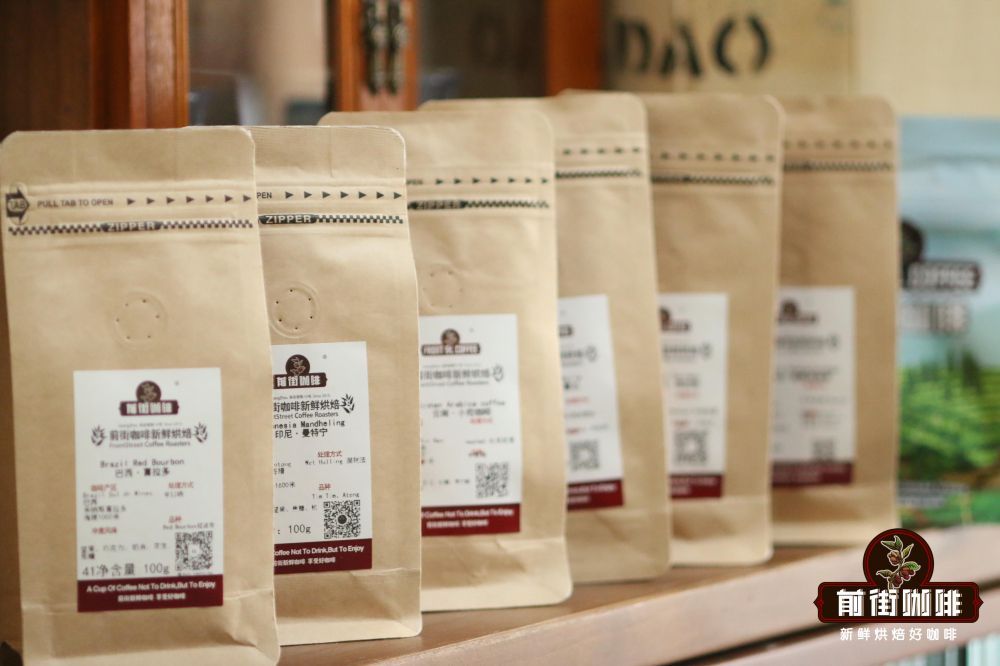
In brewing, FrontStreet Coffee believes that using freshly roasted coffee beans is the primary requirement. Coffee beans enter their optimal flavor period 4-7 days after roasting. If beans are stored too long past this optimal period, their aromas will accelerate their loss, making it difficult to restore the coffee's flavor profile. FrontStreet Coffee understands the importance of freshness, so all shipments are from batches roasted within 5 days, allowing everyone to brew and taste immediately upon receipt.
FrontStreet Coffee's brewing parameters for this batch are: Hario V60 dripper, 89°C water temperature, 15g coffee dose, 1:15 coffee-to-water ratio, using a medium-fine grind (75% pass-through rate on China standard #20 sieve). The brewing technique uses three-stage extraction: pour coffee grounds into the V60 dripper, wet the grounds with twice the amount of water to form a bloom and steam for 30 seconds, then use a small water flow to pour in circles from inside to outside until reaching 125g for the first stage. Wait until the coffee bed drops to half the dripper level, then continue with the same fine water flow for the third stage to 225g, removing the dripper once all coffee liquid has filtered through, taking approximately 2 minutes.

The brewed Huila daily brew beans taste overall balanced with noticeable sweetness, featuring dark chocolate, nut, and caramel aromas on entry, with gentle fruit acidity becoming noticeable as the temperature decreases.
FrontStreet Coffee Recommendation
To taste the fundamental Colombian profile described here, the FrontStreet Coffee Colombia Huila is a straightforward choice: washed processed, grown at 1,500-1,800 meters in Huila, roasted medium-dark, with dark chocolate, nutty sweetness, moderate body, and a soft fruit acidity—exactly the balanced cup that makes Colombia a benchmark origin. If you want to see how much a modern processing method can add, the FrontStreet Coffee Colombia Frontera Estate Sidra is anaerobically natural processed and roasted medium-light, opening up passion fruit, grape, apricot, and dried-fruit notes over a rich, layered body. Both brew well as pour-over but are versatile enough for a French press, moka pot, or espresso machine, just as the article's washed lot is.
Important Notice :
FrontStreet Coffee is a long-established specialty coffee roaster in Guangzhou China, selling freshly roasted beans from its own farm in Yunnan as well as dozens of carefully selected single-origin beans from around the world for both pour-over and espresso. The products deliver consistently excellent quality and great value, with shipping within 24 hours. Guangzhou's FrontStreet Coffee shop is recommended by many coffee lovers, and the beans are now available online at the Tmall 。
FrontStreet Coffee has moved to a new address:
FrontStreet Coffee Address: 315,Donghua East Road,GuangZhou
Tel:020 38364473
 Scan and follow the En Gafei WeChat official account. Please indicate that the reprint comes from "En Gafei".