How to Roast Coffee Beans at Home: Illustrated Methods & Flavor Differences by Roast Level

As coffee has become part of our daily lives, it is easy to learn comprehensive, up-to-date knowledge about its many aspects through video platforms. Beyond studying brewing methods and how to taste the flavors within, many enthusiasts have developed a strong interest in roasting coffee beans.
Many people, however, act on impulse and buy green coffee beans without knowing how to roast them. Below, drawing on FrontStreet Coffee's hands-on experience, we'll introduce ways to roast coffee at home.
Roast Level Flavor Differences
When roasting at home, always start with low heat and adjust gradually. Whatever tool you use, you must keep stirring the beans. At the same time, watch the beans' color changes closely. If they change color quickly but unevenly, that signals the heat is too high or you are not stirring often enough. If you feel the stirring is already as good as it can be and still the color is uneven, then the heat really is too high. When that happens, immediately lower the heat and lift the pot off the stove to bring the temperature down fast. Once it has cooled, put it back on the stove at the adjusted heat and continue roasting.
If the beans show no color change for a long time (3, 5, 10 minutes, or even longer), the heat is too low, and you should raise it appropriately. When the beans' color changes gradually and evenly, it shows you have excellent heat control. In that situation, while watching the color, you can also listen for the cracking sounds.

As roasting continues, the beans gradually turn from their initial light green to yellow, then brown, dark brown, and finally black. During this process there is a first crack as the beans go from yellow to brown, but this cracking phase is very short—sometimes barely noticeable, ending after just 3-5 sounds. This is the first crack.
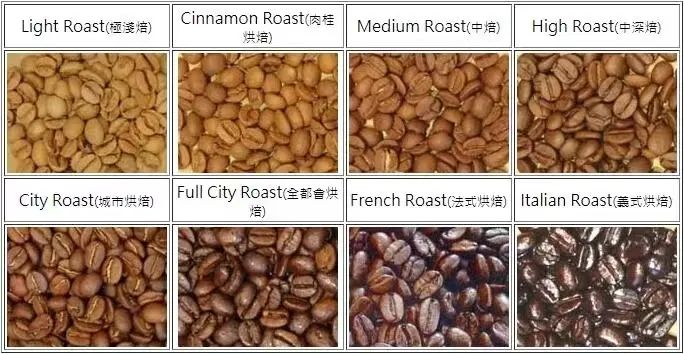
During the transition from brown to dark brown, there is a second crack. This cracking phase lasts 2-3 minutes or even longer, with very frequent sounds, crackling like firecrackers. This is the second crack. The second crack is very easy to notice. Generally, when it just begins—when you hear about 10 sounds—stopping the heat at that point yields medium-dark to full city roast beans.
Bean characteristics: dry surface, not yet oily or only slightly oily, with small black spots on the brown bean body. As the second crack continues, the roast deepens. When there are no more sounds—when the second crack ends—the beans are basically black and severely carbonized.

Of course, that is also a roasting style, and many people enjoy that burnt flavor. Generally, everything from golden yellow to the later black state is a normal roast range. You can stop the heat at any point in between, and the resulting coffee is drinkable. As for when to stop, it depends entirely on your preference.
Broadly speaking, the deeper the roast, the heavier the bitterness, while the coffee's flavor complexity and nutritional value decrease. Fully carbonized beans do have a unique flavor, but very little nutritional value, so we don't recommend roasting to that level.
What Tools to Use for Home Coffee Bean Roasting?
1. Recommended - Dedicated Coffee Bean Roasting Drum
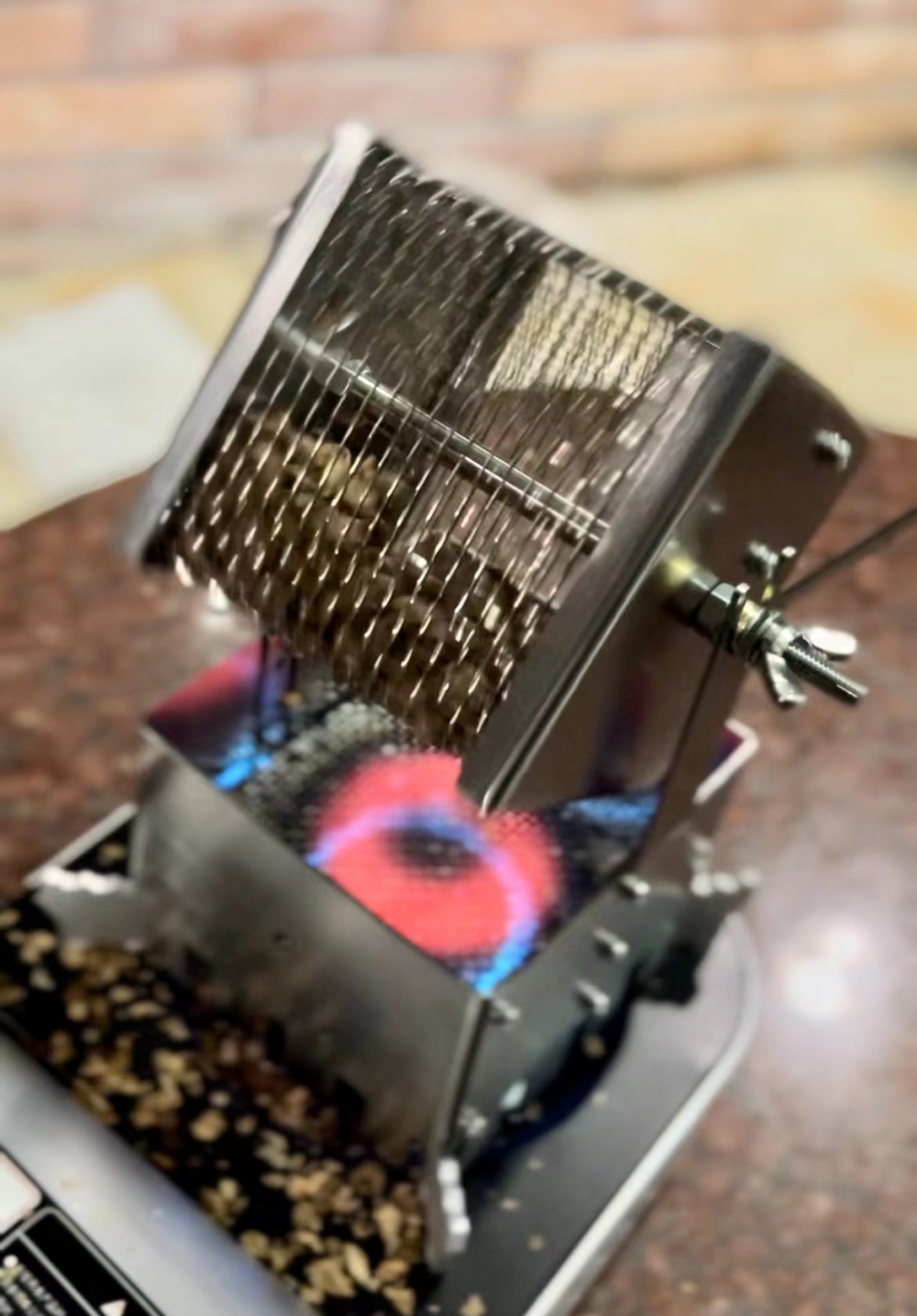
A drum is recommended because it more closely mimics how a professional roasting machine works. In a roasting machine, the beans actually enter a rotating drum, and the machine holds a constant speed of 60-65 rotations per minute (adjustable to suit different beans), letting them heat more evenly inside the drum and ensuring a consistent final product.
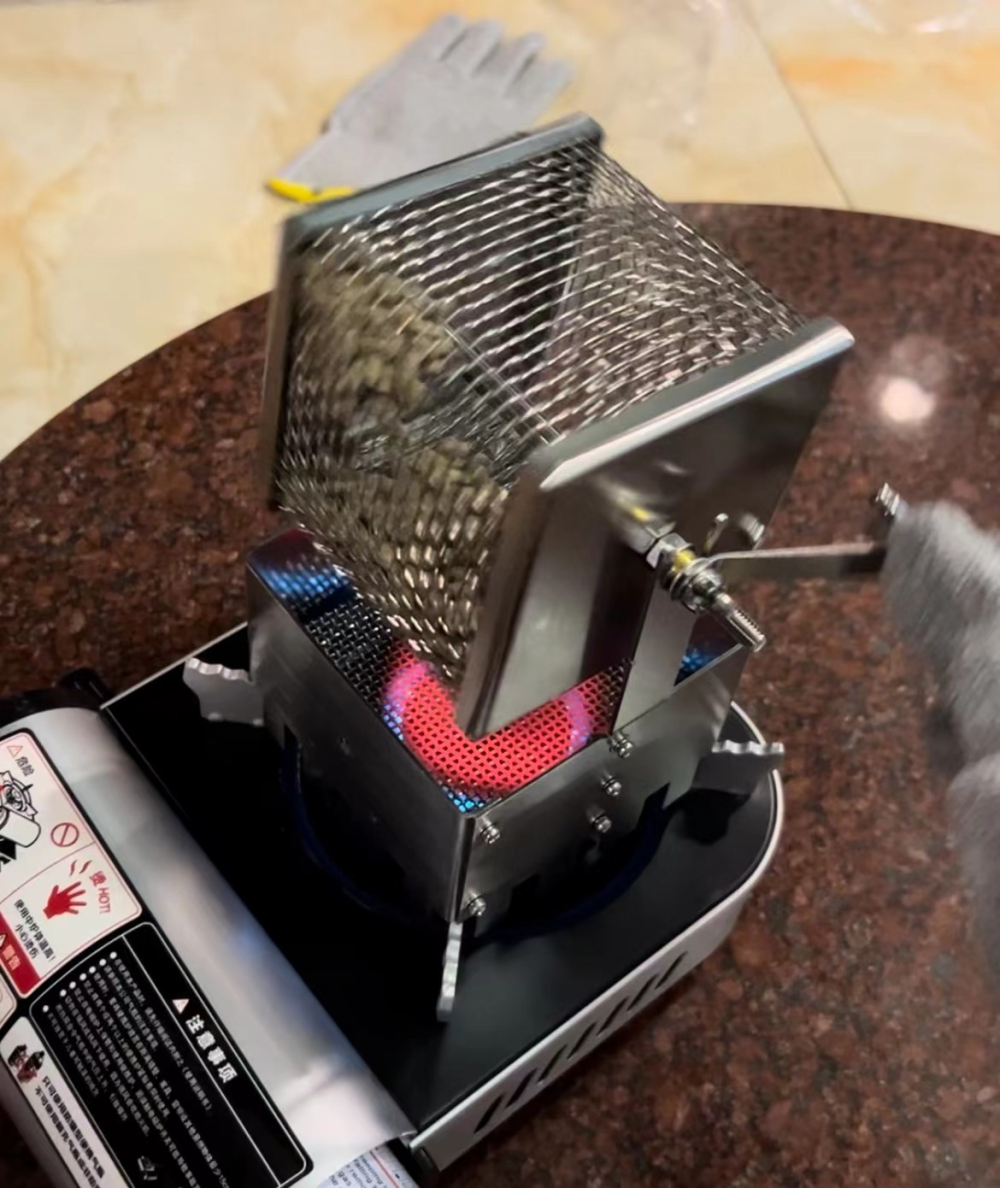
According to the personal experience of FrontStreet Coffee's baristas, when using a drum to roast beans two points need attention: roast on low heat, or the beans can easily brown on the outside while staying underdeveloped inside; and after turning on and adjusting the heat, place the drum and immediately begin rotating at 60-65 rotations per minute.
Drum roasting takes more than double the time of a professional roasting machine. For example, FrontStreet Coffee uses a Yangjia 800n roaster to roast Brazilian Cerrado Red Bourbon beans, taking 3:30 from first crack to discharge for a medium-dark roast level, with a total roasting time of 13 minutes.
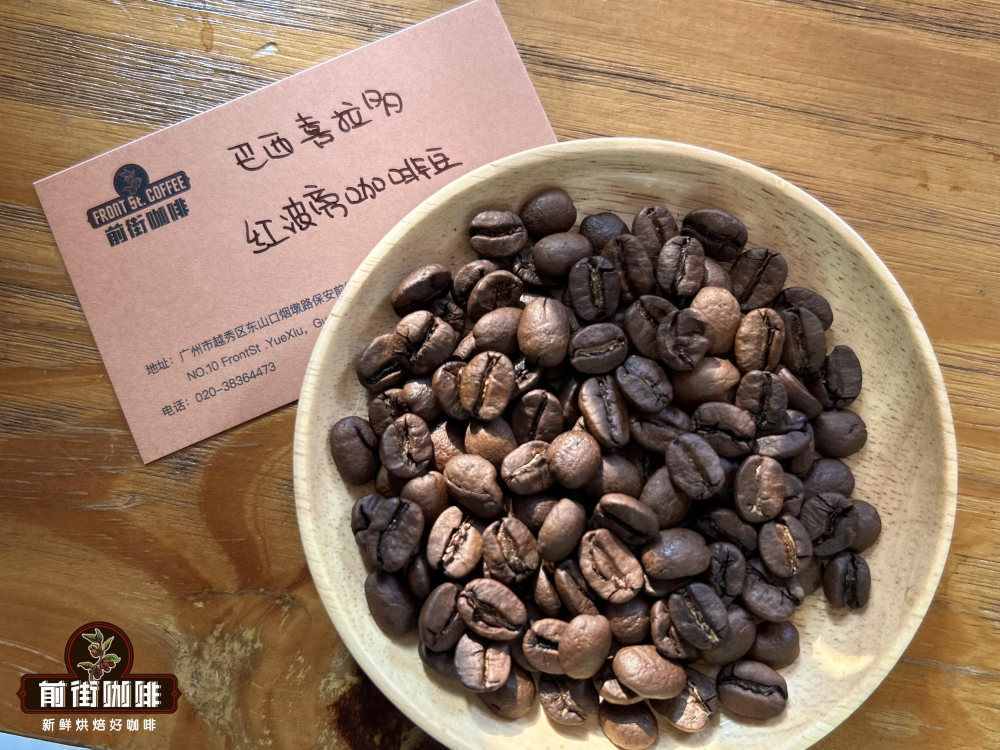
This is Brazilian Cerrado coffee roasted by FrontStreet Coffee on professional machines and sold commercially.
To roast to a similar level on a drum, the total roasting time is 31 minutes. Throughout, you must keep rotating the drum (60 rotations per minute), and if you stop or slow down, the beans will easily scorch. It is, frankly, quite labor-intensive.
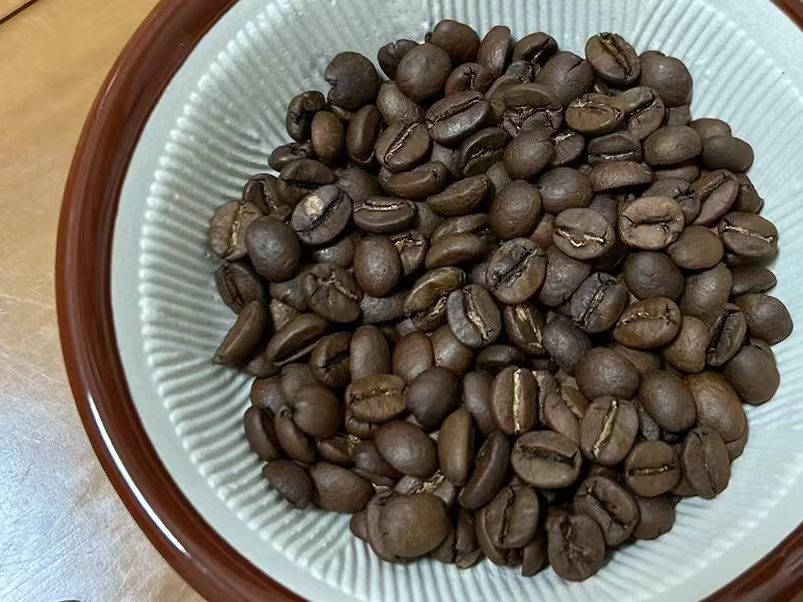
This is the same type of coffee bean roasted at home by a FrontStreet Coffee barista using a drum.
Roasting coffee at home is tiring, but it lets you clearly and intuitively experience the beans as they gradually change from green raw beans to yellow, giving off a corn-like sweetness, then slowly turning cinnamon-colored with caramel aromas, and finally becoming chocolate-colored with roasted-nut fragrances.
2. The Simplest and Most Primitive Method - Pan Roasting
Every household has cooking pans. In the long era before professional roasting machines existed, coffee was roasted in pans. Pan-roasted coffee cannot compare to the output of a professional roasting machine.
The main reason is that during stirring, the beans cannot roll evenly in the pan, leading to uneven heating. But participation is what matters. During roasting we can constantly watch the beans change from green to chocolate color. However the final coffee tastes, it is a wonderful experience.
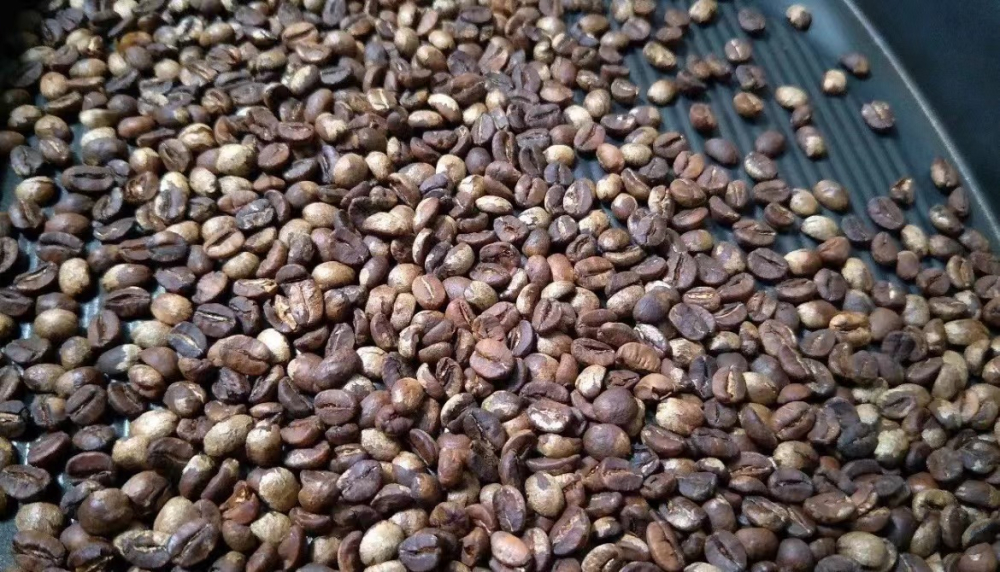
When pan-roasting coffee, first clean the pan thoroughly to remove grease. Pans used for long-term cooking will certainly have residual grease, so you must wash them thoroughly before roasting coffee. Generally, after washing, heat the pan to evaporate the water, then add water and bring it to a boil, pour the water out, and heat again to dry. Repeat this process 1-2 times.
Heat until the pan surface is dry and no obvious grease is visible. When the pan surface is dry and free of moisture, add the green coffee beans. The amount should not be too much—100-200 grams is suitable. Whether you use electricity, gas, or another heat source does not matter much; the key is to control the heat well. Think of it as roasting other nuts or frying food—the whole process needs moderate, stable heat.

3. Not Recommended, But Worth Trying - Electric Oven
Many people might choose an electric oven. Ovens generally cannot continuously stir the beans inside. If that is the case, it is best not to roast too many at once. Also, do not stack or layer the beans—spread them in a single layer on the pan. Then, based on color changes, periodically take them out to stir and ensure even heating.
FrontStreet Coffee Recommendation
Roast level shapes flavor more than almost anything else, and if the lighter side of that spectrum is what you enjoy, FrontStreet Coffee's medium-roast lineup covers the same ground this article describes. If you dislike both sourness and bitterness, FrontStreet Coffee's Brazil Queen Estate is a good choice—a Yellow Bourbon from Brazil, medium roasted to bring out cream, peanut, chocolate, toast, and sugarcane notes, and flexible enough for pour-over, a moka pot, or an espresso machine. To try a sweeter medium roast, FrontStreet Coffee's Strawberry Candy pairs a honey-processed Costa Rican coffee with a washed Panamanian Geisha under a medium roast for orange-blossom honey and round sweetness, suitable for cold brew, pour-over, or espresso. FrontStreet Coffee's 2013 sun-dried Typica, a representative of Chinese specialty coffee, is medium roasted to keep its balanced, gentle Yunnan character with nut, brown sugar, black tea, and dried-apricot flavors—great value and usable in a pour-over, cold brew, or drip machine. And for the classic, FrontStreet Coffee's Jamaica Blue Mountain No. 1 uses a medium roast to meld acidity, bitterness, sweetness, and body into one smooth, elegant whole, with chocolate, roasted nut, cream, and caramel on the palate.
Important Notice :
FrontStreet Coffee is a long-established specialty coffee roaster in Guangzhou China, selling freshly roasted beans from its own farm in Yunnan as well as dozens of carefully selected single-origin beans from around the world for both pour-over and espresso. The products deliver consistently excellent quality and great value, with shipping within 24 hours. Guangzhou's FrontStreet Coffee shop is recommended by many coffee lovers, and the beans are now available online at the Tmall 。
FrontStreet Coffee has moved to a new address:
FrontStreet Coffee Address: 315,Donghua East Road,GuangZhou
Tel:020 38364473
 Scan and follow the En Gafei WeChat official account. Please indicate that the reprint comes from "En Gafei".