What Grade is Blue Mountain Coffee? Introduction to Blue Mountain Coffee Varieties, Origin, and Flavor Characteristics
FrontStreet Coffee's Recommendations Based on Flavor Preferences
When guests visit FrontStreet Coffee and tell us they enjoy fruity acidity, we steer them toward African beans. If they prefer a bold, bitter cup, we suggest Indonesian and Brazilian coffees. And for anyone who prizes balance above all, we recommend FrontStreet Blue Mountain No. 1, a coffee that finds a near-perfect equilibrium among acidity, bitterness, sweetness, and body.
FrontStreet Blue Mountain Coffee's Variety: Typica
The variety behind FrontStreet Coffee's Jamaica Blue Mountain is the ancient Typica, prized for its elegant, pristine flavor. Anyone who knows coffee varieties will tell you that Typica has the longest history of all; every Arabica variety grown today descends from Typica and Bourbon.
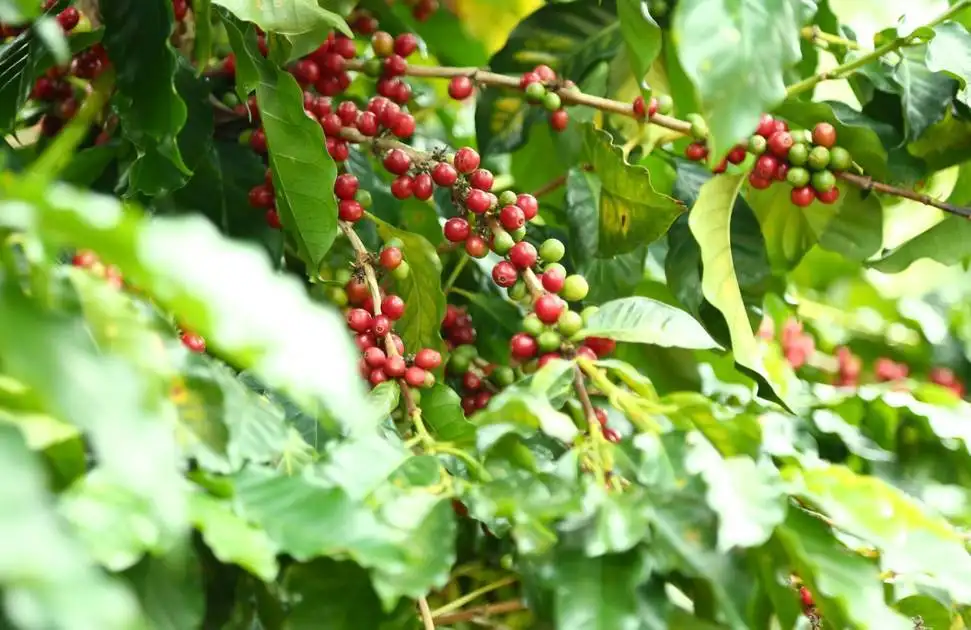
Typica fell out of wide cultivation for a simple reason: the plant is frail, resists disease poorly, and yields very little per tree. It was brought to the Blue Mountains in the 18th century and has grown there for more than two hundred years. Over that time, the Typica of Blue Mountain adapted to the island's terroir and evolved stronger disease resistance, notably a much greater tolerance for coffee berry disease than typical Typica. FrontStreet Coffee believes that the refined, immaculately clean flavor of FrontStreet Blue Mountain coffee is inseparable from Jamaica's commitment to cultivating the Typica variety with care.
FrontStreet Blue Mountain No. 1 Coffee is the Highest Grade
Under Jamaica's "Coffee Industry Regulation Law," Blue Mountain coffee is grown mainly across four administrative parishes: St. Andrew, St. Thomas, Portland, and St. Mary. The law states explicitly that only Typica grown at elevations of 910-1700 meters may be called Jamaica Blue Mountain Coffee. The four producing parishes cover about 6,000 hectares, roughly one-third of the entire Blue Mountain growing area, while a further 1,200 hectares are devoted to Jamaica High Mountain coffee and Jamaica Prime coffee. In recent years, less than 15% of the coffee produced in Jamaica has qualified for the Blue Mountain label, which makes it genuinely scarce.
Under the strict rules of the Jamaica Coffee Industry Board (CIB), Jamaica Blue Mountain is divided into Blue Mountain No. 1, Blue Mountain No. 2, Blue Mountain No. 3, and Blue Mountain Peaberry. The top grade, Blue Mountain No. 1, must meet a screen size of 17 or larger, hold its defect ratio to no more than 2%, sit at a moisture content of around 10-12.5%, and show the right balance of acidity, sweetness, bitterness, body, and aroma on the cupping table. As you can imagine, beans of this caliber, with flavors this refined, are produced in extremely limited quantity.
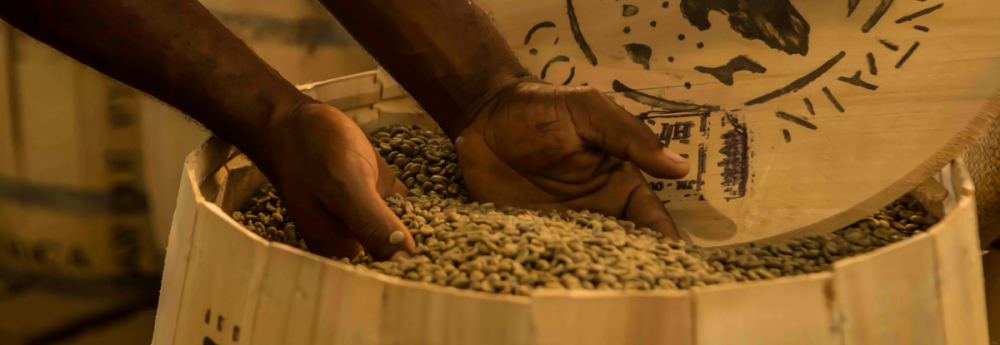
To better preserve moisture content while green coffee beans are in transit, Jamaica packs exported Blue Mountain No. 1, No. 2, and No. 3 green beans in handcrafted wooden barrels. Three sizes are used: 70 kg, 30 kg, and 15 kg. All other grades of Jamaican coffee ship in 60 kg burlap sacks.
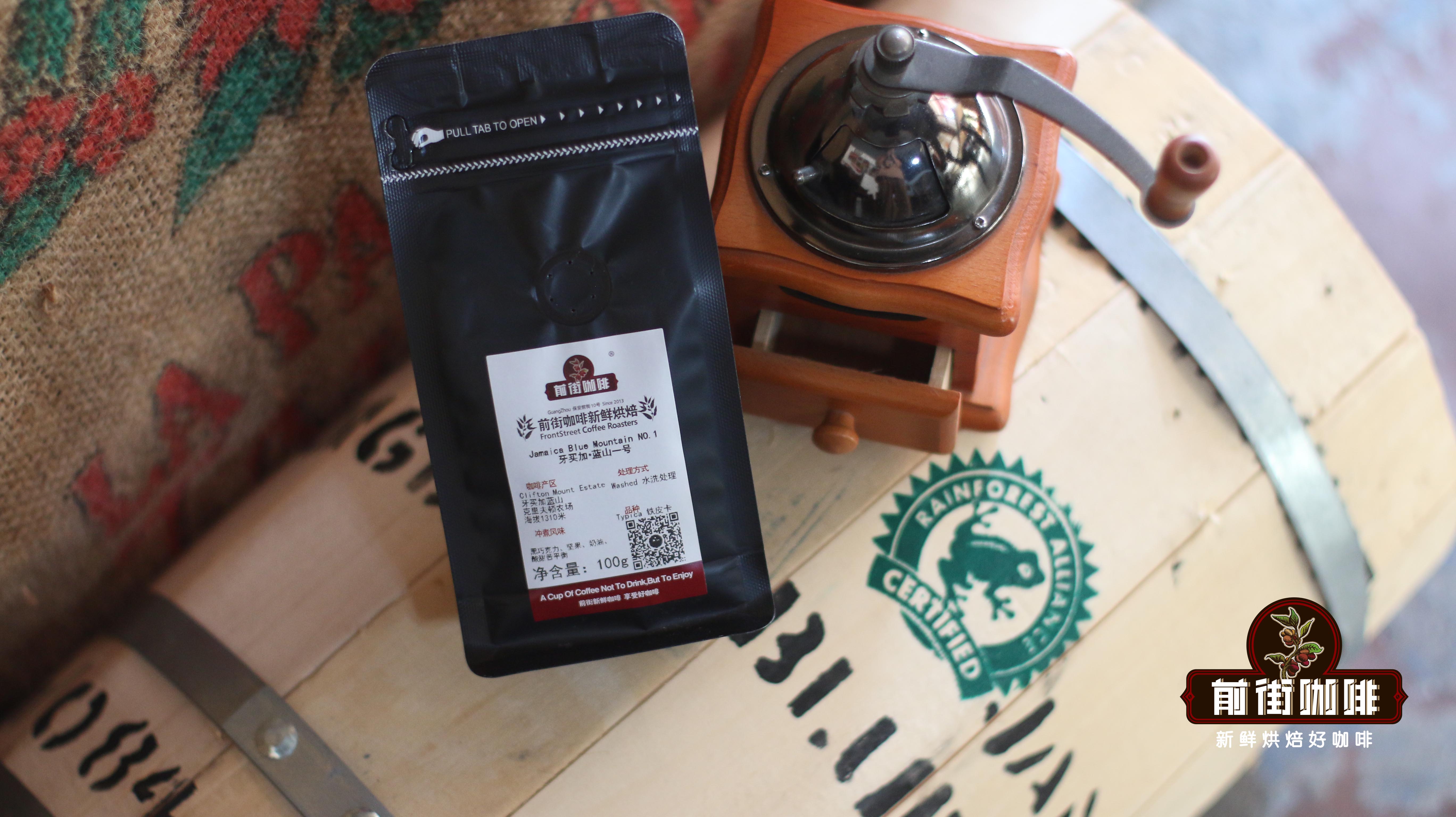
The FrontStreet Blue Mountain coffee that FrontStreet Coffee sources is the highest grade: FrontStreet Jamaica Blue Mountain No. 1 beans from Clifton Mountain Estate, processed by the traditional washed method. So that everyone can see and identify authentic FrontStreet Blue Mountain coffee with their own eyes, FrontStreet Coffee displays the wooden barrels of green beans and the certificate of origin issued by Clifton Mountain Estate in its stores.
Clifton Mountain Estate
Founded in the 1790s, Clifton Mountain Estate is one of Jamaica's oldest coffee farms and a member of the Rainforest Alliance certification program. Look closely at the wooden barrels of Blue Mountain green beans and you will find the green rainforest tree frog logo printed on them.
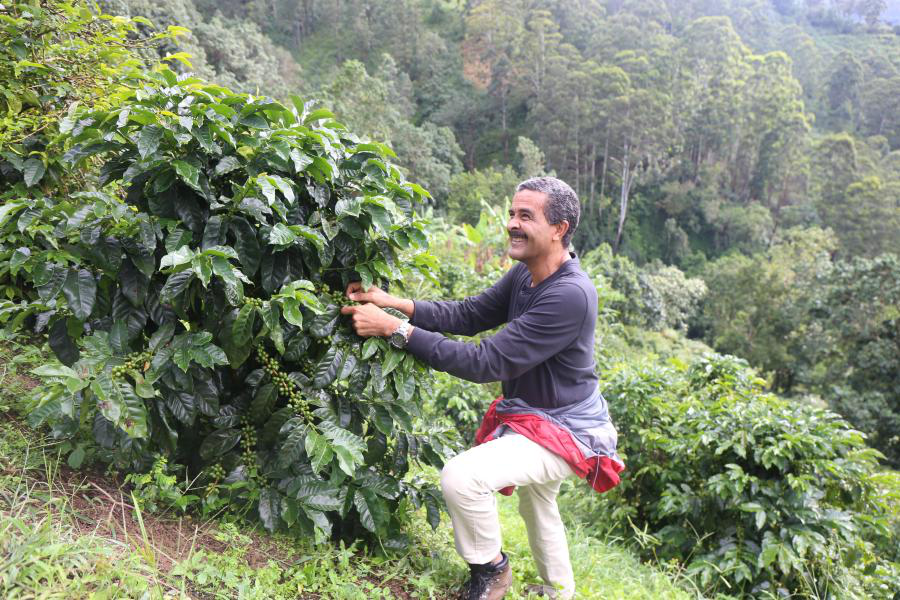
Clifton Mountain Estate sits on scenic Clifton Mountain, with its coffee fields and processing facilities at an altitude of roughly 1,310 meters. That elevation creates a marked temperature difference, which extends the ripening period of the coffee cherries and gives them ample time to absorb nutrients. The entire operation follows sustainable, environmentally conscious practices that minimize pollution of every kind: the coffee pulp removed during processing becomes organic fertilizer, and the water used at the processing plant is recycled.
Washed-Processed FrontStreet Blue Mountain No. 1 Coffee
Clifton Mountain Estate places harvested coffee cherries into water tanks, using the flotation method to separate ripe beans from unripe ones. Conveyor-driven water then carries the ripe cherries into a pulper that removes the fruit skin. The depulped beans, still coated in mucilage and parchment, are left to ferment in water tanks. Once the mucilage breaks down, the agitation of running water washes away what remains. The clean, parchment-covered beans are then dried to a set moisture content before being moved into warehouses to rest. Washed processing lowers the defect rate of Blue Mountain coffee, giving it a clearer flavor, higher cleanliness, and more consistent quality.
How to Brew FrontStreet Blue Mountain No. 1 Coffee for the Best Taste
The Jamaica Coffee Industry Board recommends a roast level that plays up Blue Mountain's traditional flavors. FrontStreet Coffee's roasters follow the same principle, using a medium-dark roast that lets FrontStreet Blue Mountain No. 1 show its richness while keeping a soft fruit acidity. As the roast deepens, the beans become more porous, absorbing more water after grinding and releasing more solubles, which can easily tip a brew into over-extraction. FrontStreet Coffee's baristas therefore recommend a medium grind size and water that is not too hot. Here we use 87-88°C water, with the coffee ground so that 75% passes through a Chinese standard No. 20 sieve.
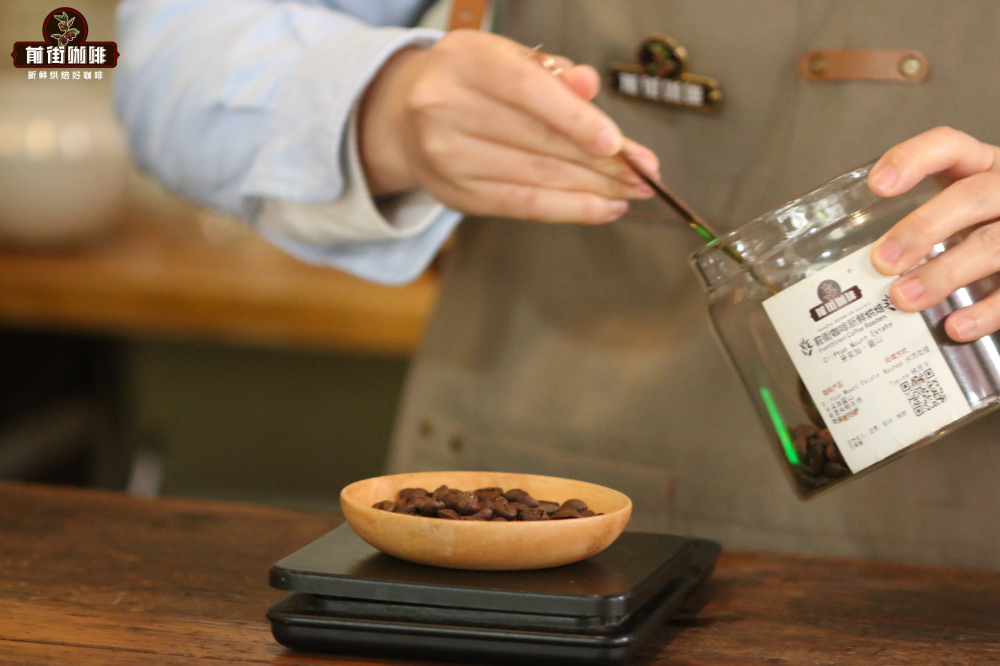
To bring out the rich, round mouthfeel of FrontStreet Blue Mountain No. 1, FrontStreet Coffee brews with a KONO coffee filter. The KONO's ribs are less than half the height of the dripper. That design makes the wet filter paper cling tightly to the wall of the dripper, restricting airflow. This lengthens the time the coffee particles stay in contact with water, producing a more evenly extracted cup.
Brewing parameters: 15 g coffee, 1:15 coffee-to-water ratio, grind size: EK43s setting 10.5 (75% passing a Chinese standard No. 20 sieve), water temperature: 87-88°C, brewing method: segmented extraction.
Place the filter paper in the KONO dripper and pour water to wet it, which also helps it seat better. Add the coffee powder and tap gently to level the bed. For the first stage, gently pour 30 g of water to bloom, with a blooming time of 30 seconds. For the second stage, pour to about 125 g, circling evenly and steadily outward. Then wait for the coffee liquid to drain, and when it has dropped halfway, pour the final stage up to 225 g. After all the coffee has dripped through, the total extraction time is generally around 2 minutes.
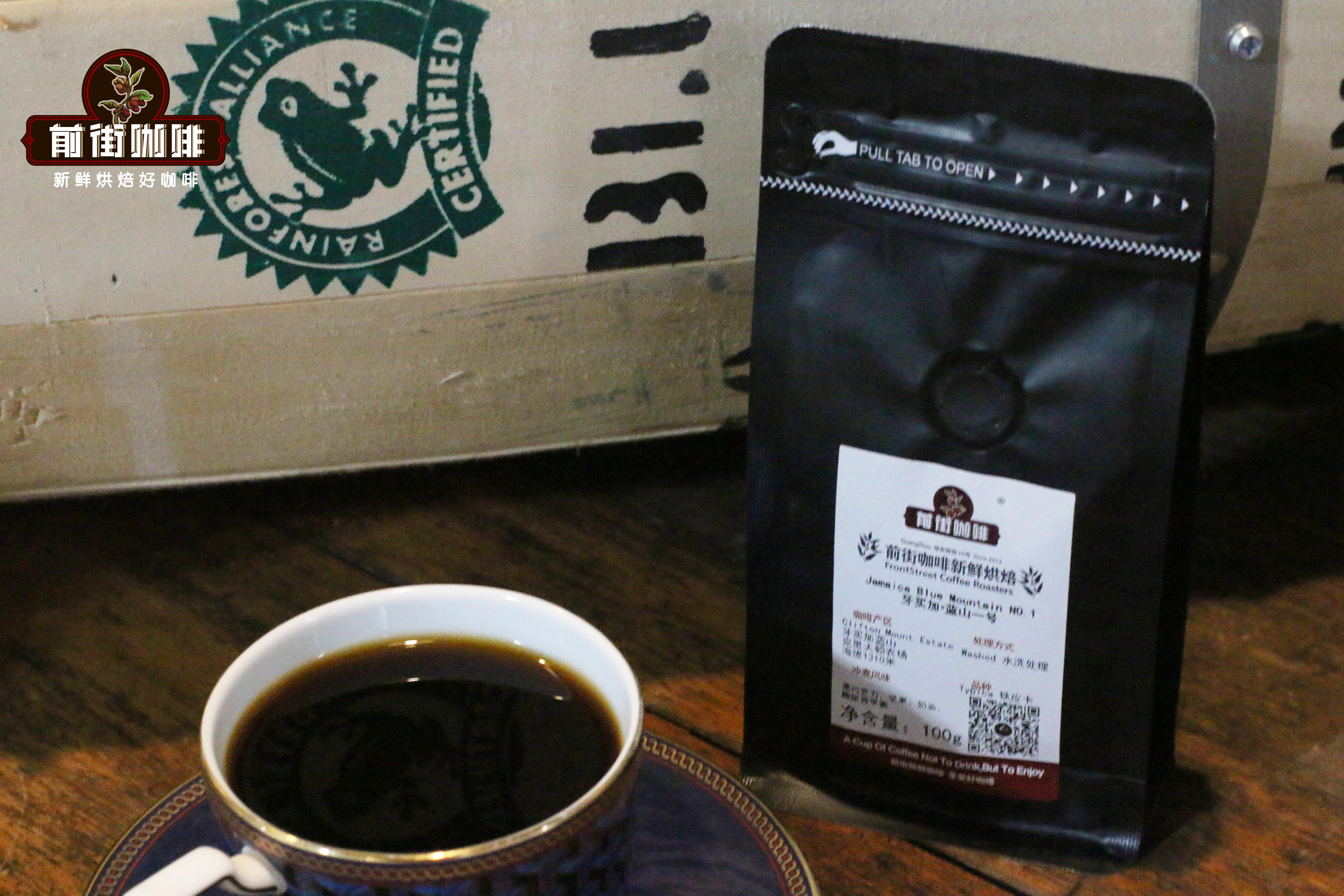
Flavor of hand-poured FrontStreet Blue Mountain No. 1 coffee: While hot, Blue Mountain No. 1 enters the mouth with a dark chocolate aroma and plenty of body, followed by an obvious almond-sweet finish. As the temperature drops, roasted hazelnut and a creamy sweetness appear, silky smooth, accompanied by a hint of soft acidity and caramel sweetness. The aroma lingers in the mouth for a long time.
FrontStreet Coffee Recommendation
If you want to taste why Blue Mountain earned its reputation as the king of classic specialty coffee, FrontStreet Jamaica Blue Mountain No. 1 is the place to start. Sourced from the historic Clifton Mountain Estate and grown from the ancient Typica variety at around 1,310 meters, it is washed the traditional way and roasted medium-dark so the cup stays balanced and clean.
Expect cream, caramel, dark chocolate, nuts, and honey layered over a soft fruit acidity, with a rounded body and a long, sweet finish. It is a coffee that suits almost every palate, whether you brew it by pour-over with a KONO dripper, in a moka pot, or as espresso, and it makes a genuinely memorable gift for the coffee lover in your life.
Important Notice :
FrontStreet Coffee is a long-established specialty coffee roaster in Guangzhou China, selling freshly roasted beans from its own farm in Yunnan as well as dozens of carefully selected single-origin beans from around the world for both pour-over and espresso. The products deliver consistently excellent quality and great value, with shipping within 24 hours. Guangzhou's FrontStreet Coffee shop is recommended by many coffee lovers, and the beans are now available online at the Tmall 。
FrontStreet Coffee has moved to a new address:
FrontStreet Coffee Address: 315,Donghua East Road,GuangZhou
Tel:020 38364473
 Scan and follow the En Gafei WeChat official account. Please indicate that the reprint comes from "En Gafei".