What is Latte Coffee? A Guide to Italian Latte Preparation and Coffee Bean Selection
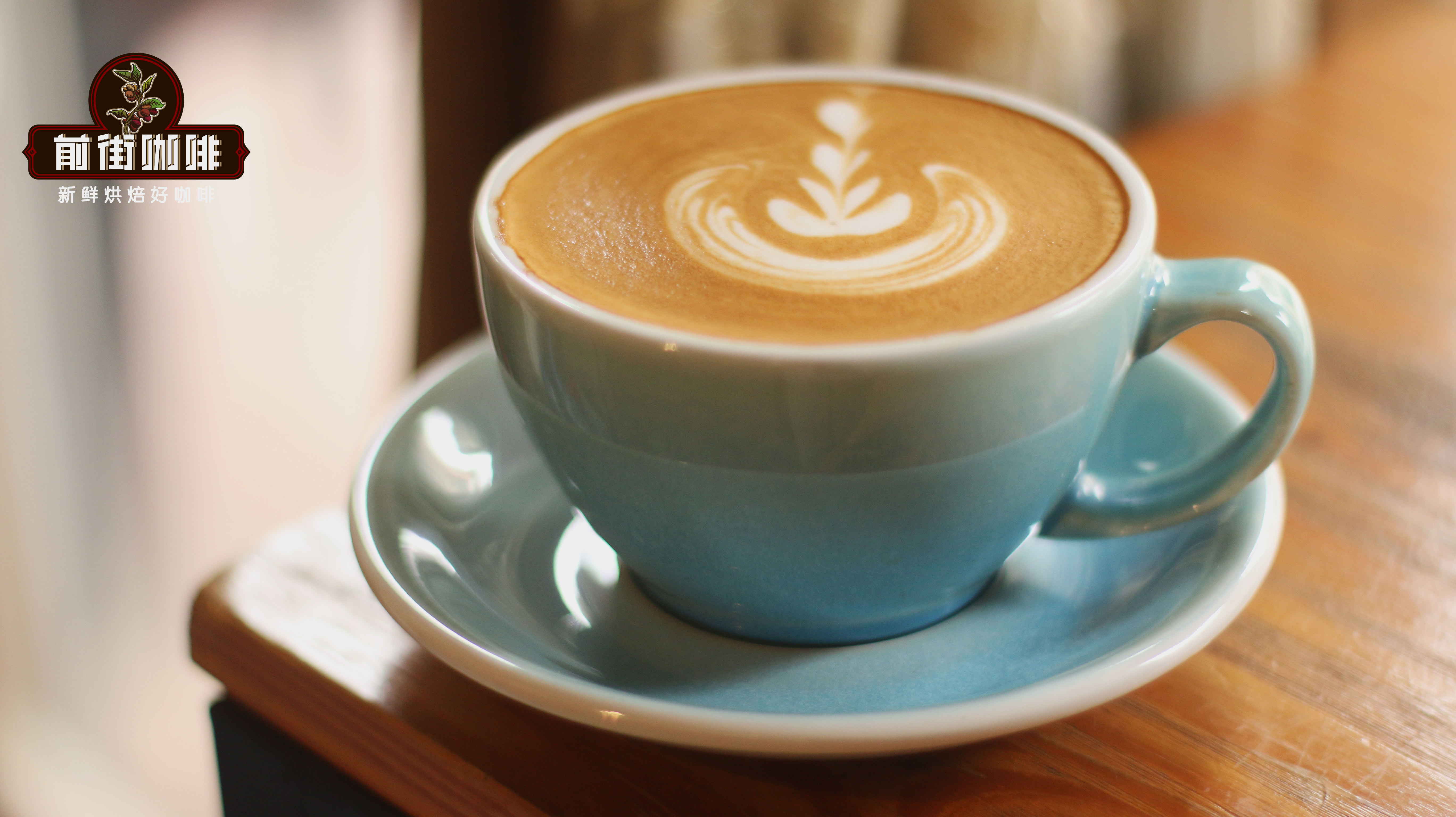
"I'm either in a coffee shop or on my way to one." For Italians who love coffee, latte is an all-too-familiar drink. On a beautiful morning, a cup of latte brings an incomparably pleasant, comfortable feeling. So what exactly is a latte, and how is it made? Let's learn and savor it together with FrontStreet Coffee!
What is a Latte?
"Latte" is simply the Italian word for milk, and the drink belongs to the family of specialty coffees—a classic pairing of Italian espresso and milk. Add milk to rich, mellow espresso in a chosen proportion, and you have latte coffee. With milk's gentle integration and flavor enhancement, the once bitter, heavy coffee turns smooth and sweet; even those unaccustomed to coffee find latte hard to resist.
Latte actually originated in Vienna, the city of music. The Viennese were drinking coffee as early as the 17th century: when the Turkish army failed in its attack on Vienna, it left behind hundreds of bags of coffee beans in its hasty retreat—and those beans supplied Vienna's first coffee house, the Blue Bottle. To suit European tastes, the shop's owners filtered out the grounds and added milk, which not only softened the bitter black coffee into something smooth and sweet but created a flavor the Viennese found utterly captivating. Thus the combination of milk and coffee began to sweep the globe.
What Coffee Beans and Milk to Choose for Latte?
As FrontStreet Coffee noted, latte's ingredients are simple: espresso and milk. There's no fixed ratio—everyone can adjust to taste—but the choice of ingredients is crucial, because it directly determines the quality of the drink.
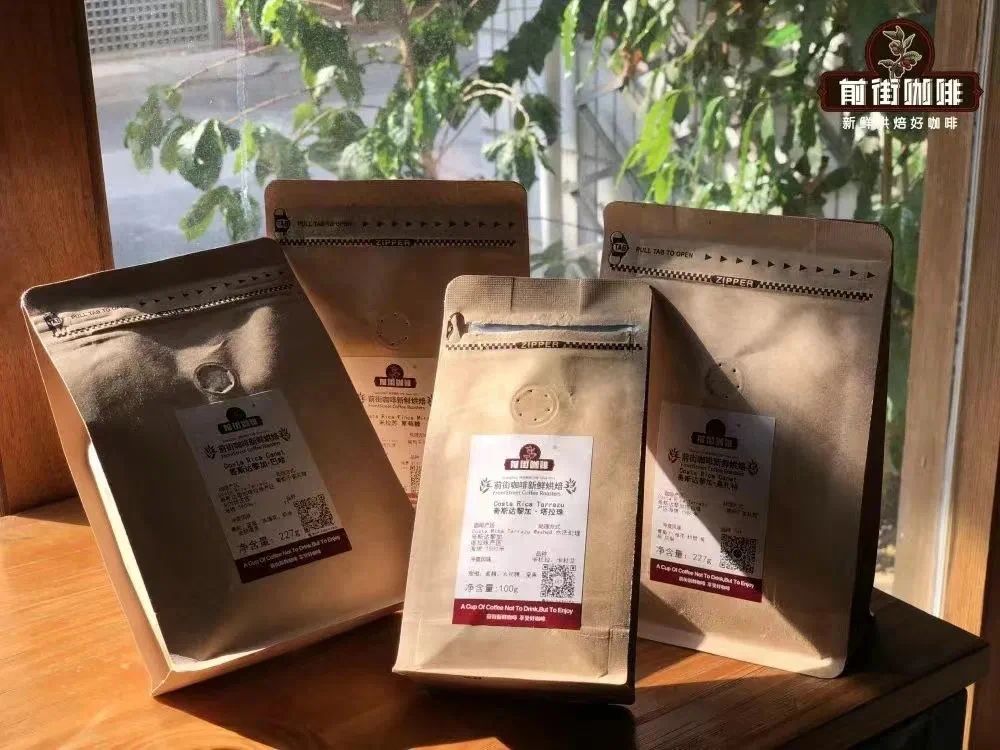
From extraction experience, FrontStreet Coffee recommends prioritizing Italian blends with high stability. Blends typically combine flavor profiles from different origins and lean medium to dark roasted, making it easier to pull rich crema—and high-crema coffee suits milk drinks beautifully. The espresso comes out thick and rich, with a generous margin for error. What's more, most Italian blends are supplied mainly to cafés for production use, so they cost less than single-origin beans of similar flavor character—an economical, high-value route. For beginners without much brewing experience, blends are clearly the advantageous choice for a delicious latte.
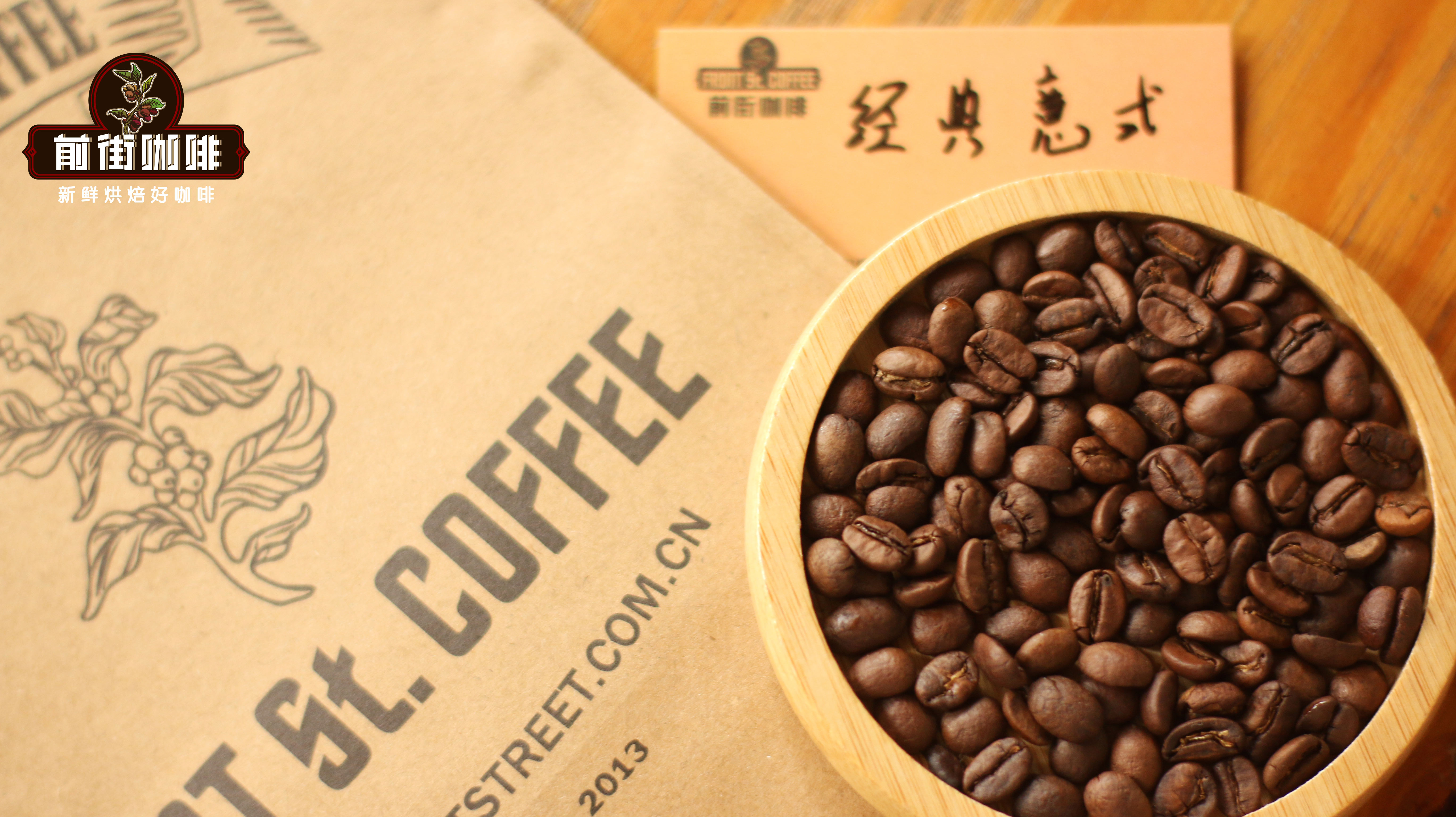
For example, the beans at FrontStreet Coffee's stores are the Sunflower Warmth Blend, blended from FrontStreet Ethiopia Natural Red Cherry and FrontStreet Honduras Sherry Barrel. Its roasting curve is built for espresso extraction, and as an iced latte it offers wine aroma, vanilla, cream, and chocolate all at once. Some friends have told FrontStreet Coffee that their espresso produces rough foam—usually a sign the beans are too fresh, and such shots taste mediocre. From FrontStreet Coffee's experience, if your beans arrive too close to the roast date, rest them in a cool place for 7–10 days and consume them within 45 days for the best flavor.
How to Make an Authentic and Delicious Latte?
The machine at FrontStreet Coffee's stores carries a double-shot portafilter with a dose of about 18–20 grams. When making lattes, FrontStreet Coffee uses 20 grams of coffee at a 1:2 coffee-to-liquid ratio—20 grams in, 40 grams of espresso out. Timing depends on the flow of the puck: a shot is generally kept within 20–35 seconds, because coffee extracted inside 20 seconds tastes thin, while extraction beyond 35 seconds slides into over-extraction and burnt bitterness. FrontStreet Coffee's shots mostly land in the 28–30 second range.
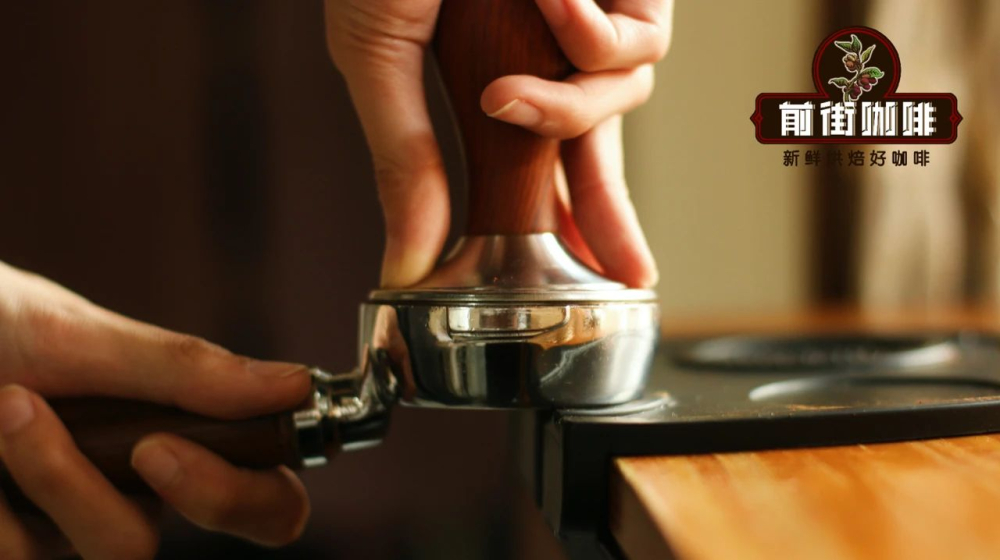
Before extraction, FrontStreet Coffee sets out a ceramic cup, milk pitcher, and fresh milk. First wipe the portafilter dry, align it with the grinder's chute, switch on, and grind a double dose onto the scale, adjusting to 20 grams. Then level the grounds with a distributor and press the tamper straight down with firm force, compacting the puck for more stable extraction.
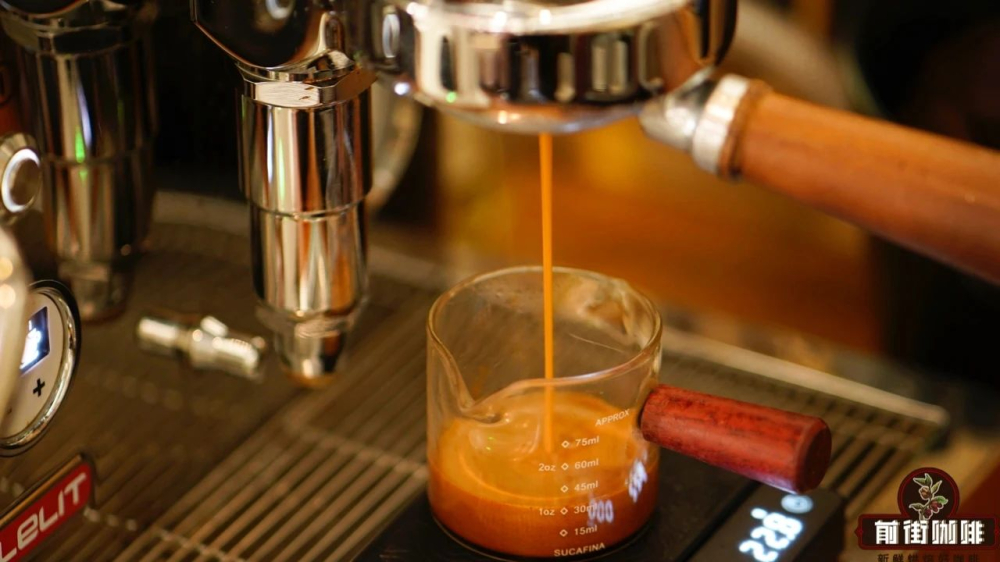
Next, switch on the pump and run water for 1–2 seconds to wet the brew head and clear any stuck grounds. Place the scale under the receiving cup and zero it, then position it under the brew head. Lock the portafilter in gently and start extraction, watching the stream change. When the scale reads 40 grams of liquid—about 30 seconds—stop the shot and pour the espresso into the prepared ceramic cup.
Milk frothing relies on the machine's steam wand. Pour an appropriate amount of milk into the pitcher: FrontStreet Coffee's latte serving cup is 300 milliliters, so about 240 milliliters of milk, since milk expands when gas is infused. Before frothing, crack the steam valve briefly to purge water from the wand, then immerse the steam tip just at the milk's surface and open the valve.
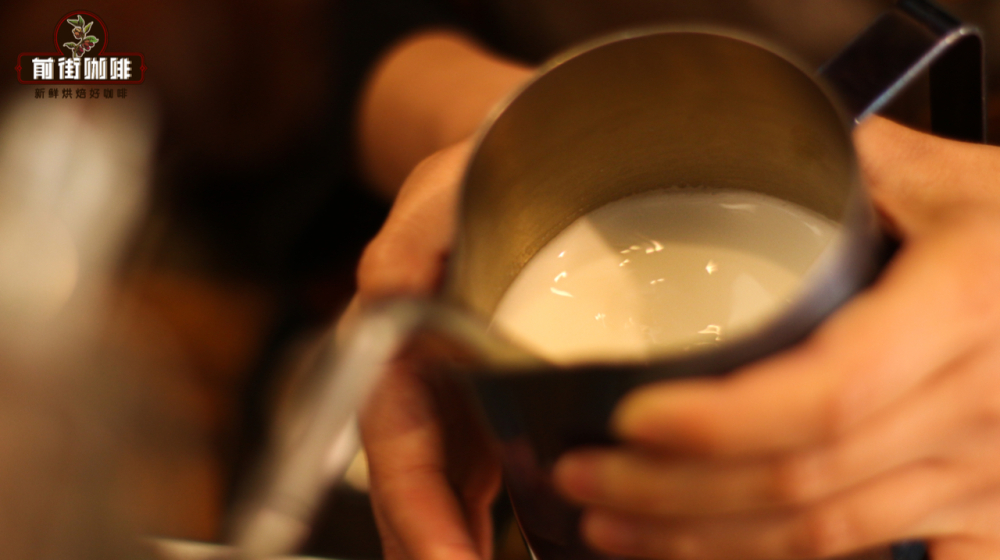
Frothing happens in two stages. The first is aeration: the steam tip touches the milk surface, producing a sharp paper-tearing sound—this stage sets the foam's thickness. The second is texturing: once enough foam exists, lift the pitcher to submerge the tip, letting the milk spin and homogenize under the steam—this stage sets the foam's quality. Latte foam should be moderately thick, about 1 centimeter, with a glossy, bubble-free, flowing surface.
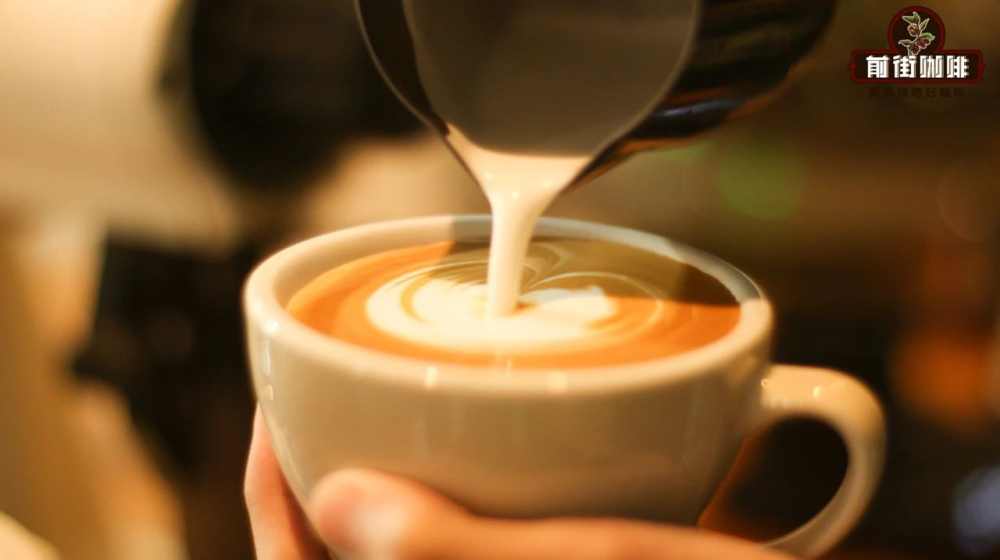
Finally, combine the frothed milk with the espresso for latte art. First integrate: hold the pitcher spout slightly high to let the milk plunge in and blend gently until the cup is seven-tenths full. Then lower the pitcher, bringing the spout close to the surface—reduced impact lets the foam rise by buoyancy and white foam blooms on the surface. Now swing your arm to draw the pattern: because the foam is moderate and still fluid, it will form a continuously swinging line. Finally, lift and push forward to finish a classic heart.
So, How Do You Make Iced Latte?
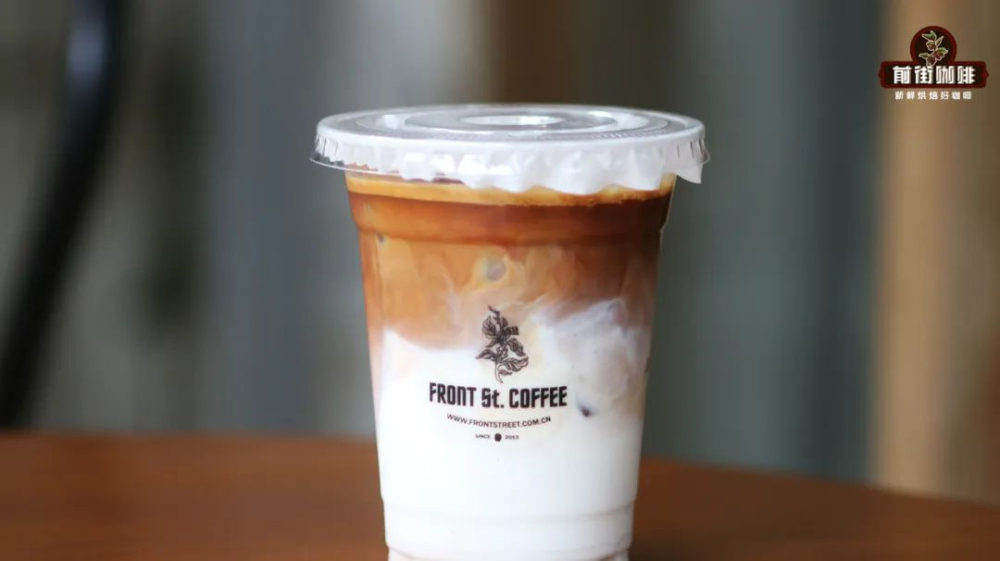
Compared with hot lattes, iced lattes are simpler: the method mirrors an iced Americano, with milk replacing the water. The steps: pre-chill the cup, add 100 grams of ice, 180 grams of milk, and finally the espresso—and don't forget to stir well before drinking.
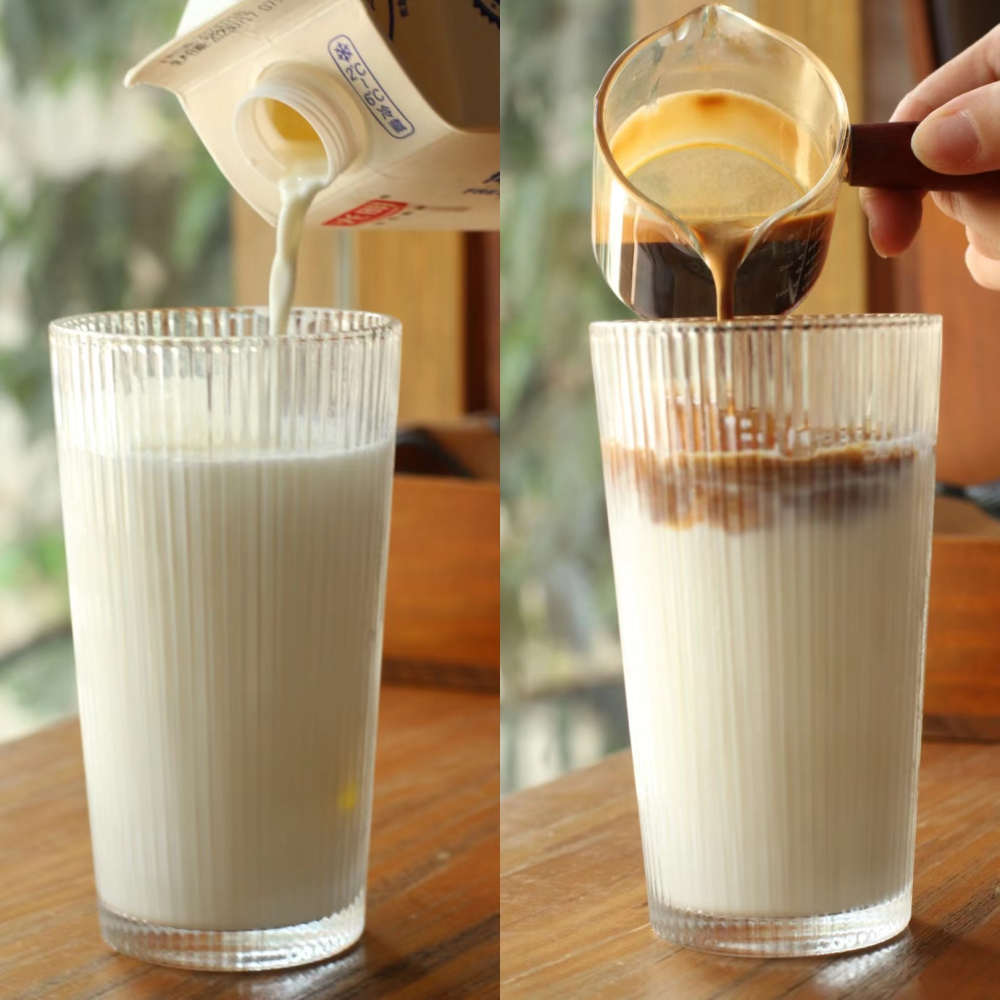
Most online tutorials give no absolute ratio for iced latte, only a general range of coffee:milk = 1:4 to 1:8—because beans, extraction parameters, and milk all differ, so even identical ratios taste different. As a reference: with dark-roasted espresso built on dark chocolate and nut notes, you can add a larger proportion of milk to stay balanced—FrontStreet Coffee's daily service uses 1:6. With lighter-roasted beans of floral and fruity acidity, the espresso is less intense and too much milk would only bury the coffee aroma, so reduce the milk to somewhere in the 1:4 to 1:5 range.
FrontStreet Coffee Recommendation
Choosing beans for a milk coffee means matching them to the brew method, since different coffees show differently against milk—and the wrong match can ruin the drink. For espresso machines and moka pots, whose shared goal is a concentrated base to be stretched into americano or latte, most Italian blends are medium-dark roasted so the latte shows rich nut, chocolate, and deep coffee character. FrontStreet Coffee's premium blend and black cocoa blend are the perfect milk companions: with Brazilian coffee leading the formula, the latte presents layered nut flavors of almond, apricot kernel, and walnut—silky and dense on the palate with a lingering finish. If you want maximum crema, choose the classic blend or commercial blend, whose small Robusta content adds extra golden foam and pulls the body and caramel aroma to their peak.
Each blend has its own role. The classic blend—built on the traditional Mandheling-Brazil formula and designed for espresso and moka pot—delivers exceptional crema that even a beginner on a basic home machine can extract into dense, velvety texture, making it the first choice for lattes, cappuccinos, and Dirty alike. FrontStreet Coffee's Black Cocoa Blend uses 100% Arabica with generous crema and a mellow cup at a friendly price, ideal for cost-conscious café owners. FrontStreet Coffee's Premium Blend, FrontStreet Coffee's longest-serving store blend at nearly a decade, pairs Brazil Cerrado with Colombia Huila—the most familiar classic espresso flavor there is—and FrontStreet Coffee's Commercial Blend remains the dependable workhorse for shop use. For something distinctive, the Strawberry Candy is the popular fruit-forward espresso blend: native flavors from different Arabica origins fuse into a vivid strawberry-gummy sweetness, perfect for drinkers who fear bitterness or cafés wanting a signature milk coffee.
Beyond hot drinks, concentrated iced coffees also welcome milk. Cold brew releases small, sweet-tart flavor molecules first, so fruity or wine-toned medium roasts work better than roasty ones: passionfruit-toned FrontStreet Colombia Sidra, the rose-scented Strawberry Candy Geisha blend, or raisin-toned Mozart, each turning harmonious and legible with a splash of milk—wonderfully easy to make at home.
Important Notice :
FrontStreet Coffee is a long-established specialty coffee roaster in Guangzhou China, selling freshly roasted beans from its own farm in Yunnan as well as dozens of carefully selected single-origin beans from around the world for both pour-over and espresso. The products deliver consistently excellent quality and great value, with shipping within 24 hours. Guangzhou's FrontStreet Coffee shop is recommended by many coffee lovers, and the beans are now available online at the Tmall 。
FrontStreet Coffee has moved to a new address:
FrontStreet Coffee Address: 315,Donghua East Road,GuangZhou
Tel:020 38364473
 Scan and follow the En Gafei WeChat official account. Please indicate that the reprint comes from "En Gafei".