Macro Environmental Analysis of Coffee Development and Evolution - Future Development Trends of Yunnan Coffee Market

I. Macro Environmental Analysis
As times change and lifestyle philosophies evolve further, the coffee industry is developing quickly as well. Urbanization and the cultivation of culture have become driving forces behind the growth of coffee shops. Government policy supports university students starting businesses. With coffee culture becoming widespread and a certain bourgeois sensibility on the rise, coffee shops are turning into important venues for social contact and personal pleasure. Their value lies not only in offering consumers a high level of spiritual enjoyment but also in expressing a certain atmosphere, culture, and pursuit of life.
II. Industry Analysis
In many major Chinese cities, coffee shops are no longer unusual, and plenty of young people have become devoted coffee drinkers. In Chinese cities the average annual coffee consumption is 4 cups per person. Japan and the United Kingdom, both world-renowned tea cultures, have already grown into enormous coffee markets. China, with its deep tea culture, holds vast potential for coffee consumption and is becoming the world's largest coffee consumer market.

Coffee (scientific name: Coffea arabica), also called the coffee tree and Arabian coffee, is the national flower of Yemen. Before the 6th century AD, Yemen was always called Arabia, so coffee trees shipped from there elsewhere were also called Arabian coffee trees. The name "coffee" comes from the Arabic "Qahwah," meaning plant beverage. Later, as coffee spread around the world, it was named after its place of origin, Kaffa, until it was formally named "coffee" in the 18th century.

The world's first coffee tree was found in the Horn of Africa. Coffee cultivation began in the 15th century. For several hundred years, Yemen on the Arabian Peninsula was the world's only coffee-producing region, and demand was extremely strong. At Yemen's port of Mocha, coffee being loaded onto ships for export often required heavy military protection. Yemen also took various measures to keep seedlings from leaving the country. Despite those restrictions, Muslim pilgrims traveling to the holy city of Mecca secretly carried coffee seedlings home, and coffee quickly took root in India. Meanwhile, in Venice, countless merchant fleets traded with Arab merchants in perfumes, tea, and textiles, and coffee spread through Venice into much of Europe. Many European merchants gradually grew used to drinking coffee as a beverage. Street vendors selling coffee soon appeared in European cities, and coffee's popularity spread rapidly. In the 17th century the Dutch introduced coffee to their colony of Indonesia, and the French began cultivating it in Africa. Today coffee is the second most traded commodity on Earth, after oil. Among the many legends of its discovery, two are the most captivating: the story of the shepherd and the story of the Arabian monk.

III. World Coffee Cultivation Regions
The world's three major coffee-growing regions are Africa, Indonesia, and Central and South America. Yemen was the first country to produce coffee on a large scale as an agricultural crop. Yemeni Mocha coffee is still grown and processed much as it was hundreds of years ago. On most Yemeni farms, growers still resist artificial chemical products such as fertilizer. They plant poplar trees to provide the shade coffee needs, and they plant on steep terraces to make the most of limited rainfall and land. Yemen Mocha beans are still shipped in bags woven from straw, unlike the chemical woven bags used elsewhere.
Yemen has a coffee cultivation history of over 2,000 years. By the numbers, 76 countries worldwide grow coffee. Coffee was first introduced to Taiwan, China in 1884. In 1908, overseas Chinese brought large-bean and medium-bean varieties from Malaysia to Hainan Island. Today the main growing areas are distributed across Yunnan, Guangxi, Guangdong, and Hainan.

IV. Future Trends in Domestic Coffee Development
Coffee is also the most highly developed and mature market-economy industry among the government-led industries in Baoshan City since the founding of New China. To develop it further, Baoshan has made various attempts, among them launching the Yunnan Baoshan Coffee World project.
Baoshan, Yunnan sits on a low-latitude plateau and has long been described as "one mountain has four seasons, ten miles have different weather." Such conditions suit coffee beans extremely well. Some data: Yunnan Province's coffee production reaches 136,000 tons, accounting for over 95% of the country's total coffee production, and its export volume ranks first in the country at 60,700 tons.
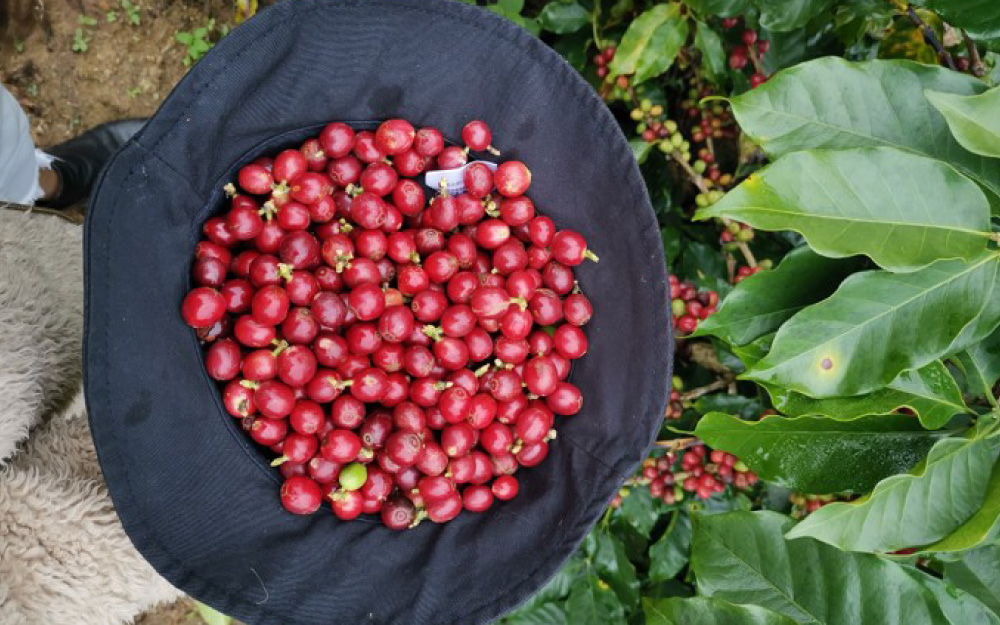
Good growing conditions aside, FrontStreet Coffee believes the current quality of Yunnan coffee beans has not yet reached "specialty coffee" standards, largely for two reasons. First, varieties: most of Yunnan grows Catimor, which is inherently inferior to the superior Typica variety. Second, the use of anaerobic processing: it is a novel method, but it covers up the coffee's original flavor—so how can we then talk about specialty coffee?
The most widely cultivated variety in Yunnan's coffee regions today is Catimor. There are also small amounts of Typica and Bourbon planted in the Baoshan area. Although Typica and Bourbon both belong to the Arabica species, they are fundamentally very different.
In 2013, FrontStreet Coffee recognized that high-quality coffee depends on variety, altitude, and climate. So FrontStreet established its own coffee estate on a mountain 1300m above sea level near Myanmar in Lincang, and planted the most ancient Arabica variety—Typica.
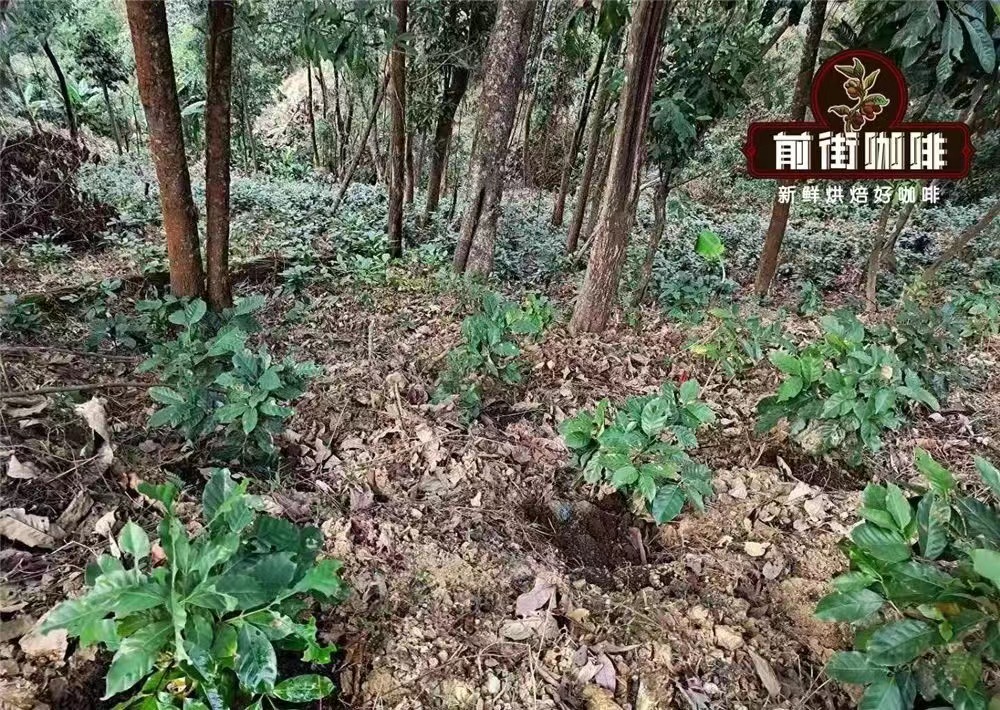
The difference between Typica and Catimor is that Typica, one of the oldest coffee varieties, carries pure Arabica genetics. Its elegant, clean flavor has long been recognized as that of a specialty coffee variety; its disadvantage is a lower yield.
True specialty coffee is not only about processing and quality—variety matters enormously too. FrontStreet Coffee hopes that by changing the variety at the root, everyone can enjoy Yunnan small-bean coffee with better flavor and quality. These self-grown Yunnan Typica beans are currently available at FrontStreet Coffee's flagship store and its physical retail locations.
FrontStreet Coffee Recommendation
FrontStreet Yunnan Small-Bean Coffee is the accessible starting point. It comes from the Baoshan region, is washed and medium-roasted, and brews into a soft cup with nut and chocolate sweetness and a light plum acidity. At a friendly price, it is how many drinkers first get to know Yunnan coffee.
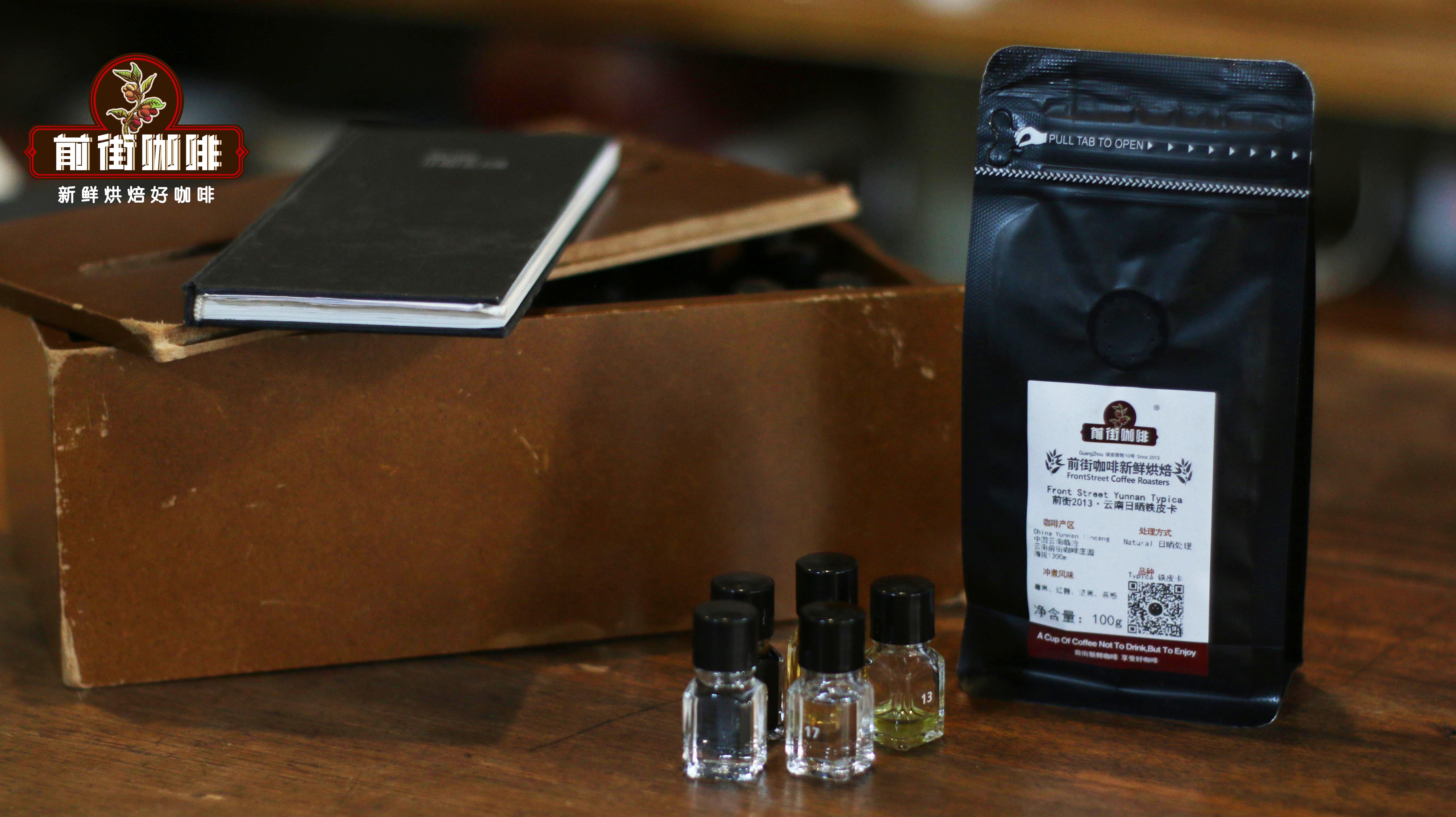
FrontStreet 2013 Sun-Dried Typica is the step up. To investigate the region's origins, FrontStreet established its own estate in 2013 and planted a block of Typica—one of the oldest coffee varieties and the first coffee planted in Yunnan, brought in by a French missionary. FrontStreet uses only fully ripe red cherries, dries them in the sun, and roasts to a medium level so the cup is balanced and its sweet-sour tension stands out. Expect dark berry character, caramel sweetness, chocolate, a hint of dried apricot, and a black-tea finish.
FrontStreet Black Cocoa Blend brings Yunnan into an espresso. It combines Yunnan small-bean with Brazil Cerrado: the Brazilian coffee supplies a mixed-nut aroma and a balanced body, while the Yunnan beans carry chocolate and citrus. Pulled as an Americano, the cup balances sweet, sour, and bitter with nutty and brown-sugar sweetness; with milk it turns silky with almond and cream. It is a very easy bean for beginners to work with.
Important Notice :
FrontStreet Coffee is a long-established specialty coffee roaster in Guangzhou China, selling freshly roasted beans from its own farm in Yunnan as well as dozens of carefully selected single-origin beans from around the world for both pour-over and espresso. The products deliver consistently excellent quality and great value, with shipping within 24 hours. Guangzhou's FrontStreet Coffee shop is recommended by many coffee lovers, and the beans are now available online at the Tmall 。
FrontStreet Coffee has moved to a new address:
FrontStreet Coffee Address: 315,Donghua East Road,GuangZhou
Tel:020 38364473
 Scan and follow the En Gafei WeChat official account. Please indicate that the reprint comes from "En Gafei".