Pour-Over Coffee Brewing: The Japanese Favorite Brewing Method

Introduction
Pour-over coffee stands at the heart of what we now call third wave specialty coffee. In 1978, Erna Knutsen coined the term "specialty coffee" — beans whose regional flavors express the unique microclimate and geography of where they were grown, what FrontStreet Coffee likes to call "the taste of origin."

Pour-over has become the emblem of the third wave precisely because the method spotlights the coffee's own flavors, and the ritual of brewing itself is a pleasure to watch.
What Is Pour-Over Coffee?
Pour-over is the brewing method you see every day in coffee shops, built around a dripper and a gooseneck kettle. Its defining feature is a dripper lined with filter paper (or another filtering medium) that separates the grounds from the brew. The idea traces back to a moment of inspiration from the German housewife Melitta Bentz: she loved coffee but hated the grit at the bottom of the cup, so she lined a perforated copper pot with her son's blotting paper — quite possibly the first coffee filter in history — and strained her brew into a clean, grit-free cup.

By now pour-over is hardly novel — every café from large chains to tiny corner shops serves it. But look closely and you'll notice that what is universally "pour-over" actually goes by several different names in English: "pour over coffee," "hand drip coffee," and "filter coffee." Why the different names?
FrontStreet Coffee's view is that since coffee culture traveled to East Asia from the West, the names mostly reflect cultural differences. "Hand drip coffee" is the term of choice in Japan and South Korea, and the word "drip" immediately calls to mind Japan's famous drop-by-drop pouring method.

"Pour over," meanwhile, emphasizes the image of water tumbling over the grounds, and is more common in Europe and the Americas. "Filter coffee" refers to the filtering apparatus itself, though in places like Melbourne the term usually means coffee from a batch brewer instead.
What Do You Need for Pour-Over Coffee?
A typical pour-over setup calls for: a gooseneck kettle, a dripper, a server, a grinder, filter paper, a digital scale, and a thermometer.

The dripper and filter paper do the filtering while absorbing the coffee's oils, which keeps the cup clean-tasting. FrontStreet Coffee's bar uses two drippers day to day: the V60 for lighter roasts and the Kono for darker roasts.

The digital scale weighs both beans and water — data-driven parameters make the brew repeatable and consistent. The thermometer serves the same purpose: check the water temperature before every pour. With a V60, FrontStreet Coffee uses 90–92°C water for light roasts and 88–89°C for darker ones.
The grinder matters just as much. Grind size directly shapes the taste of the cup: too coarse and the brew is weak; too fine and it turns bitter. FrontStreet Coffee recommends a medium-fine grind for pour-over, with roughly 80% of the grounds passing through a 0.85 mm standard sieve.

How to Brew Pour-Over Coffee
Brewing pour-over is simpler than it looks. The key is controlling the variables that shape the cup: coffee-to-water ratio, grind size, water temperature, and extraction time.
FrontStreet Coffee starts by weighing out 15 grams of coffee at a 1:15 ratio — so 225 grams of hot water in total.

Before brewing, rinse the filter paper with hot water so it seats snugly in the dripper. Then grind the beans to that medium-fine consistency.

Add the grounds to the dripper, wait for the water to reach temperature, and begin. The pour is divided into three stages. First, pour 30 grams of water to bloom, making sure every bit of ground is wetted, and wait 30 seconds so the carbon dioxide can escape and the later pours can extract more evenly. Second, pour up to 125 grams and wait for the liquid level to drop halfway. Finally, pour the remaining water up to 225 grams and let it drain fully. Total extraction time: about 2 minutes.

FrontStreet Coffee Recommendation
If you ask a seasoned friend to recommend one beginner-friendly dripper, the odds are good they'll point you to the Hario V60. Hario, founded in Tokyo in 1921 as a maker of laboratory heatproof glassware, redesigned the V60's prototype in 2004 into the shape we know today — named for its distinctive 60° cone angle and "V" profile — and launched it the following year. The cone and 60° angle force water to flow toward the center before dripping through, extending contact time between water and grounds for fuller extraction of aroma and flavor, while the single large outlet lets flow rate rest entirely in the brewer's hands. As the third wave pushed roasting lighter in pursuit of origin character — Ethiopia's white florals, Kenya's berry acidity — the V60's fast extraction proved ideal for showcasing florals, lively acidity, delicate sweetness, and tea-like notes.
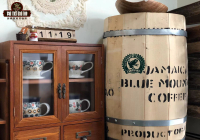
For light roasts on a V60, FrontStreet's pour-over favorites include the citrus, berry, and floral Yirgacheffe Chelbesa with its green-tea finish, the tropical-fruit-packed Guji Hambela (Hana) with its strawberry, passion fruit, and lychee aromas, and Panama Esmeralda Red Label Geisha with its jasmine florals, bergamot, and black-tea elegance. For darker roasts, a Kono dripper suits the classic profiles better: PWN Golden Mandheling with its herbal, dark chocolate depth, Brazil Fazenda Rainha with nuts, cocoa, and caramel, and Jamaica Blue Mountain No. 1, whose cream, caramel, chocolate, and honey balance make it the coffee most people find easiest to love.
Important Notice :
FrontStreet Coffee is a long-established specialty coffee roaster in Guangzhou China, selling freshly roasted beans from its own farm in Yunnan as well as dozens of carefully selected single-origin beans from around the world for both pour-over and espresso. The products deliver consistently excellent quality and great value, with shipping within 24 hours. Guangzhou's FrontStreet Coffee shop is recommended by many coffee lovers, and the beans are now available online at the Tmall 。
FrontStreet Coffee has moved to a new address:
FrontStreet Coffee Address: 315,Donghua East Road,GuangZhou
Tel:020 38364473
 Scan and follow the En Gafei WeChat official account. Please indicate that the reprint comes from "En Gafei".