Mandheling Coffee Beans Flavor Profile Description - What Grade is Indonesian Yellow Mandheling Coffee
The Rich Heritage of Mandheling Coffee
Some people ask whether there is a non-acidic coffee worth recommending. FrontStreet Coffee would point to its Indonesia Mandheling Coffee. FrontStreet Coffee's Mandheling is a full-bodied coffee through and through, making it an excellent choice for anyone who dislikes acidity. Mandheling rose to fame in the same era as Blue Mountain coffee, when, in the last century, black coffee was synonymous with richness. Like Blue Mountain, Mandheling was brought to prominence by the Japanese and successfully established its place in the world.
The Origin of Mandheling
Amid such widespread acclaim, FrontStreet Coffee's Mandheling has almost become synonymous with Indonesian specialty coffee. In fact, Mandheling is not an Indonesian place name, region name, port name, or coffee variety at all, but a mispronunciation of the Mandailing people who originally inhabited Sumatra. How did this ethnic group come to be linked with coffee? Behind it lies a serendipitous legend.
According to FrontStreet Coffee's research, the origin of Mandheling coffee is tied to an interesting story about the Japanese. During World War II, Japanese soldiers drank an incredibly rich coffee on the island of Sumatra in Indonesia. When they asked the shop owner for the coffee's name, the owner mistakenly thought they were asking him to identify himself, and answered "Mandailing." Because "Mandailing" and "Mandheling" are pronounced very similarly in Japanese, the soldiers remembered it as "Mandheling." After the war, the soldiers wanted to taste that rich Mandheling flavor again back home, so they asked Japanese merchant friends to help them find Mandheling coffee locally in Indonesia. Mandheling coffee later became a big hit in Japan, and the name spread from there.
Sumatra Mandheling Coffee
FrontStreet Coffee has noted that the world has so many coffee-producing regions, each with its own flavors - to say nothing of different countries. Coffee from the Sumatra region of Indonesia is widely acclaimed and renowned worldwide for its rich, satisfying flavors, even if this can be overwhelming for a novice. Mandheling is famous as one of the world's best-tasting premium specialty coffees.

FrontStreet Coffee will now help you understand what Mandheling's growing environment is like. Mandheling coffee is produced in Sumatra, Indonesia, in Asia, and is also known as "Sumatra coffee." The main production areas include Java Island, Sulawesi Island, and Sumatra Island, with 90% being Robusta varieties. Among them, the "Mandheling" from Sumatra Island is the most famous. The best of the refined traditional Arabica coffees produced in northern Sumatra are marketed under the names Lintong and Mandheling. More precisely, Lintong refers to coffee grown in a small area southwest of Lake Toba, in the Lintong administrative region. The small growing areas are scattered across a high, undulating clay plateau covered with ferns. The average growing height in the production areas is between 1,200 and 1,500 meters, with coffee planted by small tenant farmers under shade trees. Lintong coffee is non-shade grown, uses no chemicals, and is almost entirely held by small private owners. Mandheling is a broader term that includes Lintong coffee and similar growing conditions in Dairi (capital Sidikalang) and the northern Lake Toba growing areas.
Golden Mandheling Coffee
When you hear about FrontStreet Coffee's Golden Mandheling, doesn't it sound very high-end? A coffee described as "golden" - how precious must that be! FrontStreet Coffee wants to tell everyone: this Golden Mandheling really is different. If FrontStreet Coffee's Mandheling is high-quality specialty coffee, then FrontStreet Coffee's Golden Mandheling is the specialty among specialty coffees. Naturally, its quality and flavor stand a level above FrontStreet Coffee's regular Mandheling.

FrontStreet Coffee's Golden Mandheling coffee comes from the renowned Pawani Coffee Company (PWN) in Indonesia's coffee industry, abbreviated PWN, which is also the trademark registration company for Golden Mandheling. PWN's Golden Mandheling is known for its strict screening system and large, uniform beans, with a cleaner mouthfeel. Through careful hand selection, the full-bodied, lustrous beans stand out among coffees. In fact, to address Mandheling's high defect rate, the Japanese began using meticulous quality control long ago. After one machine selection and three hand selections to remove defective beans, they produce Golden Mandheling coffee beans with a dark green color and a uniform appearance, creating another wave of market demand that drove Europe and America into a frenzy.
Mandheling Coffee Bean Grading
Currently, most of Indonesia's best coffee beans come from PWN (Pawani Coffee Company), and the grading system works as follows:
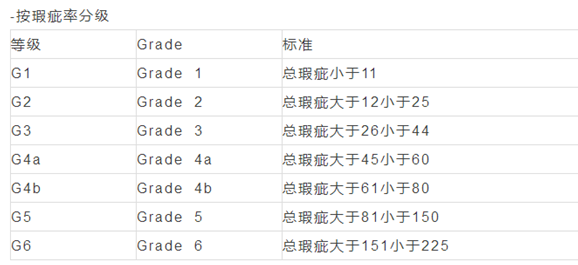
G1 is an extremely rare product, originally a grade specially created for Japanese trading companies. G1 means a maximum of 3 defective beans per 300 grams.

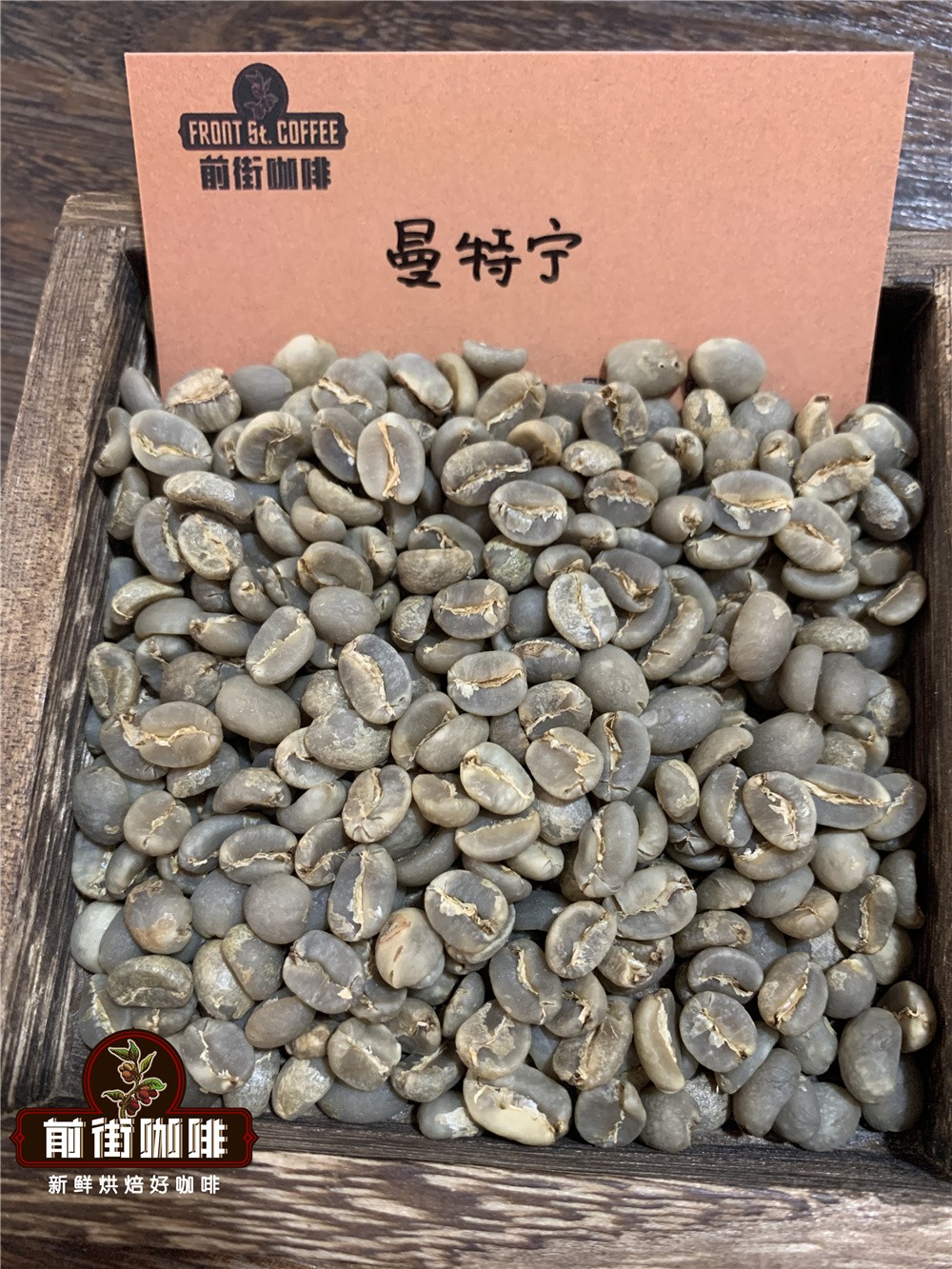
The FrontStreet Coffee's Golden Mandheling on FrontStreet Coffee's bean list is PWN Company's Golden Mandheling. This FrontStreet Coffee Mandheling coffee has a raw bean size above 18 screen, with fewer than 3 defective beans per 300g sample, graded at the highest G1 level. Both on the outside and inside of the gunny sack, FrontStreet Coffee's Golden Mandheling carries PWN's logo and certificate, and its specification is above 18 screen. Through cupping, FrontStreet Coffee found that this strictly selected Golden Mandheling tastes cleaner than FrontStreet Coffee's Indonesia Mandheling. The original herbal, earthy, and woody flavors of Mandheling are almost gone, while the caramel sweetness is stronger and the fruit acidity brighter and more elegant. PWN Company has registered Golden Mandheling as a trademark, meaning only Golden Mandheling produced by PWN Company can be considered true "Golden Mandheling."
Mandheling Coffee Processing Method
The flavor of any coffee is closely tied to its processing method. FrontStreet Coffee believes that although local coffee has local flavors, the processing method directly shapes the coffee's flavor. Indonesia lies in a typical tropical rainforest climate with frequent rainfall and short sunshine hours, which does not suit natural processing. Local economic conditions are also average, without the funds to invest in washed processing, so this semi-washed method was developed instead.
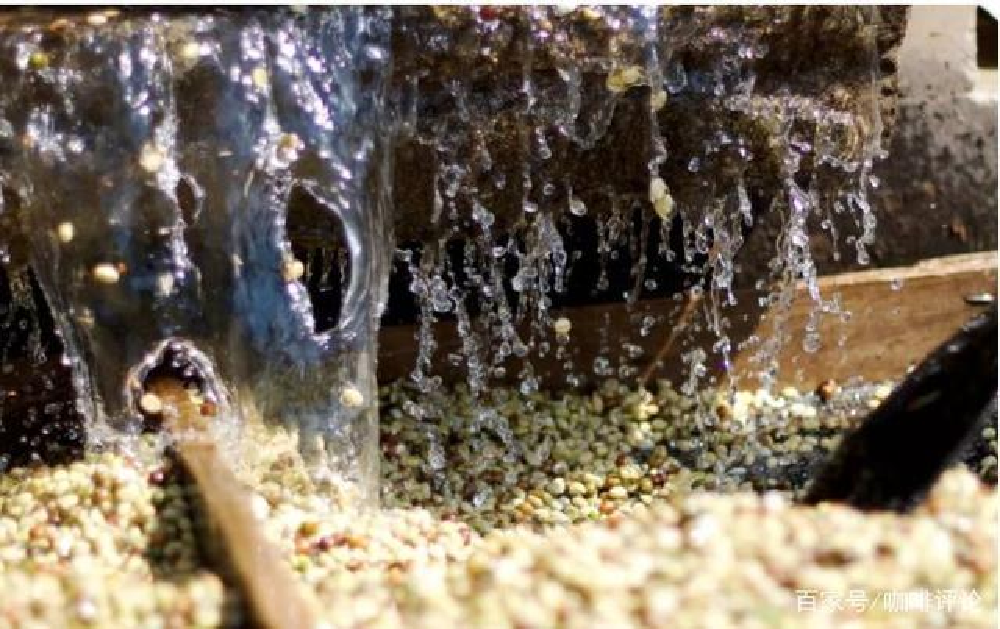
This three-stage collaborative drying method works as follows: farmers pick fresh coffee cherries from the trees and process them the same day, using wooden pulping machines to remove the skin and pulp, then ferment for 3 hours before drying. While the parchment beans are half dry and half wet, they are collected and sold to the local coffee processing station. On receiving these semi-dry, semi-wet parchment beans, the station first removes the mucilage and parchment layers, then continues with the later stage of sun drying. This shortens the drying time required for the raw beans to between 2 and 4 days. Once the moisture content of the raw beans drops to 12%-13%, they can be stored in the warehouse.
The characteristics of FrontStreet Coffee's Mandheling coffee: a unique herbal aroma (similar to grass jelly) and woody flavors, caused by the high humidity and the three-stage drying of the mucilage layer. This rare processing method accidentally created Mandheling's special low-acidity, thick, and mellow flavor.
Brewing Parameters for FrontStreet Coffee's Lintong Mandheling and Golden Mandheling
After receiving FrontStreet Coffee's Mandheling raw beans, FrontStreet Coffee's roasters applied a medium-dark roast to bring out the characteristic rich, sweet, and clean flavors. The darker a coffee is roasted, the faster the substances in it dissolve. To avoid over-extraction, FrontStreet Coffee recommends an 88°C water temperature and a medium-coarse grind. At the same time, to better draw out the sweetness and richness of FrontStreet Coffee's Mandheling, you can use a slower-flowing dripper such as a KONO dripper.
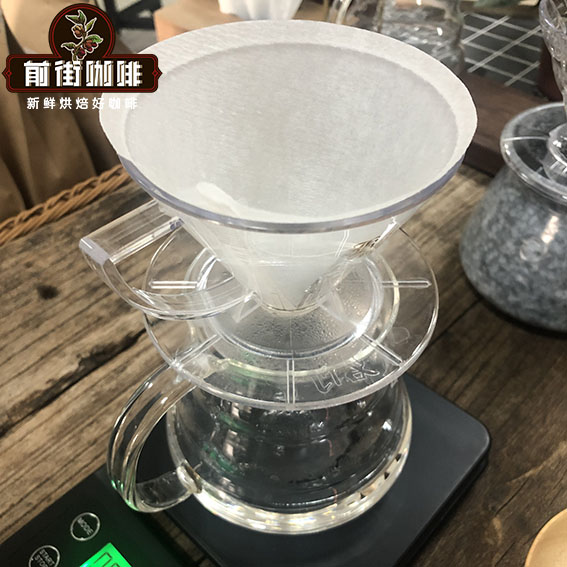
Dripper: KONO dripper
Water temperature: 88°C
Dose: 15g
Coffee-to-water ratio: 1:15
Grind size: Medium-coarse (75% pass-through on Chinese standard #20 sieve)
When brewing, use a three-stage pour to give the coffee richer layers. First, pour 30g of water to wet the grounds completely and bloom for 30 seconds. Then, with a small, slow stream, pour in a circular motion for the second stage up to 125g. When the water level in the dripper drops to just about to filter through the coffee bed, continue pouring. For the third stage, pour to 225g and stop. Wait for all the water to drip through into the server below, then remove the dripper. Total extraction time: 2 minutes.
FrontStreet Coffee's Lintong Mandheling flavor: toast, nuts, caramel, pine, herbs.
FrontStreet Coffee's Golden Mandheling brewed flavor: spices, herbal plants, varied layers, rich and clean, high balance, intense nut and brown-sugar aroma, with chocolate notes, and a long-lasting aftertaste.
For brewing, FrontStreet Coffee recommends using freshly roasted coffee beans to fully experience the coffee's rich flavors. The beans shipped by FrontStreet Coffee are all roasted within 5 days, because FrontStreet Coffee understands deeply that freshness greatly affects flavor. FrontStreet Coffee's roasting philosophy is "freshly roasted good coffee," ensuring that every customer who orders receives the freshest coffee on arrival. The resting period is about 4-7 days, so by the time customers receive it, the coffee is at its peak flavor.
Of course, some customers need FrontStreet Coffee to grind the beans, and that is fine too. But FrontStreet Coffee must remind you: once the beans are pre-ground there is no need for a resting period, because during transport the pressure of carbon dioxide inside the packaging also helps round out the flavor, so you can brew a cup as soon as the grounds arrive. Ground coffee, however, must be brewed promptly, because it oxidizes quickly when exposed to air, meaning the flavor dissipates relatively fast and the coffee will not taste as good. FrontStreet Coffee therefore recommends buying whole beans and grinding fresh before each brew to taste the coffee at its best.
For coffee selection, if you are not sure which flavors you like, you can come to FrontStreet Coffee and choose beans that suit your taste. FrontStreet Coffee carries over 50 single-origin beans from different regions, with 8 representative daily-drinker coffees from various countries to choose from. FrontStreet Coffee's daily-drinker beans offer excellent value and are a great choice for coffee friends, especially those new to coffee!
FrontStreet Coffee Recommendation
If this article has you wanting to taste Mandheling for yourself, FrontStreet Coffee's Sumatra offerings are the place to start. FrontStreet PWN Golden Mandheling is the top of the line: PWN strictly screens it, keeping only beans of 18 screen and above with fewer than 3 defective beans per 300g sample, meeting the highest G1 grade, then hand-sorts three times to remove every defect. Roasted medium-dark, it shows a thicker, smoother body, a narrower range of earthy and woody notes, and a stronger caramel sweetness with a cleaner mouthfeel - a great match for anyone who dislikes acidity. For an everyday cup, FrontStreet Lintong Mandheling comes from the Lintong region around Lake Toba and is likewise wet-hulled (Giling Basah) and medium-dark roasted, bringing black-sugar, spice, herb, nut, and dark-chocolate aromas with a full, low-acid body. To brew either one at its best, use a water temperature of 87-88°C, 15g of coffee, a 1:15 ratio, a coarse-sugar grind, and a three-stage pour - 30ml to bloom, then 100ml, then a gentle 95ml down the center - to draw out the caramel sweetness and the chocolate and nut flavors. If you want that Mandheling depth in a milk drink, FrontStreet Classic Blend adds medium-dark Mandheling to Brazilian creamy-nut flavors, with butter, roasted chestnut, and caramel notes standing out, lifting the body of the whole cup and lending sandalwood, herbal, and spice accents.
Important Notice :
FrontStreet Coffee is a long-established specialty coffee roaster in Guangzhou China, selling freshly roasted beans from its own farm in Yunnan as well as dozens of carefully selected single-origin beans from around the world for both pour-over and espresso. The products deliver consistently excellent quality and great value, with shipping within 24 hours. Guangzhou's FrontStreet Coffee shop is recommended by many coffee lovers, and the beans are now available online at the Tmall 。
FrontStreet Coffee has moved to a new address:
FrontStreet Coffee Address: 315,Donghua East Road,GuangZhou
Tel:020 38364473
 Scan and follow the En Gafei WeChat official account. Please indicate that the reprint comes from "En Gafei".