Essential Guide to Manual Coffee Brewing: Fundamentals of Pour-Over Coffee and Water-to-Coffee Ratio Calculation
For professional coffee knowledge exchange and more on coffee beans, follow Coffee Workshop (WeChat official account: cafe_style).
For more specialty coffee beans, add FrontStreet Coffee's private WeChat account: qjcoffeex
Understanding Coffee Bitterness
Coffee contains a great many aromatic compounds, but also plenty of bitter and unpleasant ones. Many people assume that coffee simply is bitter. In truth, unless a bean is inherently bitter or has been roasted dark, coffee is not naturally bitter at all.
If a coffee is not inherently bitter but you still taste bitterness, the likely cause is that you extracted not only the aromatic compounds in the bean but the unpleasant bitter ones along with them.
What is Coffee Extraction?
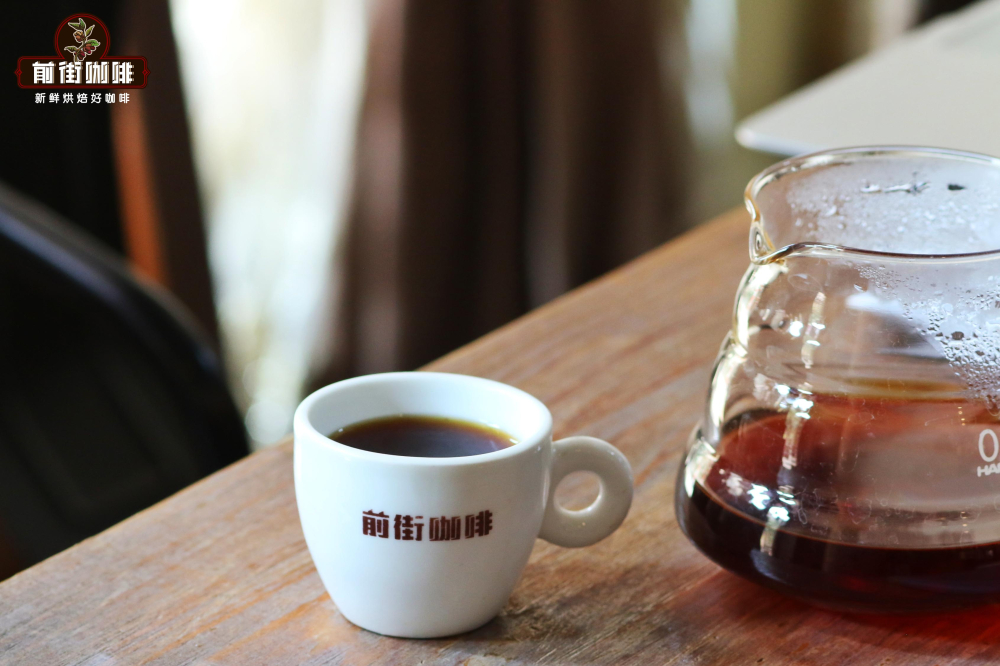
Coffee extraction simply means the process by which compounds in the coffee particles, the grounds, are dissolved by water. Extraction rate is the proportion of the grounds' aromatic compounds that the water dissolves. Dissolve more of them and the extraction rate is higher; dissolve fewer and it is lower.
Think back to brewing tea. The second infusion is often the sweetest, and after it the tea gradually goes flat. That is because tea holds a limited supply of aromatic and sweet compounds. Once they have all been pulled out, more hot water only makes the tea taste thin. Extract the aromatic and sweet compounds completely without dragging out the bitter, flavorless ones, and you have reached the optimal extraction point.
Coffee has an optimal extraction rate too. There is one crucial difference, though: tea leaves can be infused again and again, while ground coffee is brewed only once. Over-brewed tea merely turns bland. Over-extracted coffee turns bitter and leaves a drying sensation in the throat that has you hunting for water to dilute it.
What is Pour-Over Coffee?
Pour-over coffee is also called drip coffee. The method was invented in 1908 by Melitta Bentz, a German woman who wanted to share this entirely new way of extracting coffee with the world. She founded the Melitta Company the same year to sell coffee equipment.
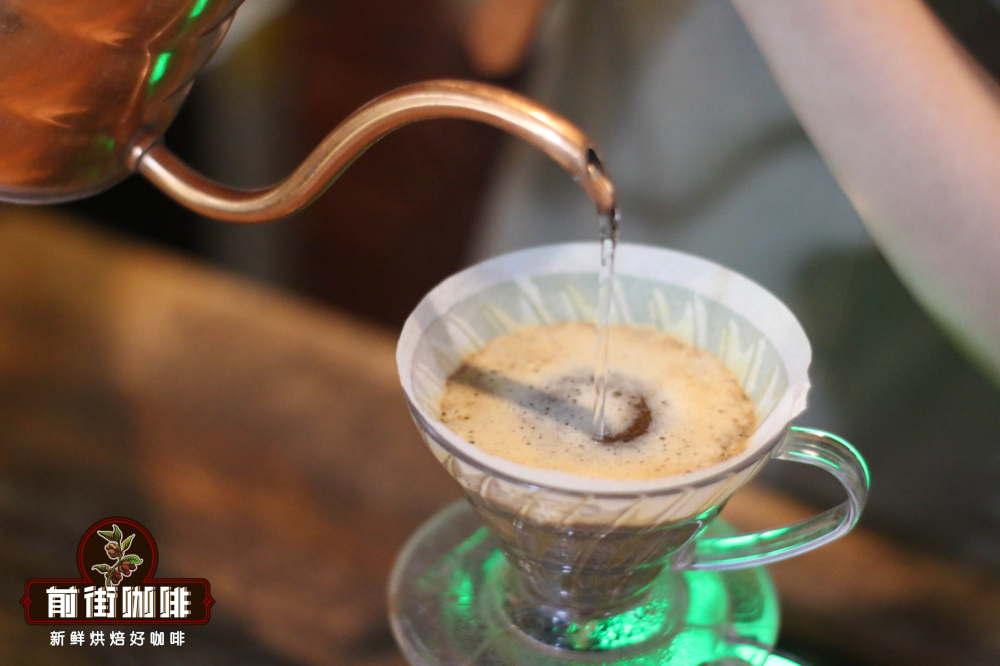
Pour-over uses hot water to dissolve the coffee grounds, and the extracted liquid passes through filter paper or a mesh filter at its natural speed into a vessel below. Making pour-over looks simple, yet the result is remarkably clean and fully expresses the coffee's aroma and sweetness.
The Pour-Over Coffee Process
Start with freshly roasted beans, and grind them just before brewing. FrontStreet Coffee believes that 80% of whether a pour-over tastes good comes down to which beans you use. Whole beans lock in aroma far better than ground particles, and stored properly in a sealed container in a cool, dry place they usually taste best between 4 and 35 days after roasting.

Freshly roasted beans carry richer aromas and flavors, and the brewed cup shows more layers. As the days pass after roasting, those aromas and flavors gradually escape. Beans older than 35 days can taste comparatively flat and thin once brewed.
Every coffee bean FrontStreet Coffee sells today ships within 5 days of roasting, which guarantees customers receive their coffee in peak condition.
Next, gather the equipment: a pour-over kettle, a filter cup, a serving pot, a coffee grinder, filter paper, a digital scale and a thermometer.
The filter cup and paper filter out the grounds while absorbing some of the coffee's oils, which makes the cup cleaner. FrontStreet Coffee's daily production relies on two filter cups, the V60 and the Kono. The V60 handles lightly roasted beans, while the Kono is reserved for darker roasts.
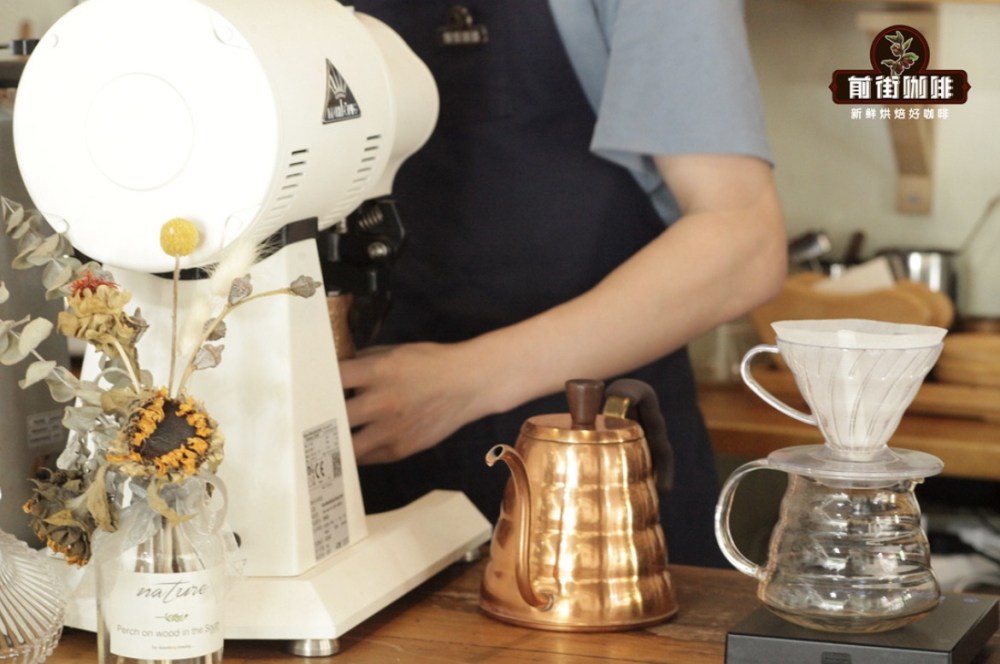
The digital scale weighs both beans and water, turning every parameter into a number you can repeat and keeping production consistent. The thermometer matters just as much: check that the water is in the right range before every pour. When brewing lighter roasted beans in a V60, choose 90-91°C; for darker roasted beans, use 88-89°C.
The grinder is equally important. Grind coarseness directly shapes how a pour-over tastes. Too coarse and the cup is weak; too fine and it turns bitter. FrontStreet Coffee recommends a medium-fine grind for pour-over, with an 80% pass rate on a 0.85mm standard sieve.
How to Brew Delicious Pour-Over Coffee?
Brewing pour-over is genuinely simple. The trick is controlling the handful of factors that shape taste: coffee-to-water ratio, grind size, water temperature and extraction time.
Drawing on years of brewing experience, FrontStreet Coffee recommends that beginners use a three-stage pour with a 1:15 coffee-to-water ratio. For light to medium-roasted beans, use a fine sugar-sized grind and 90-91°C water; for medium-dark to dark-roasted beans, use a coarse sugar-sized grind and 88-89°C water.

A three-stage extraction dissolves flavor compounds more completely, adding layers of taste while avoiding the over-extraction that comes from a long soak. The right grind and water temperature keep the release rate and share of undesirable compounds in check. In FrontStreet Coffee's testing, pour-over brewed at a 1:15 ratio shows the most balanced concentration and flavor.
So what is a 1:15 coffee-to-water ratio? With 15 grams of grounds at 1:15, the total water is 225ml, divided across three stages of 30ml, 95ml and 100ml. On the scale, those read 30g, 125g and 225g.
Pour-Over Coffee Steps
Before brewing, wet the filter paper with hot water so it sits snugly against the cup. Then grind the beans to the medium-fine consistency we described.
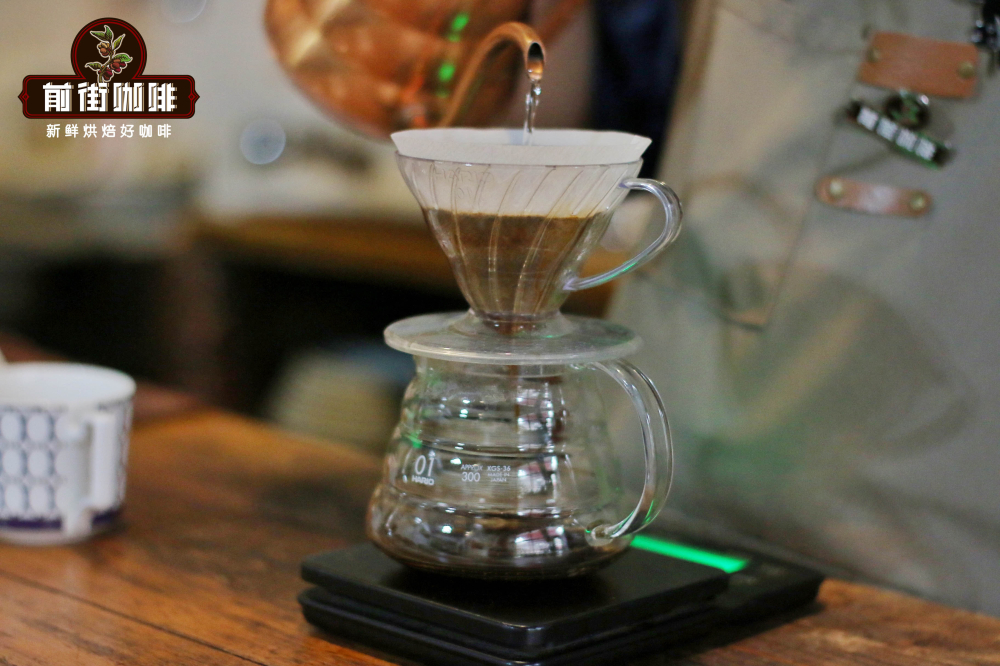
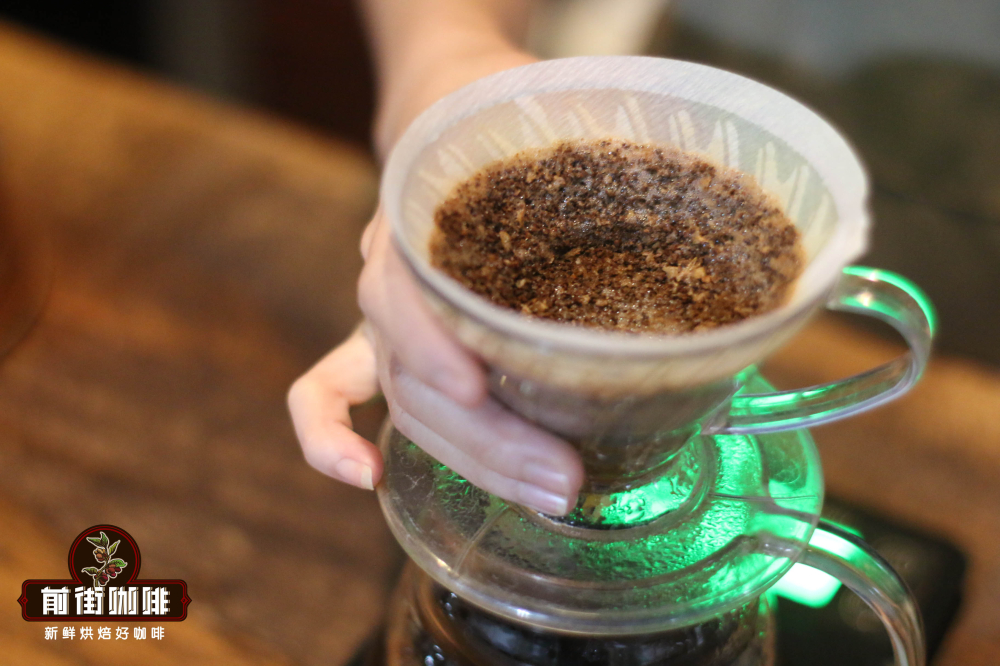
Tip the grounds into the filter cup, wait for the water to reach the target temperature, and begin. The whole brew is divided into three stages. The first pour uses 30 grams of water to bloom the coffee, making sure every ground is soaked. Bloom for 30 seconds so carbon dioxide escapes, which lets the water that follows extract the coffee more effectively.
The second pour brings the total to 125 grams, then wait for the liquid to drop about halfway. Finally, pour the last stage up to 225 grams and again let it filter through. The total extraction time is 2 minutes.
FrontStreet Coffee Recommendation
Ask an experienced hand-brewer to name a practical, forgiving and good-looking dripper and the answer will very often be the V60. Hario, the company behind it, was founded in Tokyo in 1921 as a maker of heat-resistant glassware for research institutions, and its glass serving pots are a staple of pour-over setups. In 2004 Hario redesigned the V60's prototype into the shape we know now, named for its 60-degree cone and V profile, and released it a year later.
The cone and 60-degree angle force the water toward the center before it drips into the pot, extending contact between water and grounds so aroma and flavor extract fully. The V60's signature single large hole lets water run unimpeded, which means flow rate depends heavily on the brewer's control and shows up directly in the cup. That fast extraction is exactly what makes the V60 good at drawing out the floral, fruity, clean-sweet and tea-like notes of lighter coffees - white florals from Ethiopia, berry acidity from Kenya. FrontStreet Ethiopia Yirgacheffe Gutingding, rich in citrus, berry and floral with a green-tea finish, is an easy and forgiving first step into hand-brewing. FrontStreet Ethiopia Huakui is a standout for its intense tropical fruit: strawberry, passion fruit, jackfruit, even lychee, with strong sweetness, very little bitterness and a smooth, juicy body that some drinkers call the coffee that does not taste like coffee. And for the top of the category, FrontStreet Panama Hacienda La Esmeralda Red Label Geisha brings intensely elegant jasmine alongside citrus, bergamot and fine black-tea notes, a clean, transparent cup with a long finish.
V60s now come in resin, ceramic, glass, copper and stainless steel. The material affects looks, weight and heat conduction, which creates subtle differences in extraction, but the structure stays the same. FrontStreet favors the resin Hario V60 above all: resin blocks heat loss effectively, and in mass industrial production it is the easiest material to mold with the smallest tolerances. Whatever you choose, grind medium-fine and start with a 1:15 ratio.
Important Notice :
FrontStreet Coffee is a long-established specialty coffee roaster in Guangzhou China, selling freshly roasted beans from its own farm in Yunnan as well as dozens of carefully selected single-origin beans from around the world for both pour-over and espresso. The products deliver consistently excellent quality and great value, with shipping within 24 hours. Guangzhou's FrontStreet Coffee shop is recommended by many coffee lovers, and the beans are now available online at the Tmall 。
FrontStreet Coffee has moved to a new address:
FrontStreet Coffee Address: 315,Donghua East Road,GuangZhou
Tel:020 38364473
 Scan and follow the En Gafei WeChat official account. Please indicate that the reprint comes from "En Gafei".