Mandheling Coffee: Drip Pot or Siphon - Which is Better?

Indonesian coffee has long been cherished by coffee connoisseurs for its rich aroma, low acidity, and excellent body. Whenever Indonesian coffee comes up, Mandheling is the name that immediately comes to mind. FrontStreet Coffee alone carries five kinds of Mandheling, and while nearly everyone has heard of the Golden Mandheling from the PWN company, far fewer people truly understand what Golden Mandheling actually is.

Sumatran Mandheling Coffee Beans
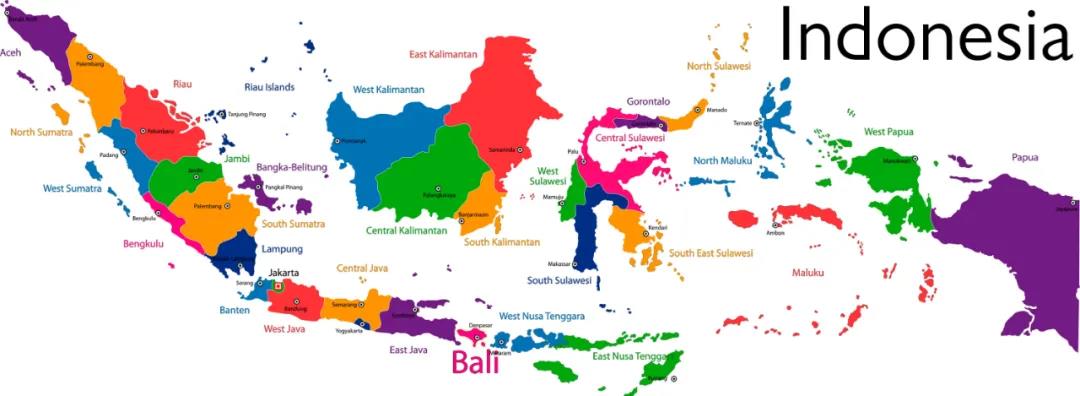
Indonesia's coffee history dates back to 1696, when Dutch plantation owners—seeking ever larger coffee-growing territories—settled on the island of Java. Within thirty years, Indonesia had established a firm foothold in the world coffee market. Today, however, the country's signature coffee is the Mandheling of Sumatra, which is hardly surprising: much of the Java coffee originally shipped to Europe was actually grown in Sumatra, and Mandheling itself originates there. Sumatra can thus be considered Indonesia's most important coffee-producing island.
Sumatra is the heartland of Indonesian specialty coffee, and its coffee system is complex. Simplified, it falls into four categories:
1. The famous Mandheling: semi-washed (wet-hulled) or natural processed beans from the Lindong mountain area, at 900-1,200 meters on the southwestern shore of Lake Toba in north-central Sumatra—the most renowned of all.
2. Golden Mandheling: beans that undergo four rounds of manual selection, putting them a step above regular Mandheling.
3. Lake Tawar coffee: washed, semi-washed, or natural processed beans from the Gayo mountains at 800-1,600 meters around Lake Tawar in Aceh, Sumatra's northernmost province.
4. Aged Mandheling and Old Brown Java.
FrontStreet Coffee offers five varieties of Mandheling: Golden Mandheling, Lindong Mandheling, Tiger Mandheling, Aged Mandheling, and Natural Mandheling.
"Mandheling" was originally the name of an Indonesian ethnic group, and it became the name of a coffee through a chain of coincidences. When Japanese soldiers returned home after the occupation of Indonesia, they could not forget the delicious local coffee. Through trade contacts, they asked locals to source premium beans for them—including this particular lot. The Japanese loved the coffee and asked for its name; since the business source could not be disclosed, the locals replied casually, "Mandheling," and the name stuck. Those locals were in fact the owners of Indonesia's PWN company (Pawani Coffee Company), which we will come to below.

Golden Mandheling
Golden Mandheling is produced in the Lindong region of northern Sumatra. Harvesting is limited to hand-picking individual fully ripe cherries to safeguard quality from the very first step. The cherries are processed by the semi-washed (wet-hulled) method and naturally sun-dried, then put through an additional drying refinement after hulling, two rounds of green bean cleaning, and four rounds of hand-picking. It is largely this obsessive attention to detail that made Golden Mandheling famous.
Most coffee drinkers know Mandheling; those who have been drinking longer know the specific name Golden Mandheling; and those who talk shop with baristas learn that genuine Golden Mandheling comes from Indonesia's Pawani company—only Mandheling produced by PWN may properly carry the name. Yet when it comes to telling whether the cup in front of you is actually PWN Golden Mandheling, many people, baristas included, are honestly unsure. In practice, large-screen (18/19) Mandheling is often passed off as Golden Mandheling. The reason is that trademarks must be registered country by country. China was long a minor coffee market, and Pawani never anticipated how successful Golden Mandheling would become; the name had already become a generic synonym for premium Mandheling before it could be registered, and even Pawani could not secure it afterward. That is why so many large-bean Mandhelings on the market are labeled "Golden."

FrontStreet Coffee's Golden Mandheling
Region: Gayo Mountain, Aceh, Sumatra
Altitude: 1,100-1,600 meters
Variety: Ateng
Grade: G1, three times hand-selected
Processing: Wet-hulled
Flavor: Spices, herbal notes, caramel, pine, nuts, chocolate
In the past, when most drinkers prized rich, mellow flavors and texture, coffee was overwhelmingly roasted medium-dark and brewed in a siphon. Siphon coffee delivered both a rich, rounded aroma and a smooth, balanced taste. If that is the profile you are chasing, FrontStreet Coffee believes choosing freshly roasted beans is especially critical. Here we use FrontStreet Coffee's Golden Mandheling with a siphon brewer to demonstrate how to extract a delicious cup of black coffee.

Water temperature: 88°C
Grind size: 90% pass-through through a #20 sieve
Dose: 18 grams
Coffee-to-water ratio: 1:10
1. Pour 180ml of warm water into the lower pot and wipe the outside of the pot dry with a cloth (to prevent the pot from cracking during heating). Light the alcohol lamp and place it beneath the lower pot.

2. Take the upper pot of the siphon, fix the filter cloth onto it, hook the retaining hook onto the glass tube at the bottom of the upper chamber, then insert it diagonally into the lower pot.

3. Watch the lower pot. When continuous small bubbles appear, straighten the upper pot and insert it vertically into the lower pot, ensuring a seamless seal between the two chambers.

4. Once the water has risen into the upper pot, add the ground coffee. Using the stirring rod, stir clockwise from the outside toward the center for 10 seconds, making sure every bit of grounds is immersed.

5. Start timing. After 40 seconds, stir the coffee clockwise once more for 5 seconds; then quickly remove the alcohol lamp and extinguish the flame, and the coffee will begin drawing back down into the lower pot. During the drawdown you can wipe the lower pot with a cool, damp cloth to speed it up. Total extraction time: about 1 minute 10 seconds.

6. Gently remove the upper pot and pour the coffee from the lower pot into a cup. Siphon coffee made this way is wonderfully aromatic and rich. Though not as clean and bright as pour-over, the oils floating on its surface add considerable body to the mouthfeel.
FrontStreet Coffee Recommendation
If this brewing exercise has whetted your appetite, FrontStreet Coffee's PWN Golden Mandheling is the bean to reach for. It is built on beans of 18-screen size or larger with fewer than three defects per 300g sample, meeting the strictest G1 standard, followed by three rounds of hand selection for exceptional cleanliness and sweetness. Wet-hulled in the classic Sumatran style, it shows the herbal, earthy wildness the island is famous for, with a heavy, syrupy body.
For pour-over, FrontStreet Coffee recommends 15g of coffee, a 1:15 ratio, water at 87-88°C, and a coarse-sugar grind using a three-stage pour. The first pour of 30ml wets the bed for degassing, the second pours 100ml to lift the bed and draw out the golden foam, and the final gentle center pour of 95ml boosts sweetness—yielding a thick body with caramel, chocolate, and nut flavors.
Important Notice :
FrontStreet Coffee is a long-established specialty coffee roaster in Guangzhou China, selling freshly roasted beans from its own farm in Yunnan as well as dozens of carefully selected single-origin beans from around the world for both pour-over and espresso. The products deliver consistently excellent quality and great value, with shipping within 24 hours. Guangzhou's FrontStreet Coffee shop is recommended by many coffee lovers, and the beans are now available online at the Tmall 。
FrontStreet Coffee has moved to a new address:
FrontStreet Coffee Address: 315,Donghua East Road,GuangZhou
Tel:020 38364473
 Scan and follow the En Gafei WeChat official account. Please indicate that the reprint comes from "En Gafei".