Coffee Basics: Which Coffee is Best for Siphon Coffee Makers?
Siphon Coffee: Understanding the Differences and Brewing Techniques

For more premium coffee knowledge, please follow the WeChat official account: FrontStreet Coffee
The siphon coffee maker is a favorite among many enthusiasts who are just starting out. It owes that popularity to the way the brew resembles a chemistry experiment, letting people enjoy the pleasure of making something by hand. Extraction in a siphon does demand a certain level of technique, but that has not stopped it from becoming a first choice for coffee lovers. A good brewer also needs good coffee beans, though. Today FrontStreet Coffee will look at which coffees suit the siphon, how siphon coffee differs from the pour-over so many cafes serve, and how to brew it so it tastes better.
Because of its distinctive method and its remarkably high visual appeal, the siphon pot was all the rage in the last century. As FrontStreet Coffee noted last winter, with the current revival of vintage style, more and more coffee shops are putting siphon coffee back on their menus, giving a new generation the chance to enjoy the flavors of the past.

Differences Between Siphon and Pour-Over Coffee
Since both are ways of brewing single-origin coffee, people inevitably compare them, and pour-over is the modern mainstream. Anyone who has tasted siphon coffee knows the two differ considerably, in mouthfeel as much as in flavor.

Pour-over tastes cleaner, with more distinct layers and more prominent flavors. Siphon coffee, meanwhile, has a richer, fuller mouthfeel, a more intense aroma and more substantial flavor. Many friends wonder why the gap between them is so wide. Today FrontStreet Coffee will explain why coffee brewed in a siphon and by pour-over differs so greatly.
1. Different Extraction Methods
Pour-over extraction is primarily "drip filtration," also known simply as filtration. As hot water is poured in to extract the coffee, the liquid seeps through the filter paper at the same time. Note that FrontStreet Coffee says "primarily" rather than "exclusively": pour-over also shows some immersion characteristics during the brew, because the water does not rush straight through the grounds but lingers briefly before seeping through the paper. Pour-over, then, is not purely a drip-filtration method.

Many people assume the extraction method of siphon coffee is "siphon style," but that is not correct. The siphon pot uses the siphon principle only to draw hot water up into the upper chamber, and that drawing action is not what extracts the coffee.

Extraction begins once the hot water has been drawn into the upper chamber and the coffee grounds are added to steep. Strictly speaking, then, the method of the siphon is immersion: the water and the grounds sit together, and flavor compounds pass from one to the other.

Because immersion brings all of the hot water into contact with the grounds, once the dissolved substances in the water reach a certain level the rate of dissolution slows and no more flavor is drawn out. This is what we usually call reaching saturation. Siphon coffee therefore tastes relatively balanced, with a full aroma but flavors that do not stand out too sharply, which is also related to the second factor. Drip filtration, by contrast, keeps delivering fresh hot water to extract from the coffee. That fresh water has plenty of "storage space" left and keeps pulling flavor compounds out, so pour-over coffee has more abundant flavors but is also easier to over-extract.
It is worth noting that siphon immersion differs somewhat from conventional immersion. Because of the siphon principle, the water is continuously heated during extraction, keeping enough pressure in the lower chamber to hold the hot water in the upper chamber. Siphon immersion therefore holds a completely constant temperature, while conventional immersion and drip filtration are both processes of steady heat loss, with the water temperature dropping over time. The result is that a siphon extracts at a higher rate and, with stirring, can finish the job in a shorter time.

2. Different Filtration Methods
Beyond extraction, the way each brewer filters has a great deal to do with the final result. Pour-over uses extremely dense filter paper, which lets coffee liquid through and nothing else.

Siphons, by contrast, mostly use a cloth filter. Filter paper can be used, but because it cannot cover the whole surface it cannot create the "sealed" space that pour-over enjoys. Fine particles, oils and other substances pass through the gaps into the lower chamber and join the coffee, which is why siphon coffee looks more turbid. Oils and fine particles make the liquid less clean, but they also give the coffee a richer, fuller mouthfeel. That is why siphon coffee tastes richer and more full-bodied.

Pour-over's very clean filtration is what costs it some of that rich, full mouthfeel, yet it is also one of the method's great strengths: the cup is exceptionally clean. We can now see why the two taste so different. It is not only the extraction method at work but, more importantly, two different filtration systems that give the coffee liquid completely different mouthfeel characteristics.
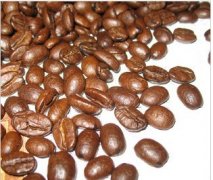
Which coffee, then, is best for a siphon? Look for beans whose appeal lies in body and aroma rather than sheer brightness. Because immersion stops at saturation, a siphon will not exaggerate a coffee's acidity the way a fast pour-over can; instead it rounds the cup off and pushes sweetness and aroma forward. Coffees with weight, sweetness and a long finish, the kind that carry oils and texture well, show best here, while delicate lots that live and die by their top notes and layered clarity are better left to the filter cone. Match the brewer to the character you want, and the siphon will reward you.
FrontStreet Coffee Recommendation: Full-Bodied Beans for the Siphon
Because a siphon brews by immersion and filters through cloth, it rewards coffees built on body and aroma rather than sheer brightness. FrontStreet PWN Golden Mandheling from Sumatra is the classic match: deep roasted, very low in acidity, thick and lingering, with herbs and dark chocolate and a faint earthy note, exactly the weight a siphon amplifies. If you want balance rather than intensity, FrontStreet Brazil Queen Estate is a yellow Bourbon, medium roasted to cream, peanut, chocolate, toast and sugarcane sweetness, and equally at home in a moka pot or an espresso machine. For the most polished result, FrontStreet Jamaica Blue Mountain No. 1 layers cream, caramel, chocolate, nuts and honey, and its famous equilibrium suits the siphon's gentle, even extraction.
Important Notice :
FrontStreet Coffee is a long-established specialty coffee roaster in Guangzhou China, selling freshly roasted beans from its own farm in Yunnan as well as dozens of carefully selected single-origin beans from around the world for both pour-over and espresso. The products deliver consistently excellent quality and great value, with shipping within 24 hours. Guangzhou's FrontStreet Coffee shop is recommended by many coffee lovers, and the beans are now available online at the Tmall 。
FrontStreet Coffee has moved to a new address:
FrontStreet Coffee Address: 315,Donghua East Road,GuangZhou
Tel:020 38364473
 Scan and follow the En Gafei WeChat official account. Please indicate that the reprint comes from "En Gafei".