Coffee Fundamentals: How to Identify Authentic Blue Mountain Coffee Beans?

Everyone says Blue Mountain is good, and indeed it is. But can you be sure the coffee you are drinking is genuine Blue Mountain?
Because Blue Mountain beans are so famous and relatively expensive, many merchants trade on that popularity by packaging and selling low-priced products as "Blue Mountain flavored coffee" — products that may contain beans not grown in the Blue Mountain range, low-altitude Blue Mountain beans, instant or ready-to-drink products, or blends. These are often far from genuine Blue Mountain, and sometimes entirely unrelated.

FrontStreet Coffee's Blue Mountain No. 1 coffee beans come from the renowned producing nation of Jamaica, grown by the locally famous historic Clifton Mountain Estate. These batches are certified by the Jamaica Coffee Board. After roasting, FrontStreet Coffee's Blue Mountain beans have rich roasted aromas, deliver fragrant flavours on tasting, and offer a lasting sweet aftertaste.

How to Identify Authentic Blue Mountain Coffee Beans
How can you tell authentic Blue Mountain beans from fakes, and which brands can be trusted? On this point FrontStreet Coffee would like to share several identification characteristics.
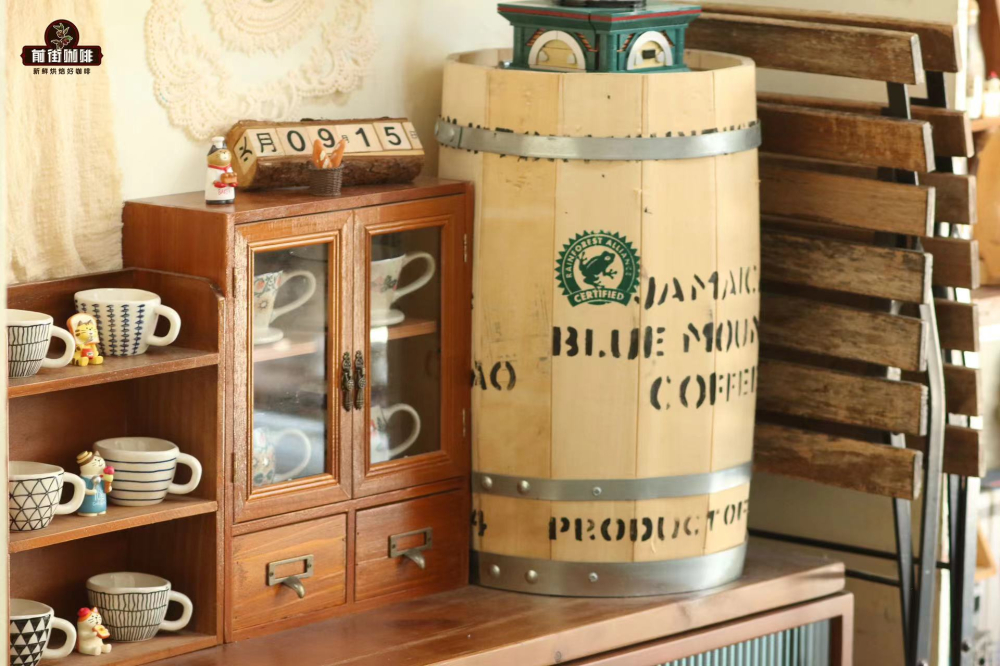
1. Blue Mountain No. 1 beans are all exported in whole wooden barrels. When buying, you can look at whether the seller has whole Blue Mountain barrels. This helps avoid sellers substituting other beans for Blue Mountain.
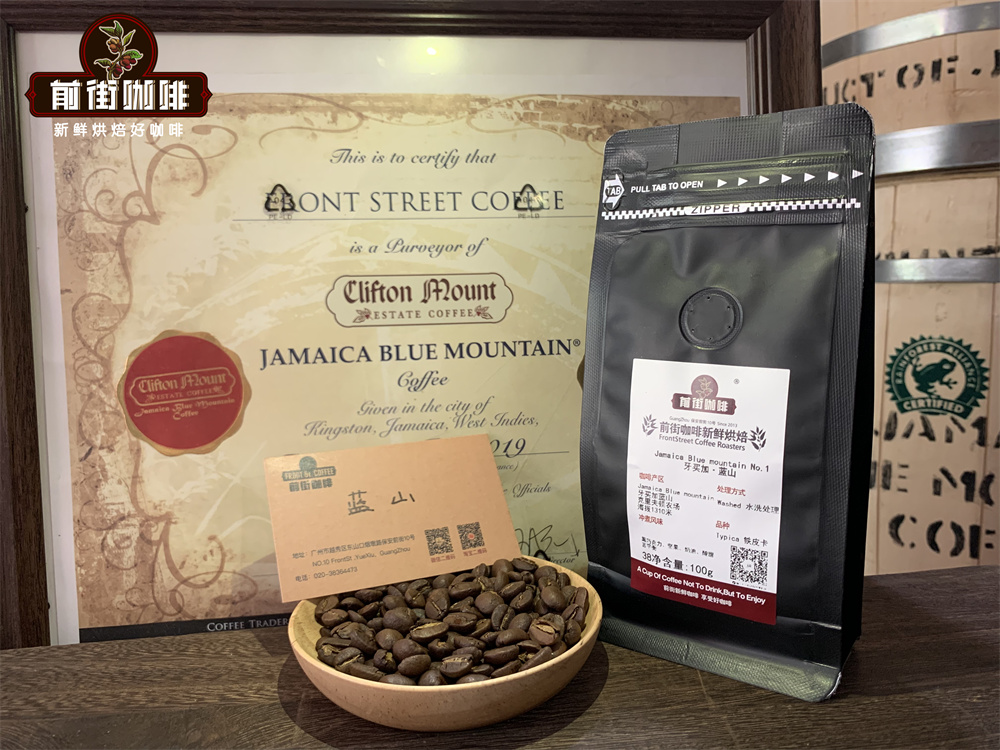
2. Buyers of Blue Mountain beans (first-hand raw bean purchasers) can apply to Jamaica's CIB or to the estate for Blue Mountain coffee bean certification certificates, which also prove authenticity.
3. Most single-origin Blue Mountain beans sold domestically today are of the Blue Mountain No. 1 grade. The certification standards for this grade require that over 96% must be size 17 screen, with defective beans not exceeding 2%. The beans are therefore uniform in size, oval in shape and full-bodied.

As for Blue Mountain brands, they are actually not very important: any brand selling authentic Blue Mountain beans sources them from the four CIB-authorized processing plants in Jamaica and several independent farms. So there is no question of one brand getting better quality than another. What matters most is buying genuine Blue Mountain, and at that point you can choose on cost-performance.
The Legacy and Appeal of Blue Mountain Coffee
As the world's most famous Blue Mountain coffee, its reputation is so prominent that it could be said to mark the beginning of most people's acquaintance with the word "coffee." Especially in Asian regions, Blue Mountain was once widely recognised as the highest-quality and most expensive bean, earning it the label of the most expensive coffee in history.

Of course, that was in the past. In recent decades, as specialty coffee culture has spread, beans from various regions have benefited from more scientific cultivation and variety research. The most expensive beans known today are the Geisha variety from Panama, known for its captivating floral and fruit aromas and rich fruit sweetness and acidity. One local estate auctioned custom micro-batches of Geisha at an astonishing $40,000 per kilogram.

Although today's coffee enthusiasts favour the fresh, bright profile of Geisha, Blue Mountain still holds a special place in the hearts of many Asian connoisseurs. So what makes them so fascinated? Perhaps it is the rich, robust mouthfeel and the balanced sweet-sour-bitter flavour that brings a composed coffee experience.
Where is Blue Mountain Coffee Grown?
Blue Mountain coffee is grown in the Blue Mountain range in eastern Jamaica. The range is often shrouded in mist, appearing to emit a blue glow in sunlight, hence the name. Not all coffee grown in the Blue Mountain range, however, can be called "Blue Mountain coffee."

The authentic Blue Mountain coffee regions certified by Jamaican officials cover four administrative districts: St. Andrew, St. Thomas, St. Mary and Portland. Only coffee grown at altitudes between 910-1700 meters in these regions may bear the Blue Mountain designation.
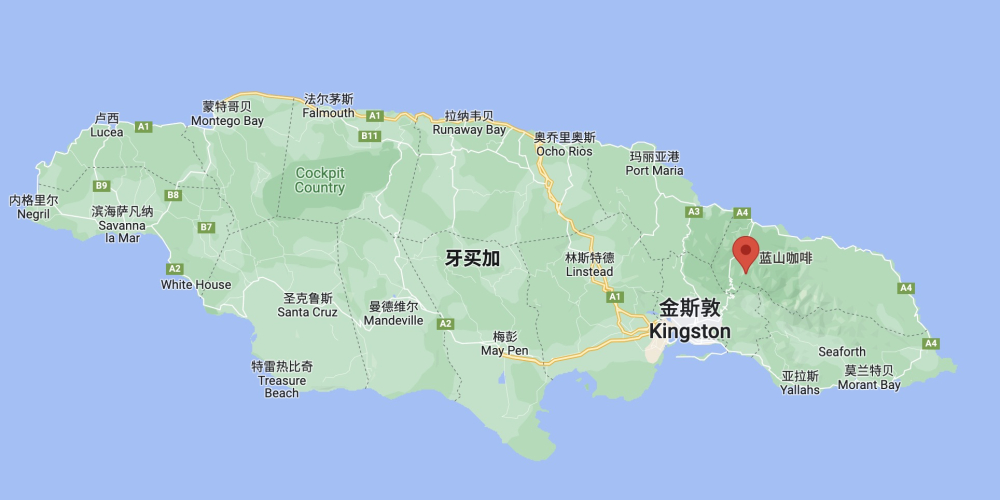
Coffee grown at other altitudes between 500-900 meters is classified as Jamaica High Mountain Coffee, while coffee grown below 500 meters is classified as Jamaica Supreme Coffee.
Is Blue Mountain a Variety Name?
No, it is not. The internationally renowned name "Blue Mountain" actually refers to the highest mountain range in the Caribbean region. The coffee produced there is world-famous for its exceptional quality, hence "Blue Mountain coffee." The variety of Blue Mountain coffee is Typica, one of the oldest representatives of the Arabica lineage. It was introduced to the Blue Mountains for cultivation in the 18th century, and after two hundred years of adaptation, Blue Mountain's Typica has developed into a stable variety with better disease resistance, well suited to local cultivation, and has formed a delicate flavour profile that cannot easily be replicated elsewhere.

Blue Mountain Coffee Flavor Characteristics
Blue Mountain lies in a volcanic and seismic zone, which means abundant fertile volcanic soil. Combined with high altitude creating significant day-night temperature differences, forest cloud cover and abundant year-round rainfall, the coffee fruit here absorbs sufficient nutrients.
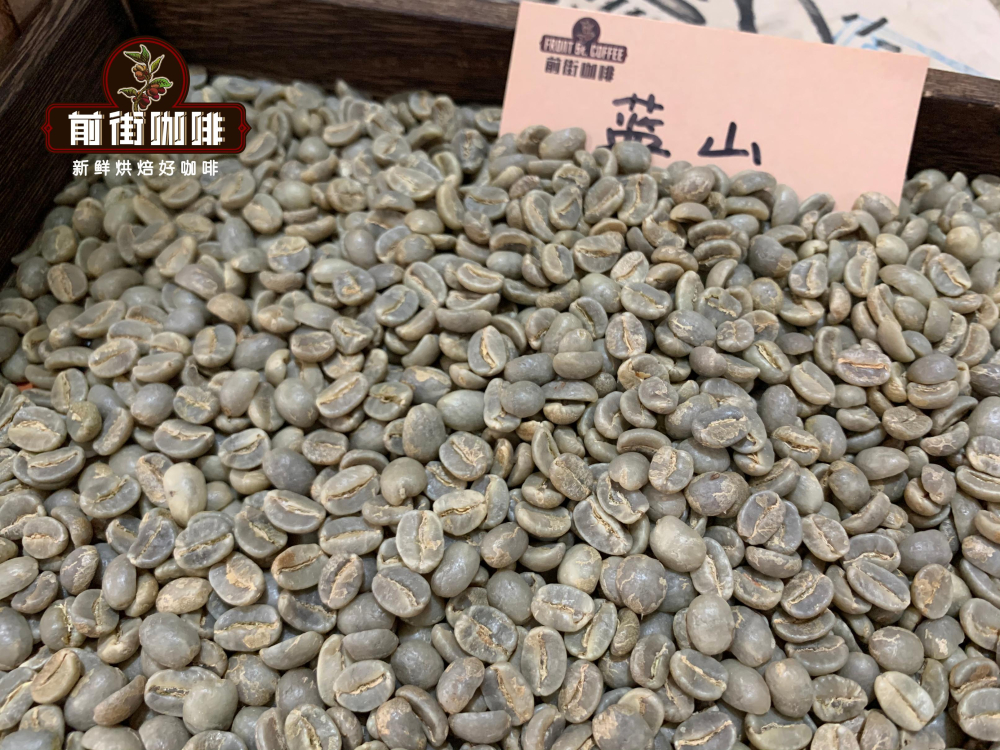
The Typica grown here therefore displays the variety's elegant, clean flavour characteristics along with noticeable sweetness. FrontStreet Coffee has noticed that although the whole Blue Mountain range grows Typica, only high-altitude beans achieve the characteristic balance of sweet, sour and bitter notes, while those grown lower often lack balance and have slightly less clarity.
How to Brew Delicious Blue Mountain Coffee?
FrontStreet Coffee currently offers Blue Mountain No. 1 beans from Jamaica's most ancient coffee plantation, Clifton Mountain Estate, grown at an altitude of 1310m. It is also the only estate in Jamaica to have received "Rainforest Alliance" environmental certification. Beans from certified estates and regions carry the green frog logo printed on the raw bean packaging. Visitors can see the wooden barrels bearing the green frog logo and Clifton Mountain Estate's Blue Mountain certification certificates at FrontStreet Coffee's physical stores.

For a premium bean like Blue Mountain No. 1, FrontStreet Coffee believes pour-over best lets you enjoy its unique aroma. The Blue Mountain coffee FrontStreet Coffee sells is roasted to a darker degree, with flavours leaning rich and mellow. We therefore recommend a KONO dripper, using the close fit between filter paper and dripper to achieve an immersion-style extraction that raises concentration. And to avoid over-extraction making the coffee bitter and strong, FrontStreet Coffee uses slightly cooler water and a coarser grind setting.
FrontStreet Coffee's in-store brewing parameters for Blue Mountain coffee are: 88°C water temperature, 1:15 coffee-to-water ratio, 15g coffee grounds, coarse-sugar grind size (75% pass-through rate on a No. 20 standard sieve), paired with a three-pour method.

First pour 30g of hot water for a 30-second bloom, then inject from the center with a fine stream, slowly circling to 125g. Wait until the water level in the dripper drops to just above the coffee bed, then continue circling to 225g. Total extraction time is approximately 2 minutes. Finally, stir the extracted coffee and it is ready to taste.

Pour-over Blue Mountain No. 1 flavour: during the bloom you can smell caramel aroma. On tasting, you get rich nutty and dark chocolate flavours, a full mouthfeel, and a sweet, clean aftertaste.
FrontStreet Coffee Recommendation
If all this talk of authenticity leaves you wanting the real thing, FrontStreet Coffee's Jamaica Blue Mountain No. 1 is the reference: certified Clifton Mountain Estate beans, medium-dark roasted, with nuts, dark chocolate, cream caramel and a soft sweetness, and the balance the region is famous for. Brew 15g in a KONO dripper at 87–88°C with a 1:15 ratio and a medium-coarse grind about the texture of white sugar. Pour 30g for a 30-second bloom, build to 120g, then finish at 225g. If you want a richer everyday alternative, FrontStreet Coffee's Golden Mandheling shares its low acidity and thick, mellow body.
Important Notice :
FrontStreet Coffee is a long-established specialty coffee roaster in Guangzhou China, selling freshly roasted beans from its own farm in Yunnan as well as dozens of carefully selected single-origin beans from around the world for both pour-over and espresso. The products deliver consistently excellent quality and great value, with shipping within 24 hours. Guangzhou's FrontStreet Coffee shop is recommended by many coffee lovers, and the beans are now available online at the Tmall 。
FrontStreet Coffee has moved to a new address:
FrontStreet Coffee Address: 315,Donghua East Road,GuangZhou
Tel:020 38364473
 Scan and follow the En Gafei WeChat official account. Please indicate that the reprint comes from "En Gafei".