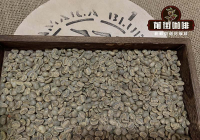
Asian Coffee Growing Regions: Yemen Premium Coffee Bean Production Areas
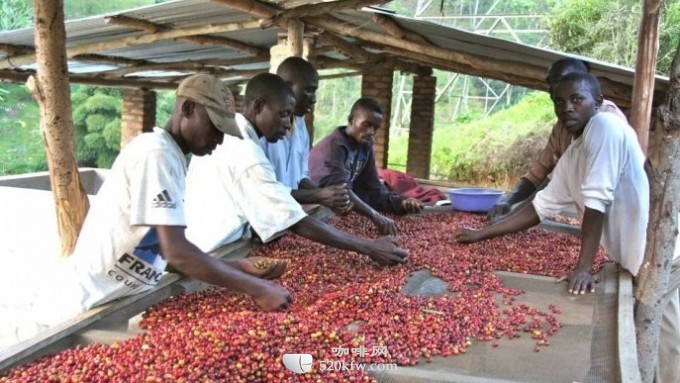
Mocha Mattari
Early Yemeni coffee beans were exported mainly through the port of Mocha, which is why all coffee shipped from there later came to be called Mocha.
Among Yemeni beans, Mattari and Sanani are the most famous. Mattari has a richer taste with strong fruit acidity and cocoa flavors, while Sanani offers a more balanced taste and aroma.
Yemeni coffee beans belong to the Arabica species. Generally, Mocha beans are smaller than average, looking quite unlike the larger beans of other origins. Despite their small size, they carry distinctive characteristics — above all their prominent fruit acidity, which often serves to lift the flavor of coffee blends. No wonder they are compared to red wine among coffees; their aroma and acidity leave a particularly memorable impression.
I. History of Yemeni Coffee
(I) Origin of Mocha Coffee
Yemen's coffee-growing areas are widely distributed, and its coffees vary in quality and taste, each with distinct characteristics. Historically, however, all of this coffee was shipped for export from Yemen's port of Mocha to markets worldwide, so it is collectively known as Mocha coffee. The port of Mocha sits on the Red Sea coast north of the Bab el-Mandeb Strait, roughly 100 kilometers by land from Aden. Because coffee grown in northeastern African countries such as Ethiopia shares the same roots as Yemeni coffee, it is likewise called Mocha coffee.
Yemen was the world's first country to cultivate coffee on a large scale, and its history is long. As early as the early 6th century AD, when coffee spread from the Horn of Africa to Yemen, Yemenis began cultivating it widely as a cash crop.
International trade in Mocha coffee began in the early 16th century. At that time the Turkish royal court began drinking Mocha coffee from Yemen. Records of Mocha coffee also appear in 17th-century Portuguese ship archives: after long voyages, Portuguese sailors came to the port of Mocha on the Red Sea coast for supplies, and local tribal leaders treated them to a black beverage they had never seen before. It had a unique aroma and was invigorating, and the sailors took to it eagerly.
In the early 17th century the Dutch were the first to establish coffee trading companies, and coffee began to be exported from the port of Mocha to Europe. In Western European markets from Amsterdam to Paris, Mocha coffee was enormously popular. For roughly the next two hundred years, Yemeni Mocha coffee almost monopolized the entire European market. As the coffee trade grew, the port of Mocha rapidly developed from an unknown fishing village into a thriving port city.
From the 19th century onward, however, coffee seeds carried home by European sailors were successfully propagated, and countries such as the Netherlands, France, and Portugal began planting coffee in their colonies, gradually far outstripping Yemen in volume. European powers controlled and monopolized the coffee trade, causing a steady decline in Mocha port's coffee exports. Even so, in the early 20th century Yemen's annual coffee exports could still reach about 20,000 tons. Today the original site of Mocha port has long been abandoned, and Yemeni Mocha coffee is exported mainly through the northern port of Hodeidah.
(II) Characteristics of Mocha Coffee
Yemenis have drunk coffee since ancient times, in a coffee culture wholly unlike that of other regions. In Yemen, many middlemen are engaged in buying and storing coffee. Each year's newly acquired crop is not rushed to market; coffee-growing farmers also treat coffee as a form of savings and hoard it at home. What actually reaches the market is often beans that have been stored for several years. Because Yemen's climate is arid with little rainfall, these beans have very low moisture content, which gives Yemeni coffee its highly distinctive taste.
The Red Sea coastal plain in western Yemen has climate and soil conditions unsuited to coffee. The growing areas lie mainly in the western mountains. Mocha coffee grows in mountains at 3,000 meters altitude, where the environment is singular — rugged peaks, thin air, strong sunlight, and water drawn from rainfall and mountain springs. These conditions create Mocha coffee's special aroma and taste. Local farmers have carved fertile terraces into the mountainsides, and to this day coffee is grown in these areas exactly as it was three or four hundred years ago, relying entirely on manual labor, without fertilizer or pesticide — pure, natural Yemeni coffee shaped by sunlight, rain, and unique soil. Coffee grown in Haiti, Ethiopia, and the West Indies shares the same lineage as Yemeni coffee, and much of it is also called Mocha; for various reasons, however, its taste and aroma differ completely from Mocha produced in Yemen.
Yemeni coffee harvesting and processing are done entirely by hand. The preliminary processing uses the dry method, naturally air-dried under the sun. It is the most primitive and simple approach, with no machinery and no washing, so Yemeni beans sometimes contain small amounts of sand and pebbles. Today only Brazil, Haiti, and a few regions of India still dry-process their coffee. Roasting, too, is done entirely by hand, the degree depending wholly on experience and feel. From cultivation to harvest to roast, every step uses the most ancient methods. The result is unevenly colored beans — and exactly that rugged, wild aroma is what makes Yemeni Mocha unique. No wonder some call Mocha the diamond on the crown of Asian coffee.
Yemeni coffee takes different names according to its specific production area. There are thirteen main varieties, and although their tastes and aromas vary slightly, they are collectively called Mocha. The most famous are Sanani, Mattari, and Harazi, distributed mainly in the mountains around the capital Sanaa and the high-altitude ranges between Sanaa and Hodeidah province. Yemeni Mocha beans are small, dense, high in acidity, and uniquely aromatic. Compared with other famous varieties, they have stronger acidity, with mingled flavors of malt, nuts, wine, chocolate, and other spices, a smooth taste, and fragrant aroma.
II. Current Development Status of Yemen's Coffee Industry
(I) Continuous Decline in Total Production in Recent Years
Since 2001, for a range of reasons, Yemen's coffee production has fallen year after year — from an annual output of 11,906 tons in 2001 to 11,608 tons in 2003 and 11,590 tons in 2004. By 2008 it had dropped to around 11,000 tons. In recent years, despite steadily rising international coffee prices, Yemen's coffee industry has not prospered accordingly but has shrunk dramatically. Two factors lie behind the decline.
First, water shortage and soil degradation. Water scarcity has become a serious constraint on Yemen's economic and social development. Coffee cultivation relies mainly on rainfall and mountain springs, lacking irrigation infrastructure, with low water efficiency and heavy exposure to climatic uncertainty. Soil degradation and erosion are severe, and land fertility and productivity are both weakening.
Second, farmers have abandoned coffee in favor of qat. Coffee has a long growth cycle, high costs, and difficult management, whereas qat is simple to grow, matures quickly, and enjoys strong demand, so many farmers have converted their coffee fields to qat. As coffee acreage has fallen, qat acreage has risen year by year. The shrinking coffee area and steadily declining production, compounded by Yemen's water scarcity and pest problems, have made coffee cultivation even more precarious.
(II) Low Production of High-Quality Mocha Coffee, Lack of Quality Standards
Although Yemen's annual Mocha production exceeds 10,000 tons, only about 15%-20% meets the import standards of developed countries.
Yemen's coffee-growing history is very long, yet its coffee industry has always remained disorganized and extensive. Because cultivation is scattered, essentially all of it small household workshops, coffee quality varies enormously. Harvesting, drying, and roasting processes and techniques lack unified standards and specifications. Hand-processed coffee readily changes color, suffers a high breakage rate, and shows inconsistent moisture content. Farmers' cultivation and processing methods are passed down through generations — inefficient and unscientific, lagging far behind the trends of the international coffee market.
At the same time, Yemen currently has no coffee appraisal standards or quality-control system, nor does it test and classify quality according to international practice. The lack of effective quality assurance is a serious obstacle to entering developed-country markets, and some unscrupulous merchants even substitute coffee from other countries and regions, processing it to pass off as Yemeni Mocha. There is still a long way to go in improving Yemeni coffee quality and strengthening its market competitiveness.
(III) Shrinking Coffee Exports
Coffee once ranked among Yemen's top export commodities, but with large-scale oil and fisheries development, its standing as a major export has declined year by year — from the top five a decade ago to twenty-third or twenty-fourth place in recent years.
Since 2001, Yemen's coffee production has declined for four consecutive years, and coffee exports have been badly hit by the fall in output.
In 2005, Yemen's Ministry of Agriculture and Irrigation proposed a plan to plant one million coffee trees within a year. With the Ministry's strong backing, the government increased investment in coffee cultivation, actively encouraged farmers to plant coffee trees, and adopted a series of promotional measures, including building water-conservancy facilities and promoting improved techniques, hoping to develop coffee production and earn foreign exchange through exports.
Under these measures, coffee production and exports have to some extent recovered and grown in recent years. Table 1 presents statistics on raw coffee bean export value; it shows that since 2006 the downward trend in raw bean exports has been halted and begun to reverse, with 2007 export value already close to the 2003 level. Overall, however, coffee's share of Yemen's export mix remains relatively low, and the country has not fully leveraged its coffee brand advantages and potential.
Table 1: Raw Coffee Export Value Table
| Year | 2003 | 2004 | 2005 | 2006 | 2007 |
|---|---|---|---|---|---|
| Export Value (10,000 USD) | 1079.2 | 857.6 | 684.0 | 703.9 | 950.7 |
| Percentage of Total Export Value (%) | 0.29 | 0.21 | 0.13 | 0.11 | 0.16 |
Data Source: Yemen Central Statistical Organization (2008)
(IV) Export Structure Dominated by Raw Materials and Semi-finished Products
Over 90% of Yemen's coffee exports are coffee beans, with processed coffee powder accounting for no more than 10%. Yemen's coffee exports are mainly unprocessed and primarily processed products, with weak deep-processing capacity. The value and added value of deep processing are far greater than those of primary processing, which seriously affects the overall quality and revenue of the coffee trade.
(V) Lack of Modern National Enterprises and Sales Channels
The main players in Yemen's coffee production and trade are extremely scattered farmers, and there is a shortage of circulation enterprises able to organize farmers and possessing operational and sales capability. The few national coffee enterprises are small, uncompetitive, and lack strong brands. This backward, fragmented structure cannot achieve economies of scale, is still less favorable for reducing costs and allocating resources rationally, and severely restricts the industry's development.
III. Prospects for Yemen's Coffee Industry
According to a forecast by the International Coffee Organization (ICO), the international financial crisis has begun to curb spending among consumers in developed Western countries, suppressing demand for high-end coffee, while high-quality, affordable single-origin coffee remains in short supply. If Yemeni coffee can seize the opportunity, fully promote its organic, pollution-free character, and make the most of its excellent quality and affordable price, there is still room for upward development.
Yemen should begin by supporting its domestic coffee enterprises, establishing a more market-oriented circulation and sales system, improving production techniques, enhancing and stabilizing quality, improving product appearance and packaging, strengthening advertising and promotion, and building brand image. It must take the path of high added value and brand operation.
Only by leaving its place of origin and exploring international markets can Yemeni Mocha coffee fully realize its value. This means Yemen's coffee industry, while rooted at home and striving to grow stronger, must also look to the broader international market, with exports as its target and orientation, in order to achieve greater development.
Recommended Yemeni Coffee Bean Brands
FrontStreet Coffee's roasted Yemeni Mocha beans are fully guaranteed in both brand and quality, and they offer excellent value for money. Many cafes sell a single cup for dozens of yuan, which makes a home-roasted lot like this a genuinely conscientious choice.
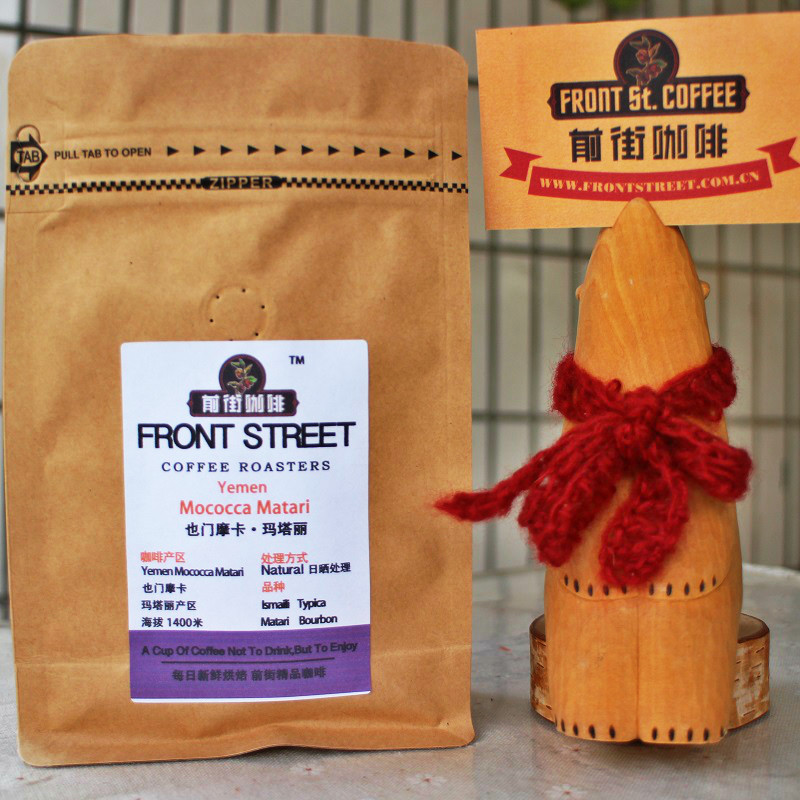
FrontStreet Coffee Yemeni Mocha Mattari Traditional Natural Process Coffee Beans - Freshly Roasted to Order Black Coffee Beans
FrontStreet Coffee Recommendation
Yemeni Mocha and Ethiopia's coffees share a lineage, so if Mocha's wild, wine-like acidity appeals to you, Ethiopia is a natural next exploration. For a first taste of the country's specialty coffee, FrontStreet Coffee recommends the entry-level washed Yirgacheffe, which delivers a clear jasmine fragrance and bright citrus acidity — the classic Yirgacheffe profile. Yirgacheffe is a small town in southern Ethiopia, mild all year round and wrapped in mist, cool and humid, where thousands of coffee trees flourish and yield that signature interweaving of floral aroma and fruit acidity, light and elegant with a tea-like body that drinks like a clean, refreshing lemon tea.
For greater clarity, turn to the Godinding cooperative. Most Ethiopian coffee comes from garden-style plots, with each smallholder delivering cherries to a village-level processing station that sells under the producer team's name — which is how we get the many cooperatives such as Godinding, Worka, and Konga. Godinding sits at the southeastern edge of Yirgacheffe in the Worka area; originally part of the Worka cooperative under the YCFCU alliance, it was carved out as an independent single origin in 2012, with roughly 300 member farmers, as buyers chased traceability. Because the fruit is stripped before drying, Godinding's inherent aroma is clearer and more transparent, showing citrus and lemon notes with elegant white florals and an overall bright, delicate profile. Those who prefer sweeter, fruitier coffee can choose the natural-processed Red Cherry: damaged or moldy cherries are removed, the rest dried in the sun for two weeks until the fruit's sugars and essence seep into the bean and moisture falls to 12%, after which the hardened pulp, mucilage, and parchment are scraped away, then density- and color-sorted and hand-picked. The result is pristine, with a rich, captivating fruit aroma of peach, cocoa, honey, and lemon.
For a bolder, more complex natural, the FrontStreet Huakui comes from Hambella in the Guji zone of Sidamo, a farm of 200 hectares using traditional natural processing. To keep the cherries from molding or taking on off-flavors, workers dry them on raised beds for 21 days, turning constantly for even drying and hand-sorting out defective or mildewed beans every three to five days, before hulling once the skin has dried hard. Because the fruit and skin remain throughout drying, a medium-light roast shows a light fermented wine note with florals, citrus, and mango, a much richer and more complex cup with honeyed sweetness, cocoa, and a touch of spice, a thick body, and a long finish.
Important Notice :
FrontStreet Coffee is a long-established specialty coffee roaster in Guangzhou China, selling freshly roasted beans from its own farm in Yunnan as well as dozens of carefully selected single-origin beans from around the world for both pour-over and espresso. The products deliver consistently excellent quality and great value, with shipping within 24 hours. Guangzhou's FrontStreet Coffee shop is recommended by many coffee lovers, and the beans are now available online at the Tmall 。
FrontStreet Coffee has moved to a new address:
FrontStreet Coffee Address: 315,Donghua East Road,GuangZhou
Tel:020 38364473
 Scan and follow the En Gafei WeChat official account. Please indicate that the reprint comes from "En Gafei".