Premium Coffee Beans: Jamaica Blue Mountain Coffee Region Story and Grade Introduction

Before specialty coffee became popular, Blue Mountain Coffee was one of the earliest beans people recognized. At the time, it was held up as "the standard by which whether coffee tastes good is judged."
What Does Blue Mountain Coffee Taste Like?
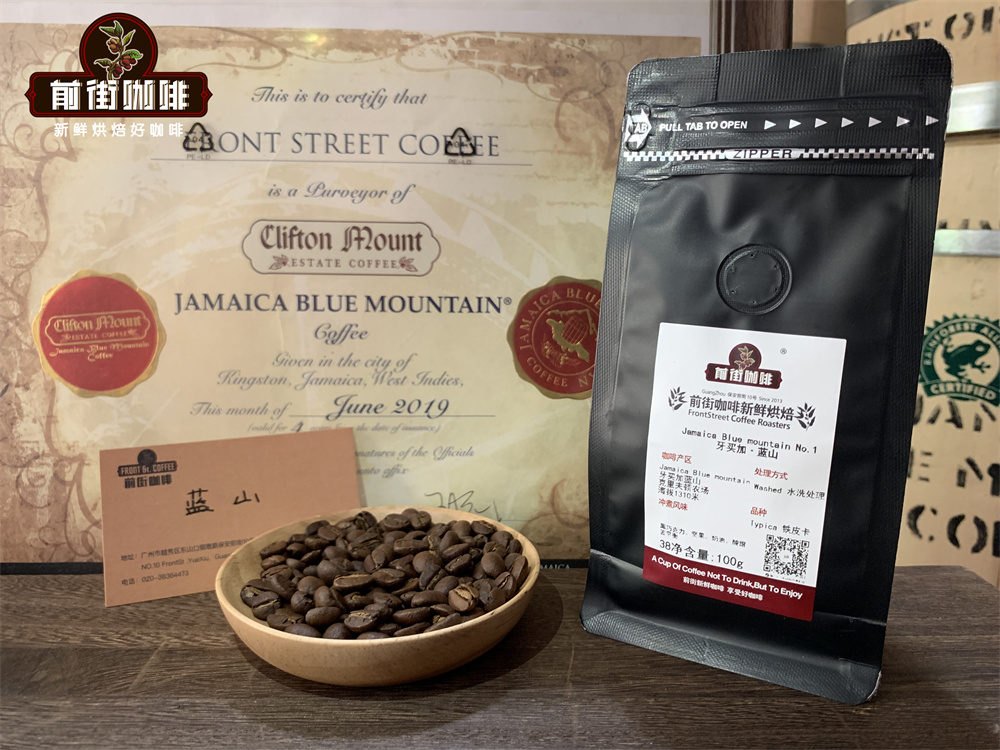
FrontStreet Coffee considers Blue Mountain Coffee to be a coffee of perfectly balanced acidity, sweetness and bitterness. To bring today's drinkers this traditional, classic cup, FrontStreet Coffee has recently introduced two authentic Blue Mountain coffees from Jamaica's Blue Mountain Clifton Farm.
The History of Jamaican Blue Mountain Coffee
The history of Jamaican coffee can be traced back to the 18th century. In 1717, French King Louis XV ordered coffee to be planted in Jamaica. In the mid-1720s, Jamaica's Governor Sir Nicholas Lawes imported Arabica seeds from Martinique and began promoting cultivation in the St. Andrew area, introducing coffee trees to Jamaica. Coffee was planted on the Blue Mountain range, and the crop was divided into high-altitude Jamaican Blue Mountain Coffee, High Mountain Coffee and Jamaican Coffee, with different grades determining different prices.
The Blue Mountain range lies in eastern Jamaica. Because the mountains are ringed by the Caribbean Sea, whenever the sky is clear and sunlight falls directly on the azure water, the peaks reflect the brilliant blue light of the sea - hence the name.
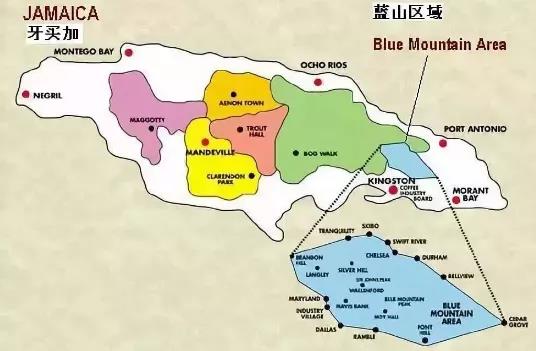
The highest peak of the Blue Mountains rises 2,256 meters above sea level (coffee can only be grown below 1,700m, with the land above kept as protected forest). It is the highest peak in the Caribbean and a famous tourist destination. The area sits in the coffee belt, with fertile volcanic soil, fresh, unpolluted air and a humid climate of year-round fog and rain, averaging 1,980 millimeters of precipitation and temperatures around 27 degrees. Such conditions created the world-renowned Jamaican Blue Mountain Coffee - and the world's most expensive coffee.

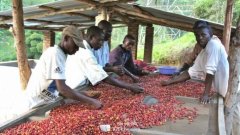
After harvesting, Jamaican Blue Mountain cherries are typically processed by traditional washed methods. Machines crush the cherries to remove the skin and pulp, after which the beans are placed in pools to ferment overnight. The fermented beans are then moved to clean water pools and washed back and forth, using the friction among the beans and the force of flowing water to clean them until smooth. Finally the parchment beans are dried for 2-3 weeks until moisture content reaches 12-14%. Because the pulp and mucilage have been removed before drying, no excessive fermented acidity affects the beans, allowing the inherent aroma of Blue Mountain to come through more balanced and clean.
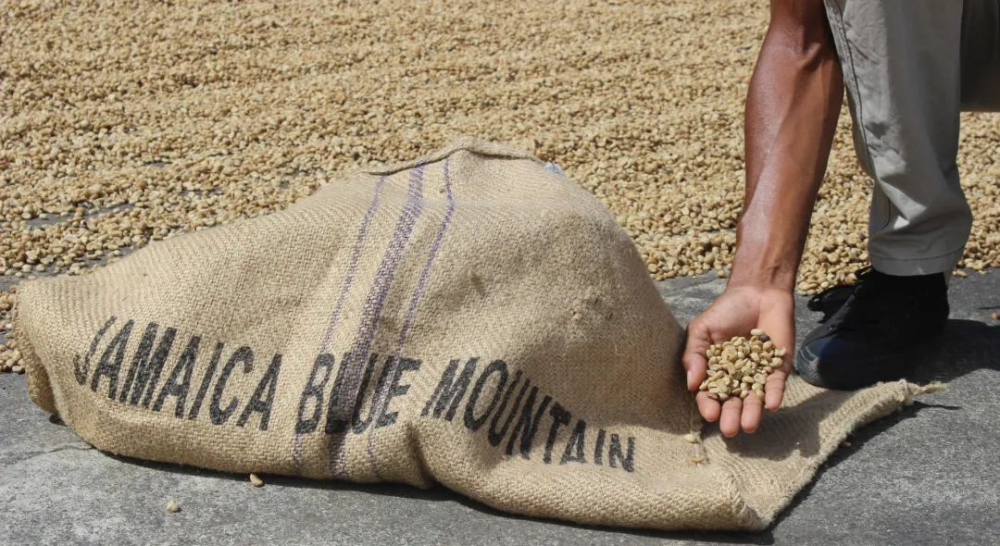
Processed Jamaican Blue Mountain green beans must pass multiple quality inspections, covering defect ratios, size specifications and cupping scores. The highest grade, Blue Mountain No. 1, must meet 17-18 screen specifications, with a defective-bean ratio not exceeding 2%, and possess just the right balance of acidity, sweetness, bitterness, body and aroma. As you can imagine, the quantity of such premium beans with refined flavors is extremely scarce. To taste the refined flavors of Blue Mountain, FrontStreet Coffee believes one should choose the highest-quality Jamaican Blue Mountain No. 1. FrontStreet Coffee's Blue Mountain No. 1 is washed-processed and produced at the historic local Clifton Estate.
Jamaica's Clifton Estate
FrontStreet Coffee's Jamaican Blue Mountain comes from Clifton Estate. Clifton is the oldest coffee-producing area in Jamaica still in normal operation today, and it is the only Clifton Farm in Jamaica to carry the Rainforest Alliance Certified mark. As early as the mid-18th century (around 1750), Clifton Farm began planting and producing coffee. Today's Clifton Farm is the largest estate in the area, though by international standards it still counts as small-scale cultivation, with many estate owners being small landholders.
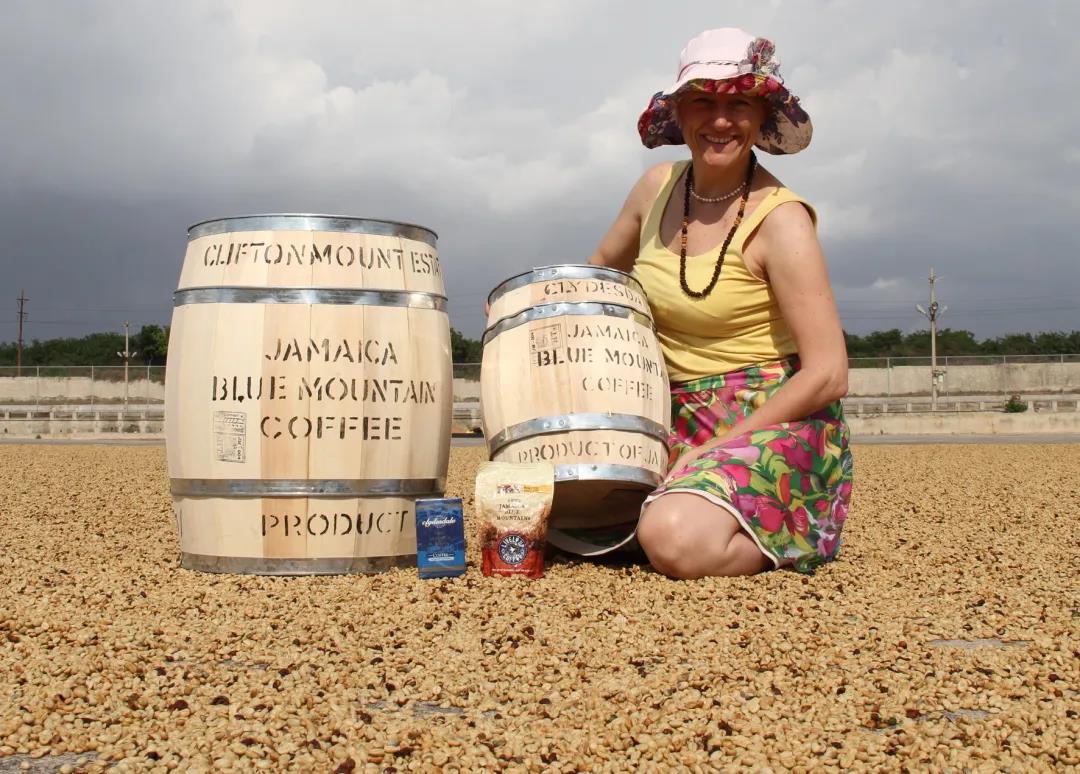
Under CIB standards, the basic criteria for Blue Mountain No. 1 green beans include beans above 17 screen size, defect rates below 2%, and moisture content around 13%.
How to Identify Authentic Blue Mountain Coffee?
Below, three key points can be used to identify authentic Blue Mountain Coffee: export by companies designated by the Coffee Industry Board, the wooden barrels used only in this region for green beans, and Clifton's Rainforest Alliance certification.

FrontStreet Coffee would like to share some background:
1. Authentic Blue Mountain Coffee is exported by companies designated by the Coffee Industry Board.
Some authentic Blue Mountain No. 1 beans on the Chinese market are exported mainly through direct branch companies from Japan, Australia and Europe. According to 2013 statistics from the International Coffee Organization (ICO), Japan accounted for 85% of the allocation, while the United States, Europe and other countries each accounted for 5%. ICO statistics show that China accounts for 15% of Blue Mountain coffee consumption. It is worth noting that the limited supply of Blue Mountain No. 1 is mostly allocated to Japan, the United States and Europe. Because Japan invested in Jamaica's coffee industry, most Blue Mountain Coffee was bought out by Japan. In 1992, Jamaica sold 688 tons of Blue Mountain Coffee to Japan, 75 tons to the United States and only 59 tons to the United Kingdom.

In 2005, Jamaica's Minister of Agriculture announced that Blue Mountain Coffee should be roasted in Jamaica, so it now flows directly from Jamaica to consuming countries through quota allocation. This distribution system is recognized by the Jamaica Coffee Industry Board (CIB). (Note: CIB board members are estate owners who own coffee plantations of a certain scale in Jamaica.)
In addition, the officially registered logo of the Jamaica Coffee Industry Board is used for certification and inspection of exported Jamaican Blue Mountain Coffee. The BLUEMOUNTAINCOFFEE trademark is the mark found on the packaging of authentic Jamaican Blue Mountain Coffee.
Coffee Industry Board (CIB)
2. Authentic Blue Mountain Coffee is the only coffee region that uses wooden barrels for green beans.
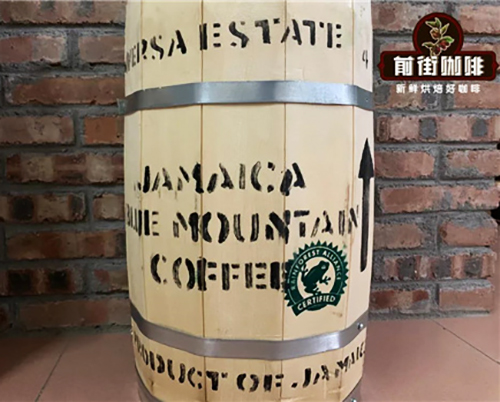
Blue Mountain Coffee is to this day the only coffee-producing region that ships green beans in wooden barrels; all other coffee exports use gunny sacks. During the mid-18th century British colonial period, flour transported from Britain to Jamaica left empty barrels behind, and these were recycled to carry coffee and rum, sealing in the coffee aroma to protect quality. The barrels used today are made from timber sourced from temperate forests in the United States.
3. The frog on Clifton's barrel lid is Rainforest Alliance certification.
Clifton Estate is Jamaica's oldest coffee estate, and it is the only Clifton Farm in Jamaica to carry the Rainforest Alliance (RFA) mark. Only operations that meet the Sustainable Agriculture System Standards can be certified, and their wooden barrels bear the Rainforest Alliance certification mark.

FrontStreet Coffee's Blue Mountain is authentic Blue Mountain Coffee: exported by companies designated by the Coffee Industry Board, packaged in wooden barrels for green beans, and carrying Rainforest Alliance certification.
FrontStreet Coffee Recommendation
If this story of terroir and grading has you curious about the cup itself, FrontStreet's Jamaica Blue Mountain No. 1 is the definitive place to start. It comes from the historic Clifton Estate - a farm that has grown coffee since around 1750 and the only Clifton Farm in Jamaica to hold Rainforest Alliance certification - and it is washed-processed and packed in the region's signature wooden barrels.
Roasted medium-dark to draw out Blue Mountain's classic balance, it unfolds in layers of nuts, dark chocolate, creamy caramel and soft sweetness, with acidity, sweetness, bitterness and aroma in perfect harmony and a clean, lingering finish. Whether you brew it as a daily specialty cup or present it as a premium gift, FrontStreet's Blue Mountain No. 1 delivers the balanced, timeless character that has kept this legendary coffee in demand for decades.
Important Notice :
FrontStreet Coffee is a long-established specialty coffee roaster in Guangzhou China, selling freshly roasted beans from its own farm in Yunnan as well as dozens of carefully selected single-origin beans from around the world for both pour-over and espresso. The products deliver consistently excellent quality and great value, with shipping within 24 hours. Guangzhou's FrontStreet Coffee shop is recommended by many coffee lovers, and the beans are now available online at the Tmall 。
FrontStreet Coffee has moved to a new address:
FrontStreet Coffee Address: 315,Donghua East Road,GuangZhou
Tel:020 38364473
 Scan and follow the En Gafei WeChat official account. Please indicate that the reprint comes from "En Gafei".