
How to Use the V60 Pour-Over Coffee Dripper? How Much Coffee Beans Should Be Used for a Single Serving?

As we all know, the familiar Hario V60 comes in two models: the 01 and the 02. Comparing the two, the size 02 V60 is larger and holds more grounds, capable of brewing 4-5 servings at once without trouble. The size 01 dripper that FrontStreet Coffee commonly uses, by contrast, is best with a brewing amount between 15-20 grams.
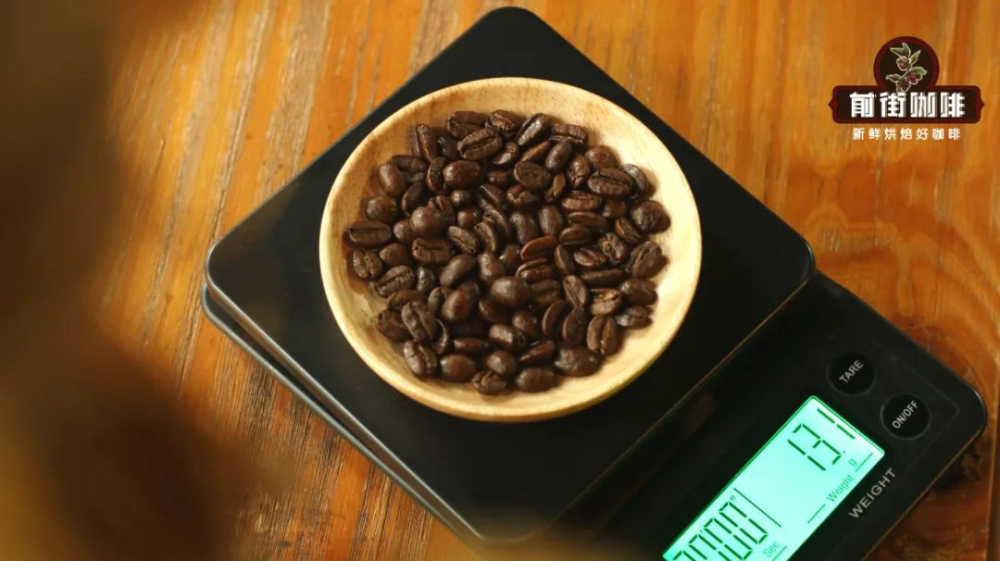
In daily life, we occasionally run into "small accidents" that keep the actual amount of grounds from matching the recommended values — for instance, having less than 15 grams of beans left, or simply not wanting to drink much coffee today. When using a large dripper for a small amount of grounds, the coffee layer becomes thinner and water passes through more easily, demanding better pour control from the brewer. The resulting coffee often shows thin body and weak aroma.
To meet the extraction needs of such situations, single-serve coffee drippers emerged. One is the 30-degree conical filter launched by the Japanese equipment brand Tarachine Conical, claimed to brew small amounts of coffee under 15 grams perfectly. Everyone calls it the "V30."
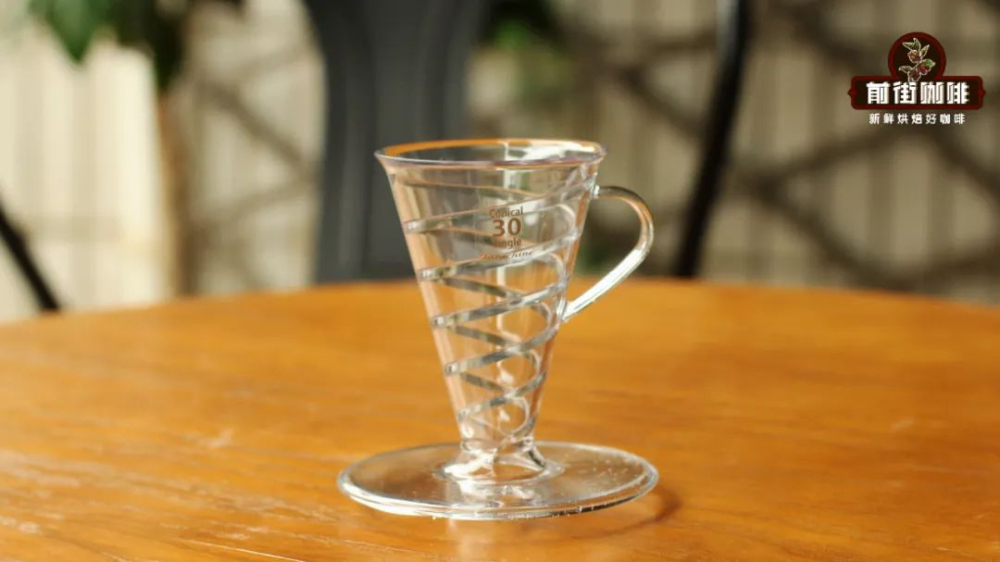
The V30 that FrontStreet Coffee acquired is made of transparent resin, feeling small and lightweight in hand. Its overall appearance resembles a running "drill bit." The biggest difference from the classic V60 is its cone angle of only 30°, with a cross-sectional diameter of just 6cm. To accommodate all the grounds while leaving space for the coffee to rise, the cup's height reaches 11cm.
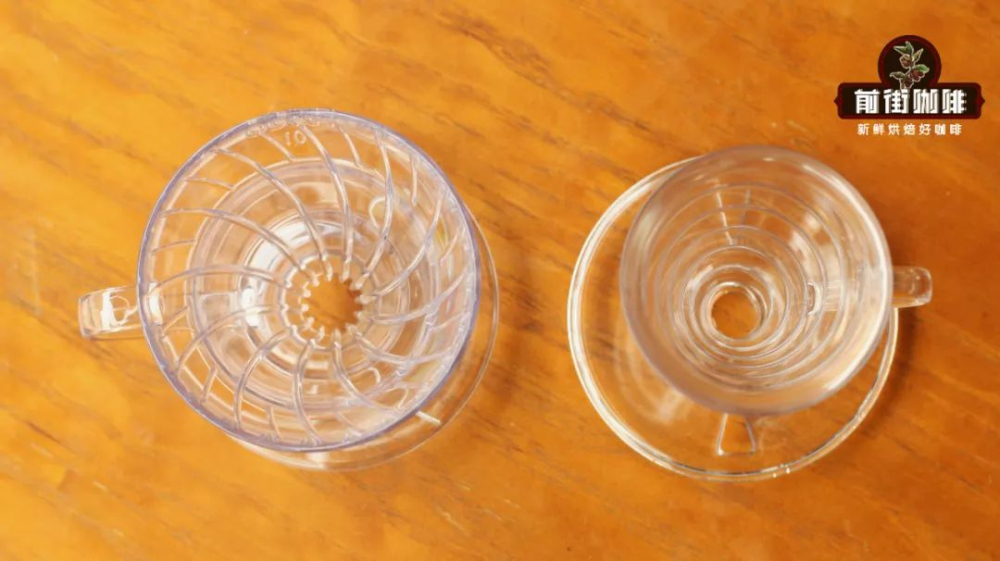
Observing from top to bottom, FrontStreet Coffee found that the V30's filter hole is relatively small — a circular hole about 1.5cm in diameter, compared with 2cm on the size 01 V60. The internal flow-groove patterns form two clockwise spirals running parallel to each other toward the bottom, extending the hot water's extraction path to make the coffee taste fuller.
Filter Paper Usage
Regarding filter paper, besides the official matching version, Tarachine also recommends using commercially available large Hario filter paper as a substitute. Simply fold it in half along the center line of the fan shape, then unfold one side to fit into the single-serve dripper. Because large filter paper after folding creates a single layer on one side and three layers on the other, the different filtration thicknesses cause varying extraction conditions for grounds in different positions. Here, FrontStreet Coffee references a filter paper folding method summarized by a coffee enthusiast, for your reference.
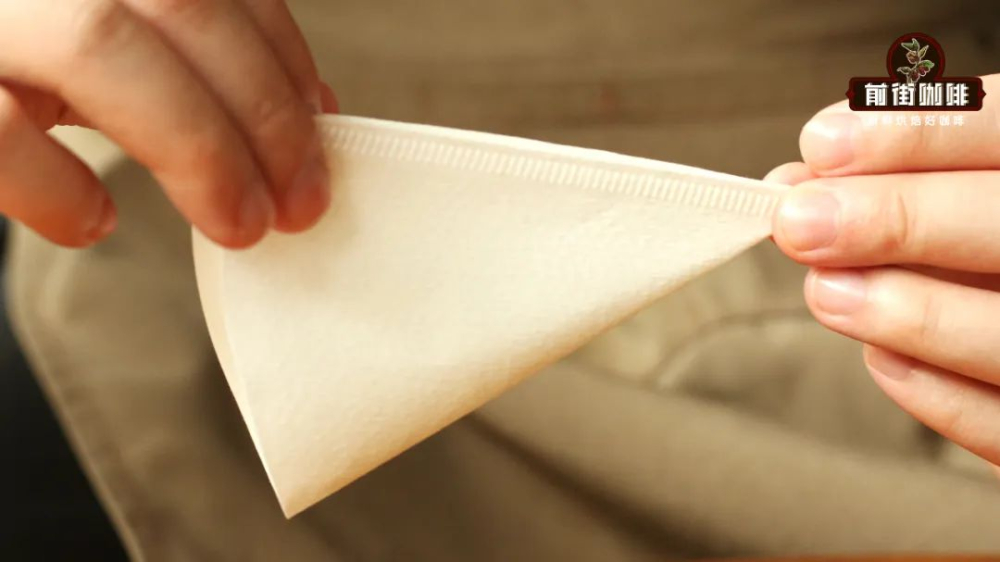
First, align the two radii of the filter paper and fold it in half.
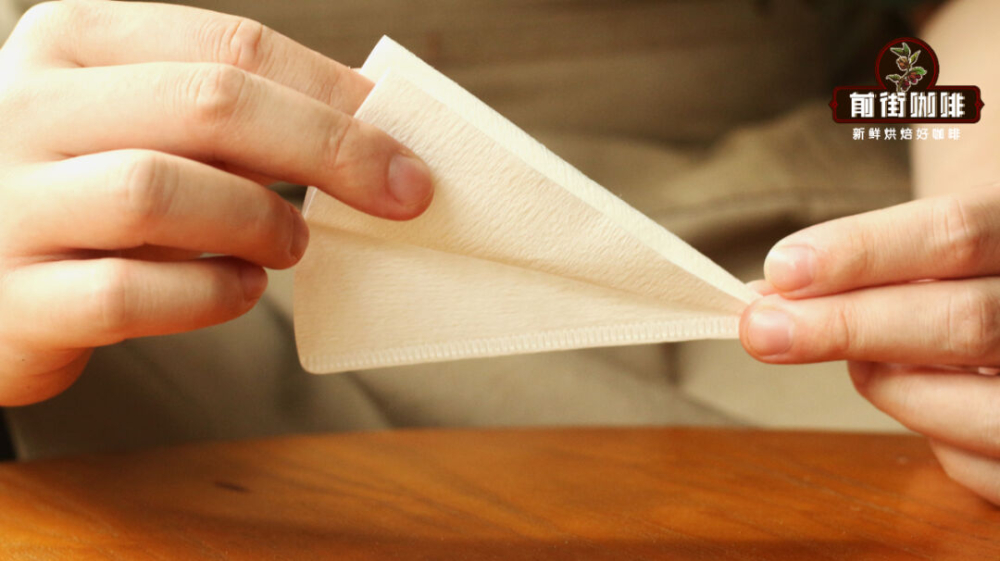
Take the unconnected radius side, align it with the center line in reverse, and fold it down, pinching gently to secure.
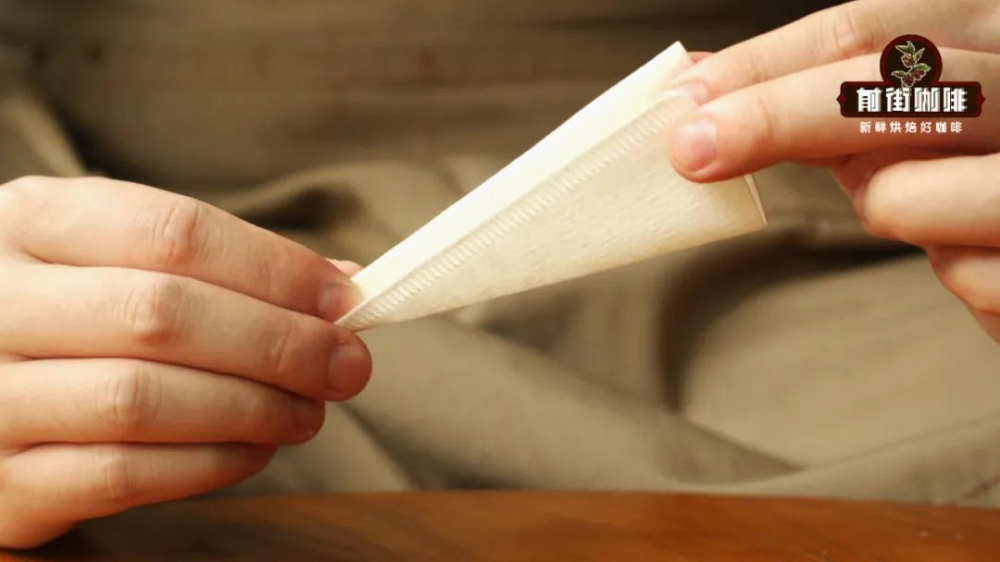
Do the same on the other side, just like folding a paper airplane.
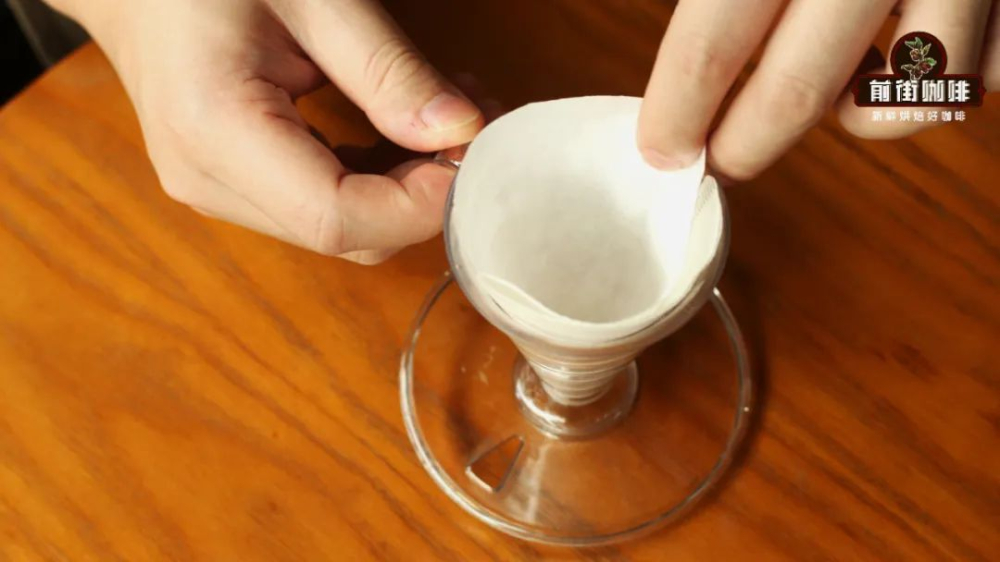
Finally, open the filter paper from the middle along the folded ribs, align it with the cone angle, and place it in the dripper.
Brewing Tests
After getting the dripper, FrontStreet Coffee first selected a bean that mainly expresses fruit acidity to see how the brewing results would turn out.
Coffee beans: 13g (Kenya · Assalia)
Powder-to-water ratio: 1:15
Water temperature: 92°C
Dripper: V30
Grind size: EK43s setting 10 (sieved 80% through #20 standard sieve)
Three-stage pouring: 25g, 75g, 95g
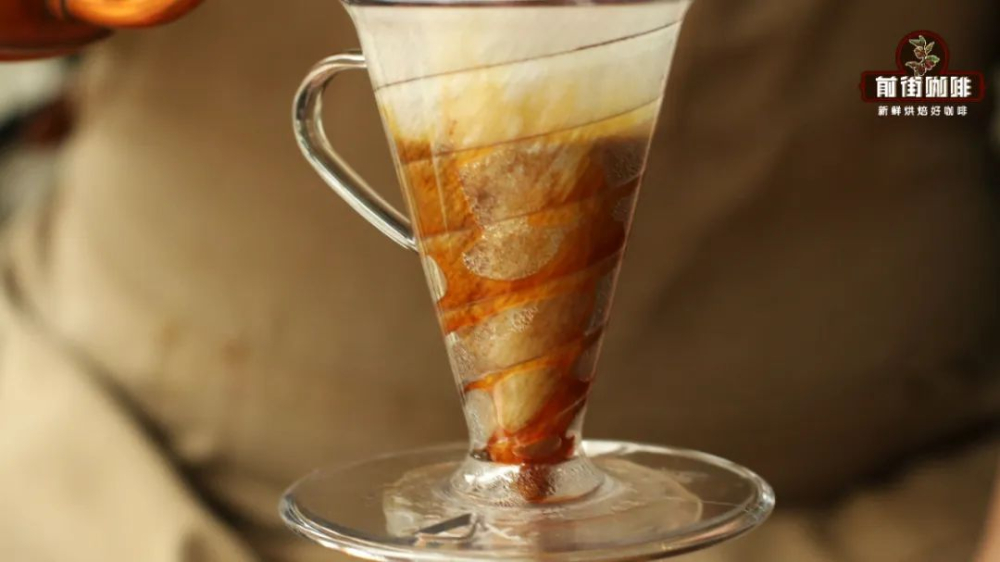
During the pouring and stirring process, the coffee bed accumulated at the bottom, with an overall slow flow rate and slight blockage at the end. The liquid finished dripping only at 2 minutes and 23 seconds. The coffee had strong acidity on entry, mainly berry and black tea notes, with overall weak aroma and a mediocre body.
FrontStreet Coffee speculated that because the dripper's structure deepens the water level, and we used lightly roasted, fruit-acidity beans with a more compact internal structure and weaker water absorption, the coffee bed could not be easily lifted by the water column. The poor flavor was mainly due to over-steeping at the final stage. Next, FrontStreet Coffee tried a medium-dark roasted coffee that expresses mellow body and sweet aftertaste.
Coffee beans: 13g (Jamaica · Blue Mountain No. 1)
Powder-to-water ratio: 1:15
Water temperature: 88°C
Dripper: V30
Grind size: EK43s setting 10.5 (sieved 75% through #20 standard sieve)
Three-stage pouring: 25g, 75g, 95g
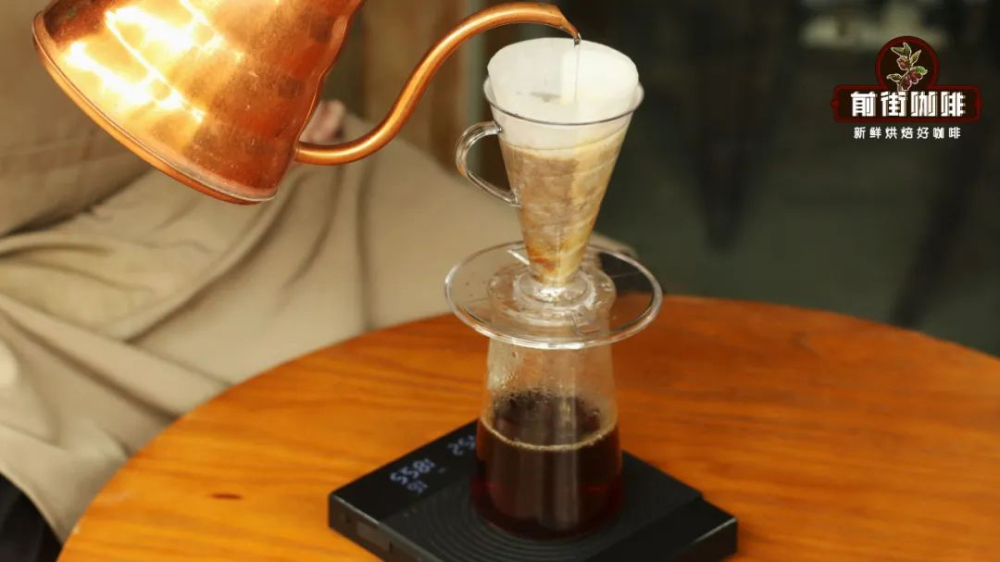
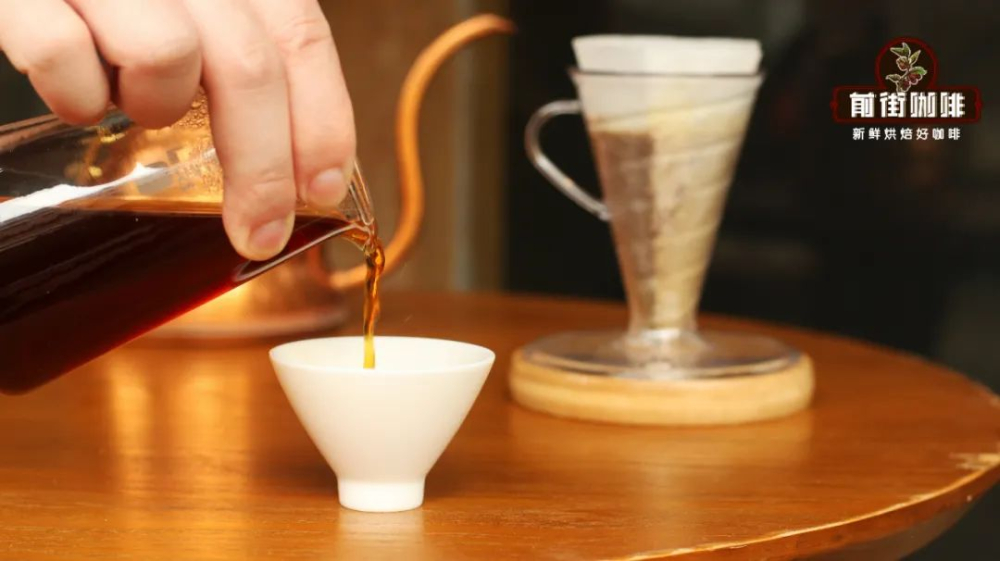
Compared with the first group, the Blue Mountain coffee drained significantly more smoothly, finishing extraction in close to 2 minutes, with a very evenly distributed coffee bed. Compared with the results from FrontStreet Coffee's usual KONO dripper, the Blue Mountain brewed with the V30 had a softer, smoother texture, though weaker in richness and solidity. On entry, one could clearly sense a black chocolate aroma, and the aftertaste after swallowing was also very distinct.
Comparative Testing
To obtain a more direct comparison, FrontStreet Coffee selected three medium-roast beans (Colombia · Sidra, Guatemala · New Eastern Geisha, and Honduras · Lychee Garden), pairing them respectively with the V30 and a small V60 dripper for small-amount extraction (13g), keeping all other parameters unchanged.
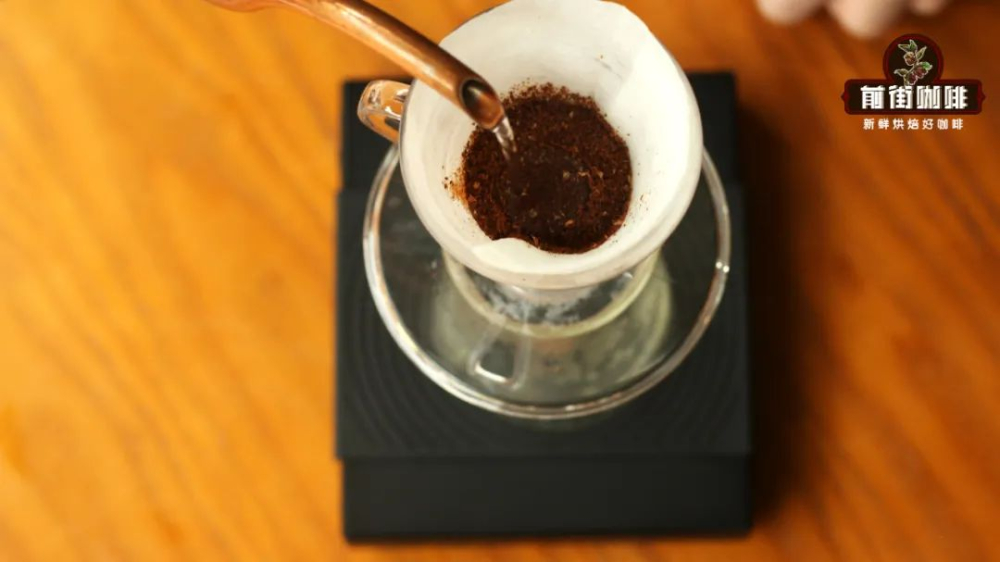
All three pots brewed with the V30 finished dripping between 2 minutes and 2 minutes and 10 seconds, while the V60 group finished in around 1 minute and 50 seconds. Comparing the spent drippers, the coffee pit formed by the V30 was significantly deeper. The small batches of Sidra, Lychee Garden, and New Eastern Geisha brewed with the V30 were superior to the small V60 in both flavor complexity and mouthfeel viscosity.
Analysis and Recommendations
After extensive comparisons, FrontStreet Coffee found that with the same amount of grounds, the V30 forms a thicker, deeper coffee bed, which not only slows drainage but also lets the coffee layer rise quickly under a larger water flow, enhancing immersion extraction. The distribution of internal flow grooves also lets the grounds degas while giving the water column a longer extraction path, further improving the overall flavor concentration of the coffee liquid.
From this perspective, the dripper is better suited to brewing small amounts of medium-to-dark roasted coffee, which can fully express the rounded fruit acidity and mellow sweetness in coffee, such as caramel, preserved fruit, apricot, and fermented wine aromas. Note, however, that to avoid the water level exceeding the dripper's peak and overflowing, FrontStreet Coffee suggests keeping the amount of grounds within 15 grams but above 8 grams when using the V30, while pouring in small circles with a small water flow and pouring evenly in segments. This achieves an extraction process with a moderate rhythm.
FrontStreet Coffee Recommendation
The V60 has been a barista favorite since Hario, a Tokyo glassmaker founded in 1921, redesigned the dripper in 2004 and launched the familiar 60° cone a year later. Its conical shape and the 60° angle force water to the center before it drips into the server, extending contact between water and grounds, while the single large hole lets the flow rate depend heavily on the brewer's control. Those traits suit bright, floral, and fruity coffees, and FrontStreet Coffee's light-roast range is made for them: the Yirgacheffe Guodingding Cooperative with its citrus, berry, and floral notes and green-tea sweetness; the Ethiopia Huakui with prominent tropical fruit aromas of strawberry, passion fruit, and jackfruit; the Panama Emerald Red Label Gesha with its elegant jasmine, citrus, bergamot, and black tea; and the Kenya Cherry Tomato with its cherry tomato and smoked plum acidity and full, juice-like body.
Before the third wave of coffee, medium and dark roasts dominated, and brewers favored fuller body, higher sweetness, and caramelized flavors like chocolate, maple syrup, nut, and vanilla. That style still has its place, and it works well with siphon or cloth filters too. For these, FrontStreet Coffee suggests the PWN Indonesia Golden Mandheling, deep-roasted for very low acidity with herbal and dark chocolate notes; the Jamaica Blue Mountain No. 1, which balances acidity, sweetness, bitterness, and aroma with cream, caramel, chocolate, nut, honey, and light fruit; the Brazil Queen's Manor, low in acidity and balanced with nut, cocoa, and caramel; the Yunnan 2013 sun-dried Typica, clean with citrus and caramel plus a touch of nut, chocolate, and brown sugar; and the Papua New Guinea Bird of Paradise, a Typica variety from volcanic soil at 1600-1800 meters, triple-washed for a clean, sweet cup.
A final note from the earlier tests: with the V30, small amounts of medium-to-dark roasted coffee shine, but keep the dose between 8 and 15 grams to avoid overflowing the dripper's peak, and pour in small circles in even segments. Match the bean to the dripper, and the cup will follow.
Important Notice :
FrontStreet Coffee is a long-established specialty coffee roaster in Guangzhou China, selling freshly roasted beans from its own farm in Yunnan as well as dozens of carefully selected single-origin beans from around the world for both pour-over and espresso. The products deliver consistently excellent quality and great value, with shipping within 24 hours. Guangzhou's FrontStreet Coffee shop is recommended by many coffee lovers, and the beans are now available online at the Tmall 。
FrontStreet Coffee has moved to a new address:
FrontStreet Coffee Address: 315,Donghua East Road,GuangZhou
Tel:020 38364473
 Scan and follow the En Gafei WeChat official account. Please indicate that the reprint comes from "En Gafei".

