
Guatemala | Introduction to Selected Coffee Beans from Coffee Growing Regions
Guatemala
In the Americas there is a country that was one of the heartlands of ancient Maya civilization: the Republic of Guatemala (La República de Guatemala), with a total area of 108,900 square kilometers, divided into 22 departments.
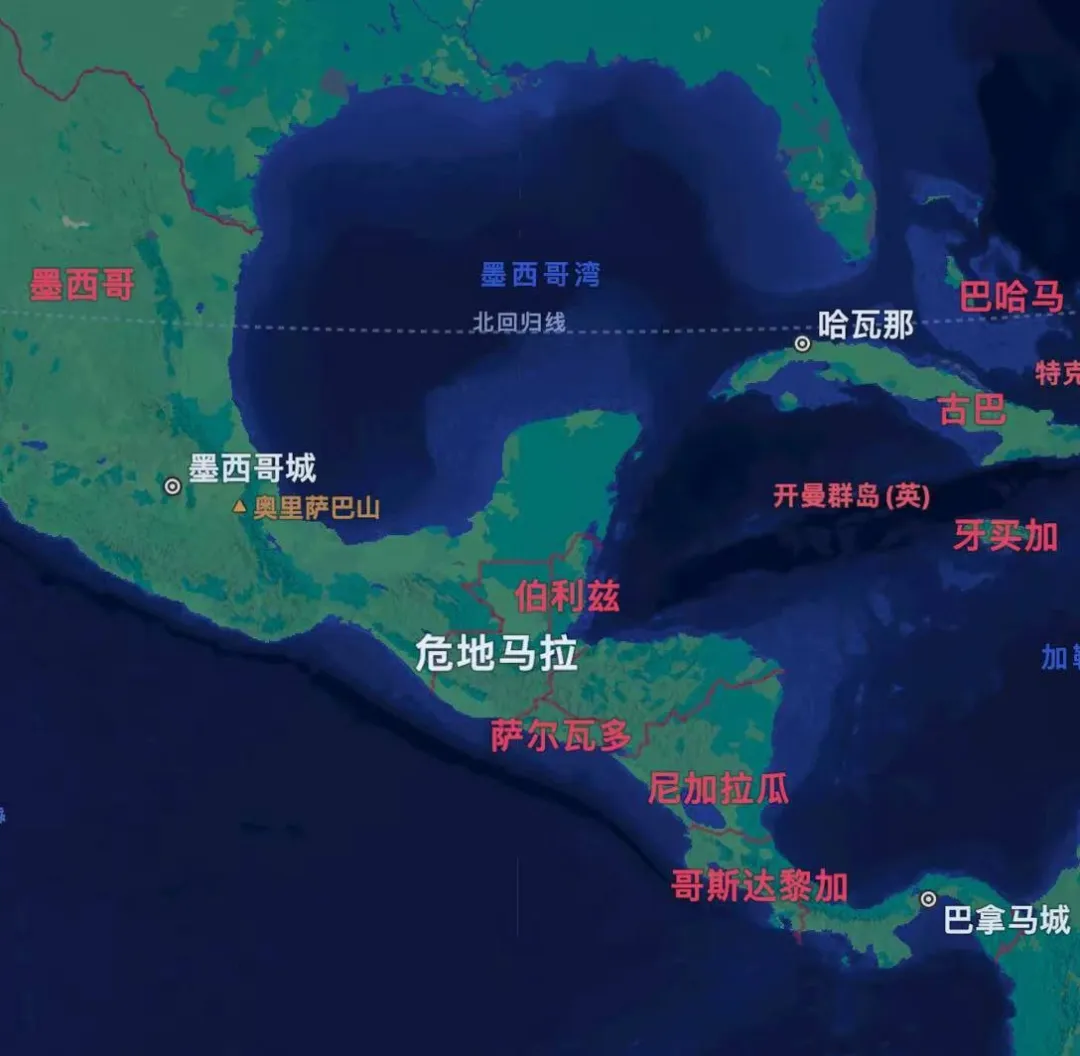
Guatemala lies in the southern part of the North American continent and has both land and sea territory. To the west and north it borders Mexico; to the northeast, Belize; and to the southeast, Honduras and El Salvador. To the east lies the Gulf of Honduras along the Caribbean Sea, and to the south the Pacific Ocean. Guatemala has a coastline of about 500 kilometers, and forests cover 38% of the country's area.
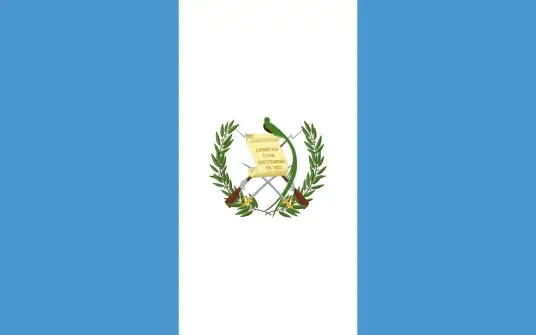
The Guatemalan flag consists of three parallel vertical rectangles, with white in the middle symbolizing the pursuit of peace and blue on either side symbolizing the Pacific Ocean and the Caribbean Sea. In the center of the white band is the national coat of arms, circular in shape with an opened scroll at its middle. The scroll reads "September 15, 1821, Freedom" in Spanish, commemorating Guatemala's independence from Spanish colonial rule. Perched on the scroll is Guatemala's national bird, the green quetzal, also known as the "Bird of Freedom," symbolizing liberty, patriotism, and friendship. Behind the scroll are crossed rifles and swords, symbolizing the people's readiness to defend the nation's freedom.
Two-thirds of Guatemala's territory is mountains and plateaus. The west has the Cuchumatanes range and the south the Sierra Madre, both belonging to volcanic belts. The country has 37 volcanoes, among them the Tajumulco volcano, at 4,211 meters the highest peak in Central America. The north is mainly the Petén lowlands, which are tropical rainforest, while the main cities sit in the mountain basins of the south.
Guatemala is situated in the tropics. The northern and eastern coast has a tropical rainforest climate, while the southern mountains have a subtropical climate. The rainy season runs from May to October and the dry season from November to April the following year. Coffee is generally grown in high-altitude areas, where the climate is mild year-round at altitudes between 1,300-1,800 meters, with perceived temperatures between 18°C and 28°C. January and February are typically colder, and rainfall is concentrated mainly in the northeast, with annual precipitation of 2,000-3,000 millimeters. High altitude, volcanic soil, large day-night temperature swings, abundant rainfall, and variable microclimates give Guatemalan coffee elegant, lively acidity, a clean taste, and distinctly layered flavors.

Coffee Growing Regions
Of Guatemala's 22 departments, 20 grow coffee. Eight regions are particularly well known, divided into five volcanic and three non-volcanic, with coffee grown at an average altitude above 1,500 meters. The non-volcanic regions are Huehuetenango, Cobán, and Nuevo Oriente. The volcanic regions are Atitlán, Antigua, Acatenango, Fraijanes, and San Marcos.
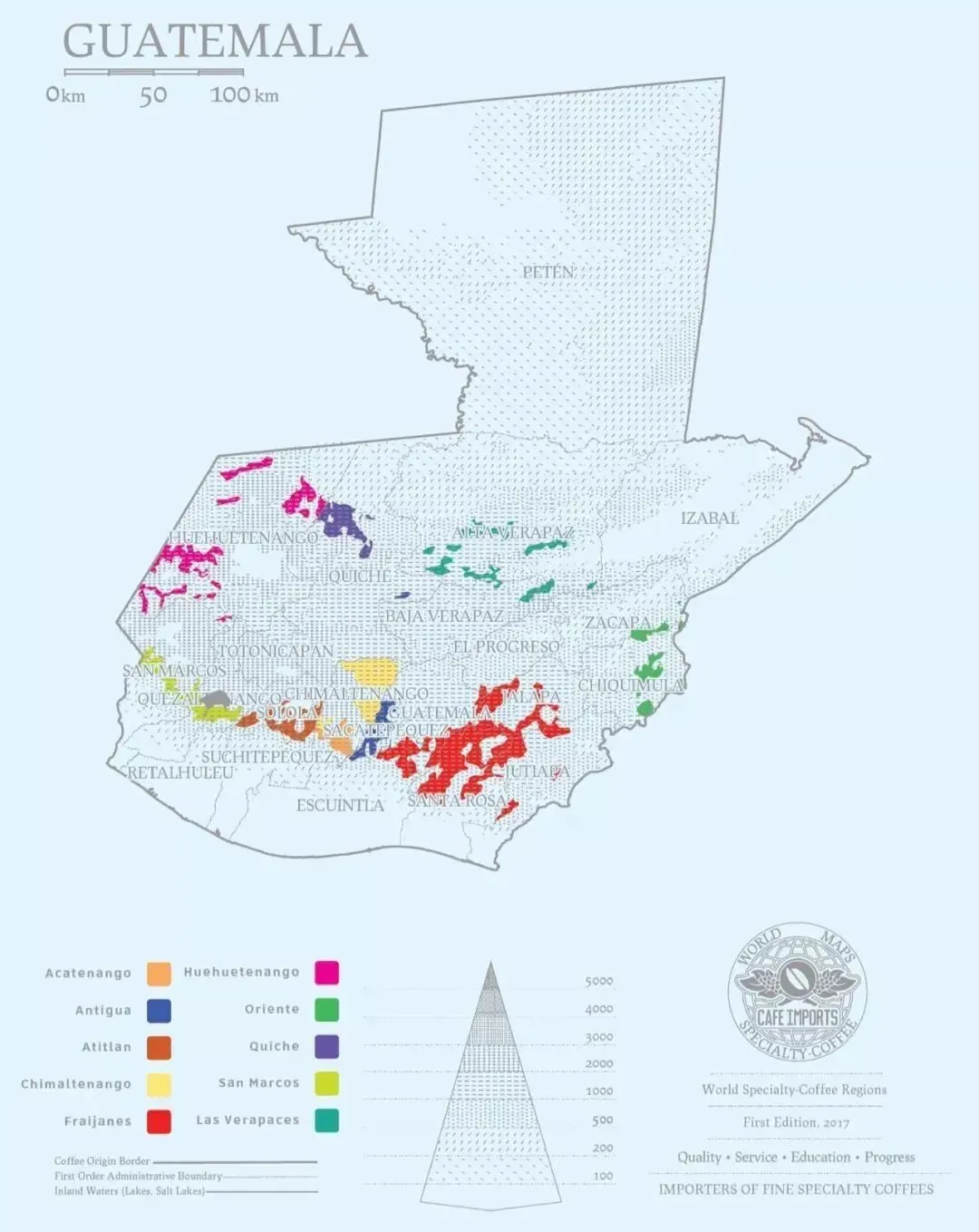
Huehuetenango: Huehuetenango is a non-volcanic coffee region in Guatemala and one of the highest-altitude regions, with coffee grown at 1,800-2,100 meters. The name comes from Nahuatl and means "land of the ancients (or ancestors)." Huehuetenango lies in the west of the country, at the foot of the Cuchumatanes range, the highest non-volcanic range in Central America. Because hot air from Mexico's Tehuantepec tropical plains blows toward this range, coffee here is protected from frost and can be grown at higher altitudes. The area also has many rivers and water bodies, making it ideal for high-quality coffee.
Cobán: Cobán lies in central Guatemala and is an important coffee cultivation center. The region belongs to a rainforest zone with a tropical rainforest climate: cloudy and foggy year-round, with abundant rainfall and cool weather. The local soil is rich in limestone and clay, and most coffee is grown on hilly terrain at 1,300-1,500 meters. Given the weather, naturally processed beans are relatively rare here, with washed processing the main method.

Nuevo Oriente: Nuevo Oriente lies in eastern Guatemala near Honduras and is one of the youngest coffee regions, with cultivation beginning only in the 1950s. The area has abundant rainfall year-round and high altitudes of roughly 1,500-2,050 meters, resulting in constant mist and relatively short sunshine hours, making it more humid than other regions. Nuevo Oriente was once one of Guatemala's poorest and most isolated areas. Although it was a volcanic region in ancient times, that left the soil rich in minerals. Combined with abundant rainfall and high altitude, the coffee here has quite complex, variable flavors. FrontStreet Coffee offers a honey-processed Geisha from Nuevo Oriente, with white floral aromas, sweet orange and bergamot on entry, a toffee-like sweetness, and a honey-smooth texture.
Atitlán: Atitlán lies in the central Guatemalan highlands. Its name comes from the country's largest volcanic lake, Lake Atitlán, which is surrounded by three volcanoes. The volcanic soil provides rich minerals, and most coffee trees are planted on volcanic slopes at 1,500-1,700 meters.

Antigua: The Antigua region is surrounded by three volcanoes: Agua, Fuego, and Acatenango. Most coffee is grown in the heart of the valley at 1,500-1,700 meters. Thanks to the active Fuego volcano, humidity stays at 65% year-round. Shade growing is the main method, protecting the trees from frost in cold weather. The dense shade and the extremely shallow water table create a unique microclimate, which, with fertile volcanic soil and appropriate humidity, gives Antigua coffee bright acidity and fruity notes.
FrontStreet Coffee - Guatemala Huehuetenango Washed Coffee Beans
Region: Huehuetenango
Altitude: 1,500-2,000 meters
Varieties: Bourbon, Caturra, Catuai
Processing: Washed
Flavor: Citrus, lemon, berries, nuts, tea-like notes
FrontStreet Coffee's Guatemala Huehuetenango beans are washed processed and medium roasted. FrontStreet Coffee brews them on a V60 at a 1:15 ratio and 91°C. On entry there is a slight fruit acidity, and as the temperature drops a little, citrus, berry, and nut flavors gradually emerge. The texture is smooth, with a tea-like aftertaste.
FrontStreet Coffee Recommendation
Guatemalan coffee is loved for its elegant acidity and clean, layered cup, and if that style appeals to you, FrontStreet Colombia Huila is a natural next step. Colombia is one of the few origins whose coffee is sold under a national name, and Huila is its best-known specialty region - mountains all around, planting above 1,500 meters, and the confluence of the country's most important rivers bringing abundant moisture and water. Colombian coffee tends toward gentle florals and soft fruit acidity, rich and lingering, and it is almost always a specialty grade.
If you want to go further into floral, high-altitude territory, try FrontStreet Panama Boquete Geisha. Panama is best known for Geisha, and Hacienda La Esmeralda above all; a cup brings citrus, berries, and florals with a balanced, smooth body, almost like a completely unsweetened fruit-flower tea. Master estates can be expensive for a beginner, though, so this entry-level Boquete Geisha is the practical way in: from Panama's most representative specialty region, washed processed, and offering the classic mandarin-honey sweetness of Geisha at excellent value.
Important Notice :
FrontStreet Coffee is a long-established specialty coffee roaster in Guangzhou China, selling freshly roasted beans from its own farm in Yunnan as well as dozens of carefully selected single-origin beans from around the world for both pour-over and espresso. The products deliver consistently excellent quality and great value, with shipping within 24 hours. Guangzhou's FrontStreet Coffee shop is recommended by many coffee lovers, and the beans are now available online at the Tmall 。
FrontStreet Coffee has moved to a new address:
FrontStreet Coffee Address: 315,Donghua East Road,GuangZhou
Tel:020 38364473
 Scan and follow the En Gafei WeChat official account. Please indicate that the reprint comes from "En Gafei".

