Why Should You Swirl Coffee After Brewing? Is It the Same Principle as Letting Wine Breathe? And Why Can't Espresso Be Swirled?
"To release more aroma and soften the wine, people swirl it so it contacts the air and transforms — that step even has a professional name: 'aeration.' Does coffee need aerating too?" a customer remarked while watching FrontStreet Coffee swirl the coffee.
You've surely seen the scene: after a barista finishes a pour-over, they pick up the carafe and give it a vigorous swirl before pouring the coffee into cups. Have you ever wondered why baristas always shake the coffee after brewing?

Why Shake Coffee After Brewing?
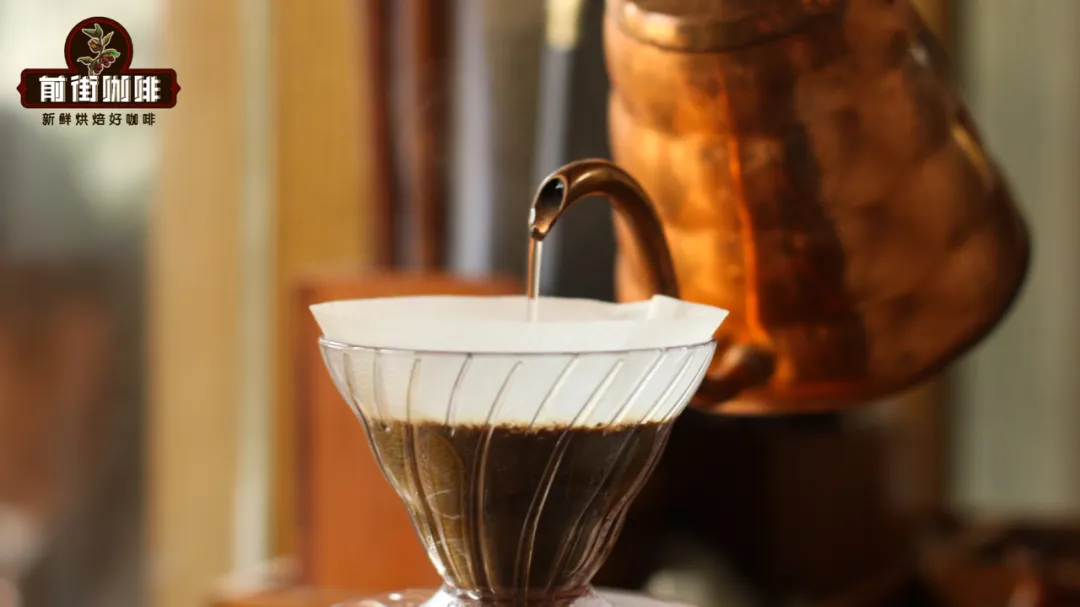
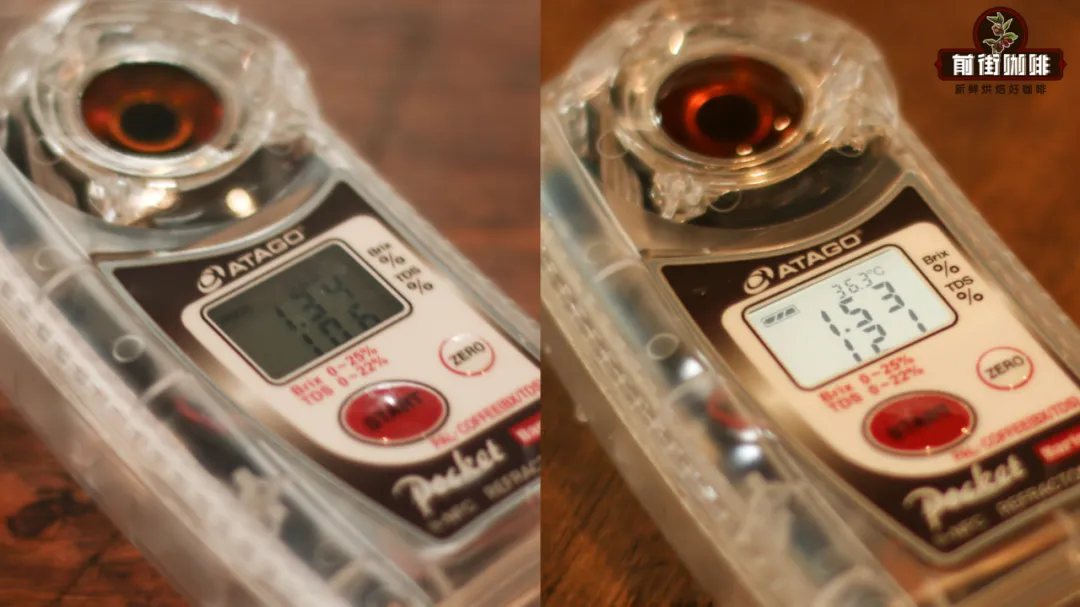
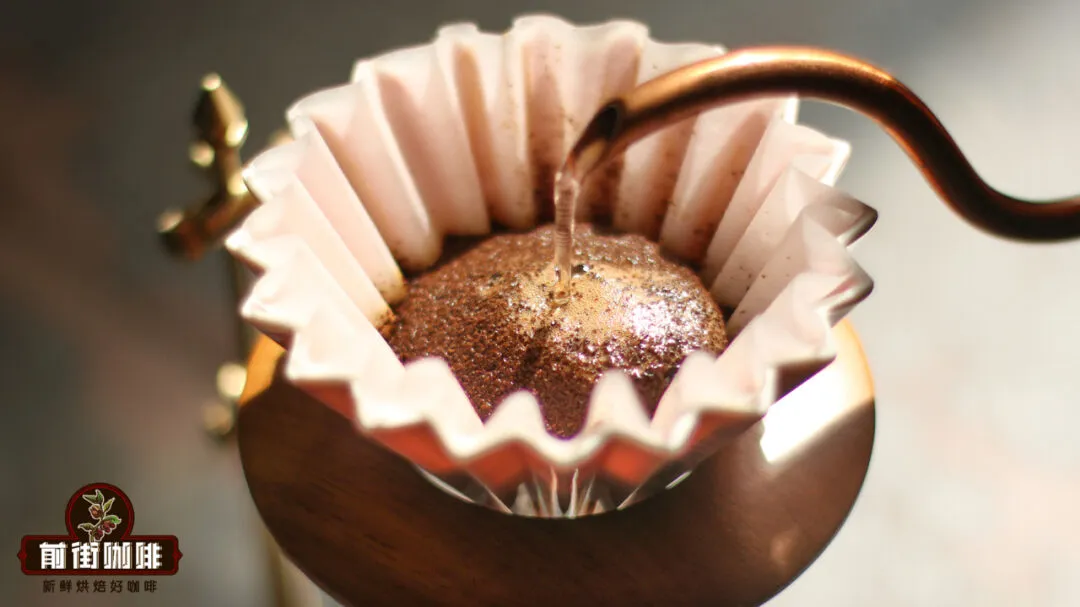
FrontStreet Coffee has mentioned before that a swirled pour-over does taste better than an unswirled one. But its logic differs from wine: wine releases aromatics through contact with air, whereas shaking coffee is about blending the liquid. To demonstrate, FrontStreet Coffee ran an experiment measuring the concentration difference between shaken and unshaken coffee. The method: after brewing, measure the concentration directly without shaking. Then shake the carafe and measure again to compare. Brewing parameters: 15g of coffee, EK43 at setting 10, 1:15 coffee-to-water ratio, 92°C water, three-stage pour, V60 dripper. (Brewing details omitted.)
Straight off the brew, the concentration meter read 1.09%. After swirling, the same coffee read 1.21% — completely different results.
Why? Because coffee releases its compounds unevenly across the brew. The early stage is the peak of extraction, and from there fewer and fewer substances come out — see FrontStreet Coffee's second experiment below.
Tracking the coffee-to-water ratio, FrontStreet Coffee collected the dripping liquid into three cups of 70ml each (swapping in a fresh cup each time one reached weight). The colors were completely different: the first cup darkest, the second lighter, the third lightest of all. Flavor followed the same pattern — the first cup the richest, the second less so, the third the thinnest.
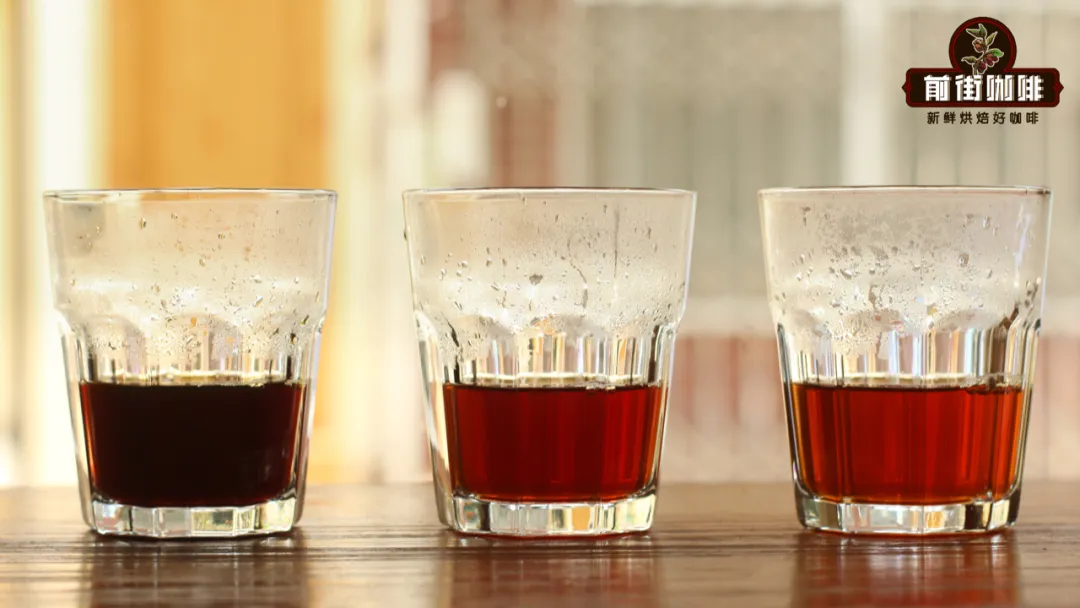
In other words, the coffee that comes off the brew first is the most concentrated, thanks to the high early extraction efficiency; as the coffee's remaining substances dwindle and extraction slows, concentration falls. Because the liquids carry different loads of dissolved material, they don't mix on their own once the brew ends — so we swirl, homogenizing the coffee into a single cup at the right concentration.
Important Considerations
That said, FrontStreet Coffee does not recommend this shaking treatment for every type of coffee — espresso in particular. Most espressos can't be homogenized by swirling alone because of density differences; they need stronger mixing (stirring). Whether it's the coffee and crema in an espresso, or the milk and espresso in a latte, only stirring achieves a truly uniform blend.


FrontStreet Coffee Recommendation
A good pour-over carafe deserves good beans. Three FrontStreet Coffee picks for the V60:
FrontStreet Yirgacheffe Idido: The classic entry into specialty coffee — bright citrus, berries, and florals with a green-tea-like sweetness, its soft acidity making it easy to love from the very first cup.
FrontStreet Natural Guji (Hua Kui): Tropical fruit in full voice — strawberry, passion fruit, jackfruit, lychee — with obvious sweetness and almost no bitterness. So juicy and smooth that fans call it "the least coffee-like coffee," a guaranteed impression-maker when you swirl and serve.
FrontStreet Kenya Cherry Tomato: From Thika at 1550–1750 meters: SL28 and SL34, Kenya's 72-hour double-washed fermentation, light roast. Cherry tomato and dried plum over a full, juice-like acidity, snow pear and black plum in the middle, yellow sugar and green tea on the clean finish — vividly balanced and instantly recognizable.
Important Notice :
FrontStreet Coffee is a long-established specialty coffee roaster in Guangzhou China, selling freshly roasted beans from its own farm in Yunnan as well as dozens of carefully selected single-origin beans from around the world for both pour-over and espresso. The products deliver consistently excellent quality and great value, with shipping within 24 hours. Guangzhou's FrontStreet Coffee shop is recommended by many coffee lovers, and the beans are now available online at the Tmall 。
FrontStreet Coffee has moved to a new address:
FrontStreet Coffee Address: 315,Donghua East Road,GuangZhou
Tel:020 38364473
 Scan and follow the En Gafei WeChat official account. Please indicate that the reprint comes from "En Gafei".