Ethiopia | Introduction to Selected Coffee Beans from Coffee Growing Regions

Ethiopia
To coffee enthusiasts, Ethiopia is sacred ground. This is the birthplace of coffee — and today, Africa's largest producer of Arabica.

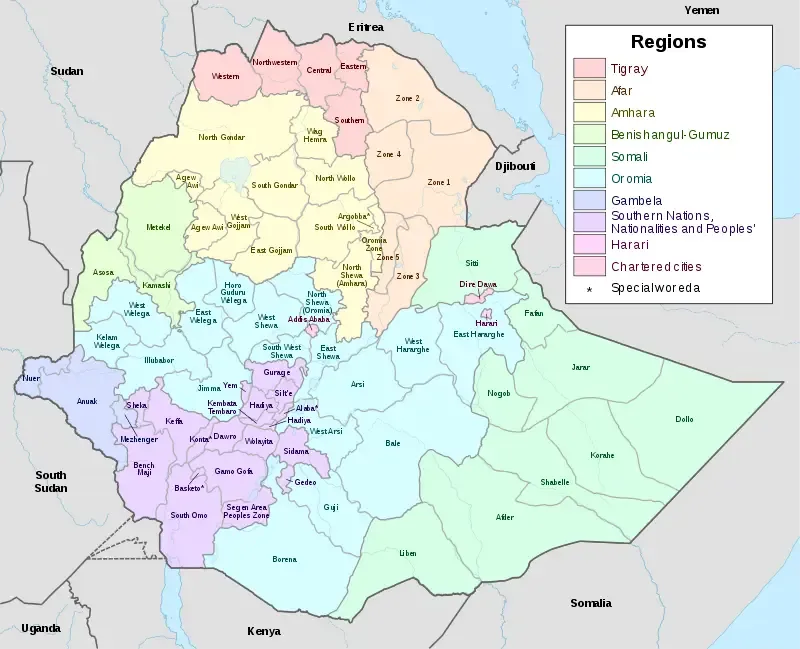
The Federal Democratic Republic of Ethiopia sits in northeastern Africa, bordering Djibouti, Somalia, Sudan, South Sudan, Kenya, and Eritrea. It is a landlocked country of roughly 120 million people covering 1.1036 million square kilometers.
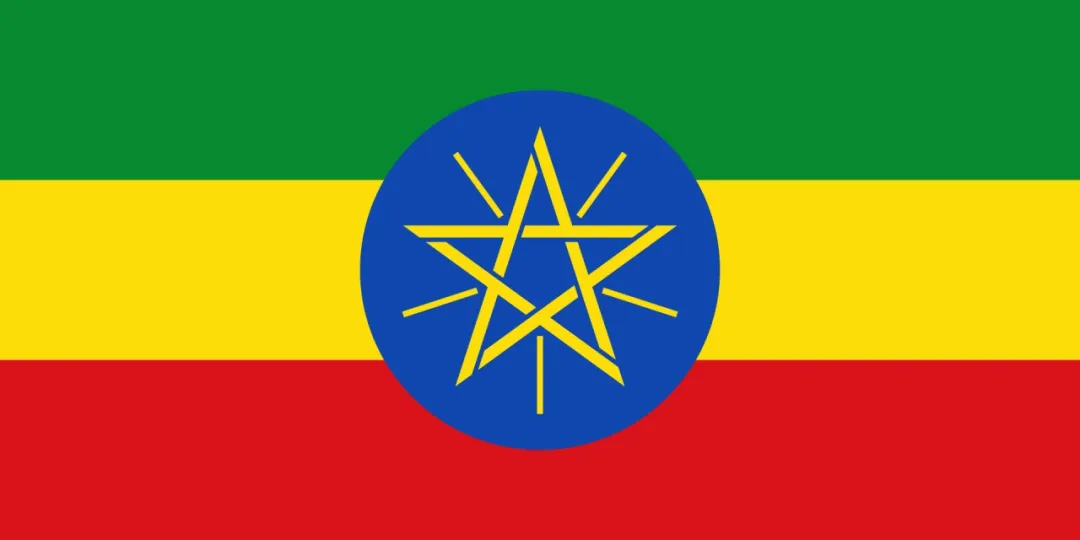
The national flag carries three equal horizontal stripes — green, yellow, and red from top to bottom — with the national emblem at the center. Green stands for the fertile land, mild climate, abundant plant resources, and hope for the future. Yellow symbolizes peace and universal brotherhood, and the people's resolve to build the nation. Red represents their readiness to shed blood in defense of the homeland. The central emblem is a golden five-pointed star radiating light on a blue disc: blue for peace, the rays for prosperity, and the star for diversity and unity.
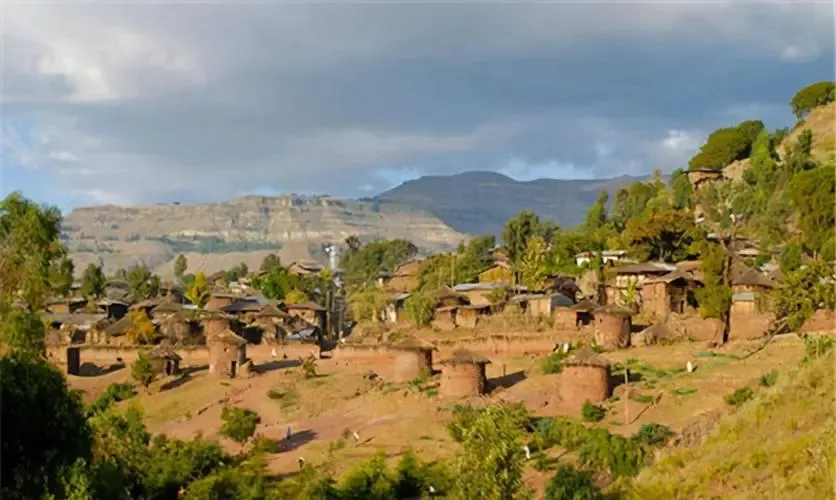
Ethiopia's terrain is dominated by mountains and plateaus — the Ethiopian Highlands cover two-thirds of the country, cut through end to end by the Great Rift Valley, with an average elevation near 3,000 meters, earning it the nickname "Roof of Africa." The northeast and south hold desert and semi-desert zones, about 25% of the national territory.
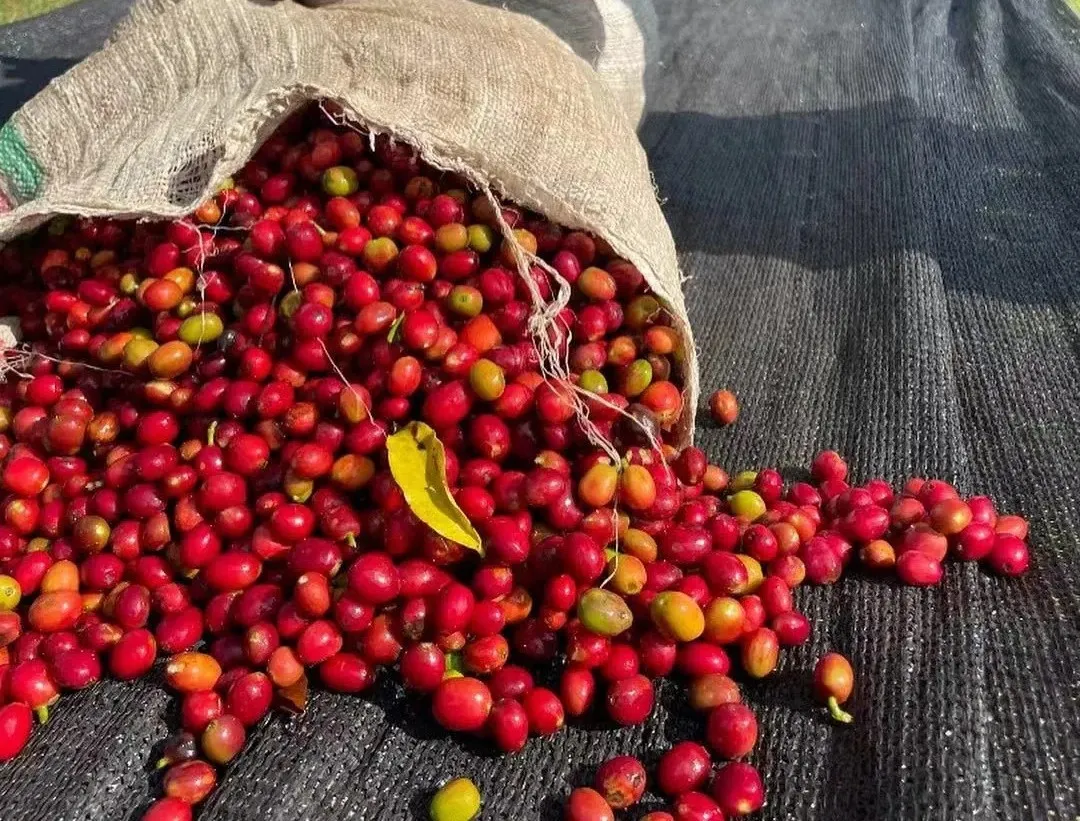
The national average elevation is 2,450 meters, which keeps the mean annual temperature at 16°C. The year divides broadly into dry and rainy seasons, with annual rainfall of 1,237 millimeters. Rich natural resources — plentiful water, high mountain zones, and more than 50 volcanoes — make the country ideal coffee territory.
Ethiopian Coffee Regions
Ethiopia has many coffee regions: Sidamo, Harrar, Kaffa, Limmu, Lekempti, Tepi, Bebeka, and Bale among them. The best-known today are Yirgacheffe, Guji, Sidamo, and Bebeka.

Sidamo:
After 1995, Ethiopia adopted a federal system and reorganized its regions around the main ethnic groups and their languages. Sidama was folded into the newly created Southern Nations, Nationalities, and Peoples' Regional State and officially restored to its historical name, Sidama. To strengthen the promotion of its coffees abroad, the Ethiopian government filed trademarks for three coffee region names in 2004, choosing the old spelling Sidamo® as the registered name for the region's coffee.
Consumers have called the region's coffee "Sidamo" ever since. The zone spans the fertile highlands south of Lake Awasha in the Great Rift Valley, at elevations of 1,400–2,200 meters with annual rainfall of 1,200–2,000 millimeters. High altitude, generous rain, a pleasant climate, and fertile soils make it superb coffee country. The region hosts several famous washing stations, such as the Santa Veni station and the Gosi station.

Yirgacheffe:
Yirgacheffe is a small town in northwestern Sidamo, on the eastern edge of the Great Rift Valley, and one of Ethiopia's highest coffee zones at 1,750–2,200 meters. In the local language, Yirga means "settle down" and Cheffe means "wetland" — the name reflects the humid, mild climate, abundant rain, fertile land, and ample sunshine. Originally part of Sidamo, it became an independent producing region on the strength of its unmistakable floral and fruity coffees, ever-changing and highly distinctive.
Guji:
Guji was once part of Sidamo but was designated a separate coffee region by the Ethiopia Commodity Exchange (ECX) in 2010 thanks to its excellent, instantly recognizable flavor. In southern Ethiopia, its terrain spans towering mountains, highlands, plateaus, valleys, and plains — a complex patchwork that creates diverse microclimates, over volcanic soils and dense forest, at an average elevation above 1,800 meters. The big day-night temperature swing slows cherry growth, letting the beans develop deep flavor. Guji contains sub-regions such as Hambella, Uraga, and Shakiso. Hambella is especially well known to Chinese consumers for its "Horse" coffee beans — and FrontStreet Coffee's new 2025 harvest "Horse" Gesha has just been released and is available now.

Bebeka:
The Bench Maji zone — also known as the Bebeka region, after Bebeka, the zone's capital — lies in southwestern Ethiopia, just a few kilometers from South Sudan. It is home to a celebrated estate: Gesha Village Coffee Estate, whose Gesha variety trees were found growing in the wild forests of Bench Maji.

FrontStreet Coffee Ethiopia Entry-level Selected Yirgacheffe Coffee Beans
Region: Yirgacheffe
Altitude: 1,600–1,700 meters
Variety: Heirloom
Processing Method: Washed
Flavor: Jasmine, orange, berries, lemon, caramel
FrontStreet Coffee's Yirgacheffe beans are washed and lightly roasted. Brewed on a V60 at a 1:15 ratio with 92°C water, you'll find jasmine fragrance, lemon acidity, orange and berry flavors, and a caramel-like sweetness, in a refreshing, smooth cup.
FrontStreet Coffee Recommendation
Want to explore Ethiopia further? Three picks drawn from the origins above:
FrontStreet Washed Yirgacheffe (entry level): The ideal first step into Ethiopian coffee — clear jasmine florals, bright citrus acidity, berries and lemon with caramel sweetness. Light, elegant, tea-like, and endlessly easy to drink.
FrontStreet Idido Cooperative: From the Worka zone at Yirgacheffe's southeastern edge, this washing-team lot — independently founded in 2012 by about 300 farmers — shows citrus, lemon, and elegant white florals with exceptional clarity and delicacy thanks to skin removal before drying. Bright, fine, and transparent.
FrontStreet Natural Guji (Hua Kui): From Guji's Hambella area, dried 21 days on raised beds with constant turning and repeated hand sorting. A medium-light roast reveals light fermented wine aromas, florals, citrus, and mango — a denser, more complex cup with honeyed sweetness, cocoa undertones, a hint of spice, thick body, and a long finish.
Important Notice :
FrontStreet Coffee is a long-established specialty coffee roaster in Guangzhou China, selling freshly roasted beans from its own farm in Yunnan as well as dozens of carefully selected single-origin beans from around the world for both pour-over and espresso. The products deliver consistently excellent quality and great value, with shipping within 24 hours. Guangzhou's FrontStreet Coffee shop is recommended by many coffee lovers, and the beans are now available online at the Tmall 。
FrontStreet Coffee has moved to a new address:
FrontStreet Coffee Address: 315,Donghua East Road,GuangZhou
Tel:020 38364473
 Scan and follow the En Gafei WeChat official account. Please indicate that the reprint comes from "En Gafei".