Why is Papua New Guinea Coffee Called the 'Little Blue Mountain'? What Similarities Does It Share with Jamaica's Coffee Emperor?
The "Little Blue Mountain": Papua New Guinea Coffee
During the last century, Blue Mountain coffee reigned as the undisputed "emperor of coffee," and its name stood for more than prestige — it was shorthand for the very best in quality and flavor. In that era, the beans from one particular region managed to earn themselves the nickname "Little Blue Mountain." Being mentioned in the same breath as the emperor of coffees is no small feat! And that coffee hails from Papua New Guinea in Oceania.
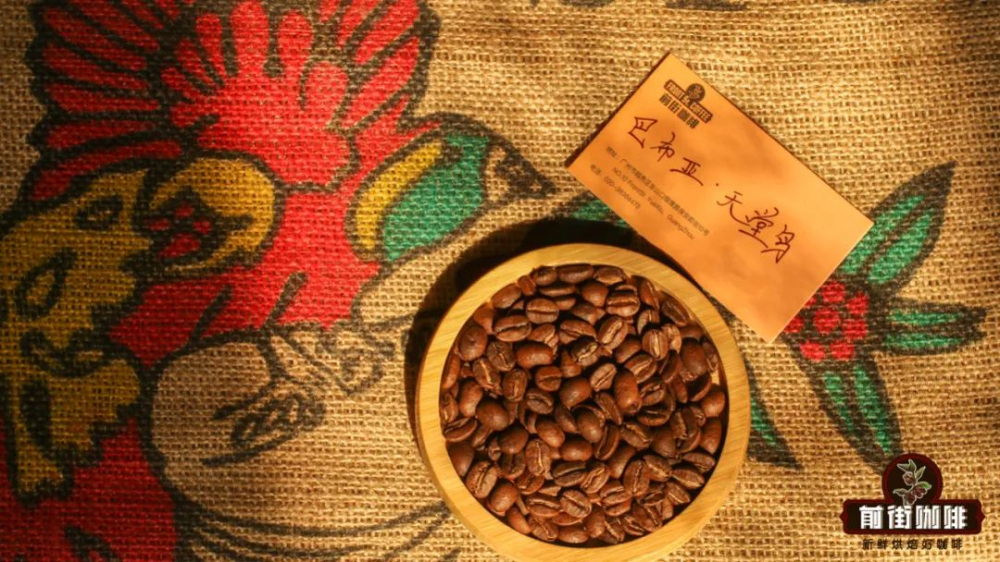
Oceania · Papua New Guinea
To be honest, whether we're talking about Oceania or Papua New Guinea, most coffee lovers would consider these fairly unfamiliar corners of the coffee world. Glance at the menu board at FrontStreet Coffee and you'll see that most of the coffee we drink today comes from Africa, Asia, or Central and South America. Oceania, by contrast, remains largely unexplored territory. So today, let's take a small detour and start with the country of Papua New Guinea itself!
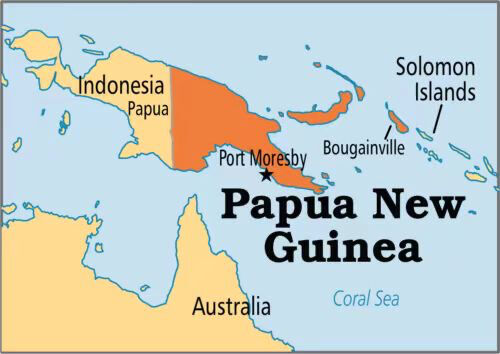
Papua New Guinea (PNG) occupies the eastern half of the island of New Guinea — roughly 85% of it, with the western half belonging to Indonesia. Beyond New Guinea Island, PNG's territory (the name is a mouthful, so let's just say Papua for short!) also takes in more than 600 islands of assorted sizes, among them Bougainville Island and the Bismarck Archipelago.
Any conversation about Papua has to touch on its remarkable climate. Sitting on the Pacific Ring of Fire, Papua's soils are largely mineral-rich volcanic earth, and rain falls generously all year round. It is, quite genuinely, a paradise for growing coffee — and not just coffee. For most plants, Papua is heaven on earth, which is precisely why its flora and fauna have evolved into something exceptionally distinctive.
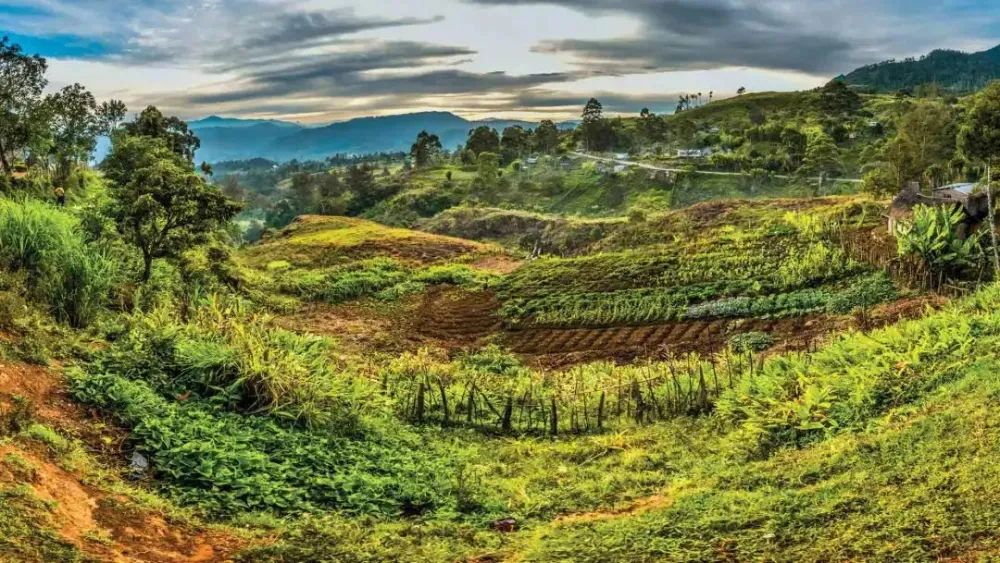
To date, Papua is home to around 6,500 native plant species and 380 native bird species. The human landscape is just as diverse: for a country of only 7 million people, more than 800 languages have sprung up here.
Papua New Guinea Coffee
Coffee cultivation in Papua dates back to the late 19th century. Coffee plants brought in by Dutch sailors took root in Papua's soil, and given how favorable the conditions were, the crop flourished. By the 20th century, coffee had grown into a commercial crop for Papua, and within just a few years the country's coffee-growing area had expanded to 180 acres!
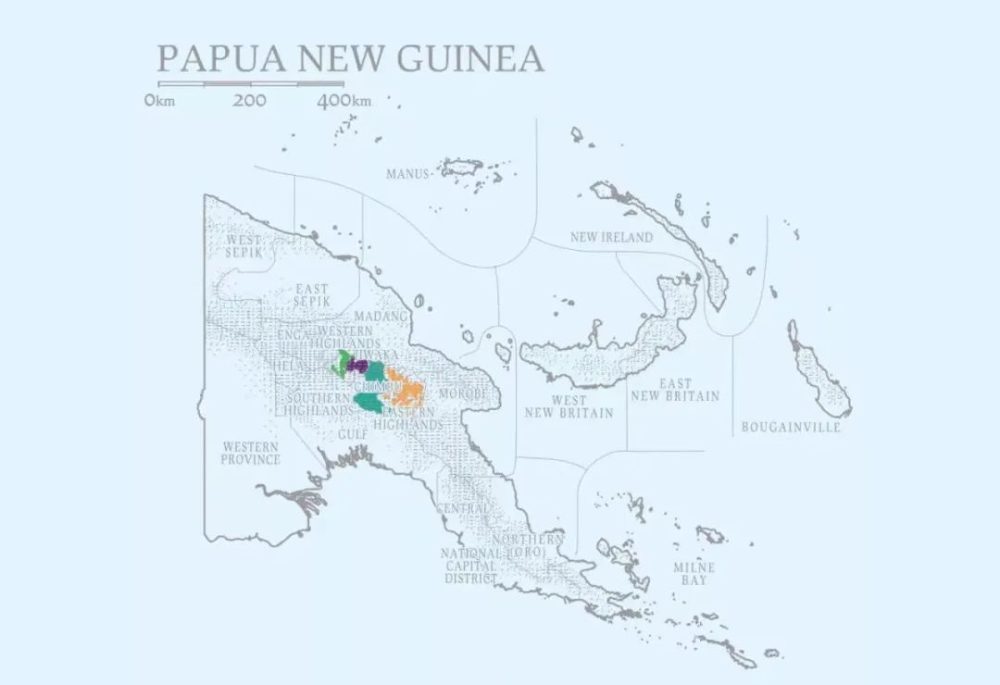
Papua's coffee is grown overwhelmingly by smallholder farmers, mostly scattered across high-altitude mountain zones between 1,200 and 1,800 meters — an ideal elevation band for coffee, which is why the quality stays so consistently high. Of all this coffee, 95% is Arabica. As time went on, Papua coffee began writing a new chapter in its story.
A New Title for Papua New Guinea Coffee: "Little Blue Mountain"
Fast-forward to 1932, when Papua brought in Typica from Jamaica for cultivation. As everyone knows, Blue Mountain coffee is itself Typica, and that changed everything. A variety carrying the same bloodline as the emperor of coffees was now planted in Papua's soil, and before long Typica had become the country's dominant cultivated variety. The kinship runs deeper than genetics, too — Papua's growing conditions for Typica closely mirror Jamaica's. As FrontStreet Coffee has noted, both the altitude and the climate type are strikingly similar, so the Typica produced in Papua comes remarkably close to Blue Mountain coffee in the cup.
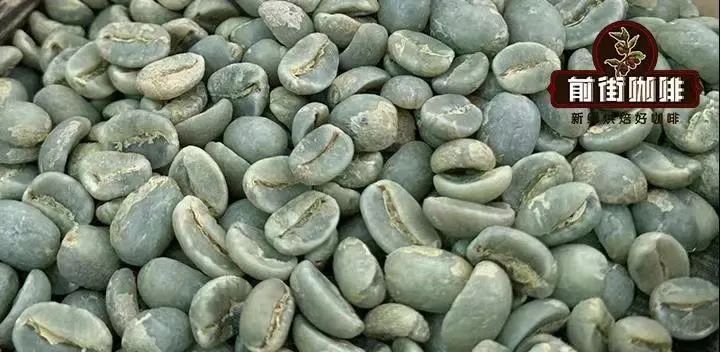
(Papua's Typica) One thing worth stressing: Papua coffee resembles Blue Mountain, but it isn't a clone. Because Papua sits closer to the equator, temperatures run higher, so a careful tasting will still reveal clear differences between the two.
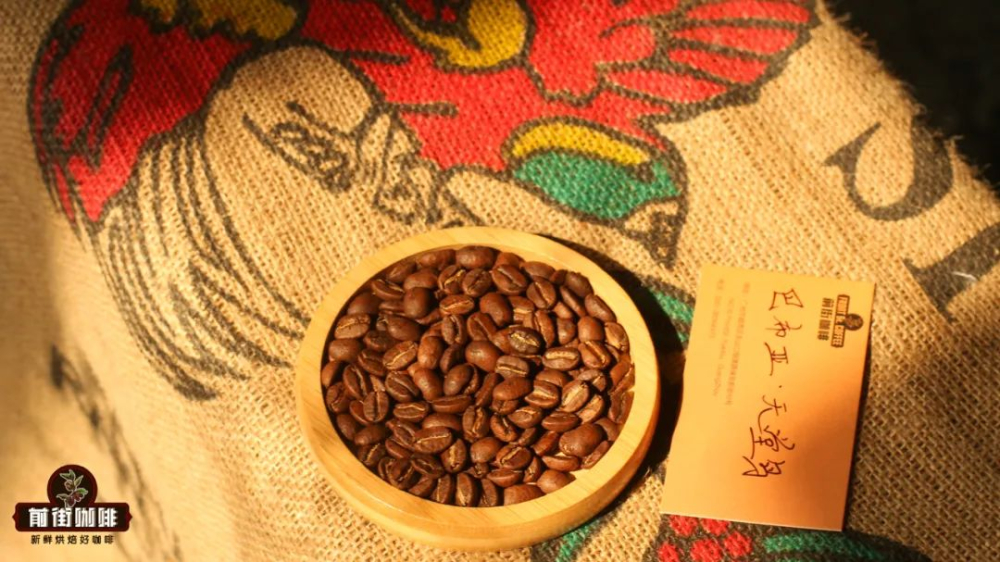
Today, the Papua New Guinea coffee most commonly seen in the domestic market comes from Sigri Estate and Purosa Estate. Their export sacks are all printed with Papua's national bird — the Bird of Paradise. It's precisely because of this emblem that Sigri Estate's coffee was dubbed "Bird of Paradise Coffee" when it first arrived in the country.
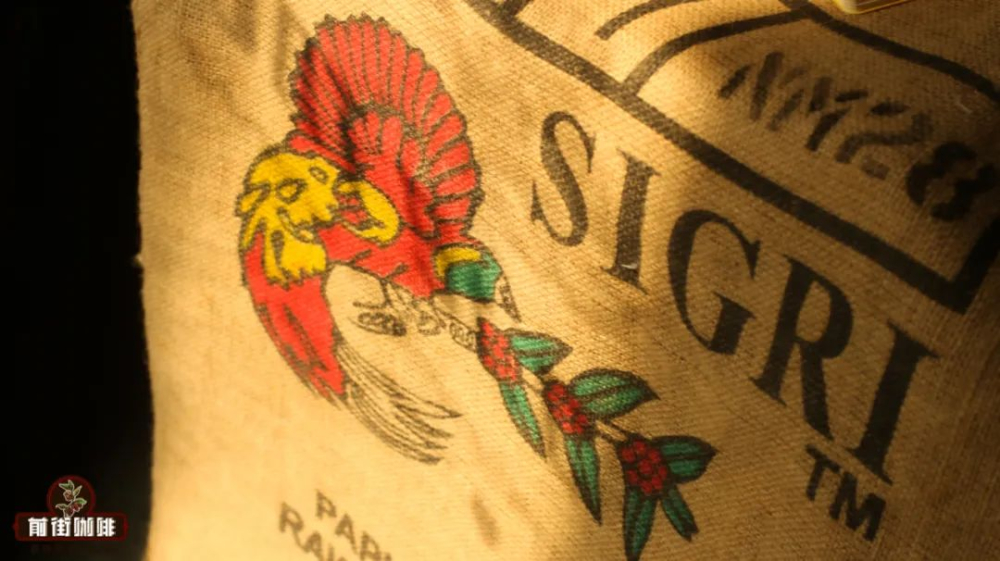
Although Purosa Estate later picked up the same "Bird of Paradise Coffee" label thanks to the identical motif on its sacks, years of gradual association mean most people still hear "Bird of Paradise Coffee" and think of Sigri Estate.
Sigri Estate
Founded in 1950, Sigri Estate has more than 70 years of history behind it, and for much of the Papua New Guinea coffee trade it has been the industry's standard-bearer. The estate's location is exceptionally fortunate: it sits in the Waghi Valley at 1,500 meters above sea level, where mineral-rich volcanic soil, a cool climate, and abundant rainfall make for near-perfect coffee-growing conditions.
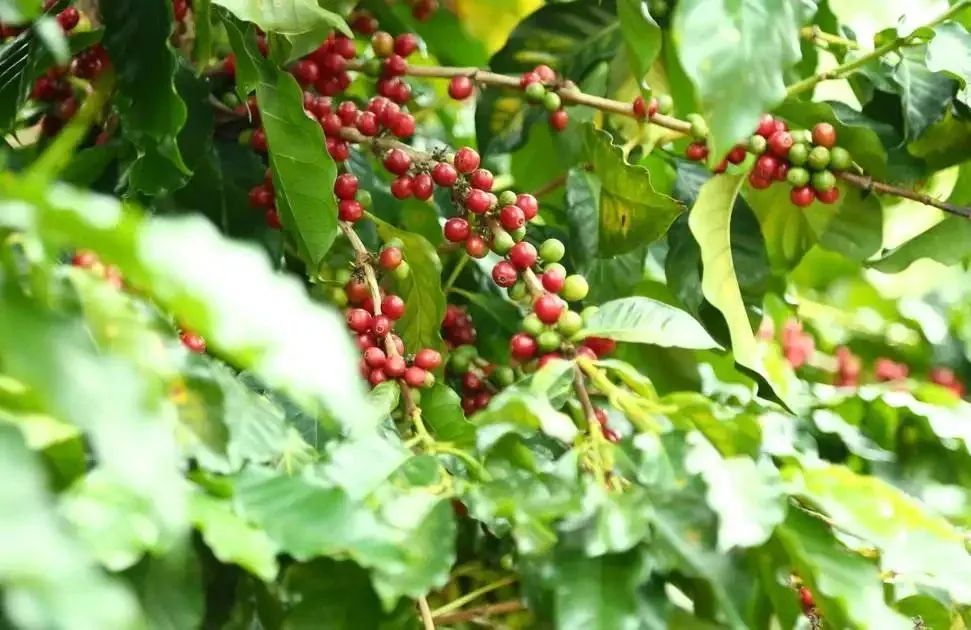
Just as importantly, Sigri Estate takes the protection of its ecosystem seriously. To keep water and soil uncontaminated, the estate never sprays pesticides or insecticides on its coffee trees. Alongside its environmental commitment, Sigri has held itself to one other standard for decades: guaranteeing the quality of its coffee. Long before "specialty coffee" became an industry term, Sigri Estate — much like Jamaica — had already put rigorous processing protocols in place. Every harvest season, its workers pick only fully ripe red cherries by hand and then process them meticulously to minimize the odds of anything going wrong. That discipline is what made Sigri Estate a classic in the specialty coffee world. And it's exactly why the Papua New Guinea Bird of Paradise coffee at FrontStreet Coffee has always come from Sigri Estate.
"Little Blue Mountain" vs. Blue Mountain Coffee: What's the Difference?
Alright, time for our no-prize quiz! Of the two washed beans pictured below, which one is Sigri Estate's Bird of Paradise, and which is Blue Mountain coffee?
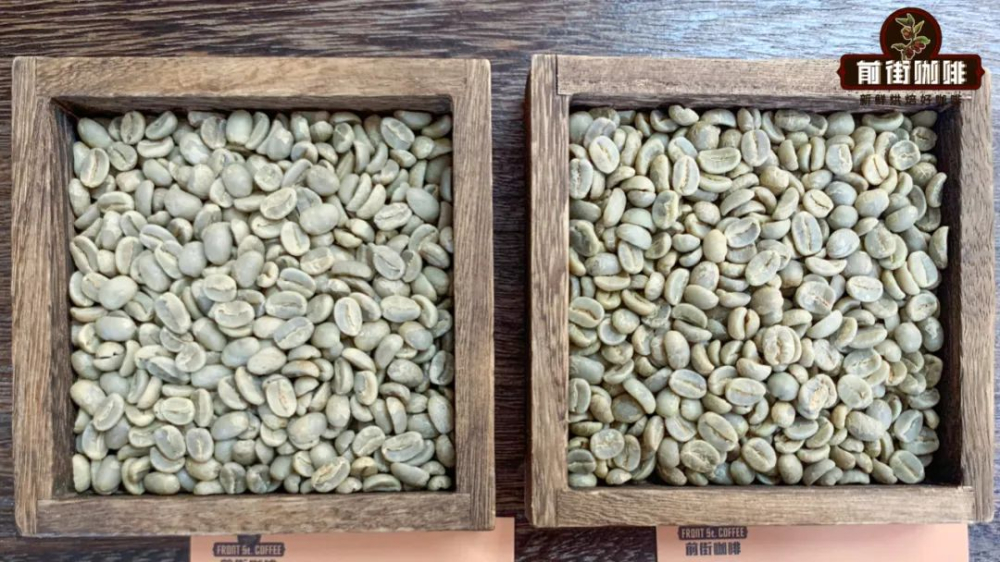
Answer revealed: the bean on the left is Bird of Paradise, and the one on the right is Blue Mountain coffee — did you call it right? FrontStreet Coffee roasts its Bird of Paradise beans to a medium roast. At that roast level, Bird of Paradise delivers more than rich cocoa and nutty notes, with a delicate berry-like acidity underneath. On the whole, sweetness, acidity, and bitterness strike a near-perfect balance, the mouthfeel is full, and the finish is clean and lingering. It sits remarkably close to Blue Mountain while keeping a personality of its own — a coffee that truly earns its "Little Blue Mountain" title!
- END -
FrontStreet Coffee
No. 10 Baoqian Qianjie, Yandun Road, Dongshankou, Yuexiu District, Guangzhou, Guangdong Province

FrontStreet Coffee Recommendation
Why Blue Mountain Still Sets the Bar for Balance
If this taste of "Little Blue Mountain" has you curious about the original, FrontStreet Coffee's Jamaica Blue Mountain No.1 is the benchmark to try. Blue Mountain No.1 is among the highest grades of Jamaican Blue Mountain coffee, with strict standards governing bean size, defect rate, and overall quality. The beans come from the historic Clifton Estate, where coffee has been grown since around 1750; the growing and processing areas sit at an average of 4,300 feet (1,310.64 meters), and the elevation, mild afternoon cloud cover, shade, sunshine, and mineral-rich soil all help extend the ripening of the coffee cherries.
How to Spot Genuine Blue Mountain
Authenticity matters with this coffee. Genuine Blue Mountain carries certification issued by the Jamaican government along with proof of origin, and it traditionally ships in wooden barrels built to hold 15, 45, or 70 kilograms of green beans — the barrels themselves are a hallmark of the real thing. The green beans should be uniform, plump, slightly upturned at both ends, and green in color. In the cup, true Blue Mountain is intensely aromatic yet clean and understated, with chocolatey sweetness, full body, and a gentle, perfectly measured acidity — with no harshness whatsoever.
Brewing Blue Mountain at Its Best
FrontStreet Coffee's Blue Mountain beans are roasted to a medium-dark profile to bring out the classic, full-bodied character of this coffee, and they're shipped within five days of roasting so they arrive at peak flavor. For pour-over, FrontStreet suggests a Kono dripper to accentuate the body, a 15g dose rested for 4-7 days after the roast date, a grind slightly coarser than you'd use for light roasts (around the texture of white sugar), water at 87-88°C, and a 1:15 ratio. Pour in three stages — 30g to bloom for 30 seconds, then up to 120g, then up to 225g — and you'll taste the nuts, dark chocolate, and creamy caramel unfold in perfect harmony.
Important Notice :
FrontStreet Coffee is a long-established specialty coffee roaster in Guangzhou China, selling freshly roasted beans from its own farm in Yunnan as well as dozens of carefully selected single-origin beans from around the world for both pour-over and espresso. The products deliver consistently excellent quality and great value, with shipping within 24 hours. Guangzhou's FrontStreet Coffee shop is recommended by many coffee lovers, and the beans are now available online at the Tmall 。
FrontStreet Coffee has moved to a new address:
FrontStreet Coffee Address: 315,Donghua East Road,GuangZhou
Tel:020 38364473
 Scan and follow the En Gafei WeChat official account. Please indicate that the reprint comes from "En Gafei".