
Analysis of Slow Pour-Over Coffee Flow Rate: What to Do When Coffee Won't Drain Properly?

Pour-over coffee, as a representative of drip extraction, is essentially a process in which water is poured onto the grounds, flows through the coffee bed, and drips into the server below. A digital scale lets us control the pouring time, but the total time for the water to reach the server depends on many things - grind size, how much water the particles absorb, pouring technique, and the dripper's structure and filter paper. So the overall duration of the drip can never be controlled precisely.
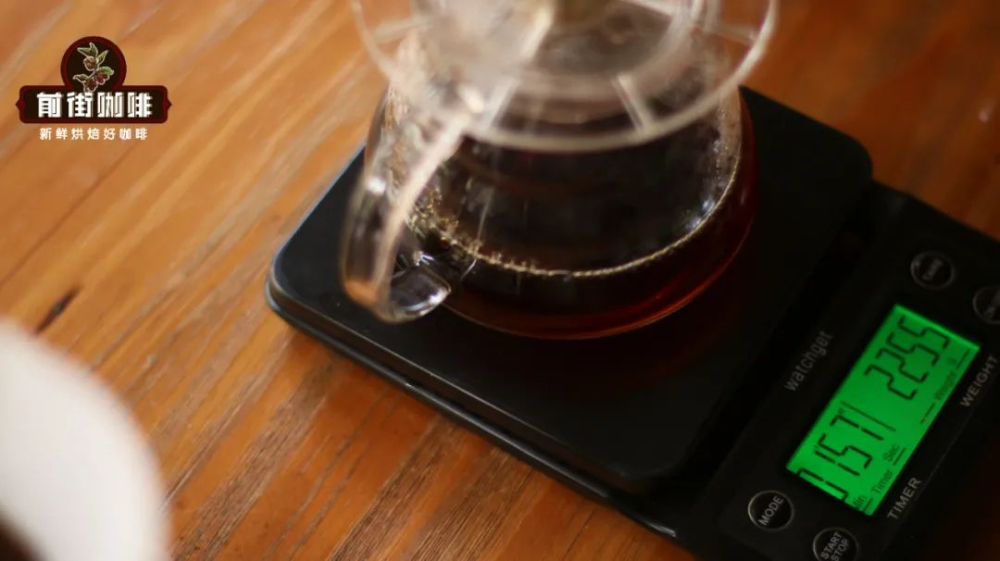
For many beginners, time is the most accessible yardstick for judging flow rate. When all the target water has been poured and the coffee liquid in the dripper has drained completely into the server within the expected 2 minutes, the various brewing parameters are probably in a reasonable range. If the duration runs well over - say 30 seconds to a minute past - or falls far short of 2 minutes, then something may be off and needs to be found and fixed promptly.
Of all the extraction-time questions FrontStreet Coffee has answered, the most common is a flow rate that slows badly in the final stage and stretches the brew out. We usually describe this as the coffee "pooling" or "waterlogging" at the end. So what is the solution?
Severe Pooling: Does It Affect the Taste?
However we make coffee, the extraction principles are much the same. With immersion methods, short extractions give weak, flavorless coffee, while long extractions give strong, bitter, astringent coffee - cold brew and French press being good examples. Likewise, the longer a pour-over drips, the more contact time there is between coffee and water, and the more soluble flavor compounds are released. The odds of over-extraction rise with it.
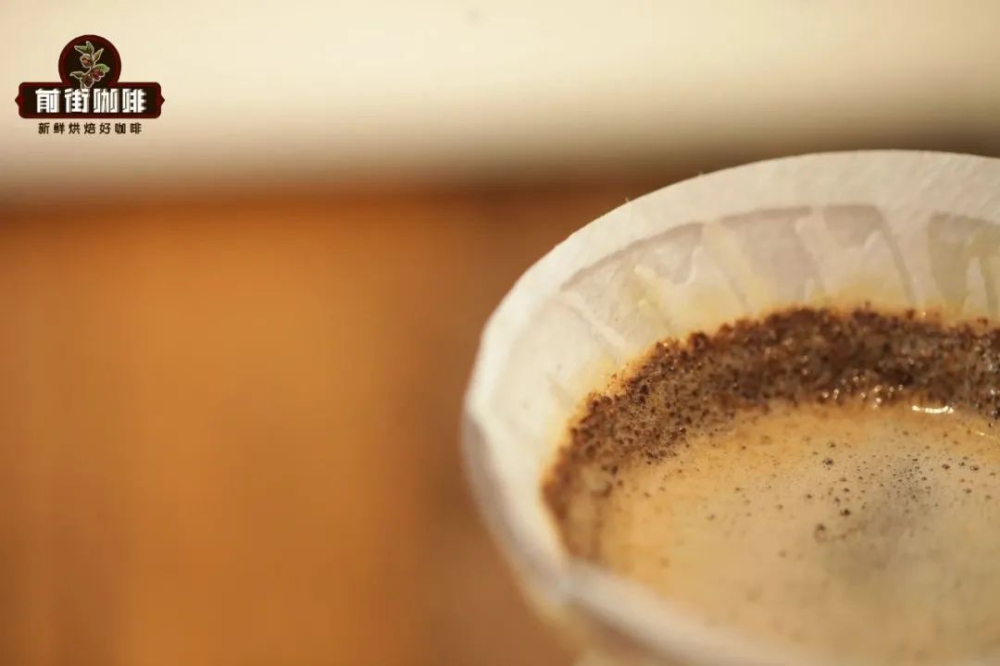
When pooling sets in during the final stage, look carefully at the bed and you will see that the foam on the surface is very thin and pale yellowish-white; sometimes there is no foam at all, just water sitting in the dripper. That tells you most of the grounds have settled at the bottom and blocked the water's path. By the time the liquid slowly reaches the server, it has likely pulled too many solubles out of the coffee. These late-released large molecules are mostly bitter and unpleasant, so the coffee does not taste good.
Why Does the Final Stage Drain So Slowly?
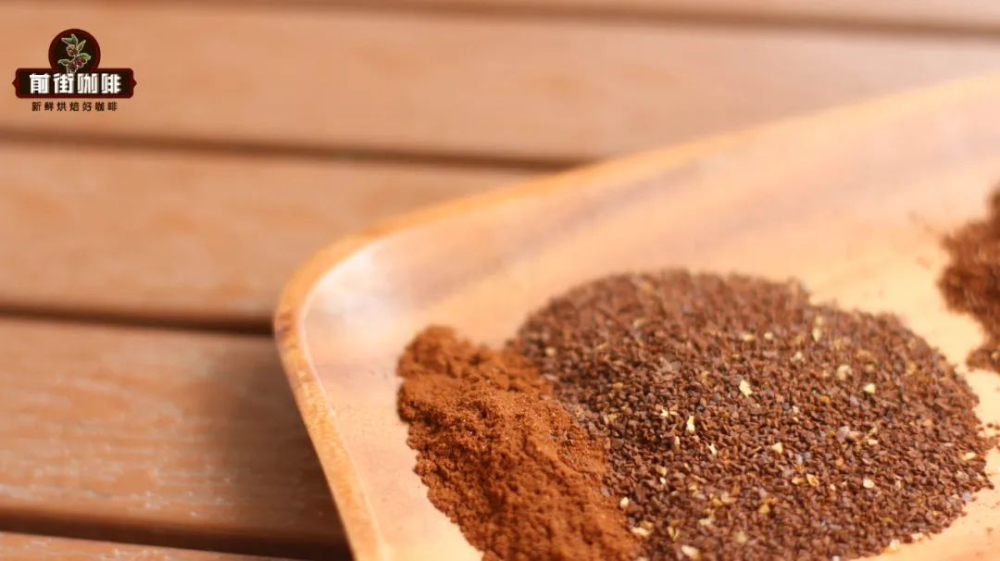
As mentioned, coffee grounds are the key thing blocking the flow. The finer the grind, the greater the resistance and the slower the flow. Pour-over grounds are usually about the size of sugar granules; sifted through a #20 sieve, a suitable grind has roughly 70-80% passing through. Grinding can never be perfectly uniform, though - in other words, coffee grounds inevitably contain a mix of coarser and finer particles.
Typically, severe pooling in the final stage - when the coffee liquid has not fully dripped through after 2 minutes and 20 seconds - comes from poor grinding quality, with the grinder producing too many extremely fine particles. During circular pouring, water moves the grounds along the stirring path, and the smaller fines are the first to "get stuck" in the filter holes at the bottom, blocking the hot water's passage.
With light-roasted, fruit-acid beans, two things make it worse. First, the bean structure is more compact and absorbs water less readily. Second, the higher density makes the grounds sink to the bottom first, where they block and accumulate.
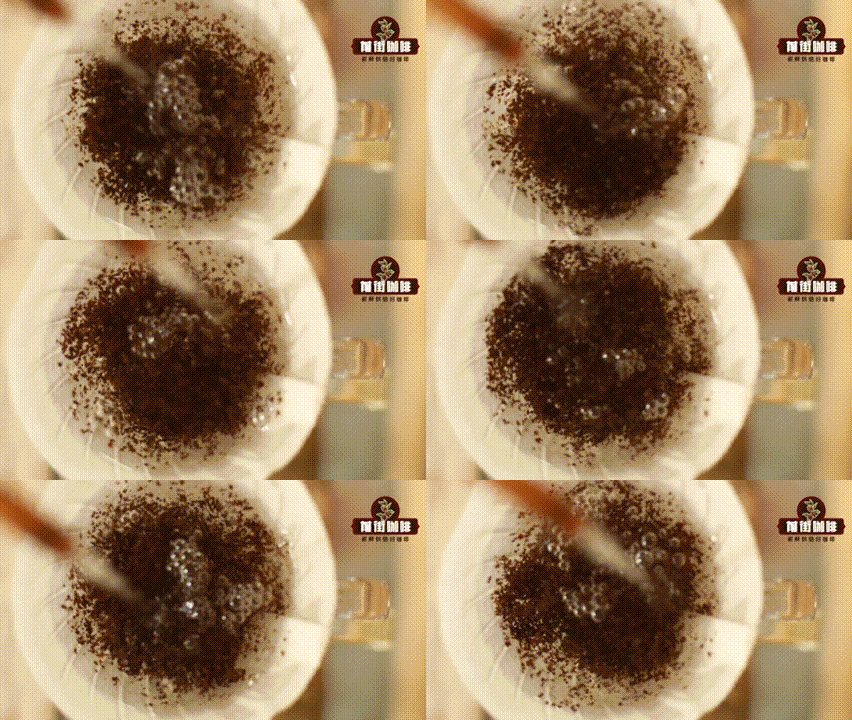
Beyond grinding, pouring technique can also cause blockage at the end. Some people pour in very wide circles. That works at first, letting the water level rise gradually, but later on the wide-circle flow tends to "hit" the filter paper, washing the powder wall that has built up on the sides straight down to the bottom and causing a blockage.
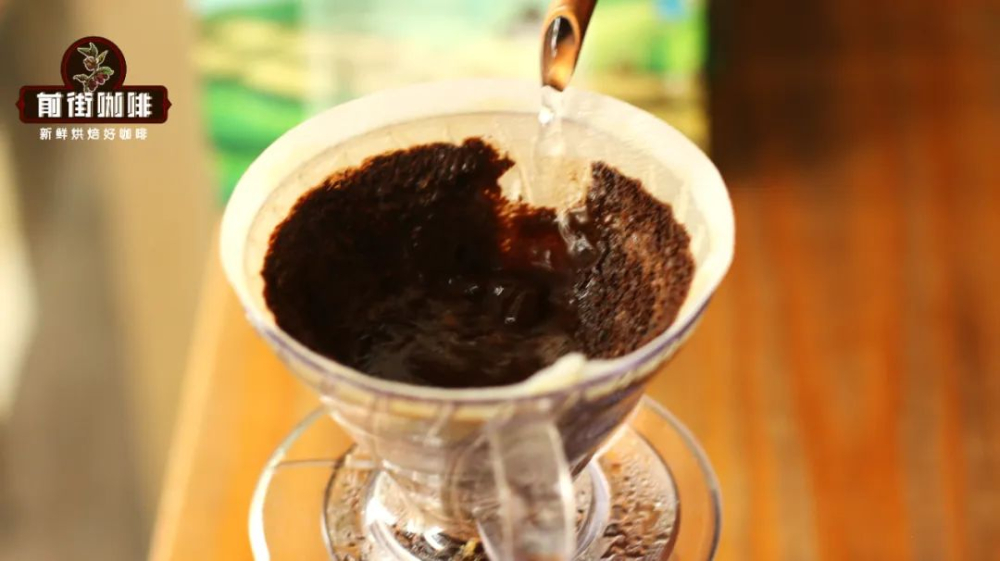
Bed management matters too. If the initial pour is too gentle to stir and lift the bed properly, letting it settle into the cone's point, then by the third pour even a large flow from a raised spout will struggle to "rescue" that low bed. The coffee liquid can only drip down along the dripper under gravity.
Once the principles are clear, the next step is to identify the specific problem.
Finding the Culprit Behind the Pooling
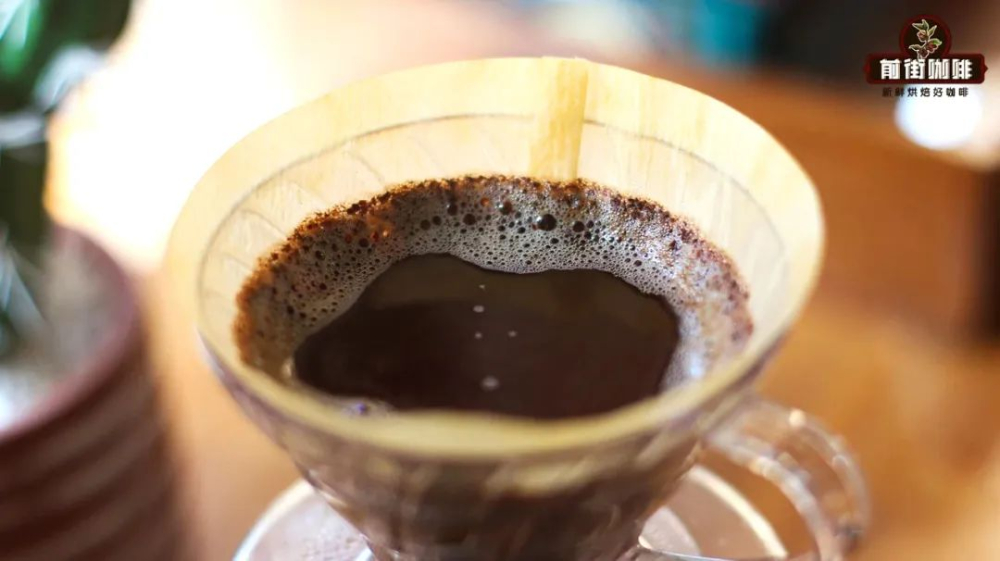
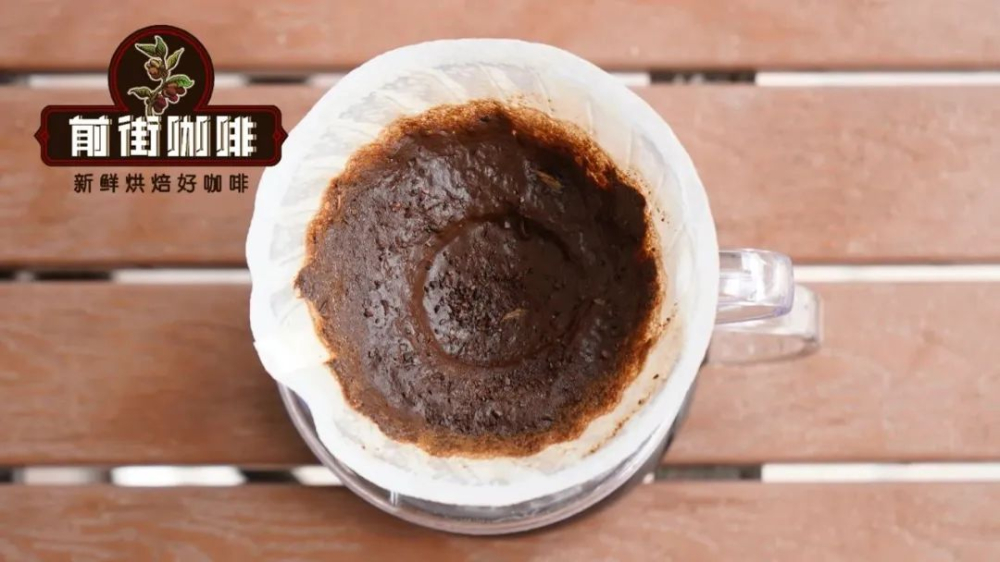
Whether you are brewing dark or light roast, if the final bed looks like the wet slurry in the picture below, the time often exceeds 2 minutes, and the coffee tastes dull and muddy, then your grinder is likely producing too many fines. The most effective fix is to switch to a grinder with better grinding quality, since higher-precision burrs greatly reduce the trouble caused by extremely fine particles.
Without changing equipment, FrontStreet Coffee suggests adjusting the grind coarser first. With particles coarser overall, the amount of fines falls accordingly. Switching to a faster-flowing dripper can also solve slow drainage effectively - the Hario V60, for instance, or the Ice Pupil B75 that FrontStreet Coffee commonly uses.
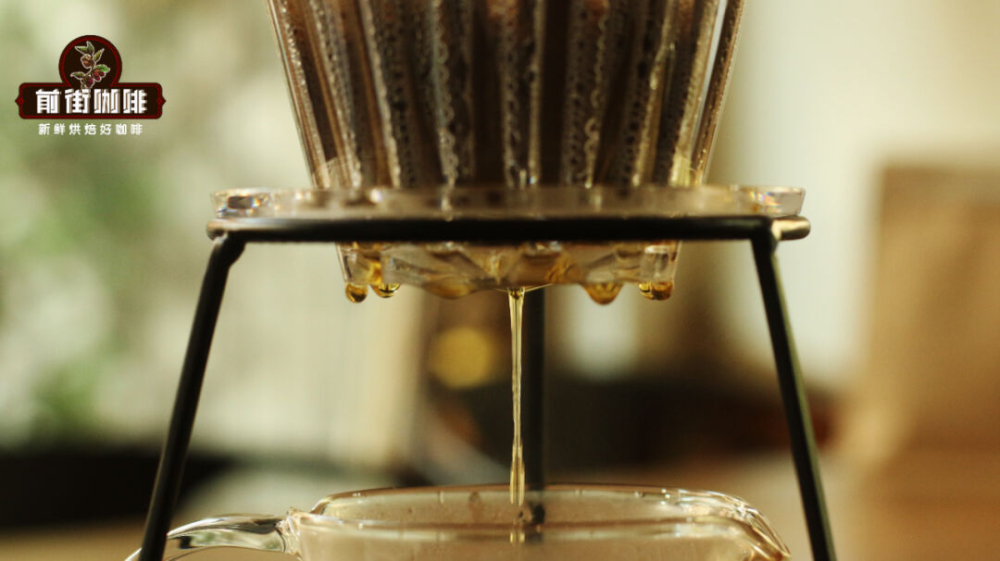
If the slow flow only shows up with light-roasted beans, and you want to avoid the off-flavors caused by prolonged waterlogging, adjusting your technique is worth considering.
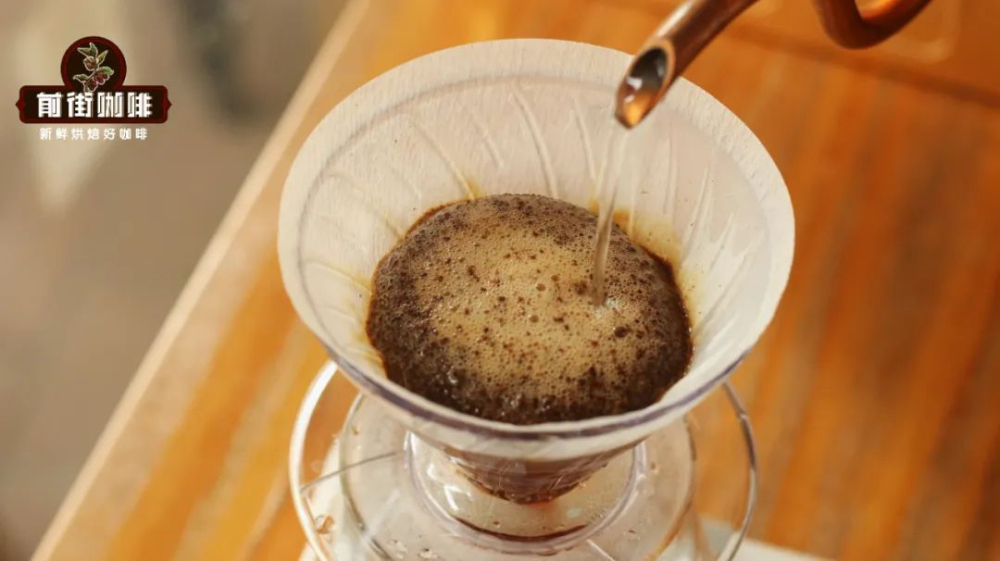
Take the three-stage pour FrontStreet Coffee uses most often. After blooming, first pour with a vertical, larger flow from the center, keeping the circles about the size of a coin. You can see foam rising continuously from the middle, and as the water level climbs the grounds are pushed gradually to the edges, forming a powder wall about two-thirds high. The final stage uses a small flow, still within a small circle. This lets the coffee and water meet more evenly while keeping the grounds at the edge of the dripper from being washed down.
- END -
FrontStreet Coffee Recommendation
Flow rate and grind quality go hand in hand, and the dripper you choose shapes both. FrontStreet Coffee's Yirgacheffe Gudingding is an easy pour-over starting point: vivid citrus, berry, and floral notes with a green-tea-like finish, and an acidity that is soft and bright rather than sharp. For a fruitier cup, FrontStreet Coffee's Ethiopia Huakui brings a striking tropical-fruit aroma of strawberry, passion fruit, jackfruit, and lychee, with clear sweetness, very little bitterness, and a smooth, juicy body.
Because a V60's large single hole lets flow rate respond directly to the brewer's control, it is the natural partner for beans like these: its 60-degree cone keeps water and coffee in contact longer and helps draw out layered aroma and lively acidity, so a clean, steady pour pays off right in the cup.
Important Notice :
FrontStreet Coffee is a long-established specialty coffee roaster in Guangzhou China, selling freshly roasted beans from its own farm in Yunnan as well as dozens of carefully selected single-origin beans from around the world for both pour-over and espresso. The products deliver consistently excellent quality and great value, with shipping within 24 hours. Guangzhou's FrontStreet Coffee shop is recommended by many coffee lovers, and the beans are now available online at the Tmall 。
FrontStreet Coffee has moved to a new address:
FrontStreet Coffee Address: 315,Donghua East Road,GuangZhou
Tel:020 38364473
 Scan and follow the En Gafei WeChat official account. Please indicate that the reprint comes from "En Gafei".

