
Guatemala Coffee | Introduction to New Oriental Region Geisha Coffee Beans
Coffee is grown across multiple continents, and Central America holds a dense cluster of producers — Guatemala, Panama, Costa Rica, Honduras among them. Of these, Guatemala is renowned for its high-quality, high-altitude Strictly Hard Beans (SHB) and ranks as the world's ninth-largest coffee producer.
Guatemala
Guatemala sits at the southern end of North America, bordering Mexico, Honduras, Belize, and El Salvador, with the Caribbean to the east and the Pacific to the south. Two-thirds of the country is mountains and plateaus: the Cuchumatanes range in the west and the Sierra Madre in the south, both volcanic zones — the country counts 37 volcanoes.
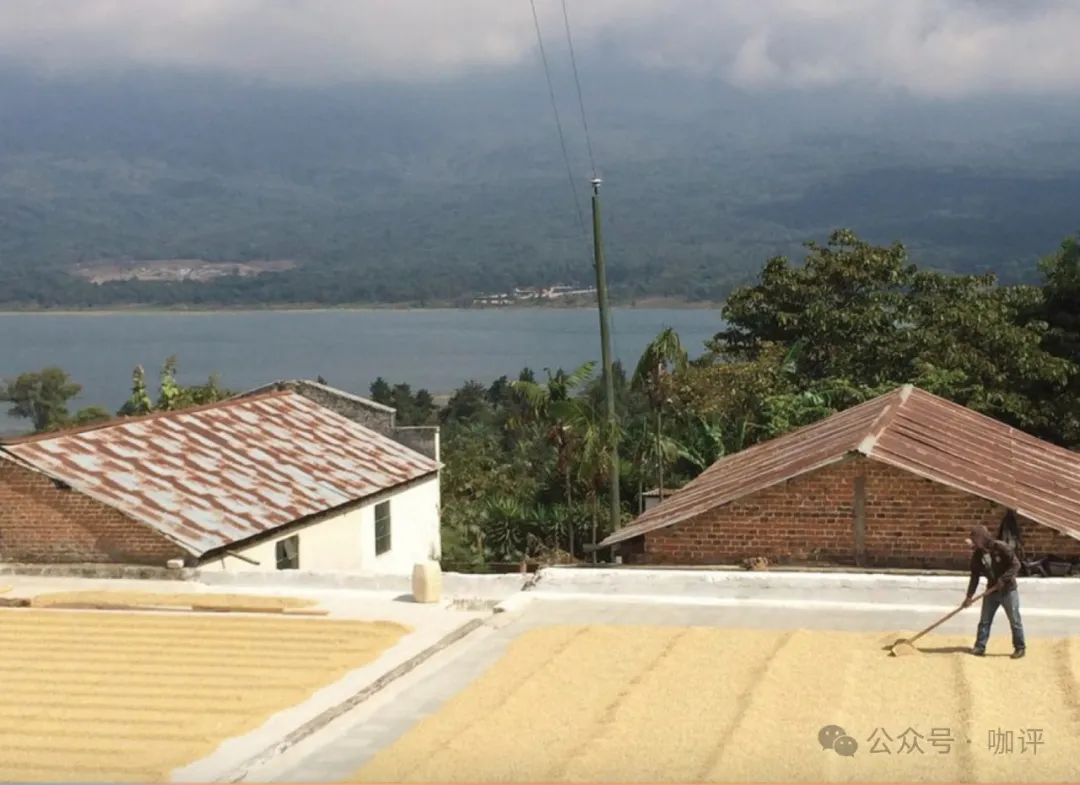
Guatemala lies in the tropics: the north and eastern coasts have a tropical rainforest climate, while the southern mountains are subtropical. The wet season runs May to October, the dry season November to April. Coffee typically grows at 1,300–1,800 meters, where temperatures stay moderate year-round between 18°C and 28°C; January and February are the coldest months, and annual rainfall in the northeast reaches 2,000–3,000 millimeters. High altitude, volcanic soil, wide day-night temperature swings, abundant rain, and varied microclimates give Guatemalan coffee its elegant, lively acidity, clean mouthfeel, and clearly layered flavors.
Nuevo Oriente Growing Region
Of Guatemala's 22 departments, 20 grow coffee. Eight regions stand out — five volcanic, three non-volcanic — with cultivation averaging above 1,500 meters. The non-volcanic group includes Huehuetenango, Cobán, and Nuevo Oriente; the volcanic group comprises Atitlán, Antigua, Acatenango, Fraijanes, and San Marcos. Huehuetenango and Antigua are the most famous. FrontStreet Coffee offers a washed Guatemala Huehuetenango as an introductory bean: light fruit acidity, citrus, berry, and nut flavors, a smooth aftertaste, and a tea-like finish.
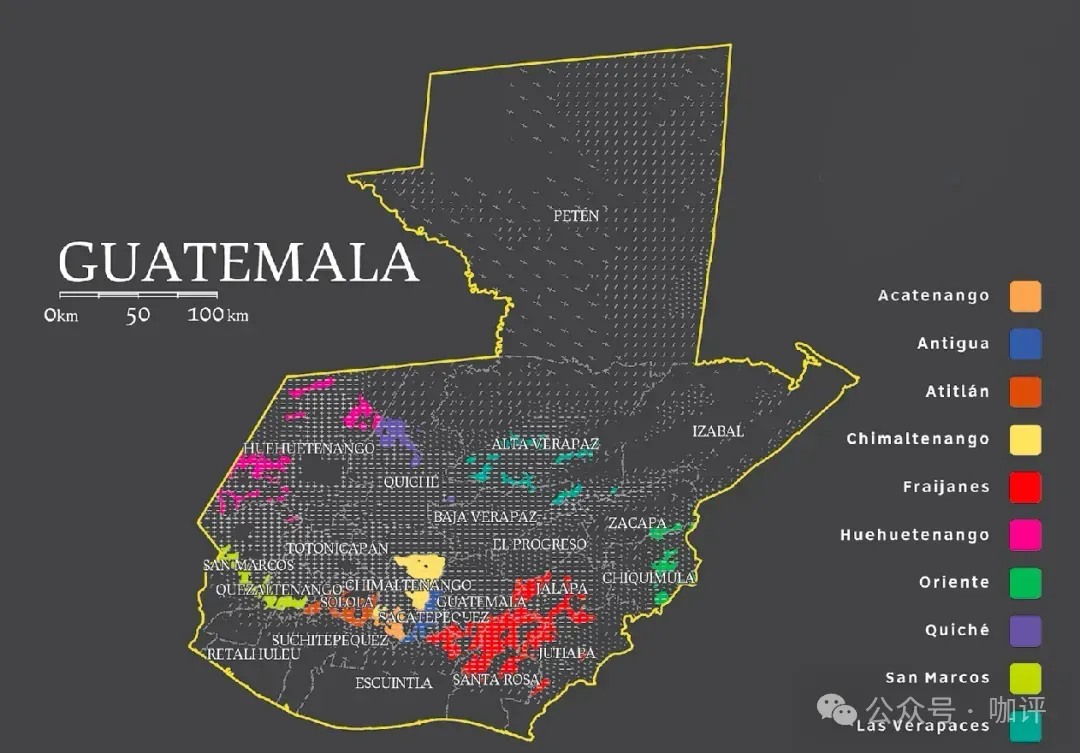
Nuevo Oriente lies in eastern Guatemala near the Honduran border and is the country's youngest coffee region — cultivation only began here in the 1950s. Rain falls abundantly year-round at elevations of 1,500–2,050 meters, bringing frequent mist and shorter sunshine hours, so the zone is more humid than its peers. Nuevo Oriente was once one of Guatemala's poorest and most isolated areas. Though volcanic in ancient times, its soil is now mineral-rich; combined with heavy rainfall and high altitude, it produces beans of exceptional flavor complexity.
Geisha Variety
The Geisha variety was discovered in the forests of Ethiopia in the 1930s. Prized for its resistance to coffee leaf rust, it passed through several countries before catching the eye of the owner of Hacienda La Esmeralda in Panama. Geisha entered the 2005 Best of Panama (BOP) competition and took first place with its delicate florals — jasmine, peach, and bergamot — and exceptionally high scores, breaking the green coffee auction price record at over $20 per pound and thrusting Geisha onto the world stage. That success inspired countries everywhere to plant it, Guatemala among them.
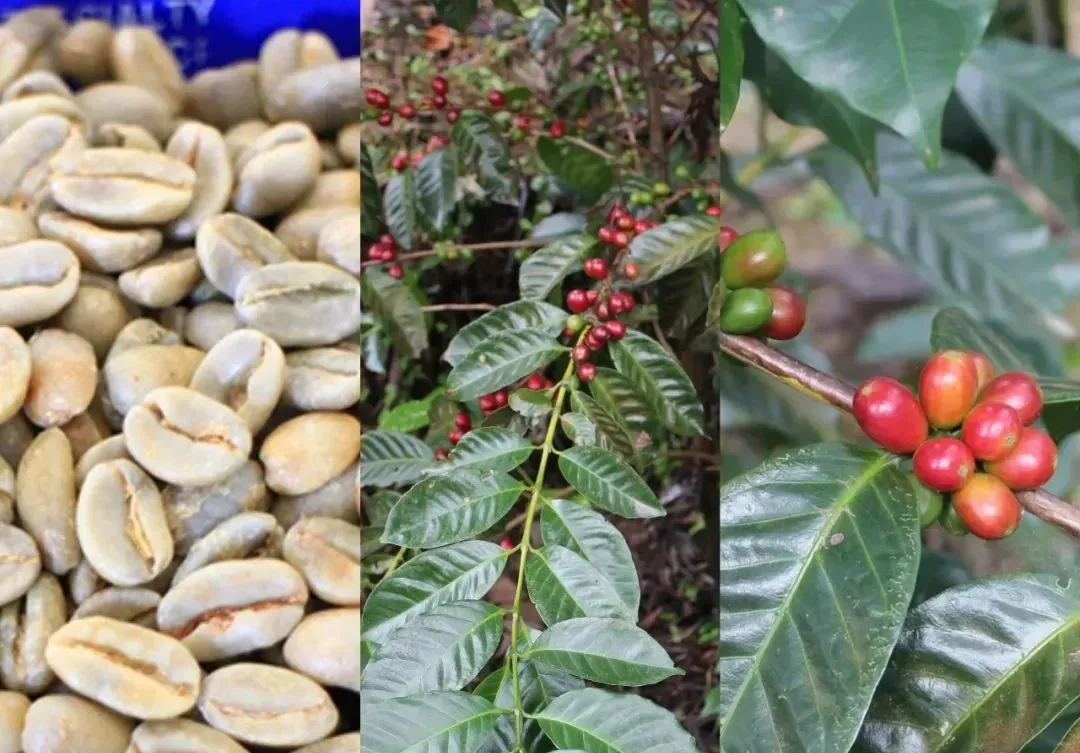
The Geisha plant has thin, elongated leaves with green or bronze tips on new growth, slender widely spaced branches, red or yellow cherries, and long, pointed green beans. The plant grows relatively large but is fragile: somewhat resistant to leaf rust, yet vulnerable to nematodes and coffee berry disease. It thrives above 1,600 meters, with quality climbing as elevation rises.
FrontStreet Coffee Guatemala Nuevo Oriente Geisha Coffee Beans
Region: Nuevo Oriente
Altitude: 1,500–2,050 meters
Variety: Geisha
Processing: Honey Process
Flavor: White floral notes, sweet orange, bergamot, honey, toffee
FrontStreet Coffee's Nuevo Oriente Geisha is honey-processed and roasted light to medium. Brew it on a V60 at 1:15 with 92°C water: delicate white florals rise first, followed by light fruit acidity, sweet orange and bergamot, and toffee sweetness in a smooth, honeyed mouthfeel — richly layered from start to finish.
FrontStreet Coffee Recommendation
Geisha's homeland is Ethiopia and its fame belongs to Panama — two picks that trace that story:
FrontStreet Esmeralda Red Label / Green Label Geisha: The Estate that made Geisha famous. The Red Label ("Esmeralda Special") grows at 1600–1800 meters, with every batch — each from a single named plot and independently numbered — cupping above 90 points; the Green Label ("Private Collection") blends lots across high-altitude plots to express the estate's signature Geisha profile at a friendlier price. Hand-poured, both unfold unmistakable orange-blossom honey notes, juicy fruit acidity, and a tea-like finish.
FrontStreet Geisha Village Gold Label: From the estate founded 12 miles from the original Gesha forest, which grows three Geisha varieties (Gori Gesha, Gesha 1931, and Illubabor Forest). The Gold Label is a Gesha 1931 lot — 10% of the estate's output, its top non-auction coffee, frequently chosen by competitor baristas — given an meticulous natural process with complex, layered flavors from dry aroma to finish.
FrontStreet Granana Estate Geisha: A rare single-variety estate in Yirgacheffe: the Granana Gesha farm, whose washing station — founded in 2014 and run by Mr. Israel Degefa — sits at the border of Kochere and Granana Abaya, surrounded by 700 hectares of largely untilled, fertile, shade-dotted land. Fully ripe cherries are hand-picked and dried 14–20 days on raised beds. At a medium-light roast it offers bright citrus acidity, elegant ginger-flower aromas, ripe fruit sweetness, and Geisha's signature refined finish. For an even easier entry, the FrontStreet Strawberry Candy blend pairs Costa Rican honey-process coffee with Panama Geisha — fine florals and sweet fruit through pour-over, moka pot, espresso machine, or cold brew.
Important Notice :
FrontStreet Coffee is a long-established specialty coffee roaster in Guangzhou China, selling freshly roasted beans from its own farm in Yunnan as well as dozens of carefully selected single-origin beans from around the world for both pour-over and espresso. The products deliver consistently excellent quality and great value, with shipping within 24 hours. Guangzhou's FrontStreet Coffee shop is recommended by many coffee lovers, and the beans are now available online at the Tmall 。
FrontStreet Coffee has moved to a new address:
FrontStreet Coffee Address: 315,Donghua East Road,GuangZhou
Tel:020 38364473
 Scan and follow the En Gafei WeChat official account. Please indicate that the reprint comes from "En Gafei".

