Will There Be Significant Differences Between G1 and G2 Grade Ethiopian Single-Origin Coffee Beans?

Coffee beans are an agricultural product, and unlike industrial goods they cannot be held to a uniform standard of quality. Many factors affect the quality of a batch, and to avoid mixing good beans with bad, grading is necessary to standardize and sort bean quality. Grade markings also give green bean buyers a valuable reference when they make their selections.
When we buy roasted coffee, most packaging carries a grade marking too. This is a continuation of exporters' practice, intended to make those grades familiar to consumers. Attentive drinkers will notice, though, that grade markings vary from one producing region to another, because coffee bean grading standards have never been standardized worldwide.
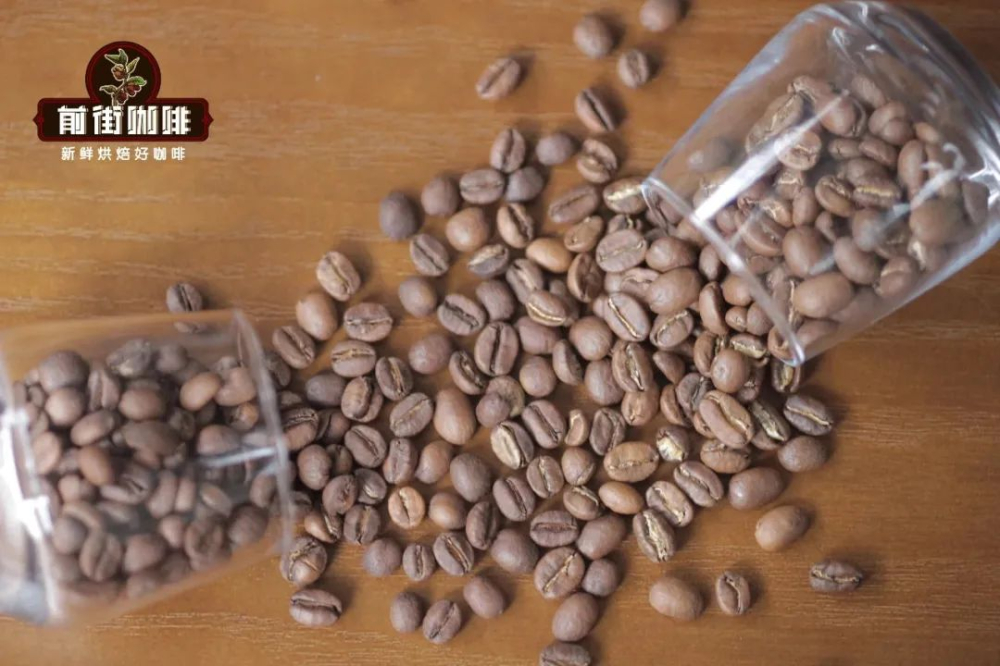
Some regions grade beans by cultivation altitude, as most of Central America does; others grade by bean size, like Kenya; and still others categorize by defect rate, like Ethiopia.
Each country's geography and cultivation methods differ, so their green bean grading systems are developed to fit national conditions. That brings us to Ethiopia's grading system, which FrontStreet Coffee has to mention.
Why Ethiopia Grades by Defects
As the birthplace of coffee, Ethiopia has thousands of coffee varieties still to be discovered. To prevent foreigners from continuing to take these unknown varieties out of the country, the Ethiopian government grouped them under the collective designation "Heirloom" as a protective measure. When we buy a bag of Ethiopian native coffee, we find that the bean sizes are not uniform, with tall, short, fat, and thin beans all making up some proportion.
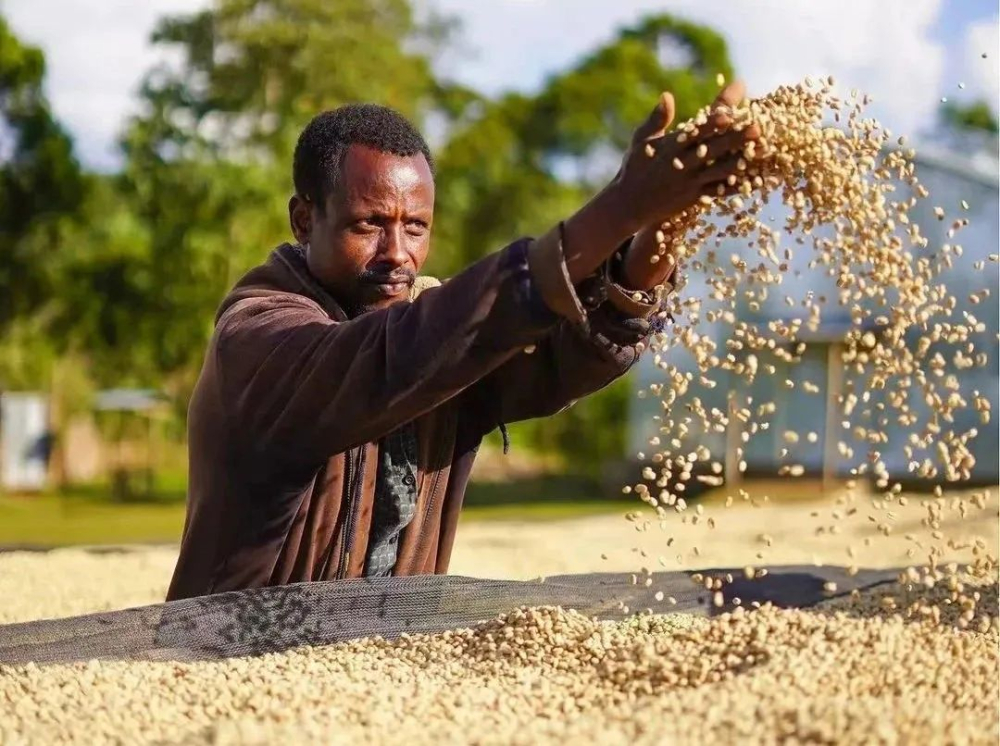
Most Ethiopian coffee trees are wild or semi-wild, scattered across the country. During harvest season, nearby farmers venture out together to pick the ripe fruit scattered across fields and mountains. A single field might hold dozens of different varieties.
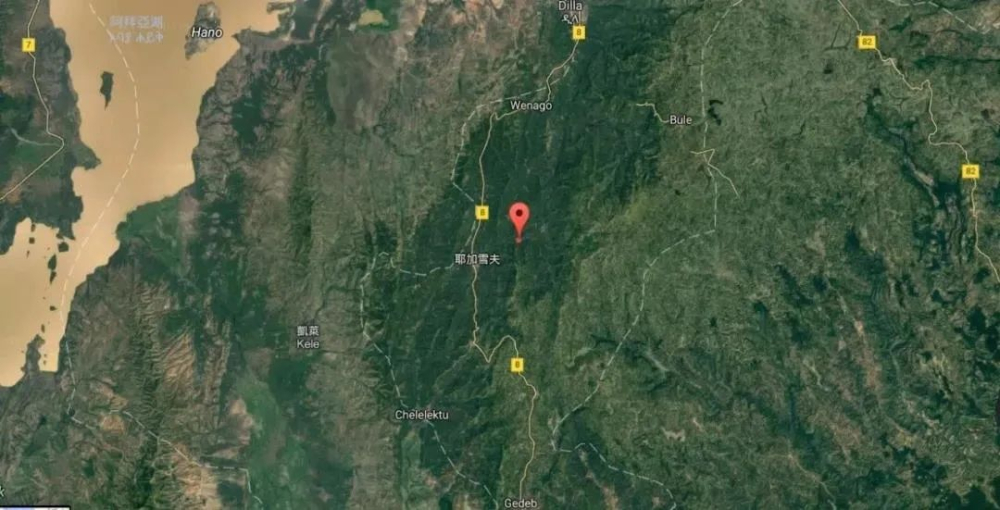
Although the beans are of different varieties, farmers have no obligation to separate them. They simply harvest and sell the ripe red fruit to processing plants and receive the corresponding payment.
The processing plants buy different varieties from surrounding farmers and likewise do not distinguish between them. Instead, they mix them together for unified processing. This "less rigorous" harvesting and production is what produces beans of varying sizes. Notably, although some beans are small, they can carry excellent flavor, which is why Ethiopia cannot use size alone to grade coffee.
Second, Ethiopia sits at a high average altitude with relatively flat terrain, and coffee is mostly grown at similar heights, making altitude-based grading impossible. As a result, the Ethiopian government ultimately used defect rate to differentiate grades.
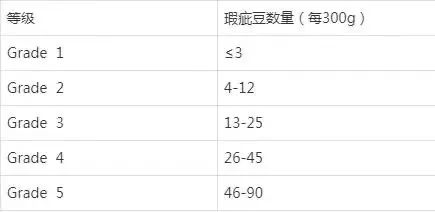
Grading purely by defect rate inevitably does a disservice to many beans with excellent flavor. So after 2009, the Ethiopian government modified its system, no longer distinguishing grades by defect rate alone. Instead, after an initial grading by defect rate, a secondary evaluation is carried out through cupping and bean appearance.
What's the Difference Between G1 and G2 Beans?
So what exactly separates G1 from G2? For today's example, let's use our familiar Yirgacheffe. The green beans in the image below are Yirgacheffe G1 and G2 grade beans, both washed. Let's start by comparing their appearance.
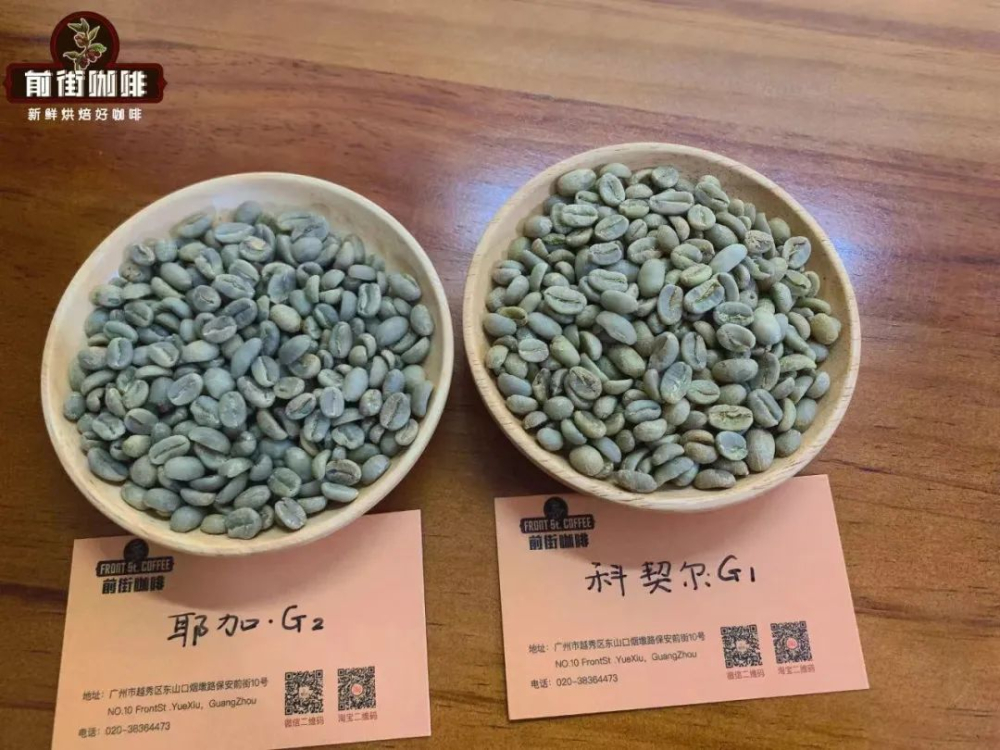
The G1 grade Kochere green beans are noticeably fuller than the G2 grade beans, with more uniform color. On closer inspection, G2 has more defects than G1, which is naturally expected. Next, let's sort out the defective beans, roast them, and see what differences appear after roasting.
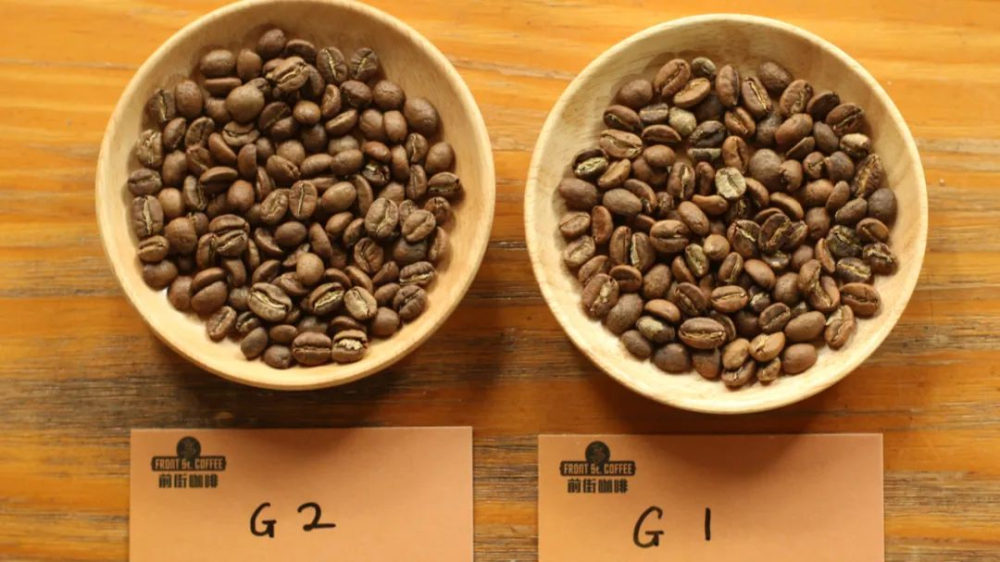
Roasting complete. Because of the different bean sizes, there are subtle differences in color value between the two. FrontStreet Coffee used a light roast, which lets the beans retain more floral aromas and fruit notes and interprets the Yirgacheffe profile well.
Brewing Parameters and Process
Brewing parameters: 15 g coffee grounds; 1:15 coffee-to-water ratio; EK43 grinder setting 10; 92°C water temperature; V60 dripper; three-stage pouring method.
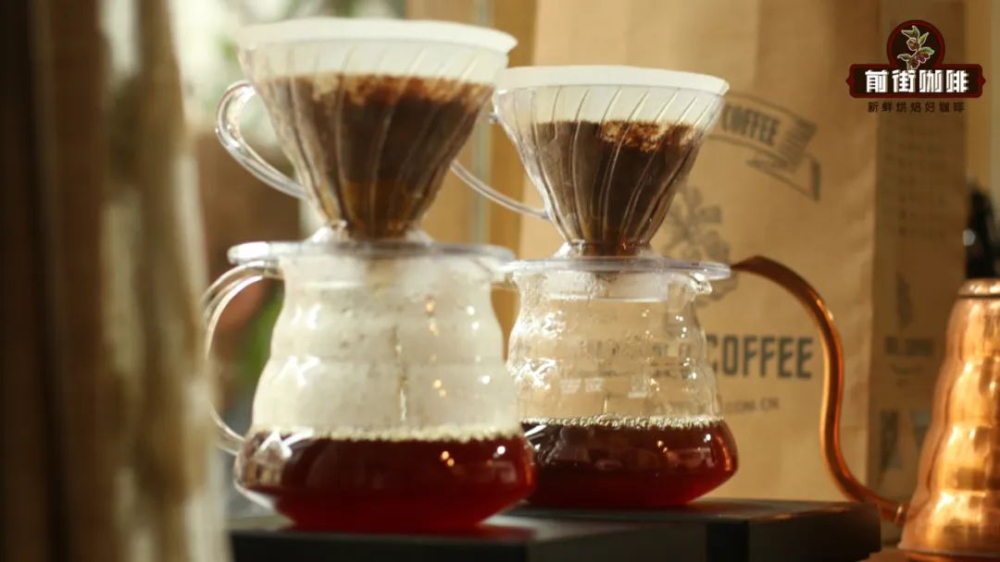
First, use twice the coffee's weight in water for a 30-second bloom. After blooming, pour the second stage of 120 ml of hot water in small, even circles. When the water level is about to drop, pour the final stage of 75 ml of hot water in small, even circles. Then simply wait for the drip to finish.
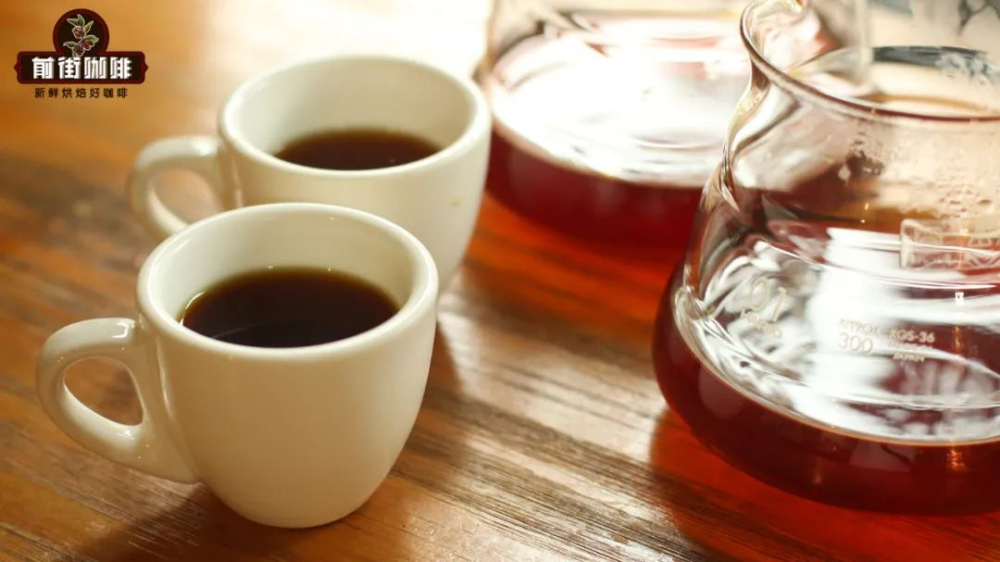
Through tasting, FrontStreet Coffee can tell that the G2 grade Yirgacheffe shows very classic regional flavors: lemon, white florals, citrus acidity, and a green tea aftertaste. The G1 grade Yirgacheffe builds on that foundation with brighter acidity, a cleaner mouthfeel, and a slightly longer aftertaste. Without a direct comparison, though, the differences between them are not very obvious.
Conclusion
In summary, G1 and G2 Yirgacheffe do not show significant flavor differences. G1's mouthfeel is simply a little more outstanding than G2's, and that is the main distinction between the grades. It is worth remembering that grading is primarily meant to give green bean buyers a reference; by the time beans reach the roasted market, the influence of grade is minimal. Coffee shops, after all, typically buy high-grade, high-quality beans by default, and apart from the top two grades, lower grades are rarely seen. So there is no need to worry too much about bean grade.
- END -

FrontStreet Coffee Recommendation
If this comparison has you curious about what an Ethiopia G1 actually tastes like, FrontStreet Coffee Yirgacheffe Gordin Cooperative is a strong example. This Yirgacheffe-area coffee comes from the Gordin processing station in the Worka region, which split off from the Worka cooperative and became independent in 2012 with roughly 300 member farmers. Pulp is removed before drying, which makes its inherent aromas clearer, and the cup shows citrus and lemon notes with elegant white florals and a bright, delicate overall profile.
For a softer, more accessible introduction to the same origin, FrontStreet Coffee Washed Yirgacheffe is a good first step, offering clear jasmine florals and bright citrus acidity with a light, elegant body and a tea-like character that drinks like a clean lemon tea.
Important Notice :
FrontStreet Coffee is a long-established specialty coffee roaster in Guangzhou China, selling freshly roasted beans from its own farm in Yunnan as well as dozens of carefully selected single-origin beans from around the world for both pour-over and espresso. The products deliver consistently excellent quality and great value, with shipping within 24 hours. Guangzhou's FrontStreet Coffee shop is recommended by many coffee lovers, and the beans are now available online at the Tmall 。
FrontStreet Coffee has moved to a new address:
FrontStreet Coffee Address: 315,Donghua East Road,GuangZhou
Tel:020 38364473
 Scan and follow the En Gafei WeChat official account. Please indicate that the reprint comes from "En Gafei".