
Colombian Coffee Beans | Introduction to Selected Caturra Coffee Beans from Huila Region
Coffee is cultivated in many countries across continents around the world. In South America, several countries grow it, including Ecuador, Peru, and Colombia. Among them, Colombian coffee enjoys exceptionally high recognition in the global coffee market, with Colombia ranking as the third-largest coffee-producing country after Brazil and Vietnam.
Colombia
Colombia lies in the northwestern part of South America and is a country with both land and sea borders. It connects with Venezuela, Brazil, Ecuador, Peru, and Panama, bordered by the Pacific Ocean to the west and the Caribbean Sea to the north. Colombia's terrain is generally divided into western mountainous regions and eastern plains. The west mainly consists of the Andes mountain range, while the east is made up of the Orinoco and Amazon plains.
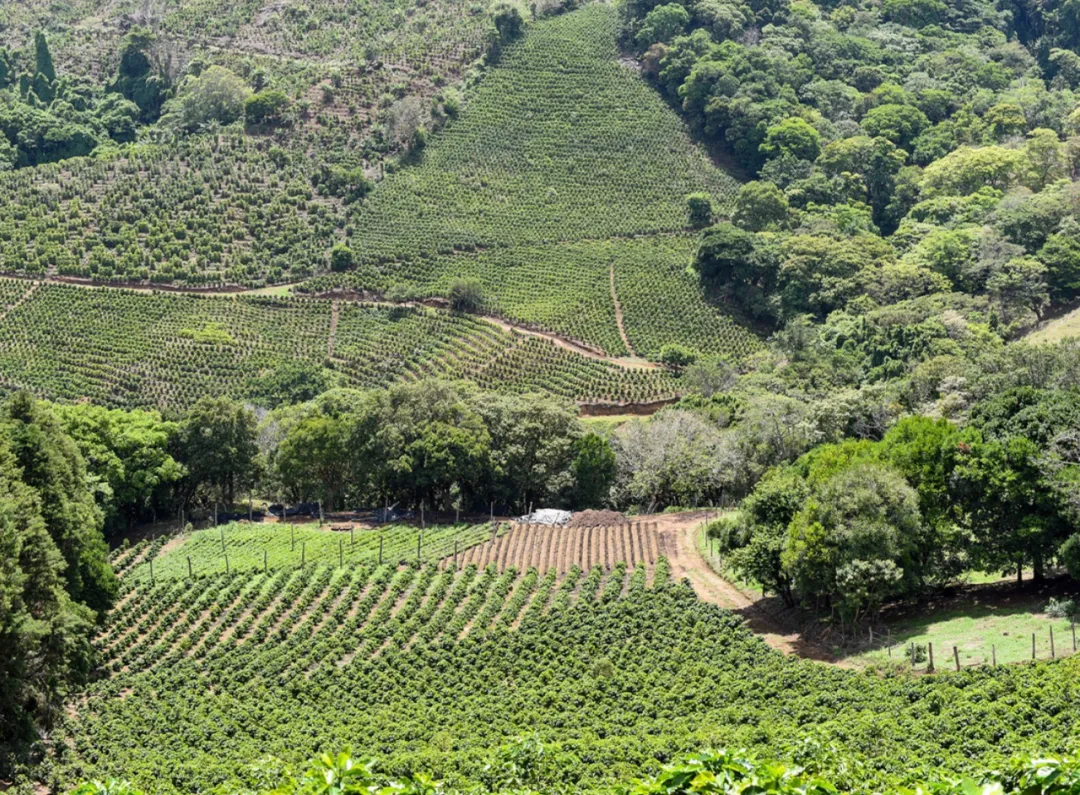
Because of its tropical location, the climate varies with altitude. The eastern plains and the Pacific coast have a tropical rainforest climate, while mountainous areas at elevations of 1,000-2,000 meters experience a subtropical climate, and the northwest features a tropical savanna climate. The country also has numerous volcanoes and forests, with forest cover of roughly 59.31 million hectares. Three Cordillera mountain ranges run north to south through Colombia, and coffee is primarily grown in the highlands of these ranges, where the annual temperature remains around 18°C with annual rainfall between 2,000-3,000 millimeters. The mountain terraces give diverse climates, enabling harvest seasons throughout the year. Colombia's high-altitude mountains, volcanic soil, and varied microclimates offer ideal conditions for coffee cultivation.
The Huila Region
Colombia's relatively large territory means it has multiple coffee-growing regions. Because of the mountainous terrain and different microclimates, coffee from each region shows a distinct flavor profile. Currently, Colombia's most renowned coffee-producing regions include Antioquia, Santander, Huila, and Nariño.
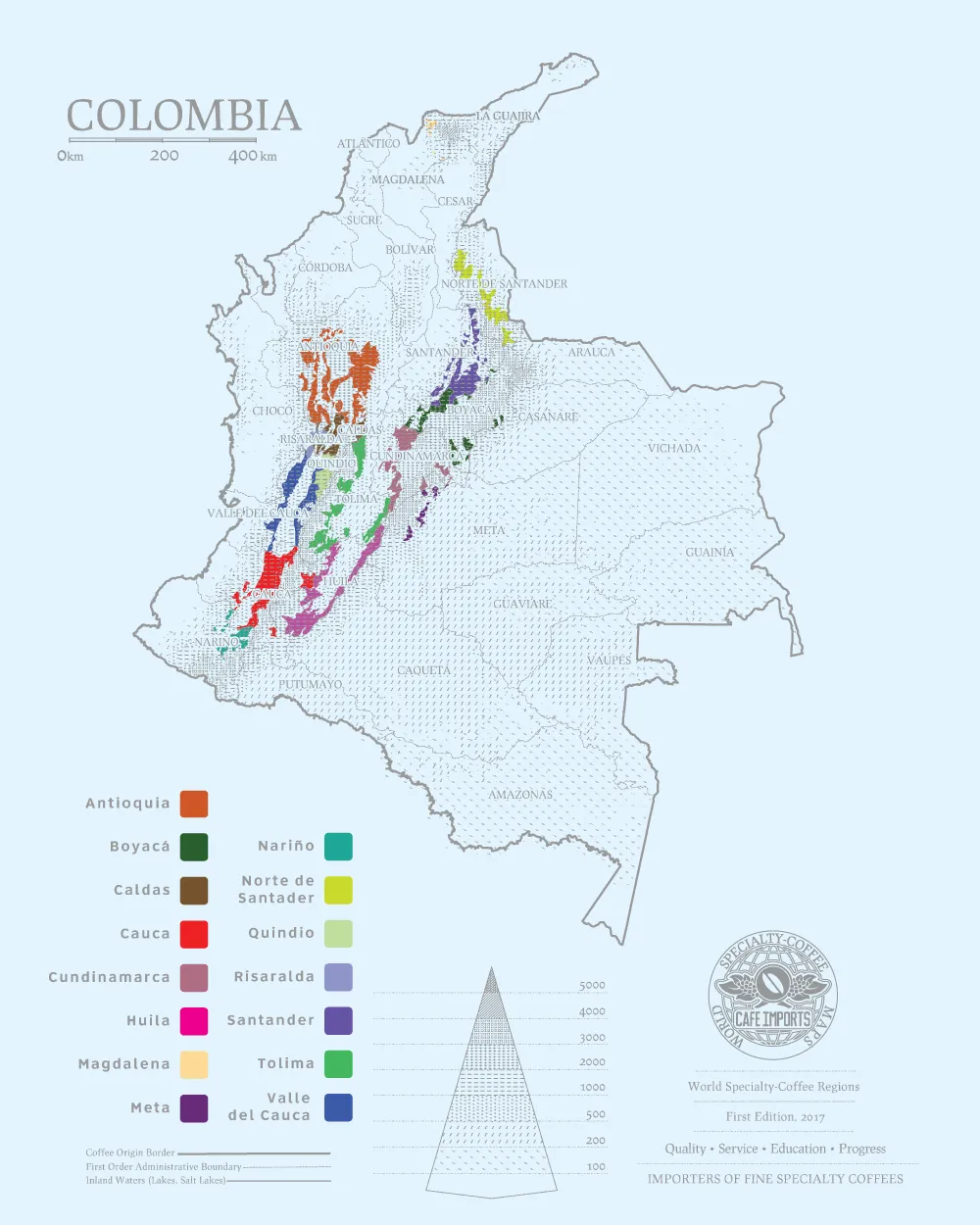
The Huila department lies in southern Colombia, representing the southern part of the central mountain range. It is formed by the central and eastern ranges of the Andes, with most of its area in the Magdalena River Valley. The region consists of hilly terrain surrounded by mountains, with coffee cultivated at altitudes between 1,200-1,800 meters and temperatures generally between 17°C and 23°C. It is Colombia's most famous specialty coffee-producing region.
The Caturra Variety
Caturra is a variety of Bourbon that was discovered between 1915 and 1918 on a plantation in Minas Gerais, Brazil. The name Caturra comes from the Guarani language, meaning "small." In coffee plants, Caturra has green leaves, tightly clustered berries, short internodal spacing, and predominantly red fruits. The beans are medium-sized and oval-shaped, though slightly larger than Catuai. The overall plant structure is relatively compact, allowing dense planting and higher yields. Its production cycle is shorter than other varieties, however, making it suitable for high-altitude cultivation but susceptible to leaf rust, nematodes, and berry diseases.
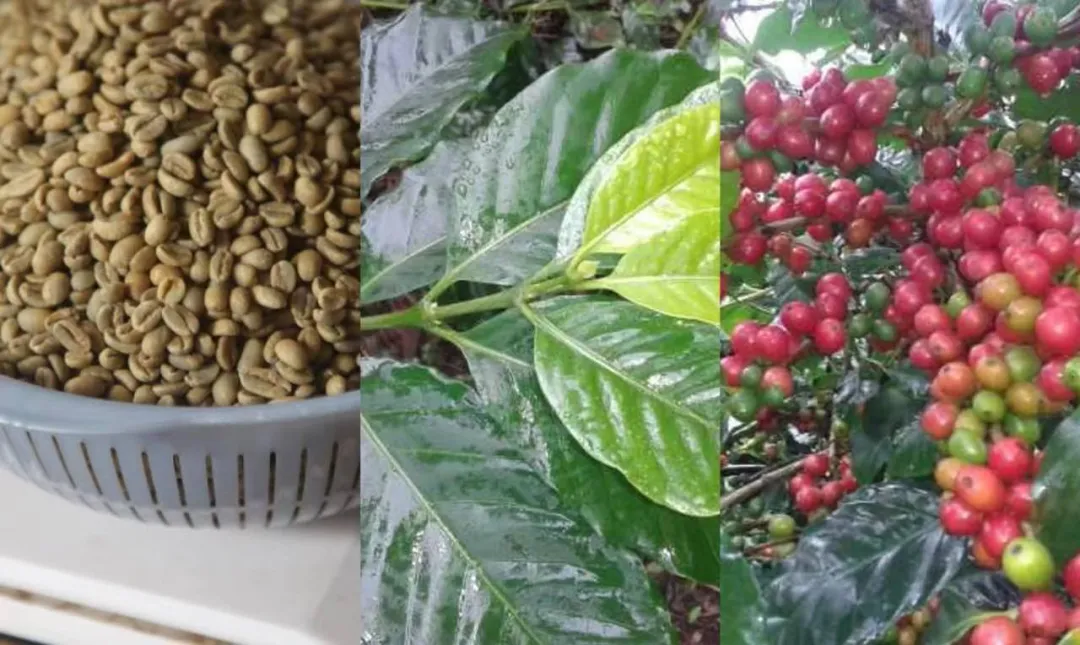
FrontStreet Coffee Colombia Entry-level Selected Huila Washed Coffee Beans
Region: Huila
Altitude: 1,500-1,800 meters
Variety: Caturra
Processing: Washed
Flavor: Dark chocolate, nuts, caramel, slight fruit acidity
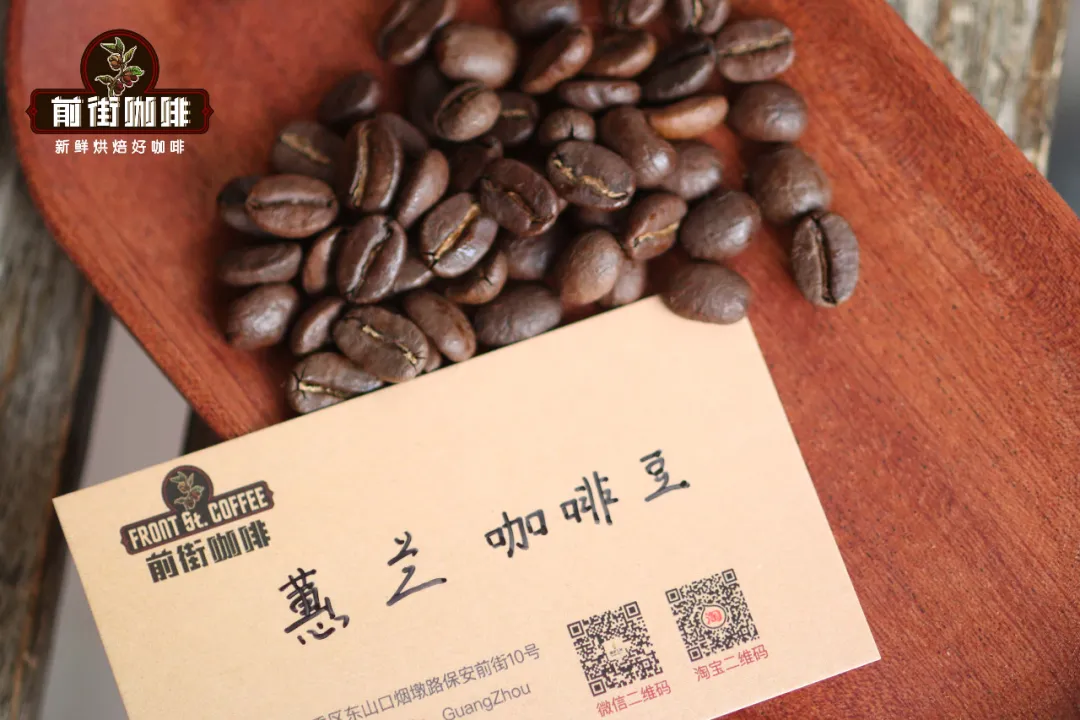
This entry-level selected Colombian coffee from FrontStreet Coffee comes from the Huila region and is washed and medium roasted. FrontStreet Coffee brews it with a V60 at a 1:15 ratio and 92°C water. The cup presents nutty, dark chocolate, and caramel flavors with subtle tropical fruit acidity and sweetness, featuring a smooth mouthfeel and overall balance.
FrontStreet Coffee Recommendation
This Huila washed Caturra is a great way to meet Colombia, and its chocolate, nut, and caramel character is one of the most approachable profiles in coffee. If you enjoy it, FrontStreet Coffee suggests trying Colombia's South American neighbor to taste the difference: the Brazil Cerrado Red Bourbon is a classic Brazilian single origin in medium roast, with creamy peanut, toast, caramel, and hazelnut notes, a round body, and almost no acidity.
For a rarer Brazilian cup, the Brazil Queen Estate Yellow Bourbon grows at higher altitude from the uncommon yellow Bourbon variety, bringing a sugarcane-like clean sweetness plus fruit and chocolate. Both also appear in FrontStreet Coffee's espresso blends, where Brazilian beans add chocolate and cream aromas and a soft, balanced sweet-bitter profile that keeps extraction stable.
Important Notice :
FrontStreet Coffee is a long-established specialty coffee roaster in Guangzhou China, selling freshly roasted beans from its own farm in Yunnan as well as dozens of carefully selected single-origin beans from around the world for both pour-over and espresso. The products deliver consistently excellent quality and great value, with shipping within 24 hours. Guangzhou's FrontStreet Coffee shop is recommended by many coffee lovers, and the beans are now available online at the Tmall 。
FrontStreet Coffee has moved to a new address:
FrontStreet Coffee Address: 315,Donghua East Road,GuangZhou
Tel:020 38364473
 Scan and follow the En Gafei WeChat official account. Please indicate that the reprint comes from "En Gafei".

