What Does Honey Processing of Coffee Beans Mean? And What Is Costa Rica's Raisin Honey Processing?

The processing stage of green coffee has a large influence on flavor. Different fermentation methods steer coffee toward distinctive flavor profiles. Natural, washed, and honey processing are the three classic methods.
Natural processed coffee typically shows rich fruit flavors with complex layers and high sweetness; washed processed coffee is remarkably clean with bright, well-rounded acidity; honey processing combines the strengths of both, producing overall balance with cleanliness and high sweetness.

Compared with the first two, honey processing is not as widely used. What sets it apart, though, is that it is not a single method but a family of variations to choose from.
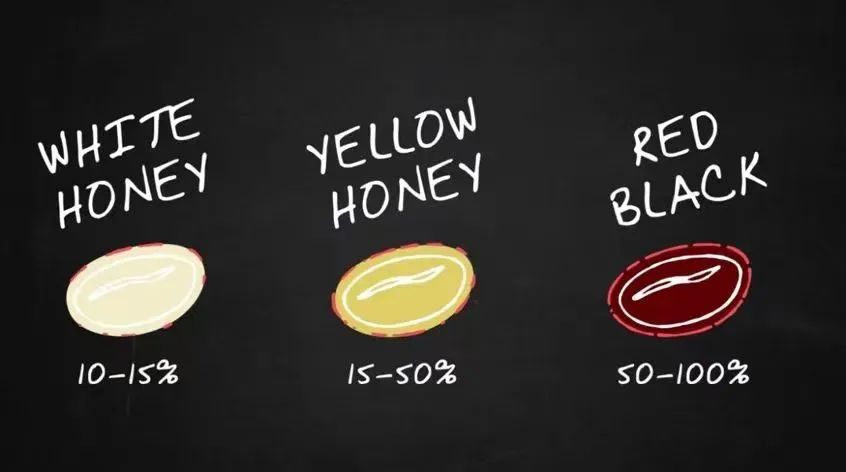
In honey processing, after the skin and pulp of the coffee cherry are removed, the mucilage is left on for drying. Since mucilage is rich in sugar, the more that remains on the green beans, the more sugar is attached. The amount of sugar determines the sweetness level of the processed beans, which is why people distinguish yellow honey, red honey, black honey, and white honey by how much mucilage is retained.
Raisin Honey Processing: A Special Variation
Beyond these classic "colored" honey methods, honey processing has a very special variation: raisin honey processing.
What is raisin honey processing? It shares an interesting naming misconception with regular honey processing. Many people have seen promotional descriptions of honey processing like "sweet as honey" or "honey-like sweetness," leading some to believe that honey is added during processing, or that the name was chosen simply because the coffee is extremely sweet. That is not the case.
Honey processing is named mainly because, during the process, the mucilage oxidizes and takes on a very viscous texture, which directly reminds people of honey and its similarly viscous quality. Thus the name "Honey Processing" was established. The misconception around raisin honey processing is almost exactly the same.

Key Differences Between Honey Processing and Raisin Honey Processing
Many friends wonder what differences exist between raisin honey processing and regular honey processing, and how they affect flavor. Good question. FrontStreet Coffee will answer those one by one.
First, the pattern of regular honey processing: the first step is to float the coffee beans, sorting out the unripe and defective beans that float to the surface.
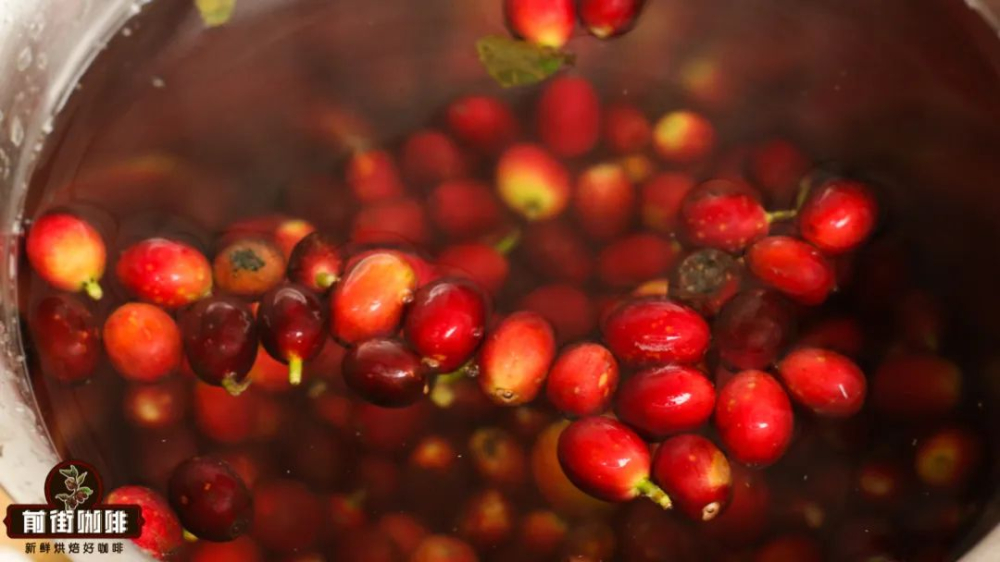
Then machines remove the skin and pulp of the cherries while preserving the mucilage layer, letting the green beans ferment and dry with the mucilage still on them. The drying time is determined mainly by how much mucilage is retained: more mucilage means a longer sun-drying time, with black honey retaining the most, followed by red, yellow, and white, until the beans dry to the target moisture content, which basically completes the process.
Raisin honey processing differs from the very start. After harvesting the cherries, farmers first dry the whole cherries with their husks intact for at least three days. Once dried, the cherries take on a shriveled look similar to raisins; the skin and husk are then removed, and the honey processing steps begin.
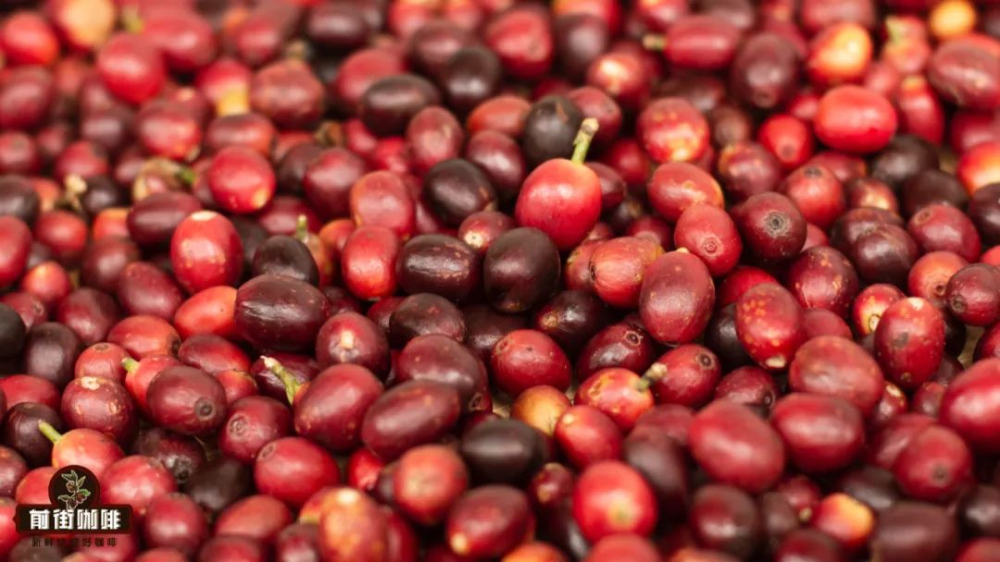
The advantage of this method is that it uses almost no water, and by sun-drying the cherries it preserves 100% of the mucilage. Complete mucilage gives the beans more sugar and therefore the highest sweetness. Although black honey processing retains almost all the mucilage, the violent mechanical hulling still affects its integrity to some extent.
This method demands higher standards and carries a higher risk of spoilage. Farmers have to invest more effort in managing the beans during processing to avoid the development of undesirable flavors.
Flavor Profile of Raisin Honey Processing
As Brother Qiang put it, the rougher the waves, the more precious the fish. The complex operation of raisin honey processing gives coffee a highly distinctive flavor expression. The Bahia from FrontStreet Coffee's bean selection, for instance, comes from the Canet Estate in Costa Rica, and under raisin honey processing it gives off rich fermentation aromas. Because those aromas are very close to grapes, they easily call to mind the taste of raisins.

Besides regular berry and caramel flavors, it also shows distinctive notes similar to blueberry and lavender. After swallowing, the mouth fills with a lingering dark chocolate taste, leaving a very deep impression.
- END -
FrontStreet Coffee
No. 10, Bao'an Qianjie, Yandun Road, Dongshankou, Yuexiu District, Guangzhou, Guangdong Province

FrontStreet Coffee Recommendation
If honey processing is what you want to explore, FrontStreet Coffee's Costa Rica Blackberry is a strong starting point. It uses a distinctive black honey process that removes almost no mucilage, and drying lasts at least two weeks under cover to keep strong sun from drying the beans too fast and to let the sugars convert fully. The beds are turned at intervals to prevent uneven heating and over-fermentation, and the extra effort shows: roasted medium-light, the grounds give off an intense floral fragrance, and the cup carries grape, berry, and ripe blackberry notes.
For something built around raisin honey processing, the Strawberry Candy Geisha Blend is a natural pick. It combines Panama Geisha with Costa Rican coffee, letting the Geisha supply its classic orange-blossom honey tone while the Costa Rican component is raisin honey processed with 100% mucilage retention and almost no water. The beans are floated to sort out the unripe and overripe cherries, then the selected fruit is dried on raised beds for at least three days before the skin is removed; the result keeps Geisha's floral-tea character while adding raisin and dried blueberry, soft fruit acidity, an almond finish, and clear sweetness.
FrontStreet Coffee's Costa Rica Mozart pushes the same idea further. It is an innovative raisin honey variation that departs from the traditional yellow, red, and black honey styles: the cherries are pre-dried on raised beds for at least three days before the skin and pulp are removed and the regular honey steps continue. Because it retains 100% of the mucilage, the method is harder than even black honey and demands strict control of timing, but it delivers a richer, juicier fruit sweetness. Brewed as pour-over, cold brew, or in a Moka pot, it shows distinctive osmanthus, pineapple, and raisin aromas.
Important Notice :
FrontStreet Coffee is a long-established specialty coffee roaster in Guangzhou China, selling freshly roasted beans from its own farm in Yunnan as well as dozens of carefully selected single-origin beans from around the world for both pour-over and espresso. The products deliver consistently excellent quality and great value, with shipping within 24 hours. Guangzhou's FrontStreet Coffee shop is recommended by many coffee lovers, and the beans are now available online at the Tmall 。
FrontStreet Coffee has moved to a new address:
FrontStreet Coffee Address: 315,Donghua East Road,GuangZhou
Tel:020 38364473
 Scan and follow the En Gafei WeChat official account. Please indicate that the reprint comes from "En Gafei".