
Discovering Hartman Estate Geisha: Premium Panamanian Coffee from Volcan Region
Panamanian Coffee: World-Renowned Geisha
Panamanian coffee enjoys an outstanding reputation in the global coffee world, above all thanks to the Geisha variety. European immigrants had already brought coffee to Panama for cultivation as early as the late 19th century. Then in 2005, the Geisha grown at Hacienda La Esmeralda won the Best of Panama (BOP) competition and fetched an extraordinary auction price, catapulting both Panamanian coffee and the Geisha variety to worldwide fame.
Geography and Climate of Panama
Panama lies at the southern end of Central America, bordered by the Caribbean Sea to the east and the Pacific Ocean to the west, with Costa Rica to the west and Colombia to the east. Its S-shaped territory connects North and South America, and the Panama Canal runs north to south linking the Atlantic and Pacific Oceans, earning it the nickname "World's Bridge." The terrain is varied, full of valleys and ravines: apart from the coastal plains in the north and south, the landscape is mostly mountainous, with several volcanoes, forests, and rivers.
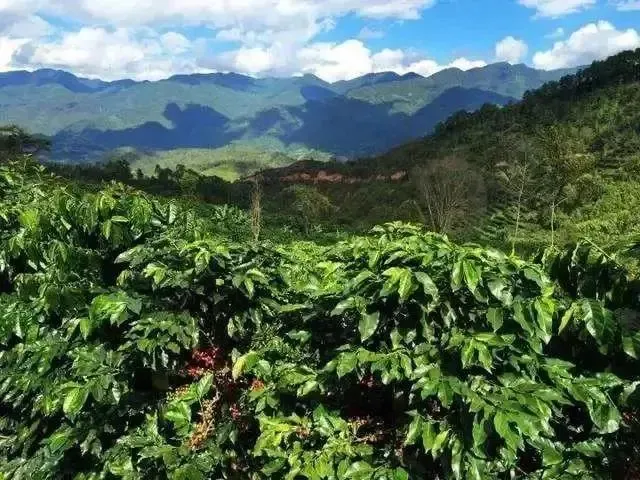
Situated near the equator, Panama has a tropical maritime climate with humid days and cool nights. Average annual temperatures range from 23-27°C, and the year is divided into dry and rainy seasons with 1,500-2,500 millimeters of annual rainfall. These conditions have created Panama's complex patchwork of microclimates. From east to west, cold air currents move through the central mountain range and converge at altitudes above 6,500 feet, producing a unique microclimate in the Boquete and Volcán-Candela regions - the country's main coffee-growing areas - whose surrounding lands are fertile and perfect for coffee.
Volcán-Candela Growing Region
Panama's principal coffee regions are Boquete, Volcán-Candela, and Renacimiento, all located around three of the country's volcanoes: Volcán Barú, El Valle, and La Yeguada.
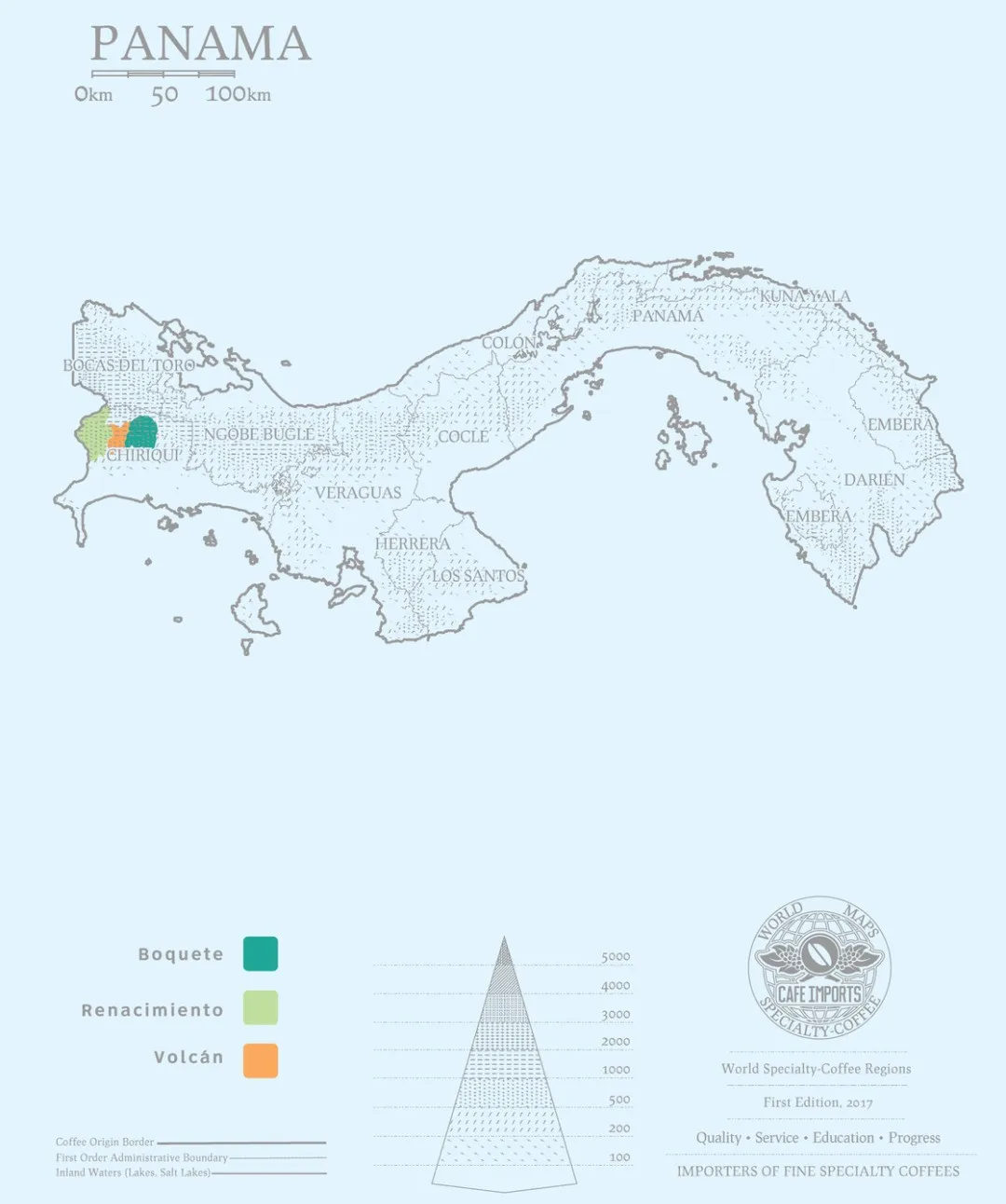
Though Boquete is the better-known name, in recent years many excellent estates from Volcán-Candela have appeared in BOP competitions with impressive results. The region lies west of Volcán Barú at altitudes of 1,200 to 1,600 meters. Its average rainfall is lower than Boquete's, but the same high elevation and fertile volcanic soils give coffee trees an excellent environment. Renowned estates here include Ninety Plus Gesha Estate, Finca Aurora, and Finca Hartmann.
Finca Hartmann
Finca Hartmann sits in the western shadow of Volcán Barú at altitudes of 1,500-2,300 meters. Its founder, Alois Strasil Hartmann, was born in Czechoslovakia and, discouraged by political instability at home, emigrated - first to New York, then on to Panama, finally settling in the Volcán-Candela region. In 1912 he established a farm there and began growing coffee. He later married and had a son, Hartmann Troetsch, who from 1940 inherited the land and carried the work forward - the beginning of a Finca Hartmann history that continues today. The estate is truly a pioneer of the Volcán-Candela region.
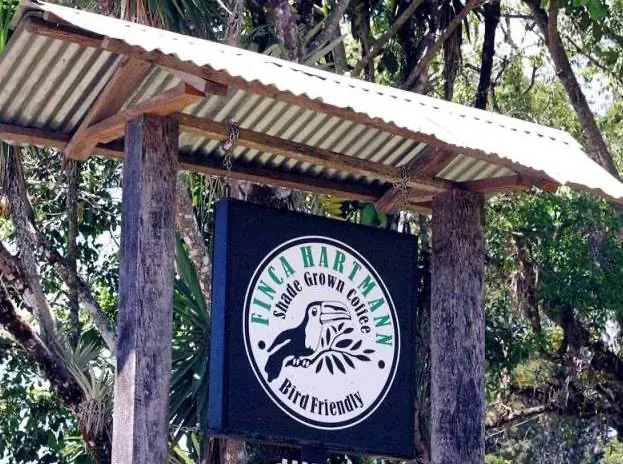
From the start, the family chose to preserve most of the original forest within the farm, a philosophy passed down to the third generation. As a result, coffee occupies only about 20% of the estate today. Thanks to this forest cover, the farm shelters numerous native birds, and the locally famous toucan became its official logo. The estate is now run jointly by five siblings, each overseeing different areas such as cultivation management, harvesting and processing, and estate tours. In 2013 they also acquired the Guarumo Coffee Farm north of Finca Hartmann. The estate grows a wide range of varieties, including Typica, Caturra, Catuai, Bourbon, Pacamara, Maragogipe, and Geisha.
The Geisha Coffee Variety
Geisha originated in Ethiopia in the 1930s. It reached Tanzania in 1936, Costa Rica in 1953, and finally Panama from Costa Rica in 1970. Back then, quantity mattered more than quality, and because Geisha's branches are relatively weak, farmers showed little interest and rarely planted it. The specialty coffee wave later shifted attention to flavor itself. In 2005, Hacienda La Esmeralda entered Geisha in the BOP competition, and with its delicate floral and jasmine aromas, peach and bergamot flavors, and exceptionally high scores, the variety won worldwide recognition.
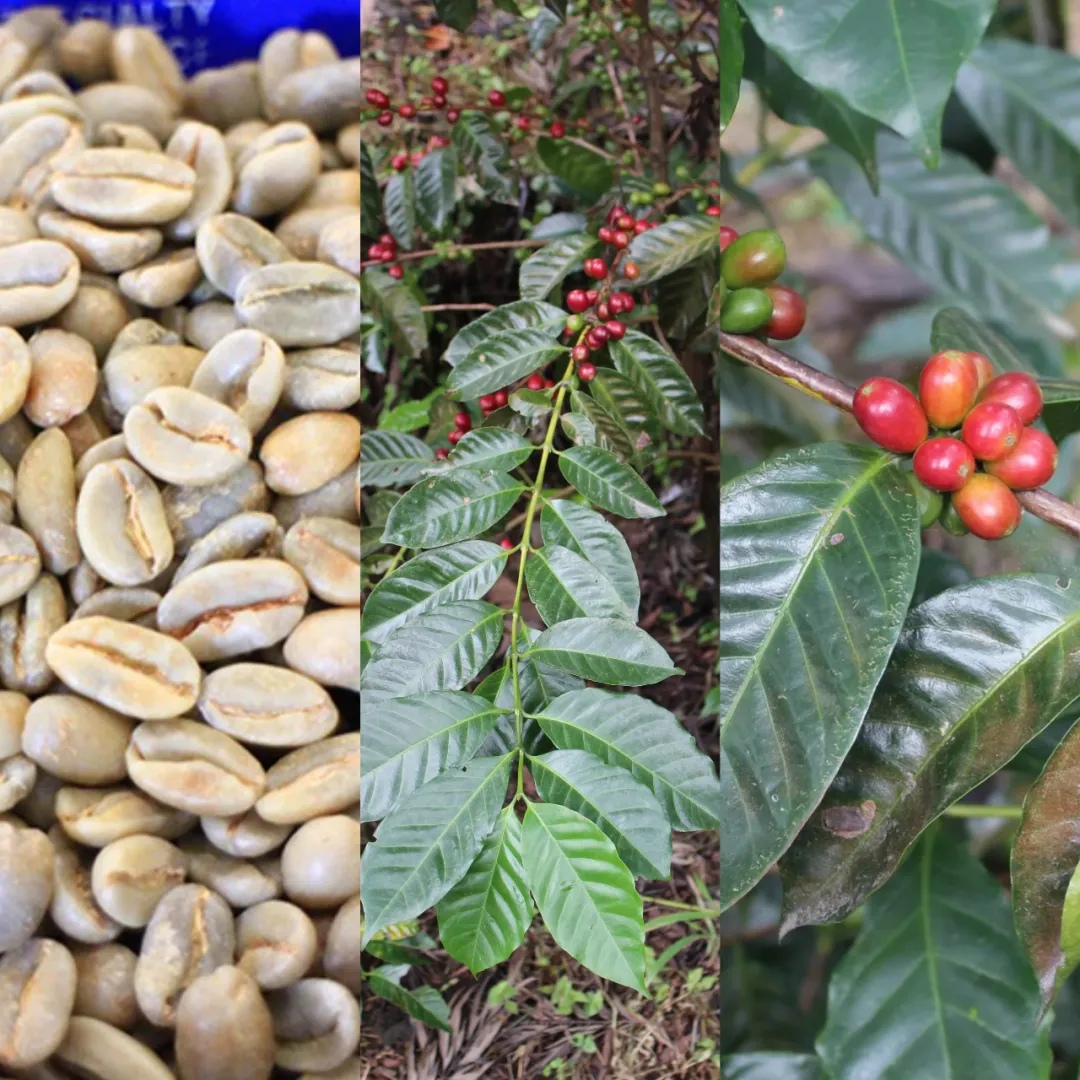
Geisha is best grown above 1,600 meters, where higher altitudes generally yield better quality. The trees have thin, elongated leaves, with green or bronze-tipped young leaves at the apex, slender and widely spaced branches, mainly red or yellow cherries, and typically elongated green beans. The plants are large but fragile; although they show some resistance to coffee leaf rust, they are susceptible to nematodes and coffee berry disease and need careful cultivation.
FrontStreet Coffee: Panama Hartmann Estate Geisha
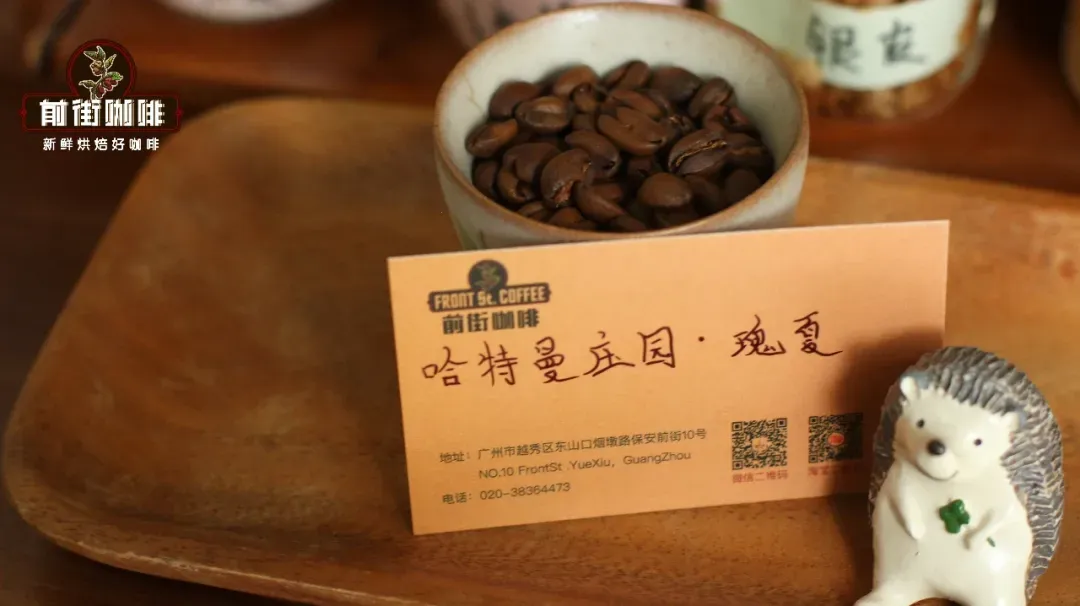
FrontStreet Coffee has sourced this Geisha from Hartmann Estate. It is anaerobic natural-processed and lightly roasted. Brewed with a V60 at a 1:15 ratio and 92°C, it offers white floral aromas up front, followed by layered, evolving fruit acidity with flavors of bergamot, pineapple, and blueberry. The mouthfeel is silky and smooth, reminiscent of Earl Grey tea, with a persistent sweet finish.
FrontStreet Coffee Recommendation
If you want to explore the world of Geisha, the FrontStreet Boquete Geisha from Panama is the ideal starting point. This entry-level Gesha lets you taste the classic orange-blossom honeyed charm of high-quality Panamanian Gesha at a friendly price, with oolong-tea texture, delicate fruit acidity, and clearly defined layers.
For a step up, consider the FrontStreet Esmeralda lots. The Red Label (officially "Esmeralda Special") grows at 1,600-1,800 meters, comes from a single micro-lot such as the Harrimiao plot, each batch with its own independent number and a cupping score above 90. The Green Label ("Private Collection") blends lots from multiple plots to express Esmeralda's signature high-altitude Gesha profile at a more accessible price - outstanding value. In Ethiopia, Geisha's birthplace, the Granla Estate Gesha is a medium-light roast that shows bright citrus acidity, elegant ginger-flower aroma, and the ripe-fruit sweetness of a native Gesha raised on raised beds and sun-dried for 14-20 days.
When brewing Gesha, note that it is a medium-light roast with a hard, dense bean that tends to sink and clog the filter. FrontStreet suggests a coarse grind (about 78% pass rate on a No. 20 sieve, roughly fine-sugar size), water at 91°C, and a three-pour V60 method: bloom 30g of water for 30 seconds, pour to 125g, then top up to 225g once the bed drops halfway, finishing in about 2:10-2:20.
Important Notice :
FrontStreet Coffee is a long-established specialty coffee roaster in Guangzhou China, selling freshly roasted beans from its own farm in Yunnan as well as dozens of carefully selected single-origin beans from around the world for both pour-over and espresso. The products deliver consistently excellent quality and great value, with shipping within 24 hours. Guangzhou's FrontStreet Coffee shop is recommended by many coffee lovers, and the beans are now available online at the Tmall 。
FrontStreet Coffee has moved to a new address:
FrontStreet Coffee Address: 315,Donghua East Road,GuangZhou
Tel:020 38364473
 Scan and follow the En Gafei WeChat official account. Please indicate that the reprint comes from "En Gafei".

