
How to Brew a High-Sweetness Aftertaste Dark Roast Coffee? What to Consider When Pour-Over Brewing Dark Roast Beans?
As we noted in our previous article, brewing a delicious cup of dark roast coffee means drawing out everything that makes it special: the aroma of caramel and chocolate, a rich and smooth texture, an intense roast flavor, and a long, sweet aftertaste. Today FrontStreet Coffee shares how to bring out these "soulful" qualities of dark roast coffee.
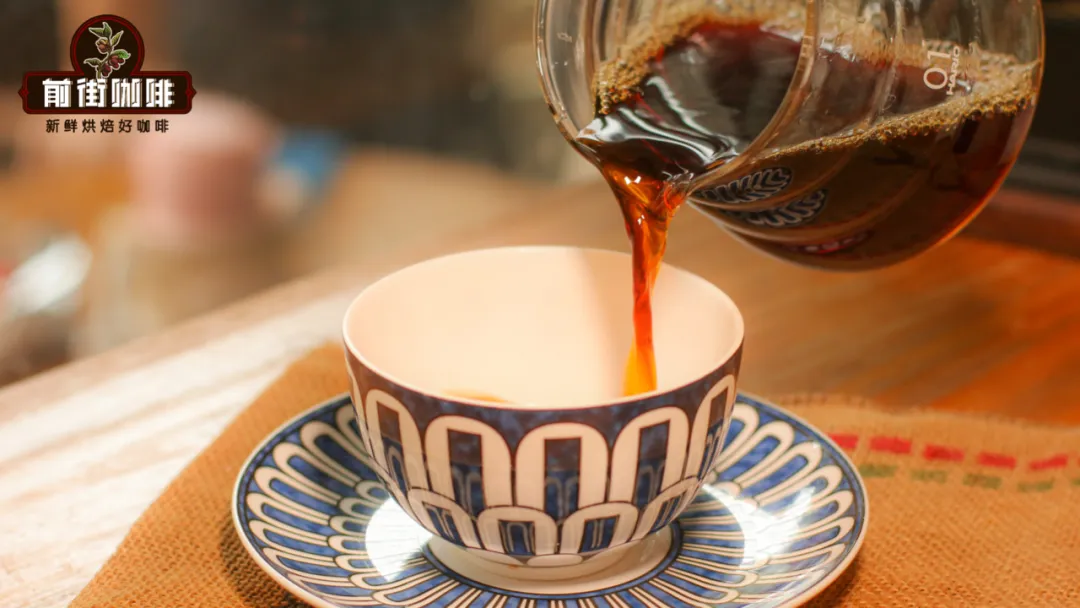
Extraction Parameters
First, keep in mind that dark roast beans have a very loose internal structure after their long roast. Use the same parameters you would use for a light roast and you will all too easily end up with a truly bitter cup. The answer is to adjust everything that affects extraction efficiency, above all water temperature and grind size.
Lower Water Temperature
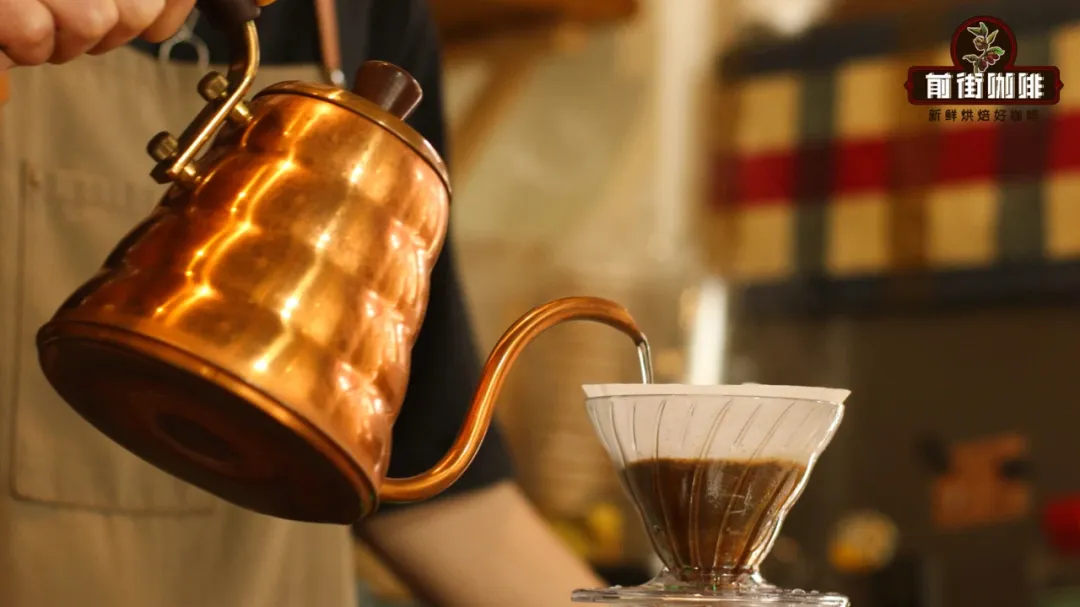
Light roast beans are brewed with high temperatures because their dense texture demands high extraction efficiency to pull the aromatics out. Dark roast beans clearly need no such force. Their loose structure over-extracts easily under high heat. FrontStreet Coffee therefore suggests lowering the water temperature to 86-88°C when brewing dark roast beans, then fine-tuning according to the grind: the finer the grind, the lower the temperature.
Coarser Grind
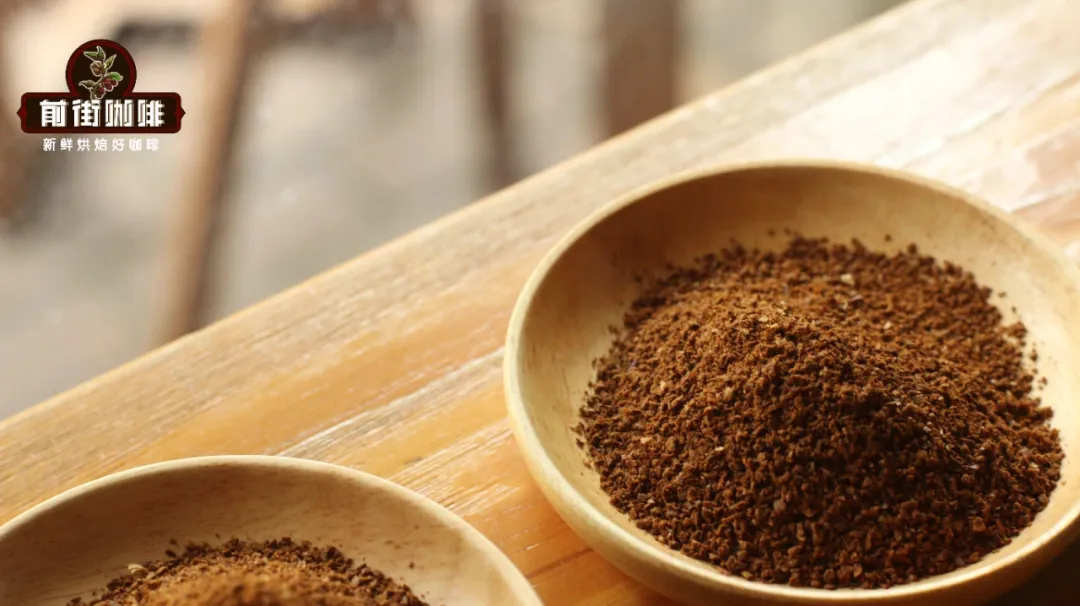
For grind size, dark roast beans call for a coarser setting than light roast beans. That looseness makes them easier to extract, and there is a second reason too: dark roast beans are more brittle, so at any given setting the particles come out finer than a light roast would. Grinding coarser corrects for both factors at once. Take Golden Mandheling as an example—FrontStreet Coffee typically uses setting 11 on an Ek43 to reach a raw-sugar particle size, which corresponds to a 70% pass-through rate on a #20 sieve.
Filter Selection
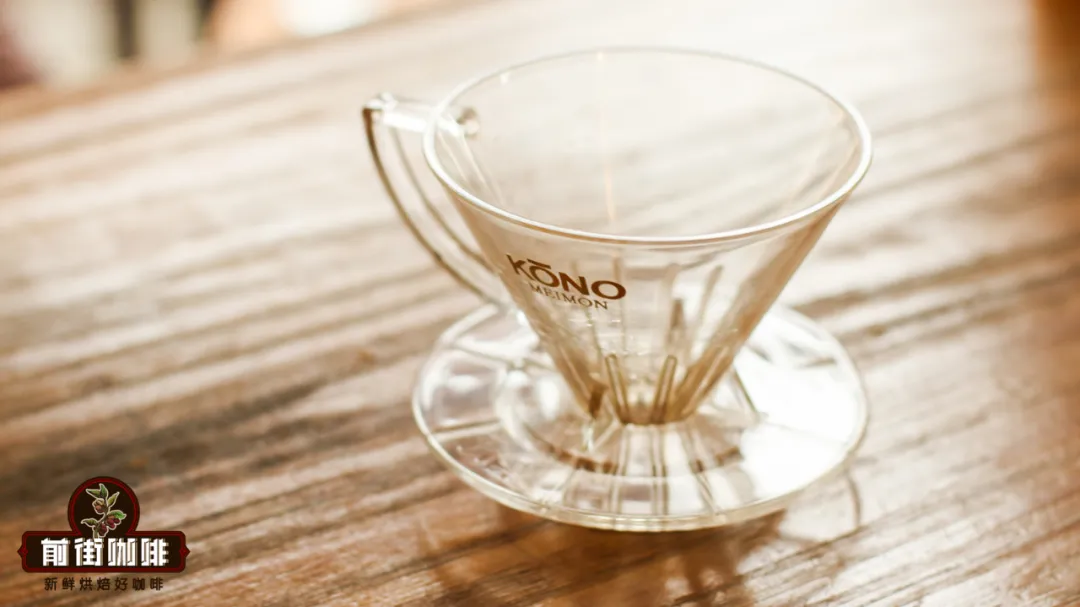
The rich, full body of dark roast coffee only appears with sufficient extraction. Use a fast-draining dripper such as a V60 and the body will fall short, because overall extraction is lower and the quick flow cannot dissolve enough of the compounds that carry that full mouthfeel. When brewing medium-dark to dark roast beans, FrontStreet Coffee recommends slower drippers such as Kono or wedge-shaped filters. A slower flow extends extraction time and makes a rich, full body far easier to achieve.
Coffee-to-Water Ratio
The ratio is yours to choose. FrontStreet Coffee uses 1:15, at which the strength of a dark roast is just right and the flavors come through clearly. If you enjoy a more expressive cup, loosen the ratio toward 1:16 to dilute the brew and let the flavors open up; if you prefer a stronger taste, tighten it toward 1:14. Do not push it much beyond that, though—an overly concentrated cup mutes the flavors and can be unpleasant to drink.
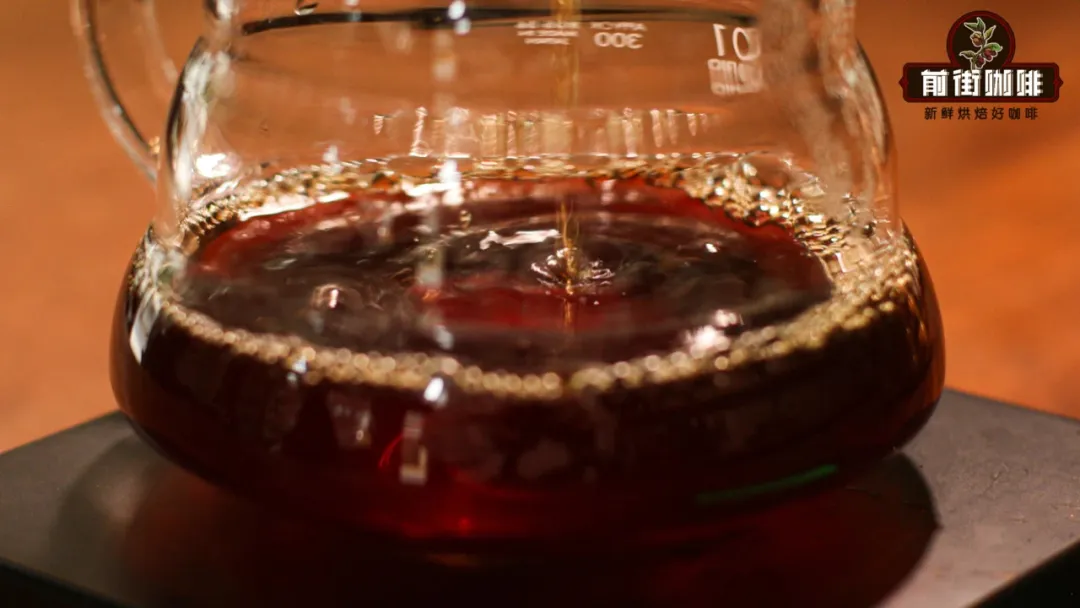
Brewing Recommendations
Pouring Method
FrontStreet Coffee recommends a three-stage pour. It extends the extraction time, it draws out the flavors we are after more effectively, and it leaves more margin for error—something FrontStreet Coffee especially values. With a 1:15 ratio, the water can be divided into 30/100/95ml portions.
Dark roast coffee needs no vigorous agitation to release its compounds; as we said, they extract with ease. So slow the circular pour somewhat, avoid a heavy stream that churns the coffee bed, and keep off-flavors to a minimum.
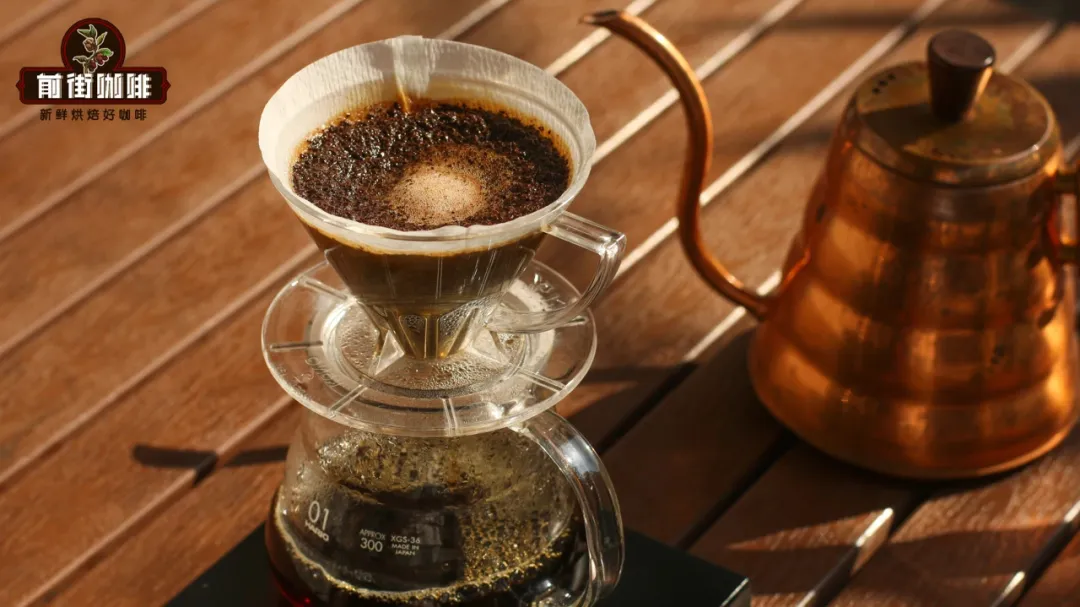
Specific Procedure
The procedure is as follows. First, wet the coffee bed fully with twice its weight in water and let it bloom for 30 seconds (for dark roast beans you can judge the end by how wet the bed looks, not strictly 30 seconds). After blooming, use a smaller stream (about 5ml/s) to pour the second 100ml in slow, wide circles. When the water level is about to drop to the bed, switch to a small, coin-sized circle at the center and slowly pour the remaining 95ml. Once the coffee has finished dripping, remove the dripper and enjoy your coffee.
Generally, if the brew finishes in about 2 minutes, this cup will most likely carry all the qualities mentioned at the outset. If it deviates much from 2 minutes—shorter by more than 10 seconds, say—the cup may still taste fine but the texture and aftertaste will be weak. In that case, adjust the grind size or your pouring technique, with the exact change depending on how you taste it. The same logic applies if it runs well past 2 minutes.
- END -
FrontStreet Coffee
No. 10, Bao'an Qianjie, Yandun Road, Dongshankou, Yuexiu District, Guangzhou, Guangdong Province
FrontStreet Coffee Recommendation
For a dark roast that rewards this method, FrontStreet Coffee's PWN Golden Mandheling is a natural fit. It is roasted dark, so acidity is low and the body is thick and lingering, filled with herbal and dark chocolate notes and a faint earthy undertone.
Golden Mandheling is a wet-hulled Sumatran coffee from the PWN company, selected at 18 mesh and above with fewer than three defects per 300g sample, then hand-sorted to meet the G1 grade. Because it extracts so easily, keep the water at 86-88°C and the grind coarse—a slow, gentle pour will draw out its caramel sweetness without any bitterness.
Important Notice :
FrontStreet Coffee is a long-established specialty coffee roaster in Guangzhou China, selling freshly roasted beans from its own farm in Yunnan as well as dozens of carefully selected single-origin beans from around the world for both pour-over and espresso. The products deliver consistently excellent quality and great value, with shipping within 24 hours. Guangzhou's FrontStreet Coffee shop is recommended by many coffee lovers, and the beans are now available online at the Tmall 。
FrontStreet Coffee has moved to a new address:
FrontStreet Coffee Address: 315,Donghua East Road,GuangZhou
Tel:020 38364473
 Scan and follow the En Gafei WeChat official account. Please indicate that the reprint comes from "En Gafei".

