
How is a Thousand-Layer Heart Latte Art Made? How to Froth Milk for a Latte?
It's here, it's here — the long-awaited latte art 2.0 has arrived! Today, FrontStreet Coffee is sharing an advanced take on the basic heart: the "Layered Heart"!

The layered heart really isn't as hard as it looks, because it's built entirely on the basic heart technique with just one small extra movement. Everything else — how much milk you integrate, the pouring position, even the final finishing action — is almost identical! That's why plenty of beginners accidentally produce a layered heart while practicing the basic heart. Now, let's have FrontStreet Coffee walk through the key points of making one. If you'd like to get the basic heart down first, you can check out this article: "Basic Heart Latte Art Tutorial."
Foam Thickness
Compared with the basic heart, the layered heart demands noticeably more from your milk foam. If the foam is too thick, it will drag on the fluidity of the pour and make the pattern hard to control. What the layered heart needs is fine, silky, thin foam. If the foam for a basic heart comes from frothing milk from 5/6 of the pitcher full up to 6-8/10 full, then for the layered heart you should only froth to about 6/10 full. The further you go past that point, the harder it becomes to get crisp, distinct layers!
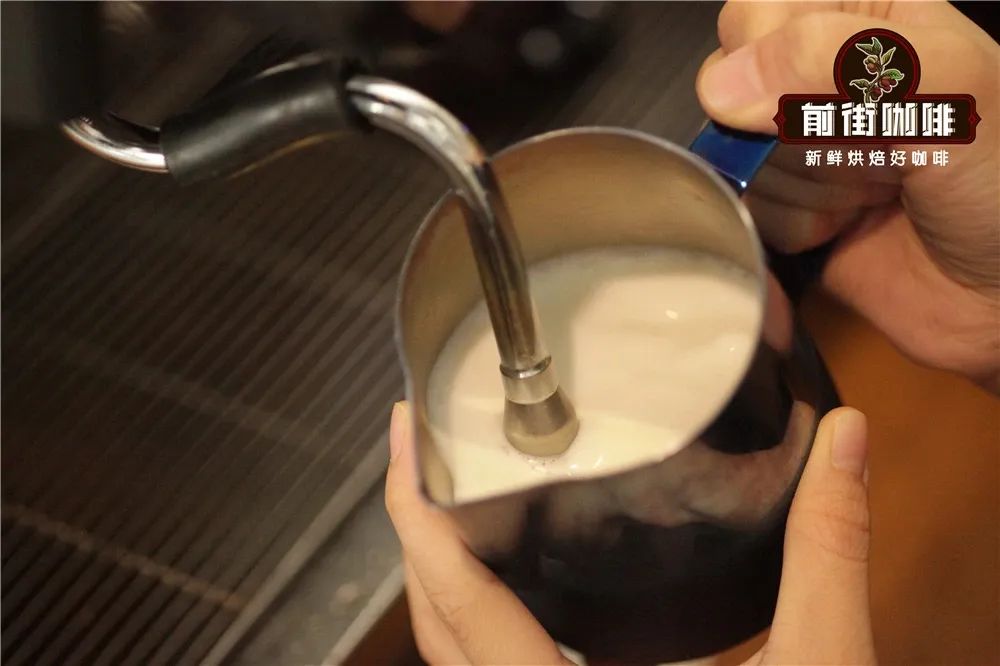
That said, it can't be too thin either! Foam that's over-aerated in the wrong direction easily produces jagged, feather-like textures — great material for advanced players, but not very forgiving for beginners!
Milk Integration Amount
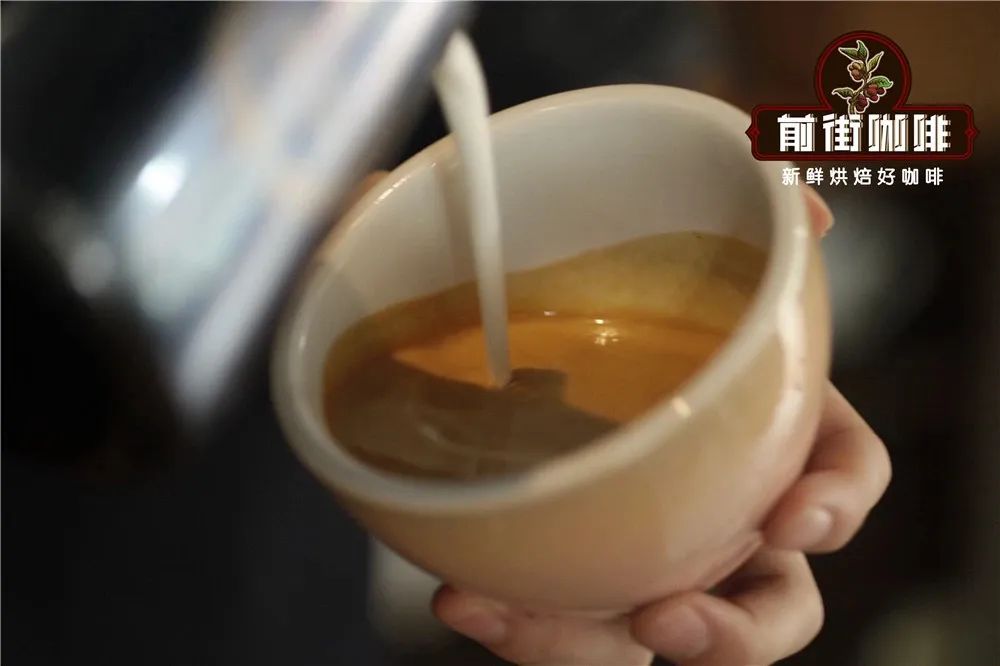
In the previous article, FrontStreet Coffee explained that the more milk you integrate, the higher the liquid level rises and the weaker the convection becomes; the less you integrate, the lower the level and the stronger the convection during the pour. Just like the basic heart, the layered heart needs strong convection to stretch the pattern out fully. So we cut back on the integrated milk to leave more room for the pattern to develop!
Pitcher Movement
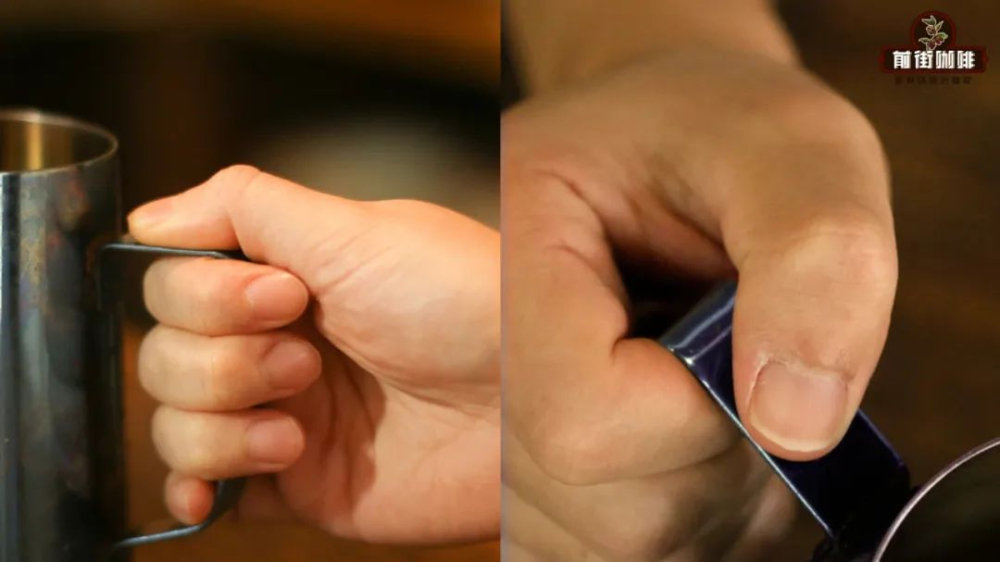
The core difference between the layered heart and the basic heart comes down to this one pitcher movement! While the pattern is forming, coordinating a steady back-and-forth swing of the pitcher is what creates those beautiful stacked layers. Since the movement takes some practice to nail down, FrontStreet Coffee recommends first deciding on your grip! Lock in your grip before learning the swing — because once you've built proficiency with one grip, switching to another means starting the muscle memory all over again!
Grip Method 1: Use the pitcher's handle as a pivot, anchoring the position with your thumb and index finger, then drive the back-and-forth swing with the remaining three fingers.
Grip Method 2: Again pivoting from the top of the handle, pinch both sides with your thumb and index finger and swing from there, letting the remaining three fingers stabilize!
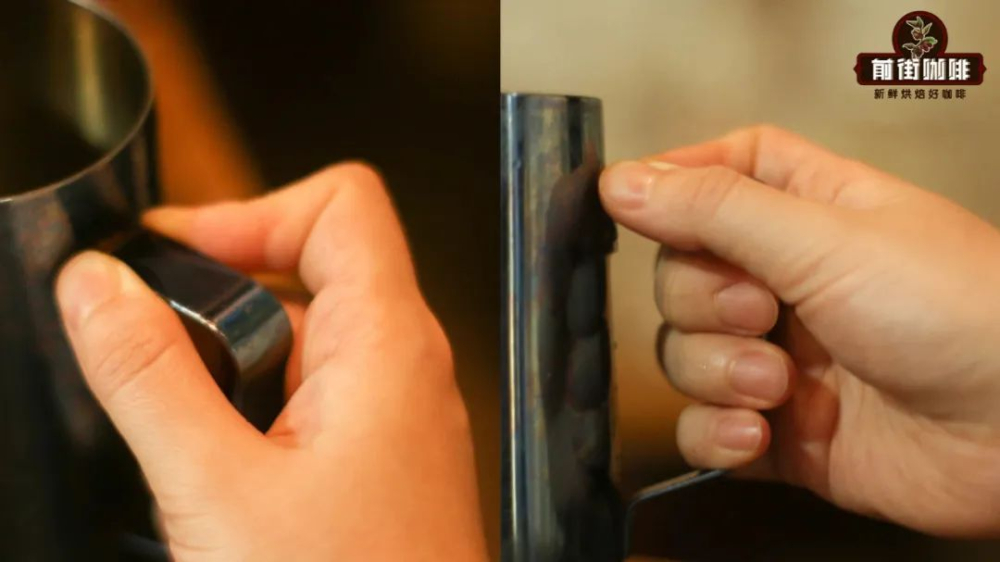
Whichever method you choose, regular practice is the only way to master it! FrontStreet Coffee leans toward Grip Method 2, since it transitions more easily into patterns like the wheat ear and the swan later on.
Practical Demonstration
Finally, the practical demonstration! The integration for the layered heart, as noted earlier, is nearly identical to the basic heart — integrate until the cup is 6/10 full! The integration pour point is also at the 1/4 mark of the cup, but note that the milk flow can't be as generous as with the basic heart; keep it slightly smaller! Integration combined with a consistent swing is what draws the pattern. As your right hand swings back and forth, your left hand should slowly pull the cup back! Once the cup reaches 9/10 full, lift the pitcher spout for the finishing stroke!
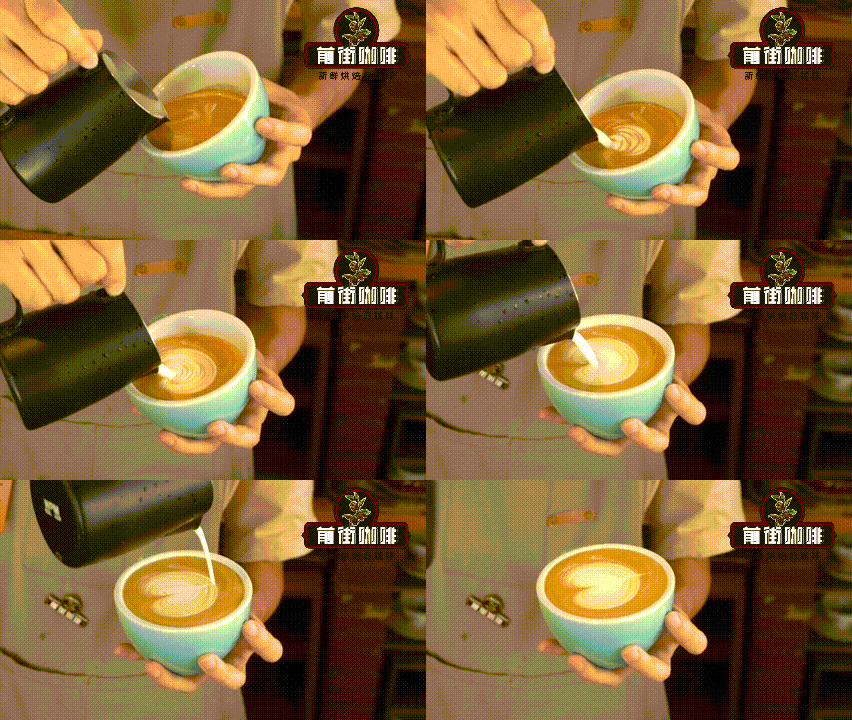
Super simple — did you get it?
- END -
FrontStreet Coffee
No. 10, Bao'an Front Street, Yandun Road, Dongshankou, Yuexiu District, Guangzhou, Guangdong Province

FrontStreet Coffee Recommendation
The Best Coffee Beans for Practicing Latte Art
Great latte art starts with the right beans, and for anyone learning to pour at home, FrontStreet Coffee's Classic Blend is the go-to choice. It's a medium-dark espresso recipe built from beans of three origins, with its design inspired by the old-school "Mandheling-Brazil" pairing. A small amount of Robusta is added for extra aroma and crema, and the shot pours with pronounced notes of butter, toasted bread, and caramel biscuits — bold in flavor, solid in body, and remarkably stable in extraction.
Two More Blends, Depending on Your Goals
Those who prefer a rich, nutty profile should look at FrontStreet Coffee's Premium Blend, another medium-dark espresso roast combining washed Colombian and pulped-natural Brazilian beans. It shows nut, dark chocolate, and caramel in espresso, and in milk drinks like lattes and flat whites it brings out a smooth aroma of cream, almond, and cocoa — with crema that holds its own against café output, which makes it more than enough for practicing latte art. If you're planning to open a shop of your own, FrontStreet Coffee's Commercial Blend was tailor-made for that stage: a traditional espresso recipe that layers a touch of Robusta onto FrontStreet Coffee's Premium Blend to push out more deep-brown crema and heavier body, delivering nut, cocoa, and caramel whether you pull Americanos, lattes, or mochas — and making latte art that much easier.
Important Notice :
FrontStreet Coffee is a long-established specialty coffee roaster in Guangzhou China, selling freshly roasted beans from its own farm in Yunnan as well as dozens of carefully selected single-origin beans from around the world for both pour-over and espresso. The products deliver consistently excellent quality and great value, with shipping within 24 hours. Guangzhou's FrontStreet Coffee shop is recommended by many coffee lovers, and the beans are now available online at the Tmall 。
FrontStreet Coffee has moved to a new address:
FrontStreet Coffee Address: 315,Donghua East Road,GuangZhou
Tel:020 38364473
 Scan and follow the En Gafei WeChat official account. Please indicate that the reprint comes from "En Gafei".

