
How is Indian Monsoon Malabar Coffee Processed? What is the Monsooning Method?
Aged Mandheling isn't the only famous coffee shaped by long storage. There is another coffee that owes its character to time and air, though it gets there by a very different route — not by sitting in a warehouse, but by lying in the path of the wind. And it comes from a producing country few people think of as a coffee origin: India.
Mention Indian food and curry springs to mind. Mention Indian coffee, and the answer is almost always "Monsoon Coffee." Compared with the country's enormous Robusta output, the way Monsoon Coffee is made is far more fascinating. So let's follow FrontStreet Coffee and look at how this "monsoon coffee" from India is actually produced!
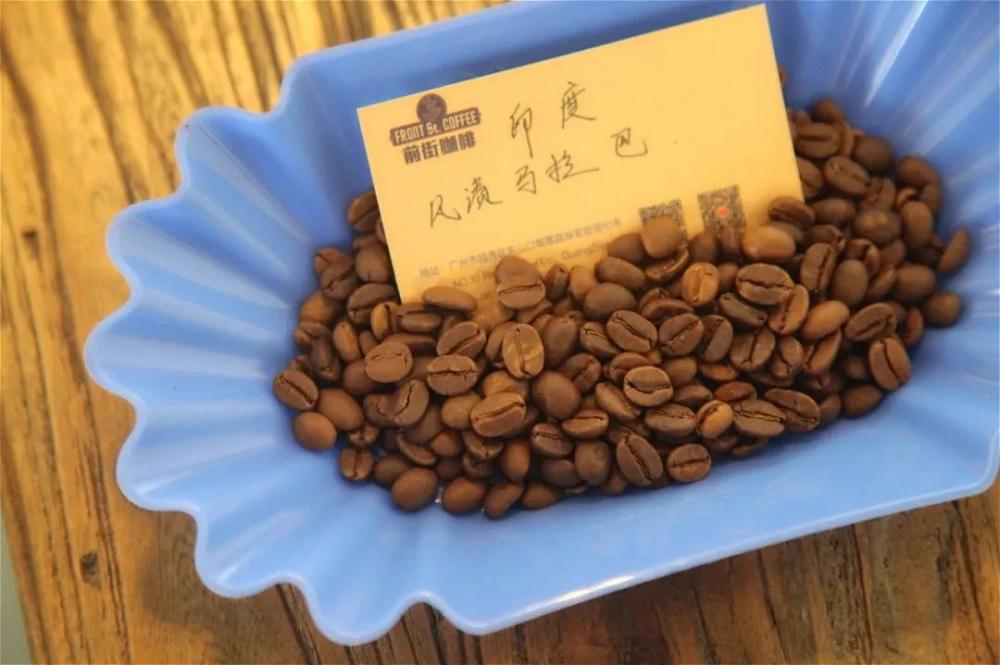
The Historical Origins of Monsoon Coffee
As early as the 17th century, India was already a major coffee supplier to Europe, second only to Yemeni Mocha. And it was in this period that the roots of Monsoon Coffee were laid. Like Indonesia, home of aged Mandheling, India is an Asian origin, so we can imagine how slow the journey to market was in the 17th century.

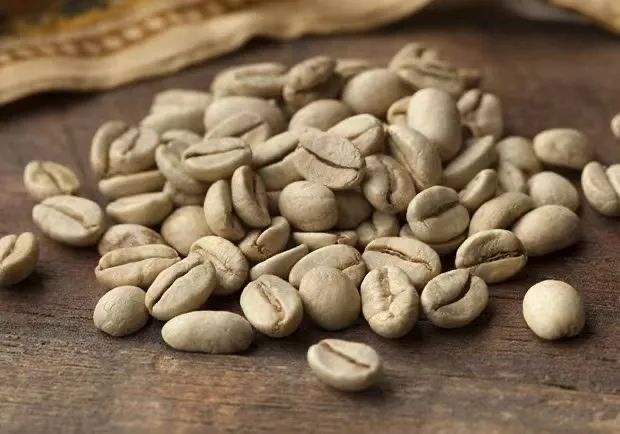
In those days coffee left India on sailing ships, stowed in the bottom of the hold — the part of the vessel closest to the seawater. Over months at sea the beans steadily absorbed moisture and a faint salty tang. By the time they reached Europe they were transformed: the once plump, moist green beans had swollen in size and turned a yellowish-brown, the color of rice grains. Brewed, the coffee showed almost no acidity, just a rich yet mellow grain-and-spice character remarkably like genmaicha, brown rice tea. To European palates of the era this was a rare delicacy, and Indian coffee was hugely popular.
The Evolution and Revival
By the 19th century, shipping had changed dramatically. Steamships and the opening of the Suez Canal cut the journey from India from six months to roughly half that. Fewer uncontrollable variables in transit should have been good news — but to everyone's surprise, European buyers were not pleased. Without the slow assault of sea air the beans arrived looking and tasting "normal," and that was precisely the problem: they had lost their distinctive yellowish-brown color and the flavor that made them famous (if you need an analogy, imagine a Panama Geisha arriving without its signature white florals). Orders from Europe dwindled, and Indian green-bean exporters were forced to figure out how to recreate the old flavor deliberately.

Stretching the voyage back to six months was obviously not an option — the cost in time and money would be enormous. A stable, low-cost method was needed, so exporters looked for a different route. They found one close to home: from late May through September each year, the southwestern Malabar coast of India is swept by monsoon winds laden with moisture from the sea. Could those same winds restore the coffee to its former glory? Several experiments later, the answer was yes. A few months of monsoon exposure gave the beans back the flavor that long sea voyages once created, and exporters could once again sell this classic profile. The beans thus became known as Monsoon Coffee, and the method itself as the "Monsooning" process.
The Monsooning Process
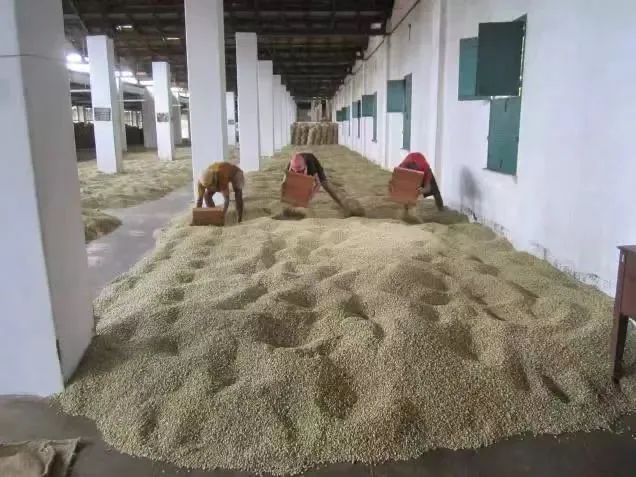
Monsooning starts from pre-processed beans: the green coffee must first be sun-dried. And because the key player — the monsoon itself — does not blow year-round, beans harvested and milled before the monsoon arrives simply have to wait. They are stored in purpose-built monsooning warehouses until the season begins. When the winds come, workers spread the beans on the ground in layers roughly 12–20 centimeters deep, so the monsoon can hit the beans directly.
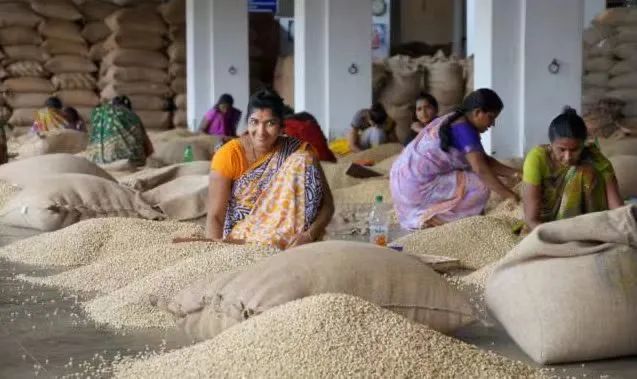
The beans are raked at regular intervals so that every layer gets an even exposure. After about five days, once the beans have taken on a certain degree of monsooning, they are bagged. Crucially, the bags are not filled completely — this reduces stacking pressure and leaves gaps between the beans through which the monsoon winds can pass.
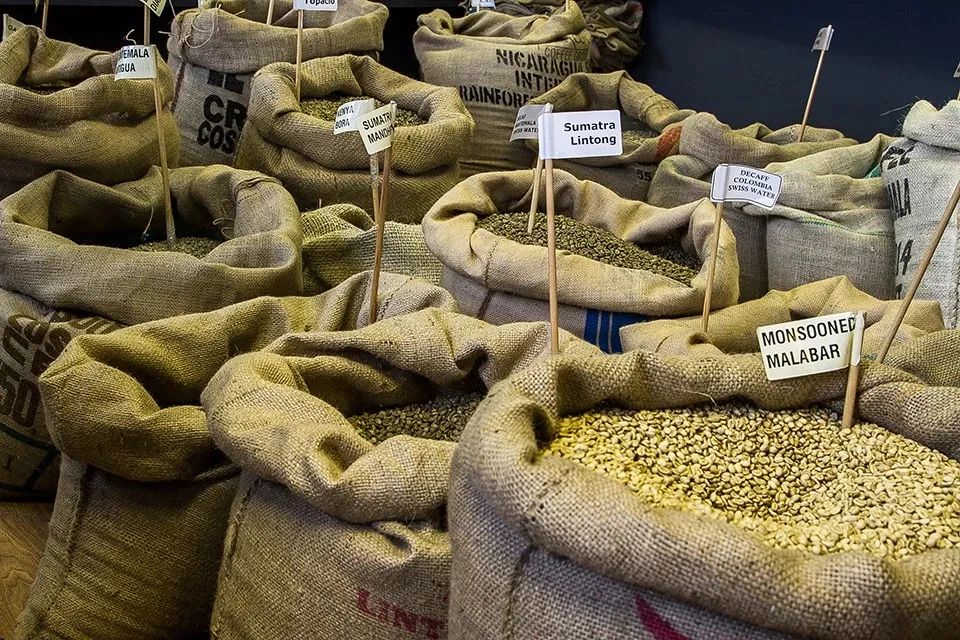
The jute bags are also swapped out regularly to keep mold at bay. This stretch of wind exposure is called the "monsooning period," and it lasts 12–16 months, with the exact end point decided by the condition of the beans. The monsooned beans are then fumigated to drive out any weevils hiding inside — coffee is an agricultural product, and a few insects are unavoidable. Finally the lot is sorted to remove any beans the monsoon failed to reach fully, then graded by flavor and screen size and sent to market.
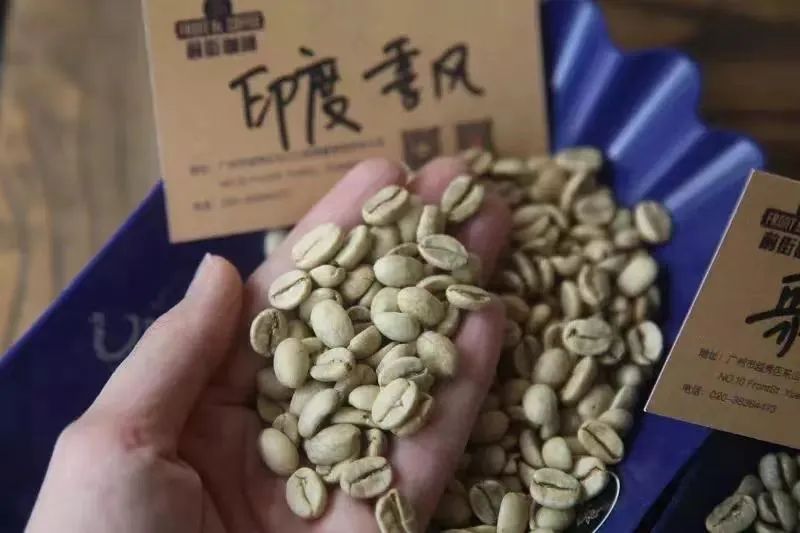
FrontStreet Coffee Recommendation
If the idea of a low-acidity, spice-toned, time-transformed coffee appeals to you, FrontStreet Coffee's PWN Golden Mandheling deserves a spot on your shelf. Produced by Indonesia's PWN company to exceptionally strict standards — only beans of screen size 18 and above, fewer than three defects per 300-gram sample to meet top-tier G1 grade, followed by three rounds of hand-sorting — it is remarkably clean and sweet. Roasted medium-dark, it delivers a full, heavy body with black chocolate and caramel sweetness, plus the wild herbal character that Sumatra's wet-hulled process is famous for. For pour-over, FrontStreet suggests 15 grams of coffee at a coarse-sugar grind, a 1:15 ratio, water at 87–88°C, poured in three stages to bring out its syrupy body and caramel sweetness.
For a more traditional take, FrontStreet's Lintong Mandheling comes from the classic region around Lake Toba: intense and bold on the palate, with clove, wood and spice aromatics, low acidity, and a thick, lasting sweetness. And if you'd rather let an espresso machine do the work, FrontStreet's Classic Blend — Brazilian beans for creamy nuttiness layered over medium-dark Mandheling with butter, roasted chestnut and caramel notes, plus a touch of Robusta for richer crema — pulls thick, chocolatey shots and works beautifully in lattes and Dirties.

Important Notice :
FrontStreet Coffee is a long-established specialty coffee roaster in Guangzhou China, selling freshly roasted beans from its own farm in Yunnan as well as dozens of carefully selected single-origin beans from around the world for both pour-over and espresso. The products deliver consistently excellent quality and great value, with shipping within 24 hours. Guangzhou's FrontStreet Coffee shop is recommended by many coffee lovers, and the beans are now available online at the Tmall 。
FrontStreet Coffee has moved to a new address:
FrontStreet Coffee Address: 315,Donghua East Road,GuangZhou
Tel:020 38364473
 Scan and follow the En Gafei WeChat official account. Please indicate that the reprint comes from "En Gafei".

