
How to Use a Spring-Style Portable Dripper Made from a Single Steel Wire? Should Hand-Brew Parameters and Brewing Methods Be Adjusted?
In their earliest form, drip cones were simply trapezoidal ceramic vessels. Over time, though, every shape and material has appeared — flat-bottomed, conical, resin, metal, and more. Different shapes brew differently, different materials hold heat differently, but nearly all drip cones share one essential function: supporting the filtration device.
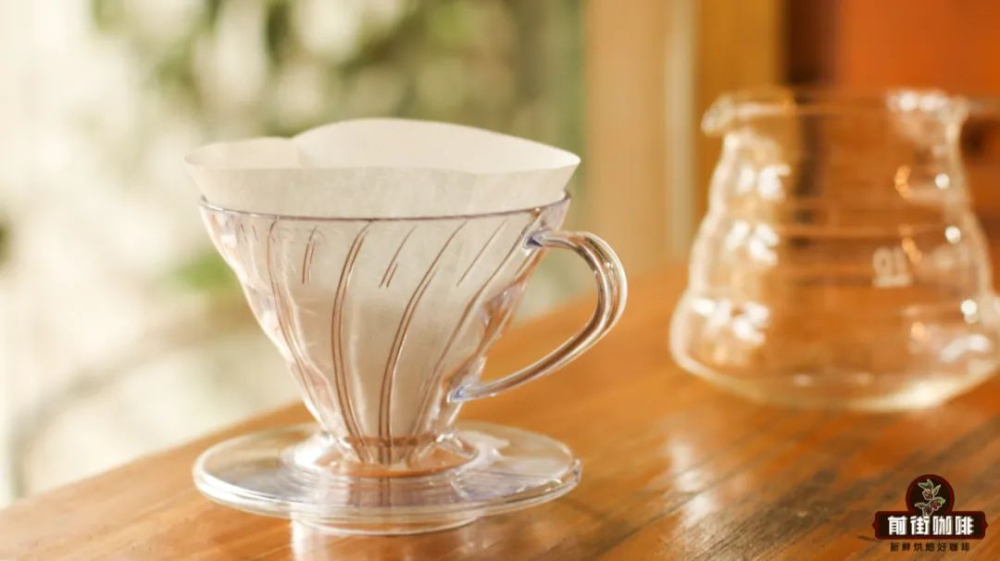
So what if a dripper's only job were to hold the filter paper, with no extra design influencing the water flow? FrontStreet Coffee happens to have a "veteran employee" that fits this description perfectly. Its contact area with the filter paper is minimal, so it barely affects the brew — its sole function is holding the paper. Meet the portable dripper made from a single steel wire.
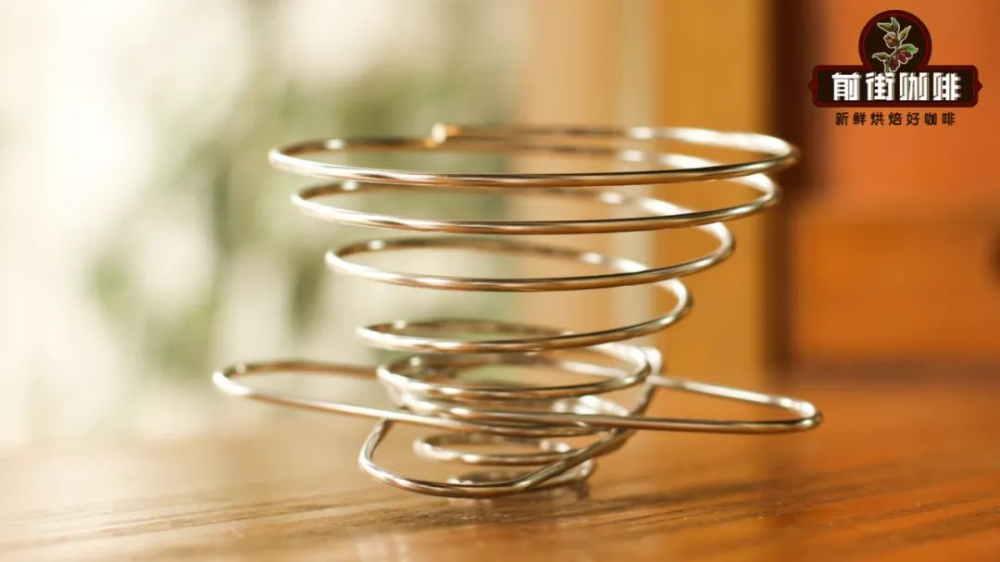
Construction and Design
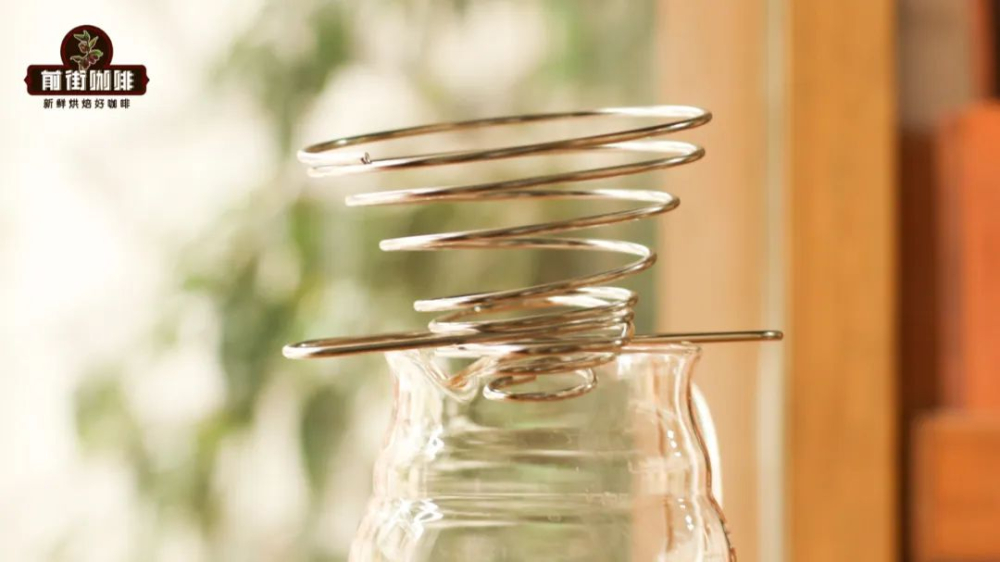
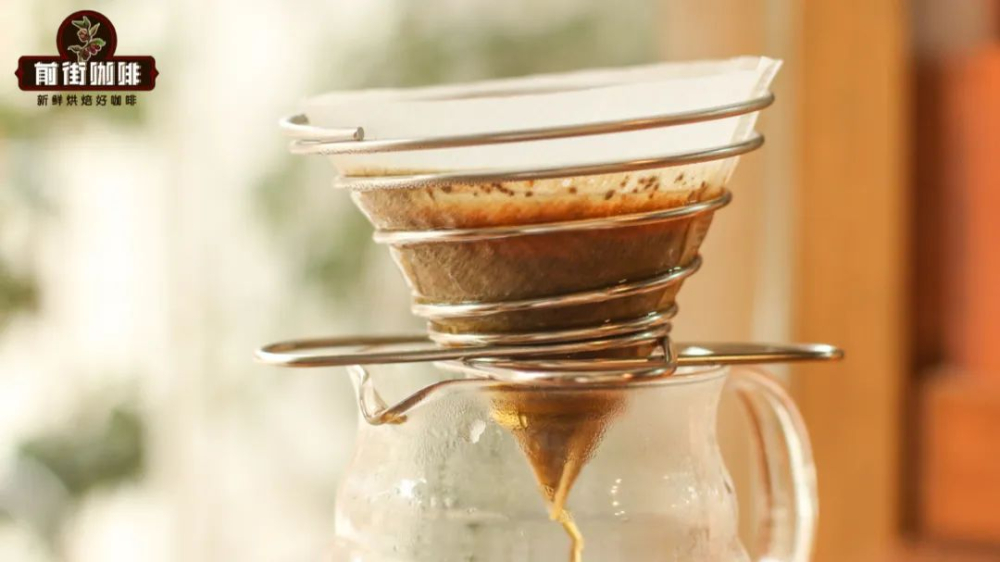
Yes — as you can see, the entire dripper is one piece of steel wire, with the cut ends plainly visible. It's conical in structure, so it naturally takes conical filter paper.
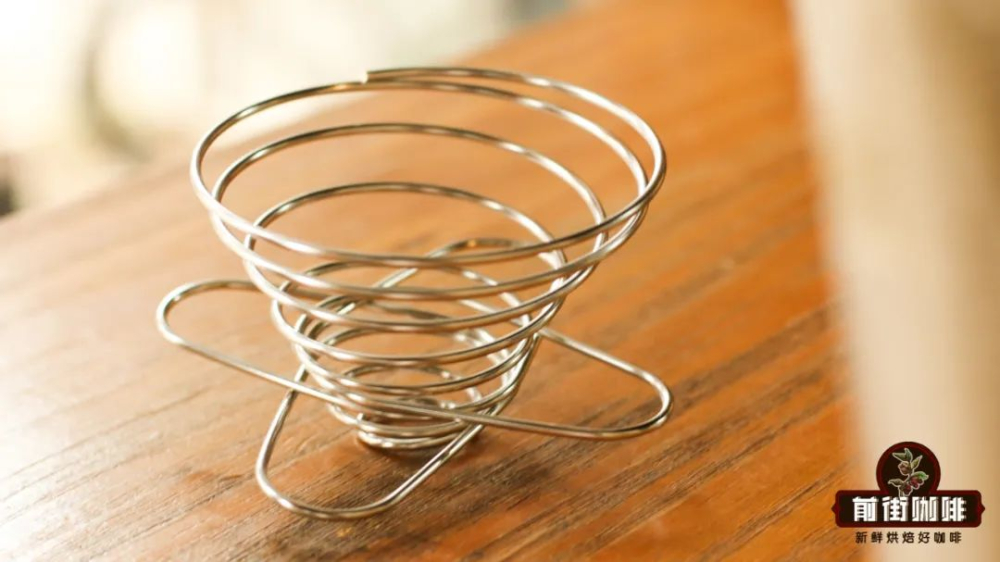
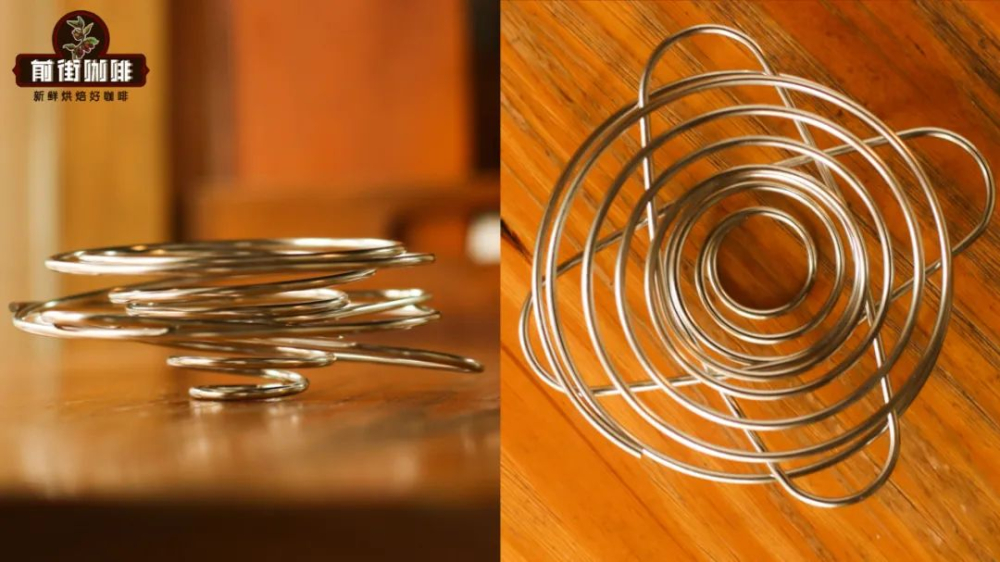
It also has a spring-like design that lets it stretch and deform; remove the force, and its own elasticity snaps it back to shape. The spring design exists for portability: when stowed, you press it down flat, seating the top wire onto the support base, and the dripper collapses into a compact, lightweight "transformed" state.
Advantages and Disadvantages
Lightweight, pocketable, and inexpensive are its clear virtues. But where there are advantages, disadvantages follow. Because the whole unit — including its support base — is a single wire, they don't sit on one level plane. Set it on a carafe and the problem shows immediately: the entire cone tilts to one side.
Brewing Experiment
With the pros and cons clear, let's actually brew with it and see what the coffee is like.
For this experiment, FrontStreet Coffee used Colombia · Divisa Geisha beans. On a V60 this coffee shows honeysuckle, citrus, and red pomelo. The parameters, following V60 practice:
Coffee amount: 15g
Grind size: Ek43 at setting 10, 75% pass-through on the #20 sieve
Coffee-to-water ratio: 1:15
Water temperature: 92°C
Brewing method: Three-stage pour
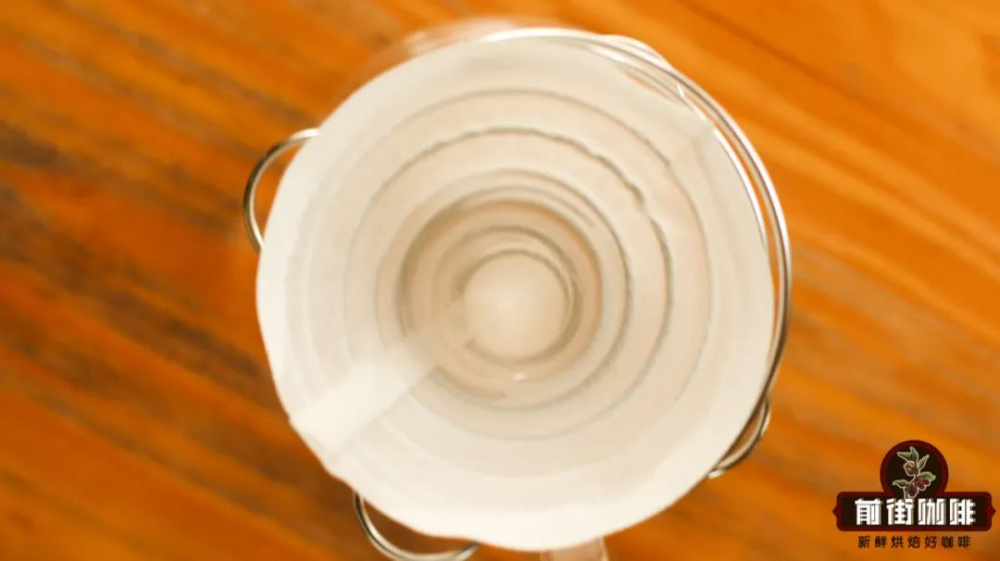
Before brewing we moistened the filter paper with a little hot water, warming the cup in the process. As the image shows, once wet the paper conforms almost perfectly to the wire frame. Now, brew!
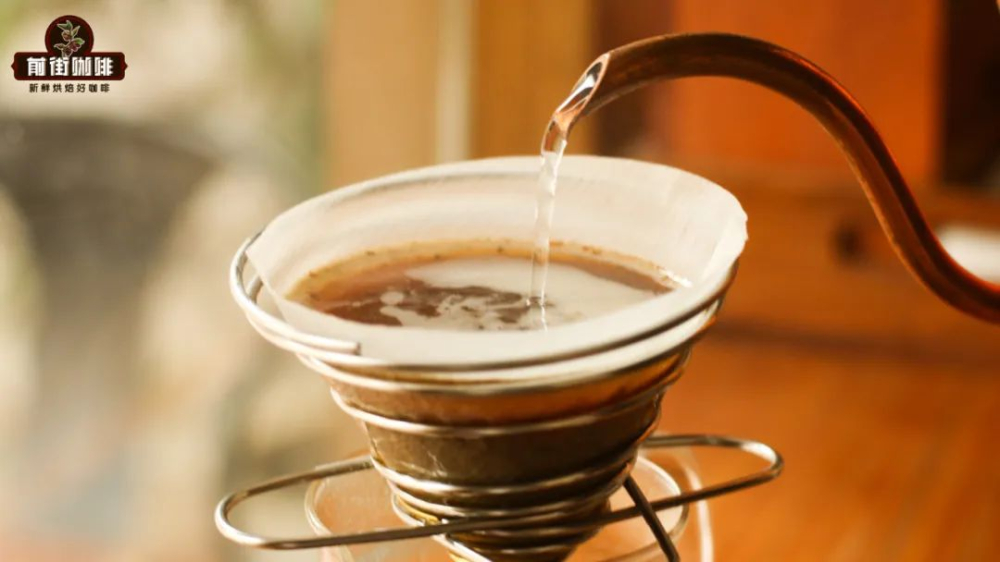
First, pour 30ml of water (twice the coffee weight) for a 30-second bloom. Then, with a steady large circular motion, pour the second stage to 120ml. When the water level nearly bottoms out, finish with a steady small circular pour to 75ml more. Once the dripping stops, the brew is complete.
Total time: 2 minutes 50 seconds. With no flow ribs, the drainage was far slower than a V60 — hence the extra time. As for the taste... you might expect a cup full of over-extracted bitterness. Not entirely: it was a complex bitterness with a notably thin mouthfeel.
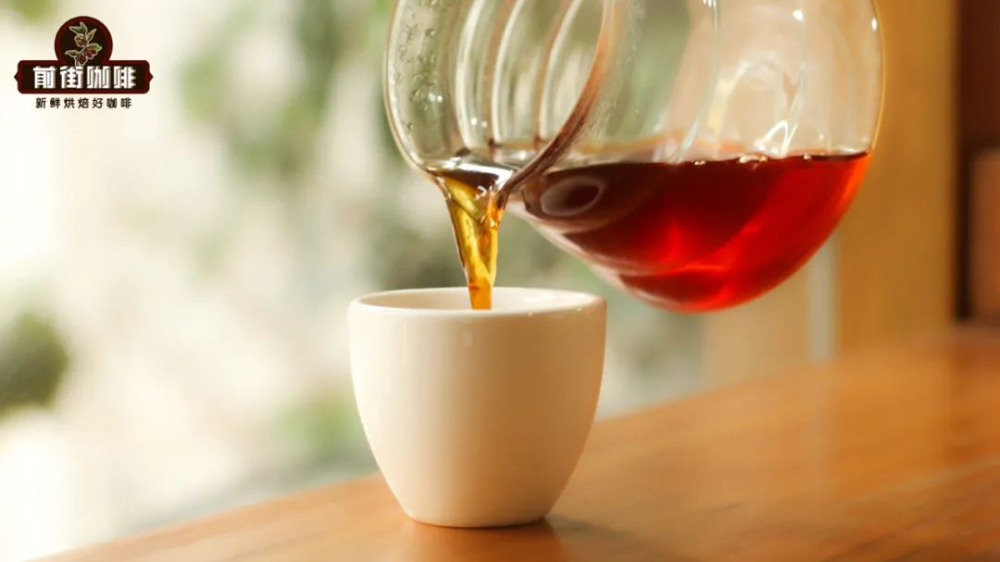
The extraction was extremely uneven. With no wall contact and no prominent ribs to guide the flow, the hot water could only percolate straight down by gravity — very slowly — leaving some of the coffee over-extracted. Meanwhile, the large single pours sent excess water around the coffee bed and straight down the sides of the paper — "bypass water." That combination produced the complex, bitter, thin cup.
Conclusion
But that isn't the dripper's fault — it's simply that we used an unsuitable method. Adjust to a coarser grind, lower water temperature, and slow, small pours instead of fast large ones, and a properly balanced pour-over follows. Beyond its steeper brewing demands, this dripper's value and portability are beyond reproach. FrontStreet Coffee doesn't think it needs to compete with conventional cones — different tools for different purposes, no comparison required.

FrontStreet Coffee Recommendation
A minimalist wire dripper brews a light, expressive cup — and pairs beautifully with milk-based drinks made from sturdier espresso. Two picks:
FrontStreet Specialty Blend / FrontStreet Black Cocoa Blend: The best milk companions, with Brazil coffee in the lead role. As lattes they reveal layered nut notes — almond, apricot kernel, walnut — silky and smooth on the palate. The Specialty Blend adds Colombia's nut, chocolate, and caramel character; FrontStreet Coffee's Black Cocoa Blend brings creamy chocolate aromas at a friendly price.
FrontStreet Classic Blend / FrontStreet Commercial Blend: If you want a latte with abundant crema, choose these. A touch of Robusta in the recipe delivers more golden foam and instantly fuller body and caramel aroma — and the Classic Blend, designed for espresso and moka pots, pulls dense, fine crema even on non-professional home machines.
FrontStreet Strawberry Candy: For fruit-leaning milk coffee, this popular espresso blend merges the native flavors of arabicas from different origins into a vivid strawberry-soft-candy sweetness — equally at home at the breakfast table or behind a café bar, and a great pick for signature milk drinks.
Important Notice :
FrontStreet Coffee is a long-established specialty coffee roaster in Guangzhou China, selling freshly roasted beans from its own farm in Yunnan as well as dozens of carefully selected single-origin beans from around the world for both pour-over and espresso. The products deliver consistently excellent quality and great value, with shipping within 24 hours. Guangzhou's FrontStreet Coffee shop is recommended by many coffee lovers, and the beans are now available online at the Tmall 。
FrontStreet Coffee has moved to a new address:
FrontStreet Coffee Address: 315,Donghua East Road,GuangZhou
Tel:020 38364473
 Scan and follow the En Gafei WeChat official account. Please indicate that the reprint comes from "En Gafei".

