
The Story of Blue Bottle Coffee's Gibraltar Glass: How to Make Gibraltar Coffee at Home

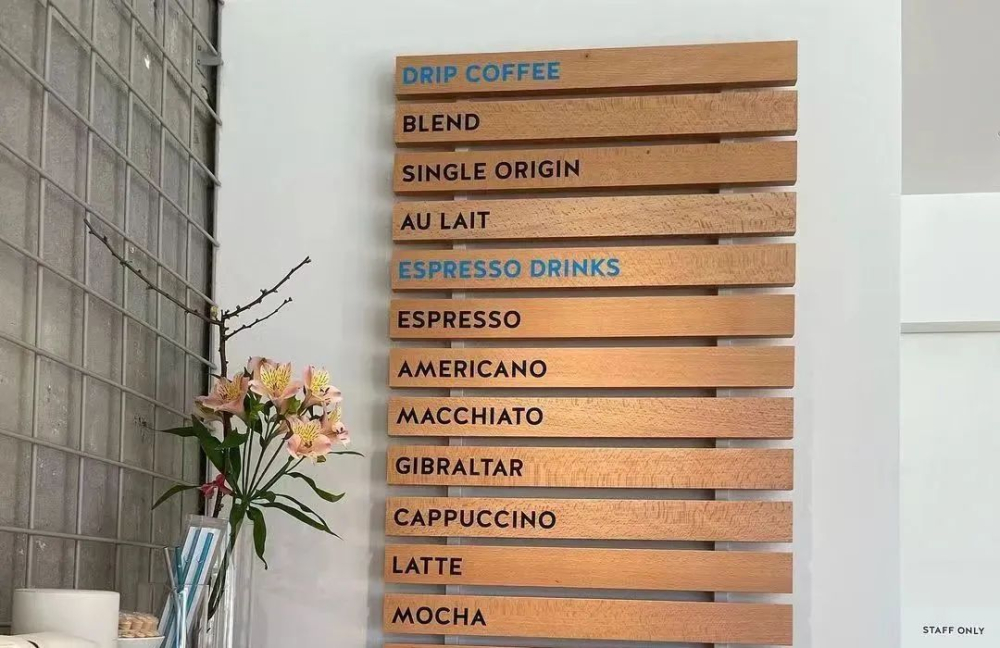
If you have ever visited a store of the well-known chain Blue Bottle Coffee, you have probably noticed a drink called "Gibraltar." Compared with the other names on the menu, the word feels unfamiliar and is often mispronounced. So what kind of coffee is it, exactly? FrontStreet Coffee is here to help you find the answer.
What is Gibraltar?
When we searched the term on Baidu, China's popular search engine, we got this explanation: Gibraltar is the name of a city and port at the southern tip of the Iberian Peninsula in Europe, and it also refers to the Strait of Gibraltar shown on maps.
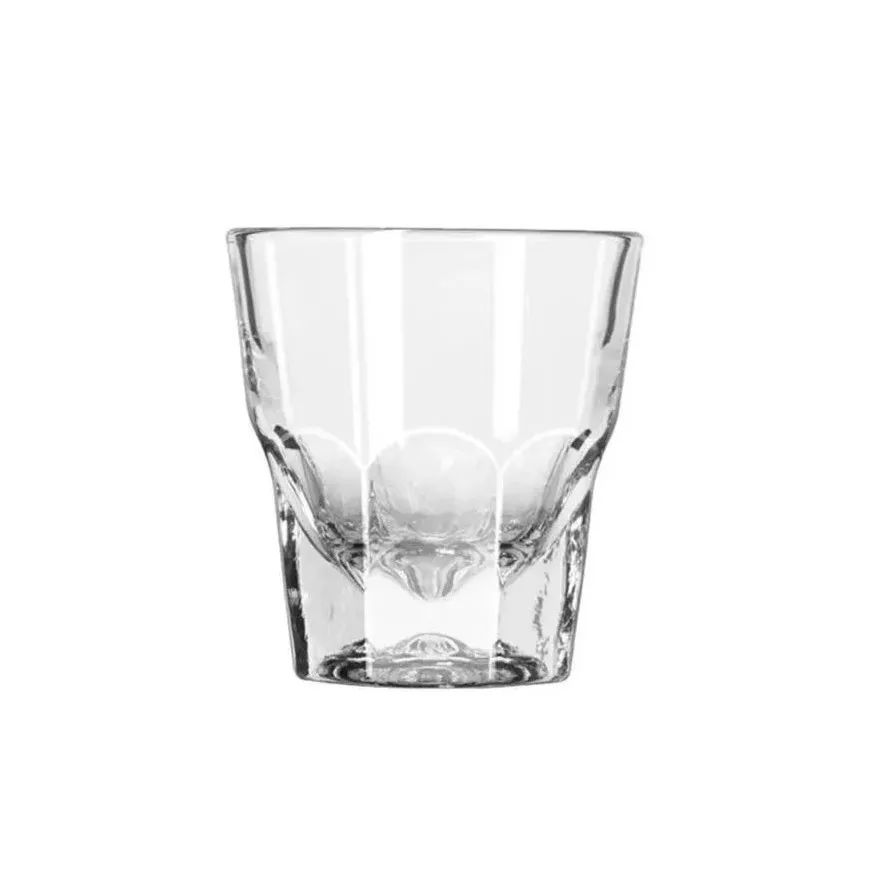
It has another identity as well. Gibraltar specifically refers to a line of glassware made by the American company Libbey. Founded in 1818, Libbey calls itself North America's premier glassmaker, with unique technologies and innovations in the field. The Gibraltar glass is one of its products, released in 1977. On the market, many coffee shops use Libbey's Gibraltar series as water glasses.
To us coffee lovers, of course, none of this is the answer we are looking for. How did a glass turn into a coffee drink? Let's get to the point.
A Coffee Born from Buying the Wrong Glasses
Blue Bottle Coffee, often called the "Apple" of the coffee world, was founded in Oakland in the San Francisco Bay Area. Founder James Freeman established the brand out of his passion for coffee. He has said he chose the name in tribute to the first coffee house in Europe, opened in 1683, also called The Blue Bottle.
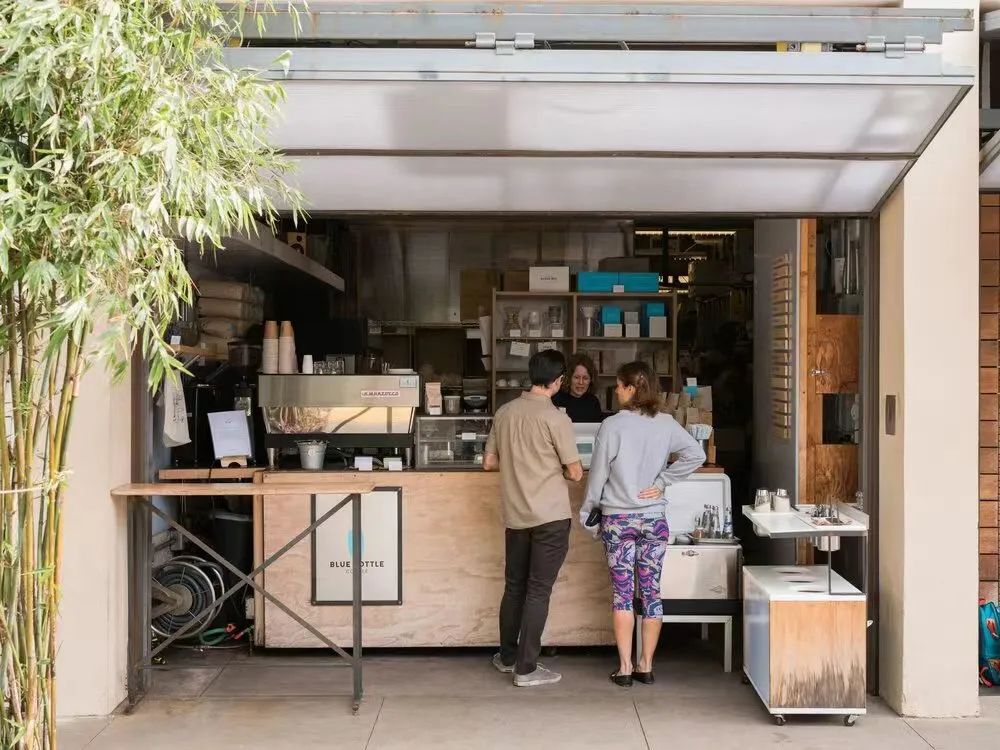
In 2005, James was preparing the first physical Blue Bottle store. One day an employee accidentally bought a pile of Gibraltar glasses, thinking they could be used for cupping. The glasses were too small, however, holding only 4.5 ounces, not even enough for a standard espresso milk drink, so they were packed into cardboard boxes and left unused.
Later, when the shop acquired a new espresso machine that needed dialing in for espresso and steamed milk, the staff discovered that the glasses' transparency and size made them perfect for watching the crema. So the small glasses came back out in the hope of being put to good use.
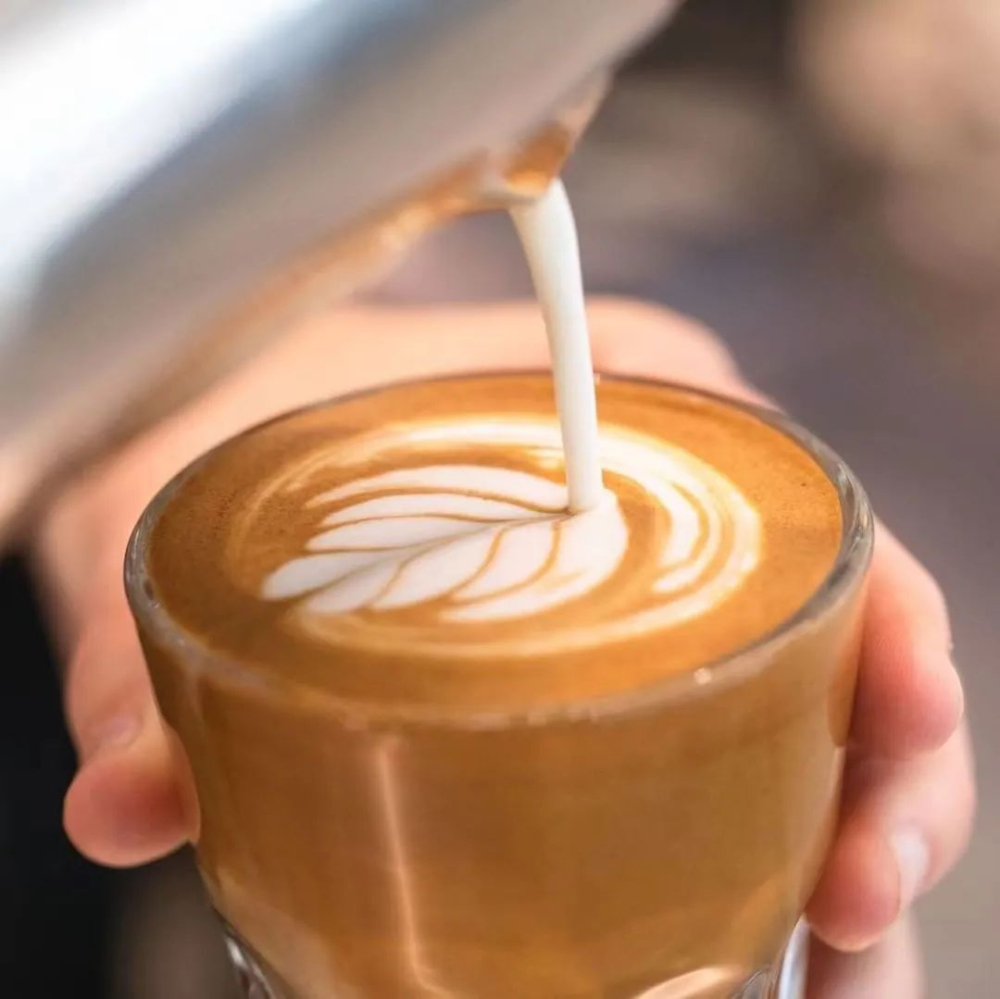
Image source: bluebottle
To create a drink close to a regular espresso milk coffee but not as intense as straight espresso, Blue Bottle's baristas began adding a small amount of warm milk with a thin layer of foam to the espresso in those small glasses, with an overall ratio sitting between a latte and a macchiato. A passing customer pointed at it and asked what the drink was, and the barista replied, "Oh, this is our Gibraltar."
Sometimes the best things happen by accident. They had not expected to create a drink that had never been on the menu, yet it became an instant hit once introduced. As Blue Bottle expanded into many countries, this rich little milk coffee, served in its beautiful glass, won fans around the world. That is why, whenever people mention Gibraltar coffee, the first name that comes to mind is its creator, Blue Bottle.
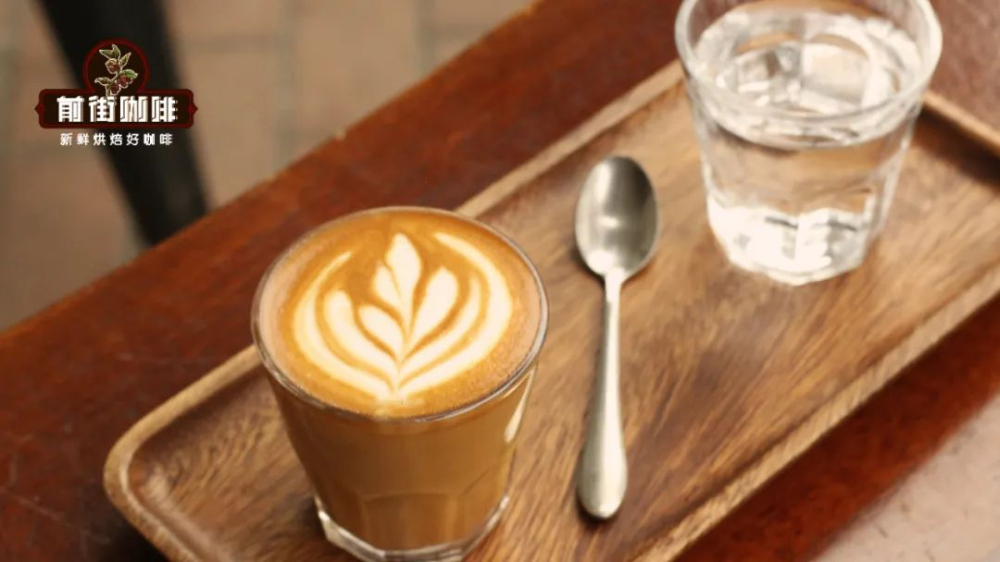
How to Make Gibraltar Coffee
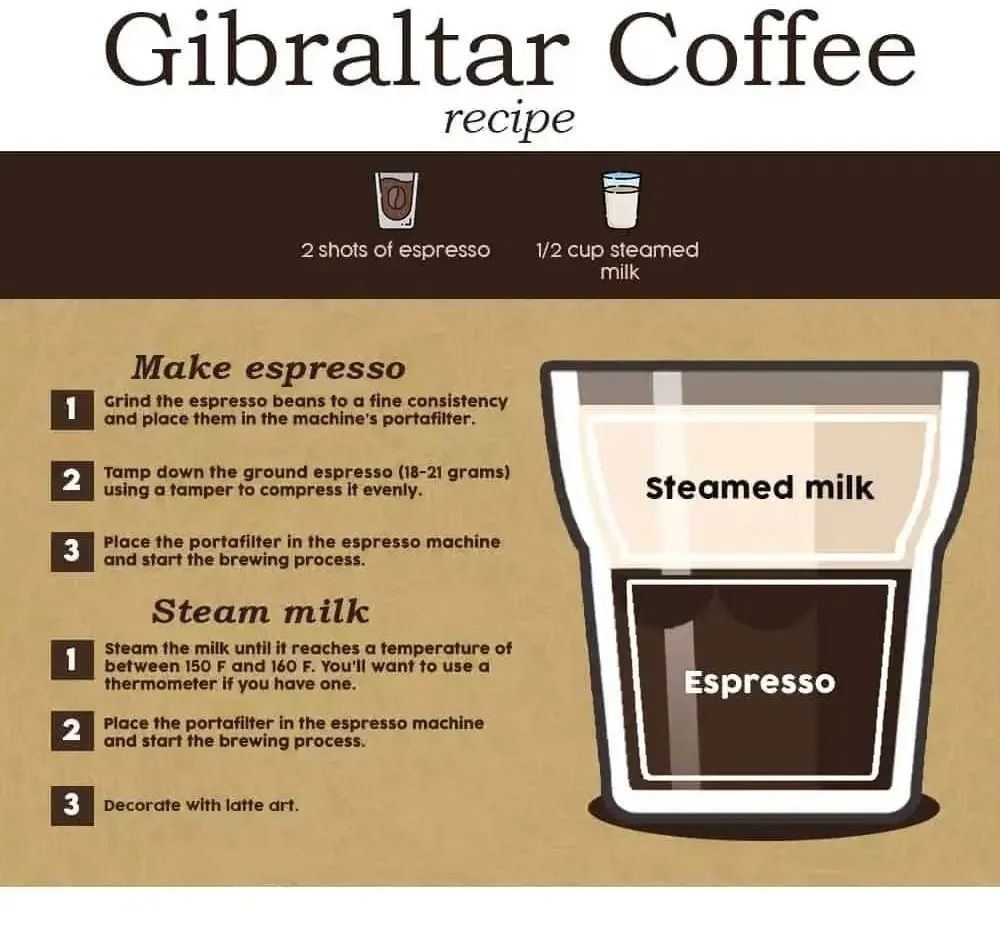
According to the recipe Blue Bottle Coffee has shared, making a Gibraltar is not complicated. Use a rock glass with an octagonal beveled bottom, essentially a cylindrical flat-bottomed glass, combine a double espresso with roughly twice its amount of warm milk, and finish with a small latte art pattern.
Using FrontStreet Coffee's daily parameters as an example: extract 19.8 g of Warm Sun Blend grounds into 36 ml of espresso, steam a pitcher of thin-foam milk at 50-55°C, then pour it into the prepared small glass until full. The Gibraltar glass holds about 130 ml, so the coffee-to-milk ratio comes out to roughly 1:2.

We tasted a very noticeable body in this Gibraltar. Compared with a Flat White, its coffee flavor is richer and more substantial, somewhat like an espresso lightly diluted with milk, but not as intense as straight espresso or a macchiato. It reminded us instead of another coffee with an equally tricky pronunciation: Cortado.
Two "Three-Sip" Milk Coffees: How Do Gibraltar and Cortado Differ?
You may recall the Cortado we introduced before, a Spanish coffee famous in the niche coffee world. Miniature cup, double espresso, less milk, thin foam: Gibraltar and Cortado look almost identical. Could they be the same thing?
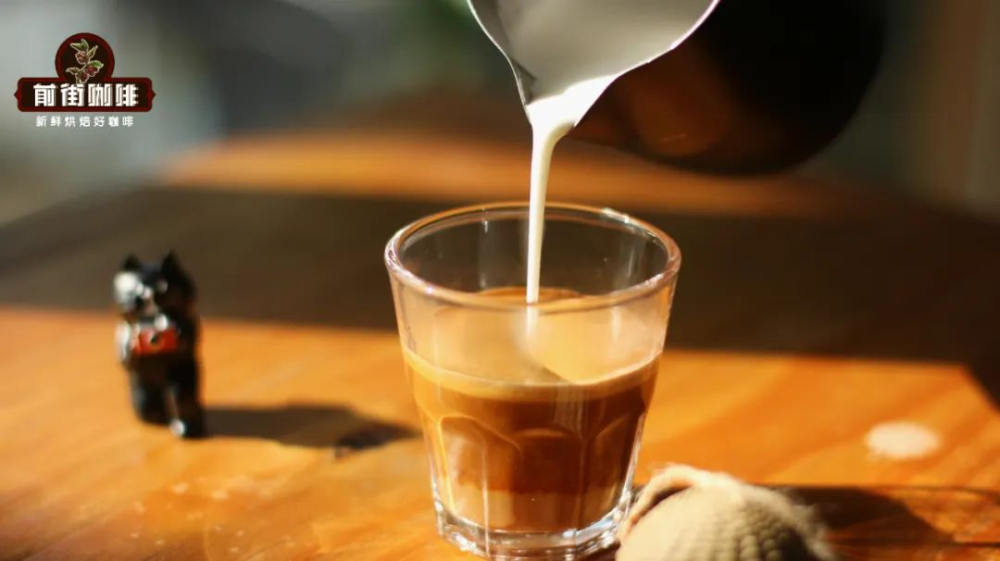
Looking at the recipe alone, they are indeed the same coffee. More precisely, Gibraltar should be seen as an improved version of the Cortado. Some particularly insistent baristas, however, wanted to distinguish them and seized on the glass as the difference, to help people remember the two more quickly.
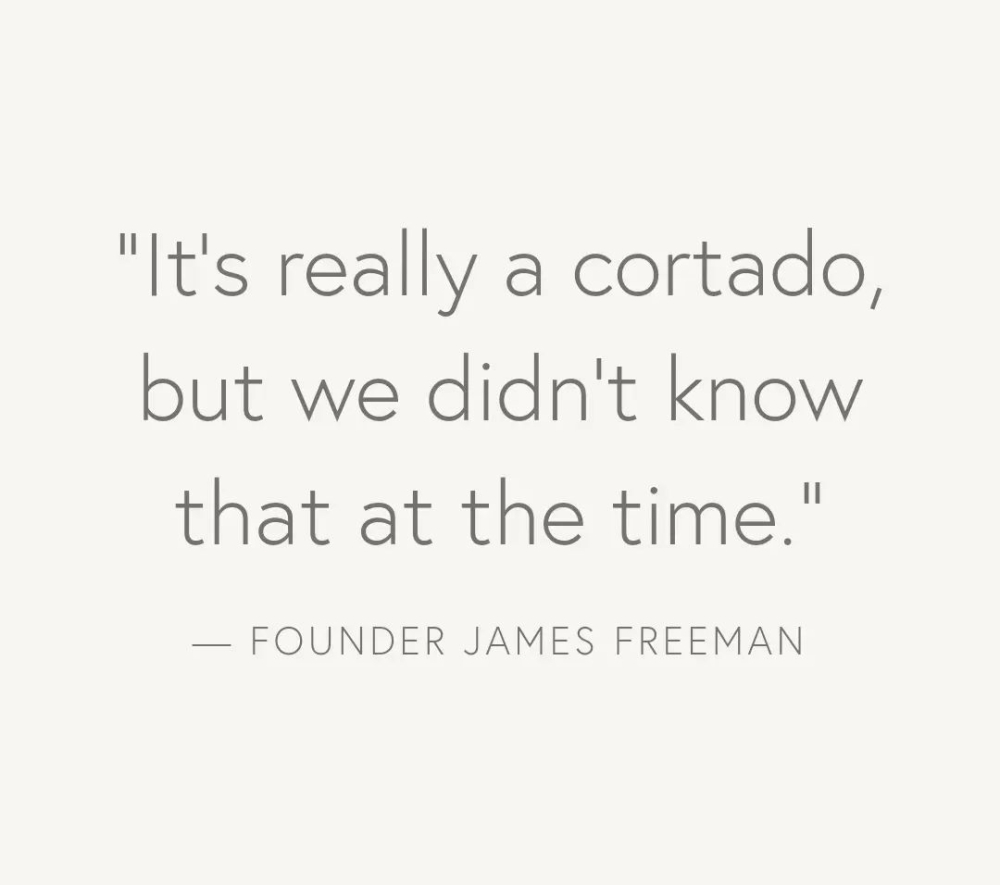
In fact, Blue Bottle founder James Freeman already gave us the answer in his book "The Blue Bottle Craft of Coffee," where he tells the story of Blue Bottle:
"It was indeed a Cortado, but we didn't know that at the time."
- END -
FrontStreet Coffee Recommendation
A Gibraltar lives or dies by a bean that holds its own against warm milk, and FrontStreet Coffee Brazil Queen Estate is a natural pick. Grown in Mogiana on fertile red volcanic soil, this rare yellow Bourbon is low in acidity and highly balanced, with rich nut and cocoa aromas, distinct caramel sweetness, and a smooth, non-astringent body, whether brewed as pour-over, espresso, or moka pot.
If you are just starting out with specialty coffee and want an approachable first bag, FrontStreet Coffee Ethiopia Huakui is a traditional natural-processed Yirgacheffe-area coffee whose tropical fruit aromas of strawberry, passion fruit, jackfruit, and honeydew stand out against a clear sweetness and very low bitterness, making it easy to enjoy even for drinkers who usually avoid the bitterness of coffee.
Important Notice :
FrontStreet Coffee is a long-established specialty coffee roaster in Guangzhou China, selling freshly roasted beans from its own farm in Yunnan as well as dozens of carefully selected single-origin beans from around the world for both pour-over and espresso. The products deliver consistently excellent quality and great value, with shipping within 24 hours. Guangzhou's FrontStreet Coffee shop is recommended by many coffee lovers, and the beans are now available online at the Tmall 。
FrontStreet Coffee has moved to a new address:
FrontStreet Coffee Address: 315,Donghua East Road,GuangZhou
Tel:020 38364473
 Scan and follow the En Gafei WeChat official account. Please indicate that the reprint comes from "En Gafei".

