How to Make Turkish Coffee? How is Traditional Turkish Coffee Used for Fortune-Telling? What is Three Boils?
In the 21st century, coffee is more than a beverage. In many places it has been handed down through generations and become a signature local specialty: Vietnam's egg coffee, Ethiopia's clay-pot coffee, Irish whiskey coffee—and the romantic, mystical Turkish coffee! All of them are experiences you owe yourself when you visit. Today, FrontStreet Coffee shares the most mystical of them all: Turkish coffee.
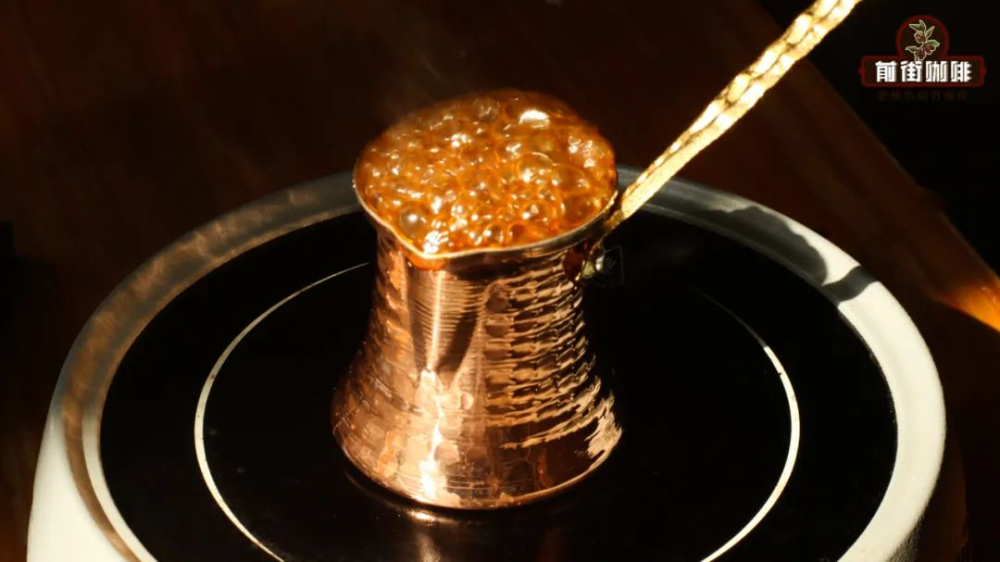
Here is a curious parallel: Turkish coffee today is nothing like Turkish coffee of the past. Before the Ottoman Empire dissolved, the Arabs were already brewing coffee in a large pot called a Dallah. (Note: the Ottoman Empire was a multi-ethnic state founded by the Turks in 1299 and dissolved in 1923.)
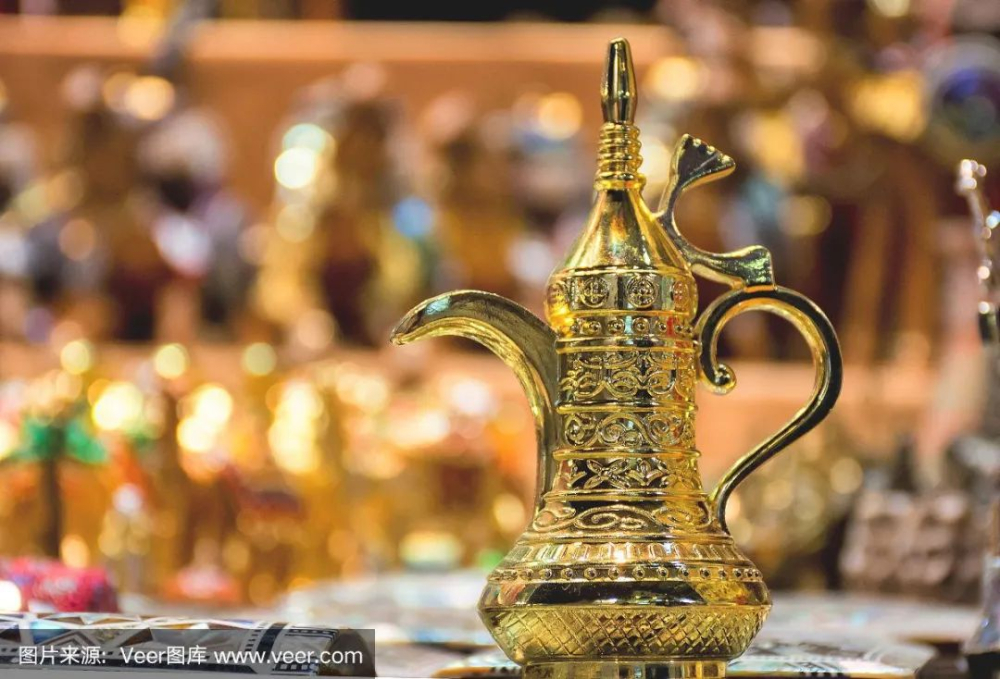
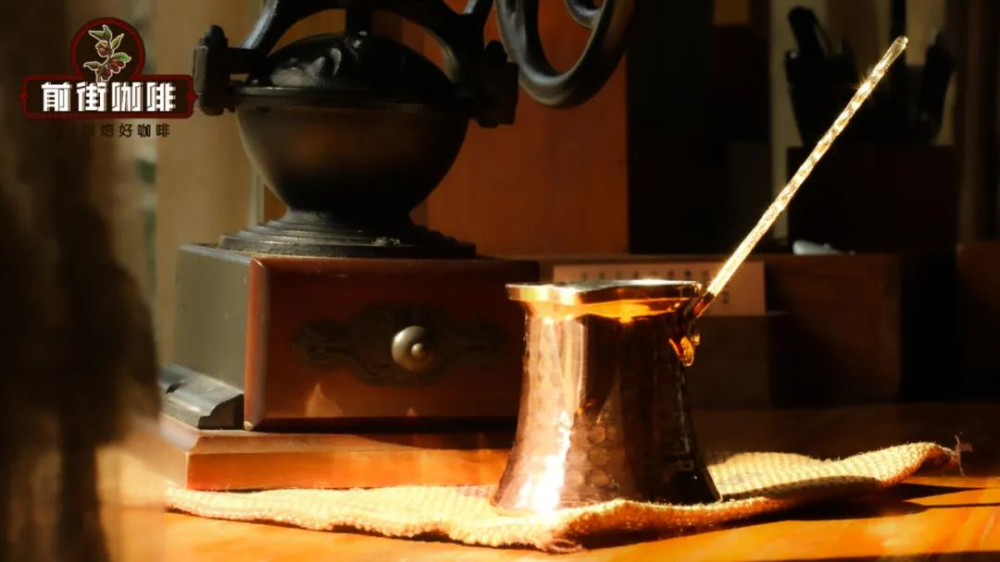
That pot—gleaming gold, with a spout like a toucan's beak—was used to brew lightly roasted, possibly even raw, coffee beans! The Turks found this astonishing. Before long they improved the Arabic method: darker-roasted beans instead of raw, and the Dallah replaced by a long-handled copper pot called a Cezve. Only the brewing method survived unchanged—add water, add coffee, and simmer slowly over charcoal. The Turkish version became wildly popular and was naturally renamed "Turkish coffee." As the empire expanded, the method spread far and wide, and soon every street corner across the empire—and in European countries—poured Turkish coffee.
Few people knew the full evolution, so neighbors simply named the method after their own lands: Greek coffee and Armenian coffee are classic examples. Over time each developed its own cultural style, but at root they all share the same ancestry as Turkish coffee.
The Cezve: The Turkish Coffee Pot
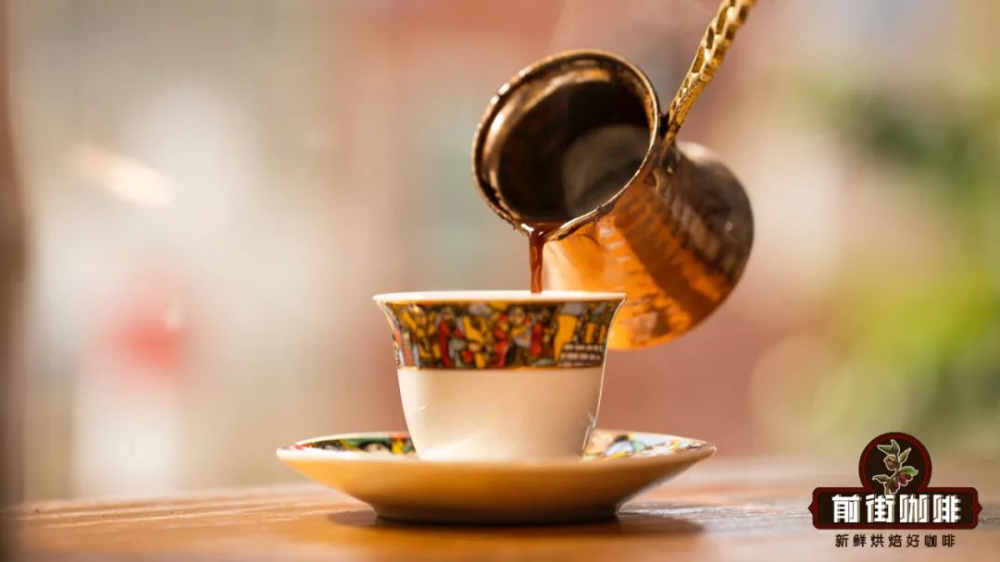
Right! The Cezve, that long-handled copper pot, is the "magical" vessel you've seen bubbling endlessly on every media platform.
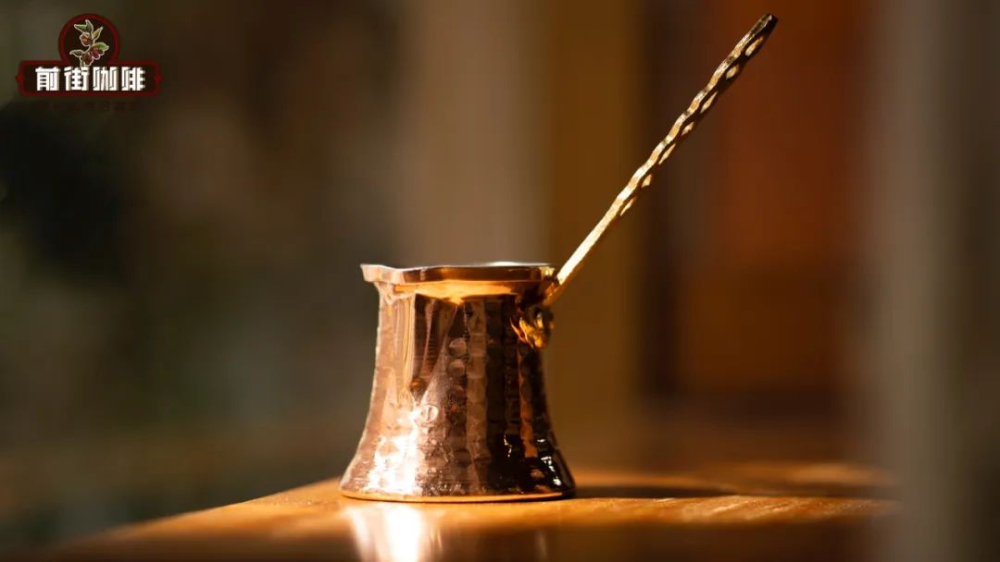
It is typically made of brass and entirely handcrafted. Its most distinctive feature is the long handle joined to a spouted body. Wall thickness varies with the heating method—pots for hot-sand brewing are thinner, pots for open flame are thicker, typically around 1-1.5mm.
How to Make Turkish Coffee
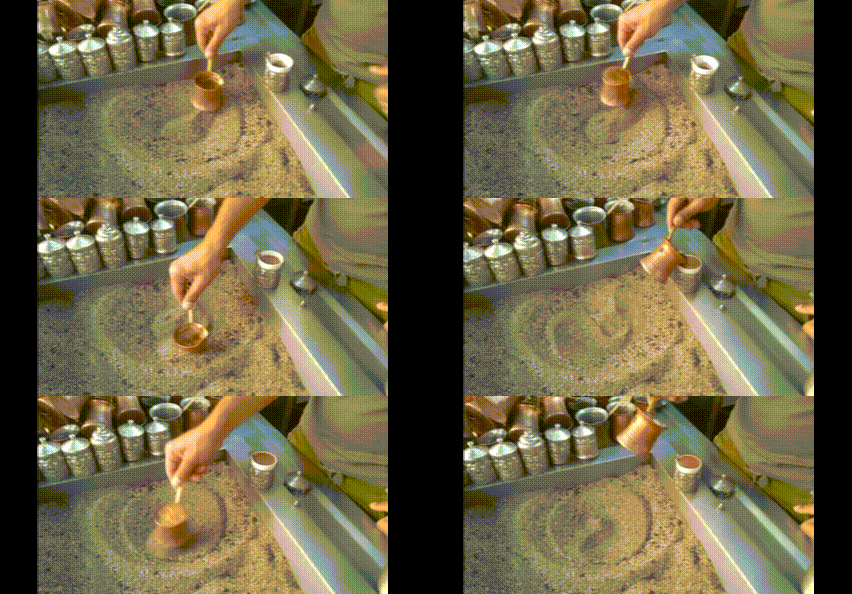
The Turkish method, like Ethiopia's, has barely changed even today: add water and coffee to the pot and heat it any way you like except an induction cooker! No filtering, either—the Turks grind the coffee repeatedly by hand into a powder even finer than espresso's flour-fine grind. Most of it settles at the bottom before you drink, so you swallow very little; even if you do, you barely notice, so why filter? And that leftover powder has another famous use after the cup is finished!
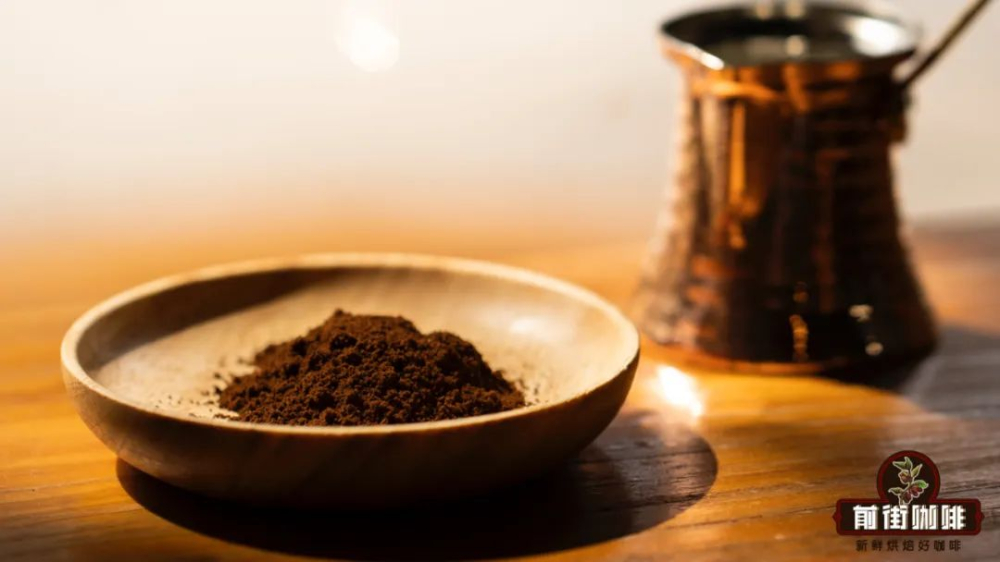
FrontStreet Coffee's Brewing Parameters:
5g coffee, 60ml water (the pot is small), ground to an unmeasurable powder—past espresso fineness, then ground again by hand several times. (Worth noting: traditional Turkish coffee adds no sugar or spices.) Put everything in the pot and let the fire bring it to a boil. As the coffee reaches boiling point it foams and bubbles, and just before it overflows, lift it off the heat.
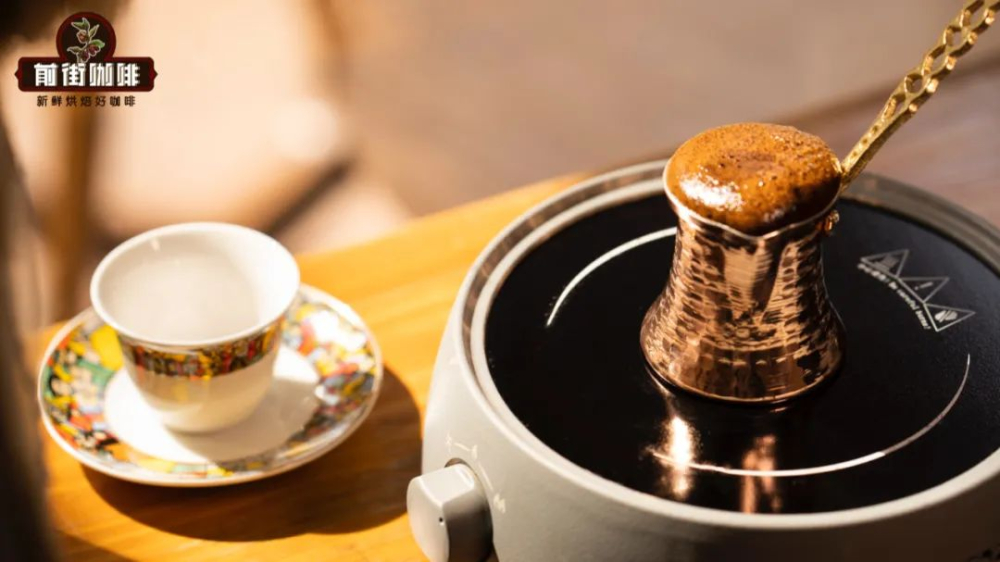
Let it settle and cool, return it to the heat, remove it again just before it boils over, and repeat once more—then pour it all into the cup and enjoy! That ritual is the most traditional "three boils" method. There is also the version from popular online videos, where a third of the coffee is poured out at each boil.
Turkish Coffee Fortune-Telling
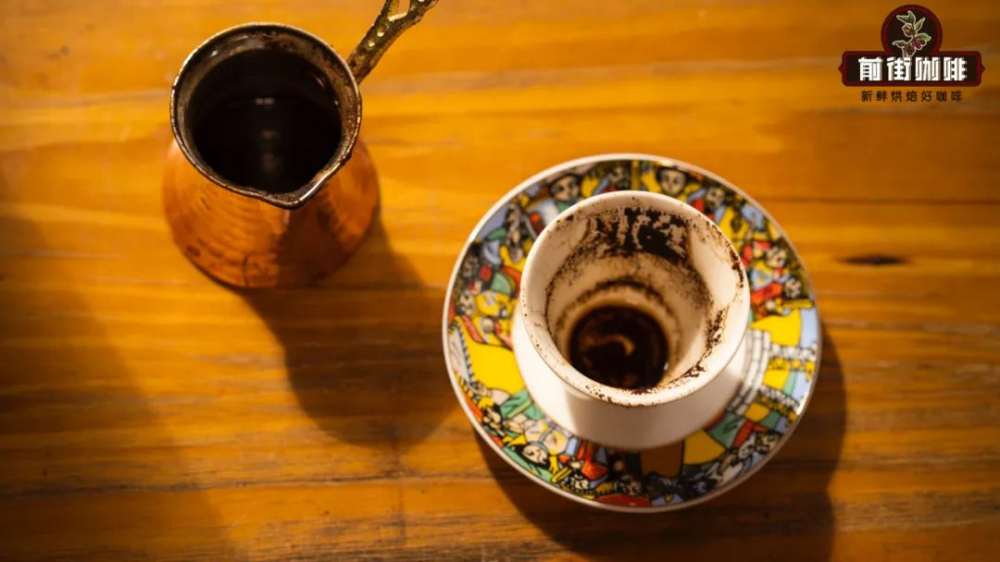
Beyond the endlessly bubbling pot, the most mystical part of Turkish coffee is the fortune-telling! When you finish your cup, cover it with the saucer, flip cup and saucer upside down together, and wait.
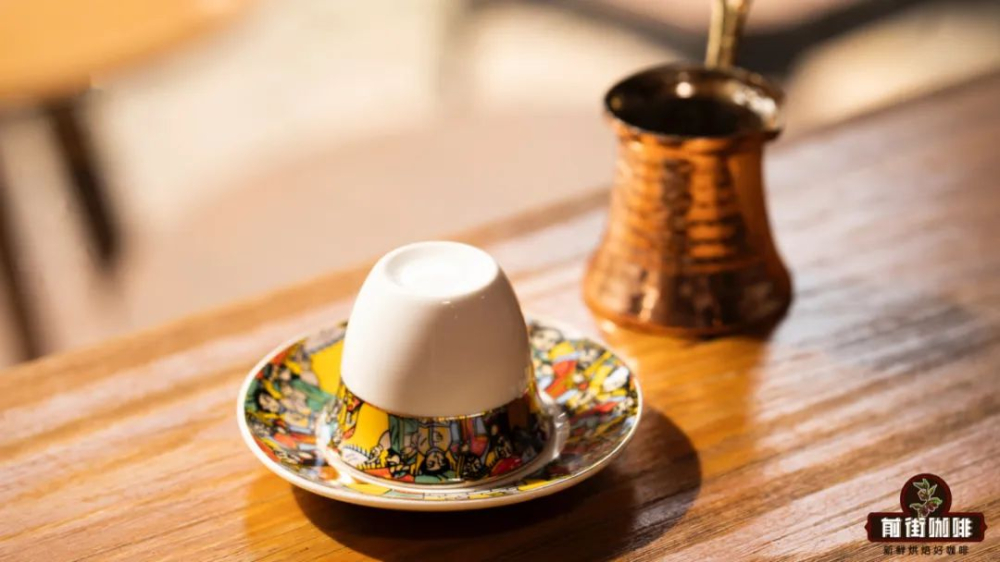
After a short while the grounds have set inside the cup; turn it upright again, and the fortune-teller reads your future in the patterns the grounds have left—letters, animals, moons, and suns are all regulars in this divination~ For the record, FrontStreet Coffee has no idea what any of them mean, so we won't be spreading misinformation~~
Though traditional Turkish coffee uses no flavorings, interestingly, Turkish marriage customs put spiced Turkish coffee to work as a character test.
A man preparing to propose must drink a cup of Turkish coffee dosed with all manner of salt and spice. If he shows no difficulty and no pained expression, it proves the gentleman is patient, hardy, and good-humored! Just like FrontStreet Coffee~~~
- END -
FrontStreet Coffee
No. 10 Bao'an Qianjie, Yandun Road, Dongshankou, Yuexiu District, Guangzhou, Guangdong Province

FrontStreet Coffee Recommendation
Coffee that travels through generations—like Turkish coffee—deserves beans with roots of their own, and China's Yunnan has exactly that story. Yunnan's Typica coffee traces back to 1904, when the French missionary Tian Deneng carried coffee seeds (Typica) from Vietnam into Yunnan and planted the province's first coffee tree in Zhugula Village, Binchuan County—the beginning of Yunnan coffee, and the reason the domestic crop is known as Yunnan arabica, or "small-bean" coffee. Coffee loves warmth: it tolerates heat but not cold, thrives on abundant sunlight, and grows best between 16°C and 21°C—conditions found along the golden coffee belt around the equator, where Yunnan conveniently sits, with most of the province above 1,000 meters on fertile, sunny slopes with generous rain and wide day-night swings. Yunnan's four major growing areas—Baoshan, Dehong, Pu'er, and Lincang—spread across the province's southwest. For an entry-level Chinese arabica, FrontStreet Coffee's Yunnan Small Bean from Baoshan, washed and medium roasted, brings gentle nut and chocolate sweetness with a light plum acidity and a friendly price—many drinkers' very first taste of Yunnan. For clearer regional character, the FrontStreet 2013 Yunnan Natural Typica comes from FrontStreet's own estate using the oldest, most traditional post-harvest method: natural drying. Typica is among the oldest and purest arabica varieties, and natural processing gives it a fuller body, more pronounced sweet-tart fruit of citrus and berries, a whisper of fermented wine, caramel sweetness, and a creamy finish. And for Yunnan character in an espresso, the FrontStreet Black Cocoa Blend pairs Yunnan Small Bean with Brazil Cerrado—the Brazil side supplies mixed-nut aromas and balance, Yunnan supplies chocolate and citrus—yielding an Americano with balanced sweet, sour, and bitter notes and nut-brown-sugar aromatics, and a latte with silky almond and cream, ideal for beginners.
Important Notice :
FrontStreet Coffee is a long-established specialty coffee roaster in Guangzhou China, selling freshly roasted beans from its own farm in Yunnan as well as dozens of carefully selected single-origin beans from around the world for both pour-over and espresso. The products deliver consistently excellent quality and great value, with shipping within 24 hours. Guangzhou's FrontStreet Coffee shop is recommended by many coffee lovers, and the beans are now available online at the Tmall 。
FrontStreet Coffee has moved to a new address:
FrontStreet Coffee Address: 315,Donghua East Road,GuangZhou
Tel:020 38364473
 Scan and follow the En Gafei WeChat official account. Please indicate that the reprint comes from "En Gafei".