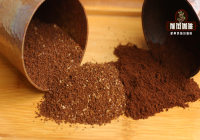
How is Indonesian Java Coffee? Are Java Variety and Java Coffee the Same Thing?

Regular readers of FrontStreet Coffee know that the term "Mocha" carries three meanings: the Yemeni port city Mocha Port; the coffee variety grown around Mocha Port; and the chocolate milk coffee that imitates the Mocha variety's flavor profile. In recent years, the increasingly popular "Java" also has three meanings, just like Mocha. It refers to a growing region, a coffee variety, and it exists as a collective term. Let FrontStreet Coffee explain this step by step, starting with the Java growing region.
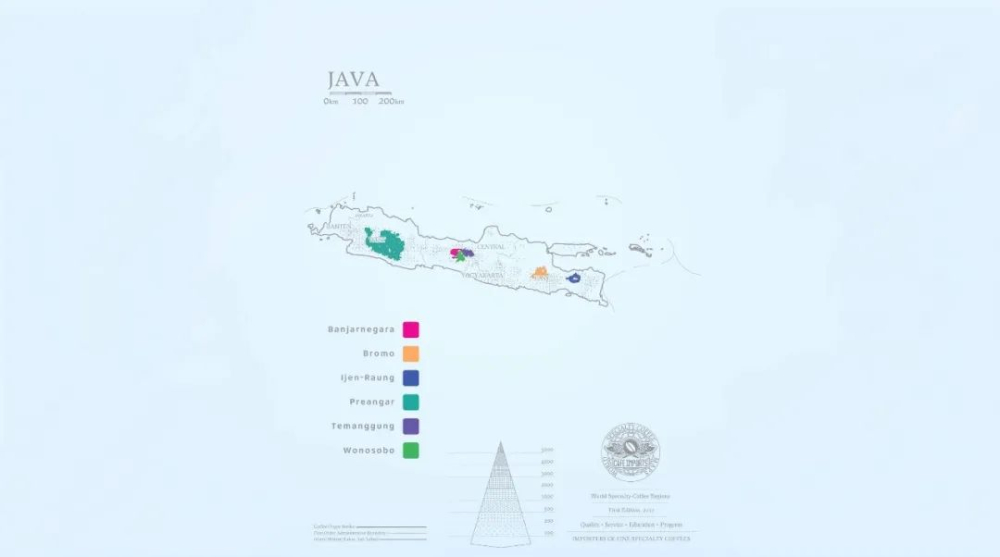
Java Island
Java is an island belonging to Indonesia, lying between Bali and Sumatra. It is Indonesia's fifth-largest island, bordered by the Indian Ocean to the south and the Java Sea to the north, and it is one of the most densely populated islands in the world. It is also Indonesia's second-largest coffee-producing region, after Sumatra, which accounts for 60 percent of the country's total production. Perhaps the name Java Island does not feel familiar on its own, so let's look at it from another angle: the volcano featured in "Lonely Planet" magazine is one of Java's hallmarks.
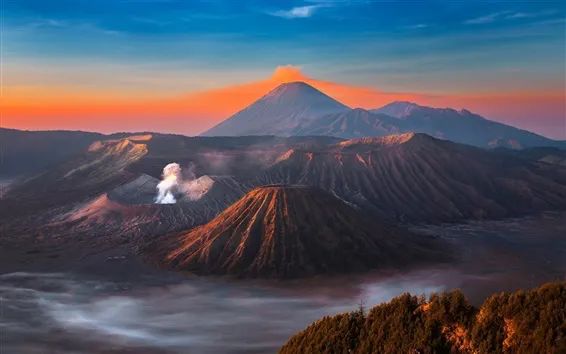
(Image sourced from the internet)
Java Coffee
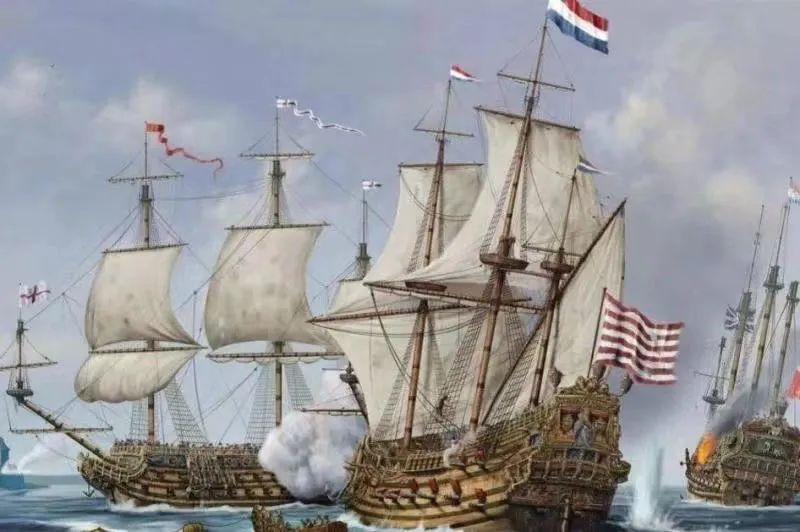
The history of coffee cultivation on Java Island goes back to the 17th century, when the Dutch, known as the "sea coachmen," planted on the Indonesian island of Java, also seized by force, the Typica plants they had taken by force. Unexpectedly, this single act allowed not only Java Island but the world's coffee industry to flourish. Java's excellent climate gave coffee an outstanding growing environment, so the cultivation of Typica naturally succeeded. The Dutch made great wealth from harvesting coffee. What is more, while conducting the coffee trade they also spread coffee to various parts of the world, significantly weakening Yemen's hold on the coffee trade. Java therefore holds a pivotal place in the history of world coffee.
These coffee varieties planted on Java Island, with their distinct flavor characteristics, were collectively known as "Java coffee." Initially the varieties planted on Java were mainly Arabica, but under successive attacks from disease and pests, the disease-susceptible Arabica varieties fell one after another. As a result, not only Java but the whole of Indonesia began planting varieties with Robusta genes, or even pure Robusta.
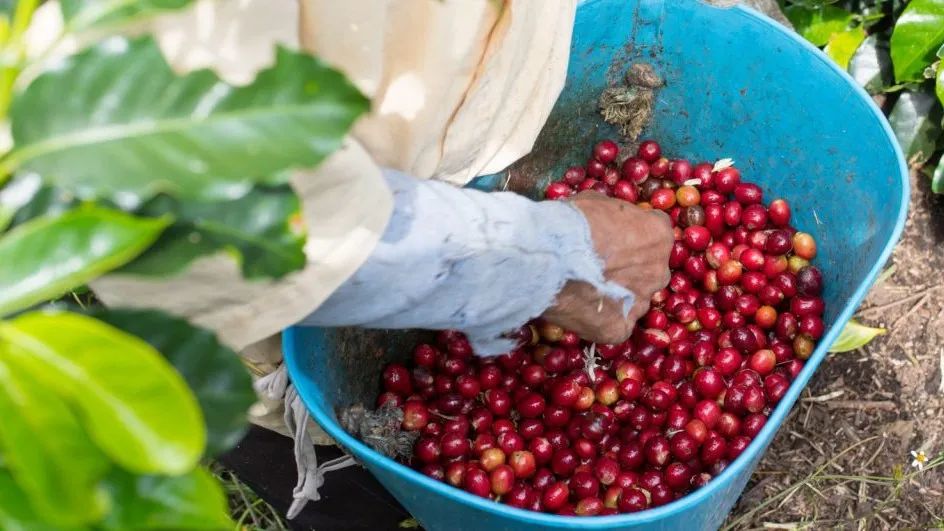
The Java Variety
Finally, let's talk about the Java variety. Many friends might guess: since this variety is named after the island, it must have been discovered there, or named after some varieties that were transplanted there and mutated. The answer is that neither is true. Java is not a local Indonesian genetic mutation but an Ethiopian local variety selected and bred in Ethiopia and then introduced to Indonesia.
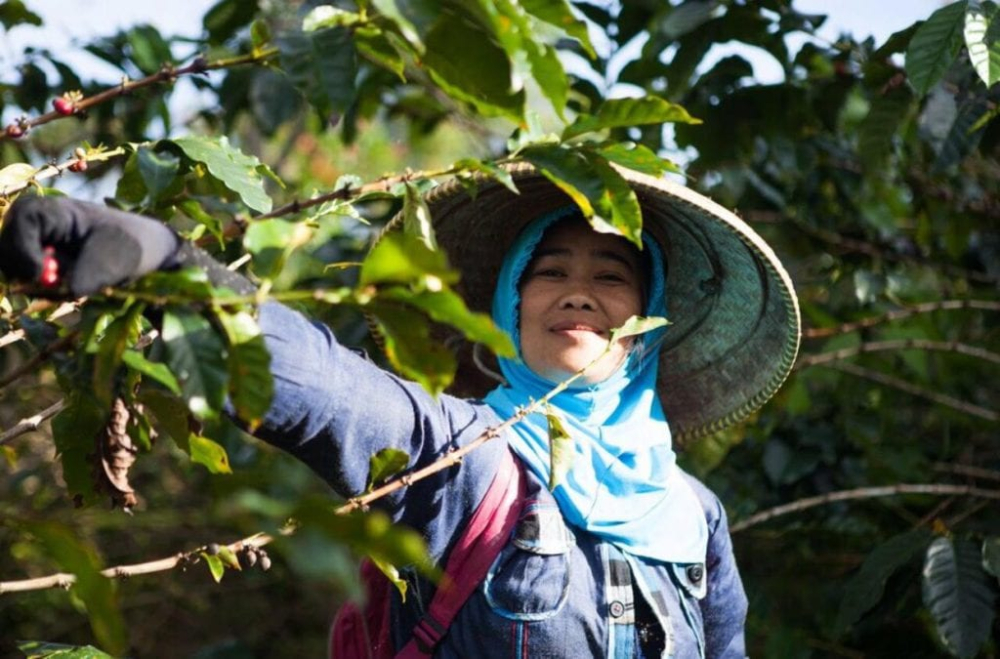
In 1928, the botanist P.J.S. Carmer brought coffee varieties he had selected in Ethiopia to Indonesia and named them the "Abyssinia series." Because one of these varieties had strong disease resistance and excellent flavor, it quickly gained wide cultivation in Java. Not only that, it was gradually introduced to coffee regions such as Africa and Central America. When it was later introduced to Cameroon, it was named after the island: Java. The Java variety also comes in long-form and short-form. Long-form Java is slender, pointed at both ends, with prominent flavors resembling Geisha, so many people compare it with Geisha. Short-form Java is oval, full and plump, resembling Typica. The reason coffee farmers growing Java might mistakenly think it belongs to the Typica family largely comes down to its appearance.
According to Teacher Huanizong's writings in "The Fourth Wave: Specialty Coffee Studies," people in the past did not know this history of Java migrating from Ethiopia and mistakenly thought Java was a variation of Typica. Only in recent years did genetic testing confirm that it is indeed an Ethiopian local variety. Beyond its appearance, the plant's characteristics are another factor that easily leads to misunderstanding.
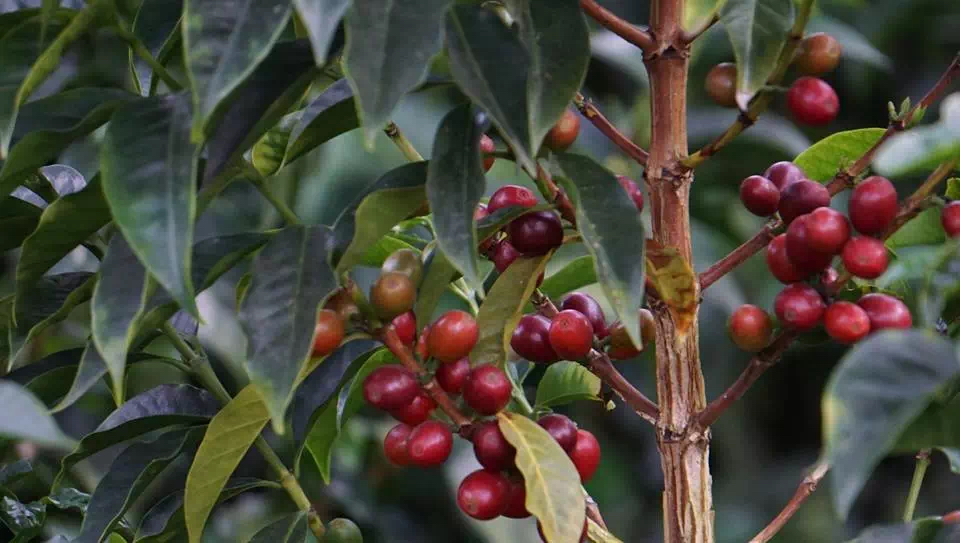
The Java variety's plants are taller than typical Arabica coffee plants, but their yield is relatively much lower. The top leaves and young shoots are bronze-colored, very similar to Typica plants. Combined with the fact that the first Arabica variety widely cultivated when coffee was introduced to Indonesia was Typica, and the appearance of short-form Java, people were led to believe Java belonged to the Typica family. In recent years, Java transmitted from Indonesia to Nicaragua has regained attention for its excellent flavor, bringing the variety back into the spotlight. What we need to remember is that the Java variety can be called Java coffee, but Java coffee does not necessarily refer to the Java variety.
FrontStreet Coffee Recommendation
No discussion of Indonesian coffee can begin anywhere but Sumatra and Mandheling. FrontStreet Coffee's Sumatra Wet-Hulled Mandheling comes from the Lake Toba area of the Lintong region and uses the local wet-hulled method, in which the parchment is removed while the bean is still half wet, leaving the green bean fully exposed to the air as it dries and giving the coffee its typical herbal and spice notes. Roasted medium-dark to bring out the classic Mandheling profile, it is low in acidity and full-bodied, with caramel, dark chocolate, and toasted bread aromas and a long, sweet finish, ideal for those who like a strong cup.
For a top-tier Indonesian coffee, the PWN Golden Mandheling is the choice. Selected with strict defect-screening standards covering bean density, size, shape, and color, and put through machine and hand sorting, it yields intact, even, large, translucent beans with less of the earthy, grassy note that Mandheling can carry. Freshly roasted, it offers sandalwood, herbal, spice, roasted hazelnut, caramel, and dark chocolate flavors, clean and mellow with a rich, layered aroma.
If you want an espresso that captures that same deep character, FrontStreet Coffee's Classic Blend enters the picture. In the era before light, acidic coffee became fashionable, Mandheling was considered the richest, most aromatic coffee in the world and was often used in espresso, and the Mamba recipe, blending Mandheling with Brazil, was born from that idea, marrying Mandheling's wildness with Brazil's smoothness while the sweet nuttiness offsets Mandheling's stronger bitterness and herbal edge. To give a proper Mamba its rich golden crema, FrontStreet Coffee's Classic Blend adds a small amount of Robusta and uses a deep roast, pushing its dark chocolate, nut, and caramel aromas to the fullest, so even a beginner can make an authentic Mandheling-style cup with ease.
Important Notice :
FrontStreet Coffee is a long-established specialty coffee roaster in Guangzhou China, selling freshly roasted beans from its own farm in Yunnan as well as dozens of carefully selected single-origin beans from around the world for both pour-over and espresso. The products deliver consistently excellent quality and great value, with shipping within 24 hours. Guangzhou's FrontStreet Coffee shop is recommended by many coffee lovers, and the beans are now available online at the Tmall 。
FrontStreet Coffee has moved to a new address:
FrontStreet Coffee Address: 315,Donghua East Road,GuangZhou
Tel:020 38364473
 Scan and follow the En Gafei WeChat official account. Please indicate that the reprint comes from "En Gafei".