
Ethiopian Coffee Beans | Introduction to 74158 Coffee Beans from Santa Vini Processing Station in Sidamo Region
Africa is home to many coffee-producing nations, but one of them stands apart: an ancient country with 3,000 years of civilization that is widely recognized as the birthplace of coffee - Ethiopia. The very word "coffee" traces back to the Kaffa forest in southwestern Ethiopia. Today Ethiopia remains a major producer, the largest grower of Arabica in Africa, with more than 10,000 coffee varieties.
Ethiopia
Ethiopia sits at the center of the Horn of Africa, on the East African Plateau southwest of the Red Sea, and is a landlocked country. It shares borders with Djibouti, Somalia, Sudan, South Sudan, Kenya and Eritrea. Most of the country is mountainous plateau - part of the Ethiopian Plateau, which covers two-thirds of the land. The Great Rift Valley cuts across the entire territory, and the average altitude is close to 3,000 meters, earning Ethiopia the nickname "the roof of Africa."
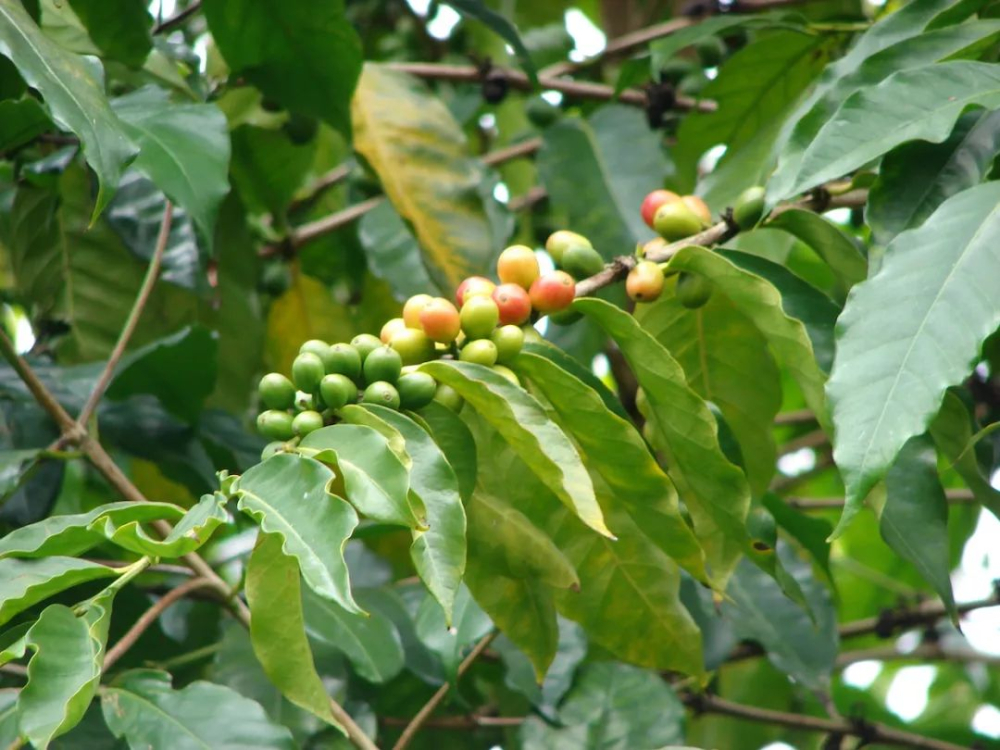
High altitude shapes the climate: Ethiopia's average annual temperature is 16°C, and the year divides broadly into a dry season and a rainy season. Water is abundant, and the country holds nearly 50 volcanoes. Volcanic ash has left the soil fertile, and combined with the high mountain elevations and suitable climate, Ethiopia enjoys natural conditions uniquely suited to growing coffee.
The Sidamo Region
Ethiopia has many renowned coffee regions - Sidamo, Jimma, Harrar, Guji and Yirgacheffe among them. FrontStreet Coffee offers a washed Yirgacheffe bean as its selected introductory specialty coffee: jasmine floral aroma, orange and berry fruit, lemon acidity and a soft mouthfeel.
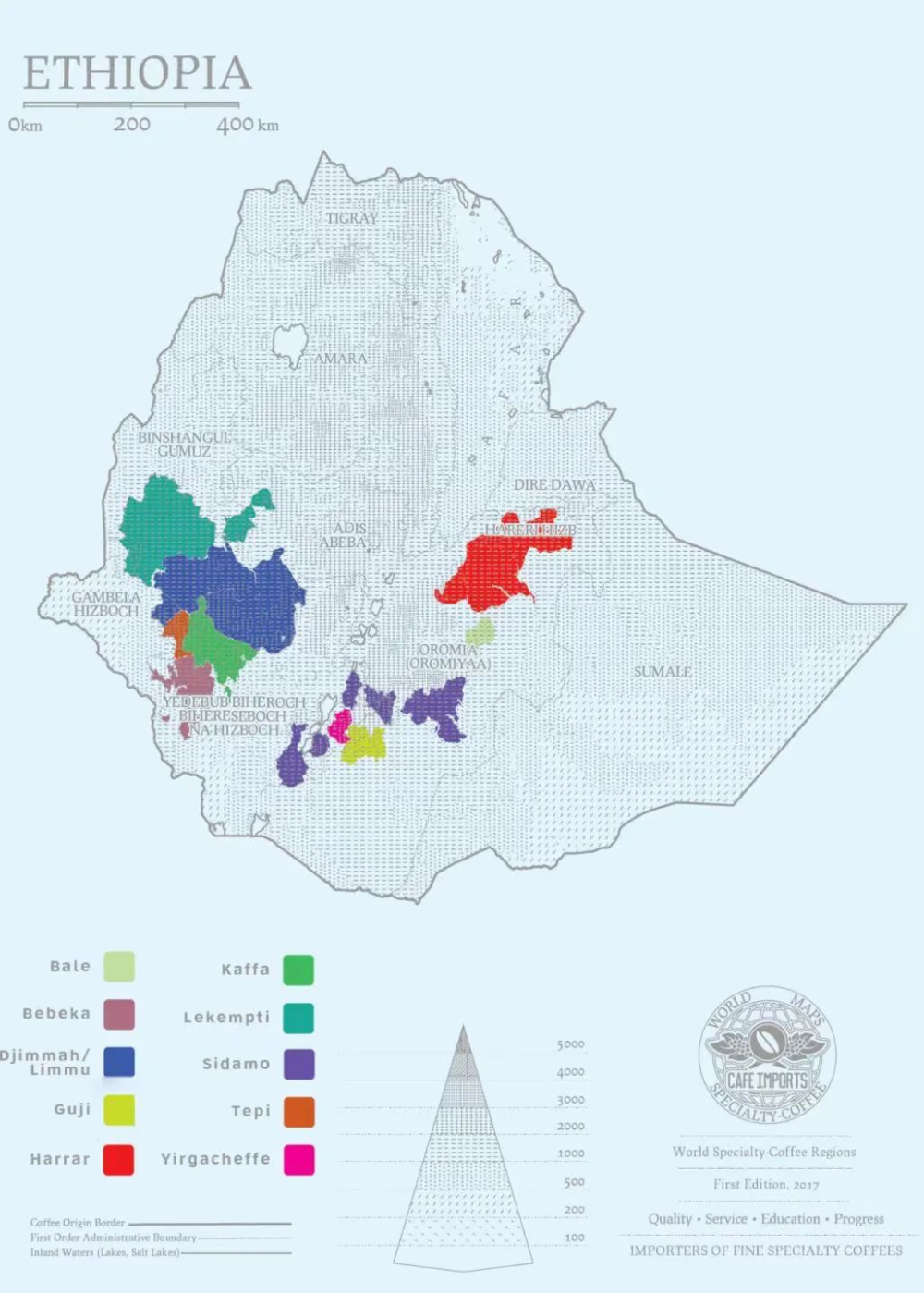
After 1995 Ethiopia adopted a federal system, and in respect for the cultures of its many ethnic groups the government redrew administrative boundaries along the main ethnic and linguistic areas. Sidama was folded into the newly formed Southern Nations, Nationalities and Peoples' Region, and the area was officially restored to its historical name, Sidama. At the same time, to strengthen the promotion of the country's coffee, the Ethiopian government applied for patent protection on three regional names in 2004, registering the older name Sidamo® for Sidama coffee. To this day, consumers at home and abroad still call the coffee from this region "Sidamo." Sidamo stretches across the fertile highlands south of Lake Awasha in the Great Rift Valley, at elevations of 1,400-2,200 meters with annual rainfall of 1,200-2,000 millimeters. The altitude, rainfall, pleasant climate and nutrient-rich soil together make an ideal environment for coffee.
The Santweni Processing Station
The Sidamo region is dotted with coffee processing stations. Among the better-known operators there is DWD Company, which runs 17 stations - more than any other company in Sidamo - including Garse and Santweni. Santweni station lies about a 40-minute drive from the town of Santweni and is one of DWD's high-altitude stations. The climate around Santweni is relatively dry with lower average temperatures, so the cherries take longer to process.
Numbered Varieties
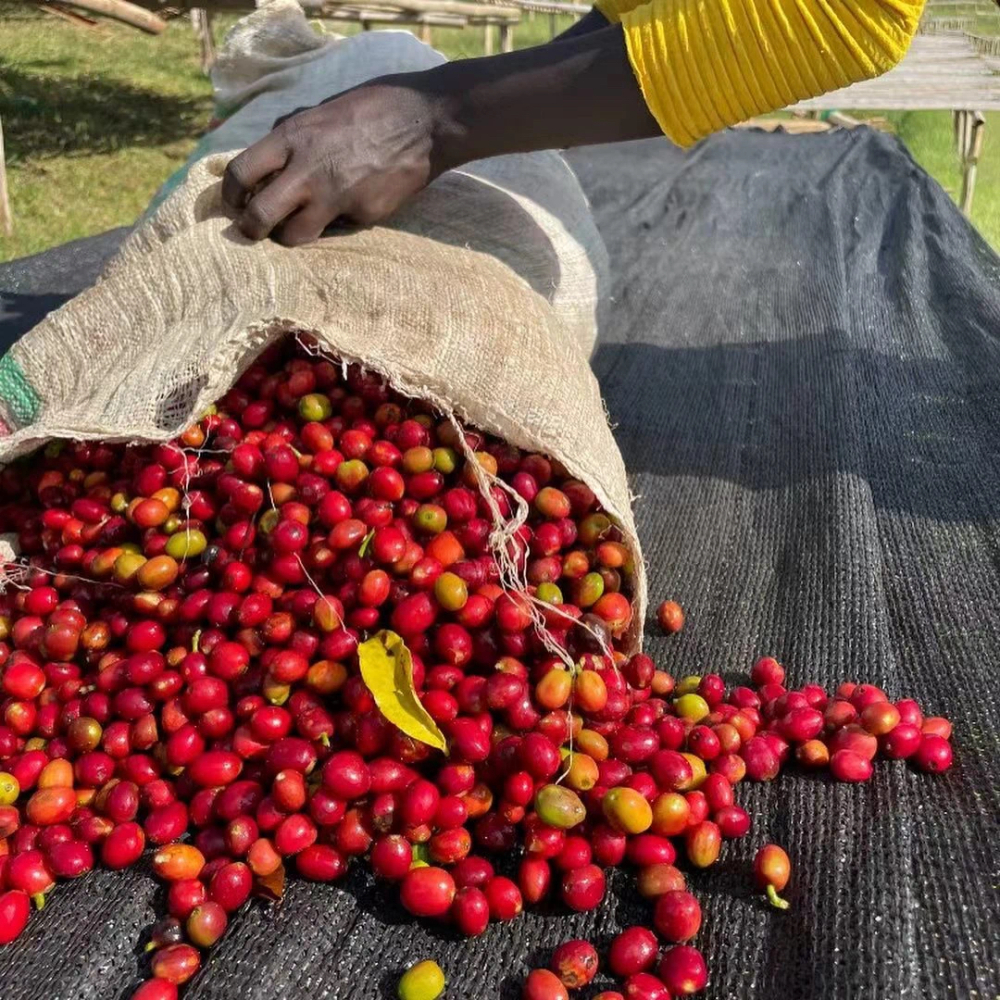
In Ethiopia the sheer number of coffee varieties makes them hard to tell apart, so they are generally grouped simply as native varieties or heirlooms. In recent years, numerically named varieties have appeared - commonly 74110, 74112 and 74158. These were released by the Jimma Agricultural Research Center (JARC), one of Ethiopia's Federal Agricultural Research Centers, to build resistance to pests and disease and to raise yields. Between 1973 and 1975, JARC identified and ran cultivation trials on 639 different coffee varieties drawn from 15 regions. Thirteen of those samples performed outstandingly, combining high yield, disease resistance, drought tolerance and good flavor. JARC classified them as "1974/1975 CBD-Resist Selections," which is the numbered series. The first two digits of a number such as 74110 or 74158 mark the year of discovery, and the digits after 74/75 are the variety code.
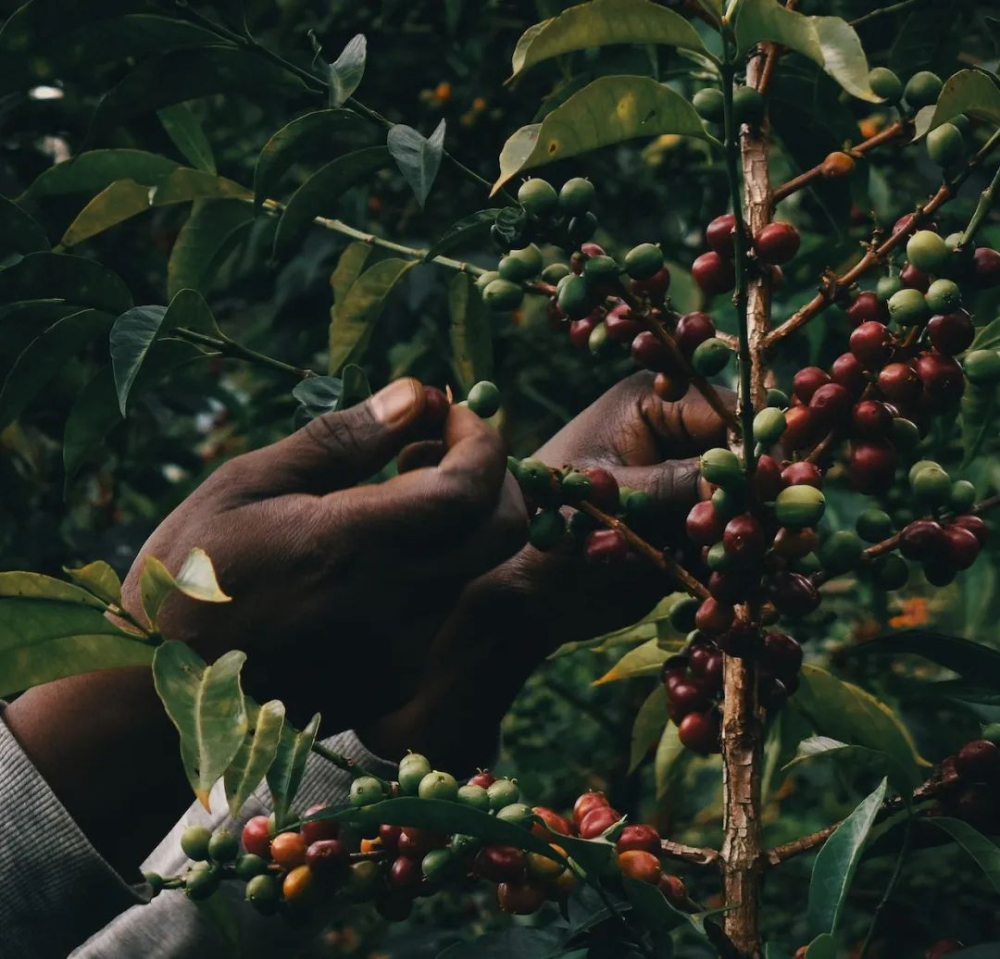
FrontStreet Coffee Ethiopia Sidamo Santweni 74158 Coffee Bean
Region: Sidamo
Processing Station: DWD Company Santweni Processing Station
Altitude: 2050 meters
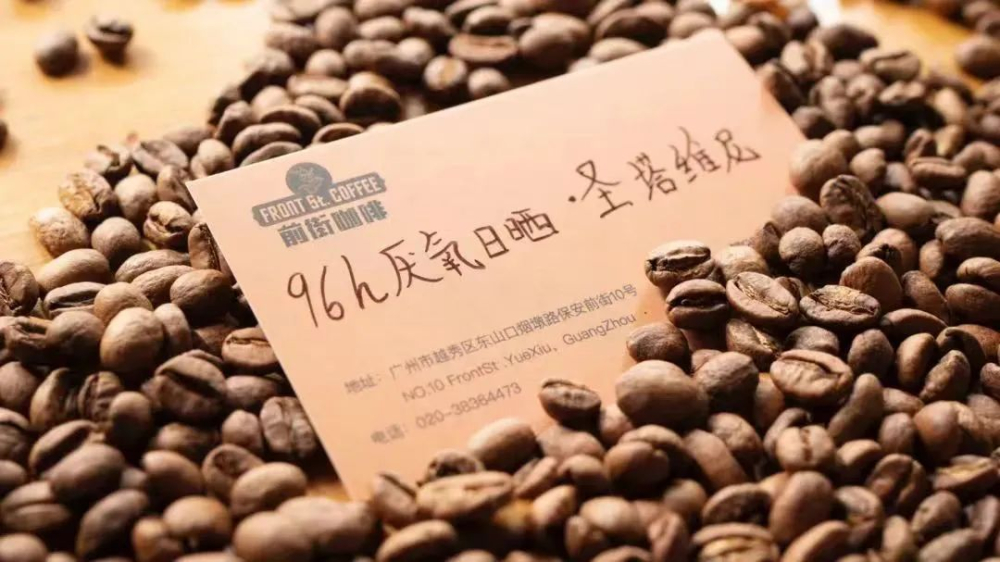
Processing Method: 96-hour anaerobic natural
Variety: 74158
Flavor: Fermented wine aroma, pineapple, citrus, tropical fruits, red wine
FrontStreet Coffee's Ethiopia Sidamo Santweni beans are processed as a 96-hour anaerobic natural and lightly roasted. FrontStreet Coffee brews them with a V60 at a 1:15 ratio and 92°C. The cup opens with a fermented wine aroma and soft acidity, then moves into tropical fruit flavors of pineapple and citrus; the body is rich and full, with a red wine note lingering in the aftertaste.
FrontStreet Coffee Recommendation
If the wild, wine-like character of an anaerobic natural appeals to you, FrontStreet Coffee's naturally processed Yirgacheffe Red Cherry makes a fruit-forward counterpart. Only fully ripe, blemish-free cherries are picked and dried on raised beds for three to five weeks, turned every two to three hours early on to prevent uneven fermentation. The result keeps the signature Yirgacheffe citrus acidity while adding sun-dried tropical fruit, juicy berries, honey sweetness and a creamy texture.
For a cleaner, more classical expression of Ethiopian terroir, FrontStreet Coffee's washed Yirgacheffe is the ideal entry point. It is known for white jasmine, bright citrus and lemon acidity and a tea-like body, and its friendly price has made it the first specialty bean for countless new drinkers.
Important Notice :
FrontStreet Coffee is a long-established specialty coffee roaster in Guangzhou China, selling freshly roasted beans from its own farm in Yunnan as well as dozens of carefully selected single-origin beans from around the world for both pour-over and espresso. The products deliver consistently excellent quality and great value, with shipping within 24 hours. Guangzhou's FrontStreet Coffee shop is recommended by many coffee lovers, and the beans are now available online at the Tmall 。
FrontStreet Coffee has moved to a new address:
FrontStreet Coffee Address: 315,Donghua East Road,GuangZhou
Tel:020 38364473
 Scan and follow the En Gafei WeChat official account. Please indicate that the reprint comes from "En Gafei".

