Why Do Flat-Bottom Drippers Have a Lower Failure Rate? What Are the Features of a Cake Dripper? What Brewing Methods Are Suitable?
Why Flat-Bottom Drippers Are Perfect for Beginners
In the world of coffee drippers, one saying comes up again and again: brew with a flat-bottom dripper and you're far less likely to ruin the cup, which makes it the most beginner-friendly option. FrontStreet Coffee has noted in many articles that the flat-bottom design's great advantage is promoting more even coffee extraction. So how exactly does it achieve that?
The biggest difference between flat-bottom and conical drippers is the shape the coffee grounds settle into. Viewed from the side, the coffee bed in a conical dripper forms an inverted triangle, while in a flat-bottom dripper it forms a trapezoid — wide at the top, narrower at the bottom.
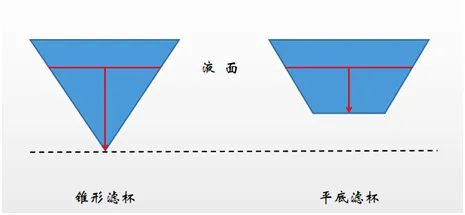
Conical vs. Flat-Bottom Drippers
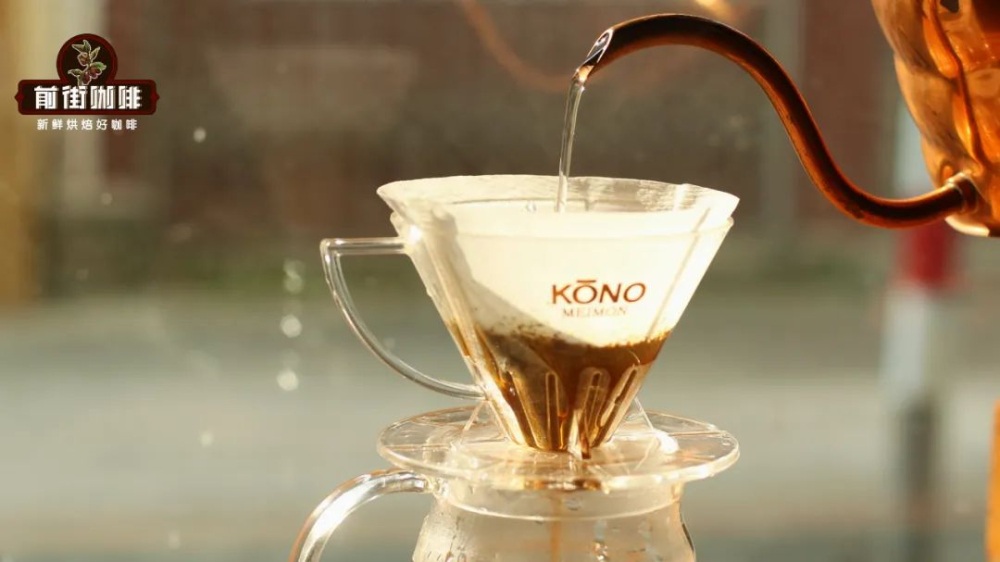
Take conical drippers like the Hario V60 and KONO that FrontStreet Coffee uses daily as examples: the closer you get to the center, the thicker the coffee layer, which raises resistance to water penetration and pushes extraction rates higher. Near the dripper wall, the coffee layer is thinner, so the grounds there give up their soluble compounds more easily. That gradient gives you more room to dial in a brew and showcase a coffee's layered complexity — but it also demands finer water-control skills from the brewer to get all the grounds extracting evenly.
The Magic of Flat-Bottom Drippers
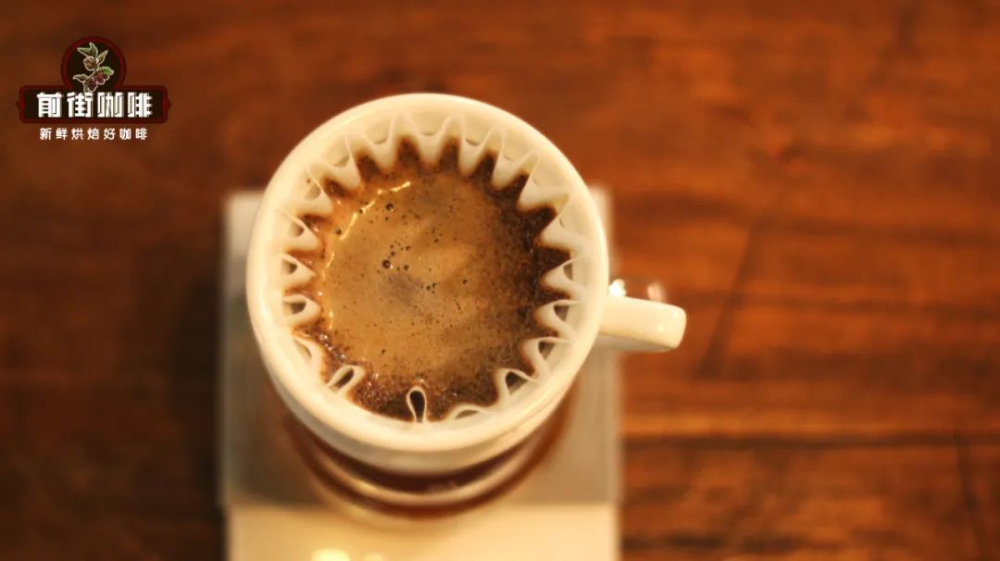
Back to today's subject: the flat-bottom dripper, best represented by the wave (cake) style. The circular flat bottom lets falling coffee grounds spread into a thinner, relatively even layer, creating weaker resistance to hot water penetrating the bed. The bottom typically has 3-4 small drainage holes linked by intersecting raised ridges that hold the filter paper off the base, designed to keep water flowing smoothly.
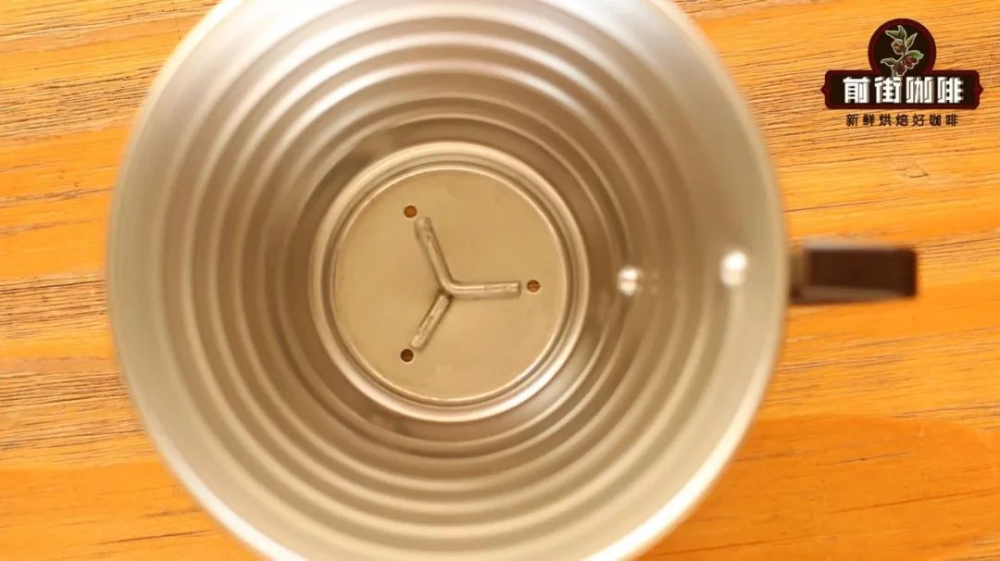
It helps to know that almost all drippers used for gravity extraction run both percolation and immersion at the same time. Because a wave dripper drains only through those few small holes, its filtration speed is slower, which substantially raises the share of immersion in the extraction. The resulting cup leans on mid-to-late flavor compounds, with noticeably better performance in smoothness and body.
When hot water hits the center of a wave dripper, it radiates outward in all directions before exiting through the bottom holes. That means even if your pour isn't perfectly even, the water level inside the dripper stays horizontal throughout the brew, letting most of the particles "absorb" water evenly. The result is a higher fault tolerance than conical drippers and better consistency cup to cup. The trade-off: stirring efficiency is lower and there's less room for adjustment.
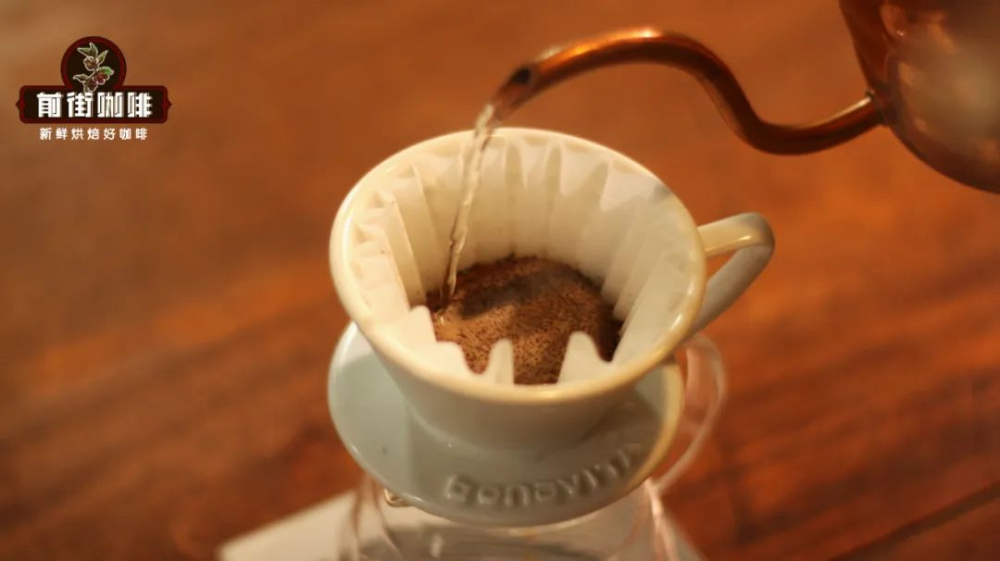
That stability is precisely what countless coffee shops care about most, which is why many world-renowned cafés reach for wave drippers first when brewing pour-over black coffee. And that, in a nutshell, is why people say flat-bottom drippers have a lower failure rate.
Rib Designs in Flat-Bottom Drippers
The rib patterns on flat-bottom drippers generally come in two types: horizontal circular ribs that hold back water, and vertical ribs like the V60's that mainly guide flow.
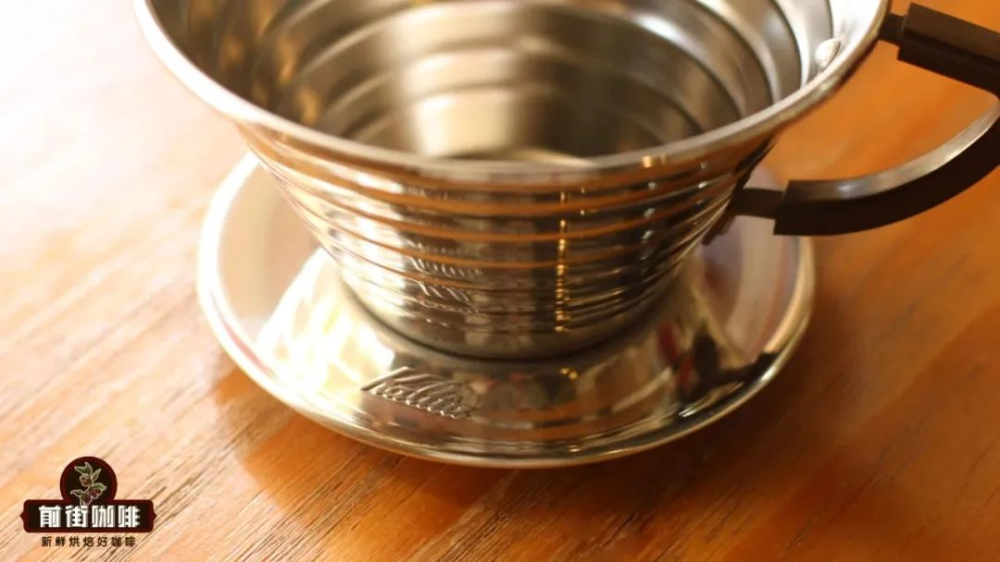
The Wave series, for instance, has circular grooves inside that not only slow the flow but also let water from higher positions travel along the grooves to lower ones, keeping the water level as horizontal as possible during brewing.
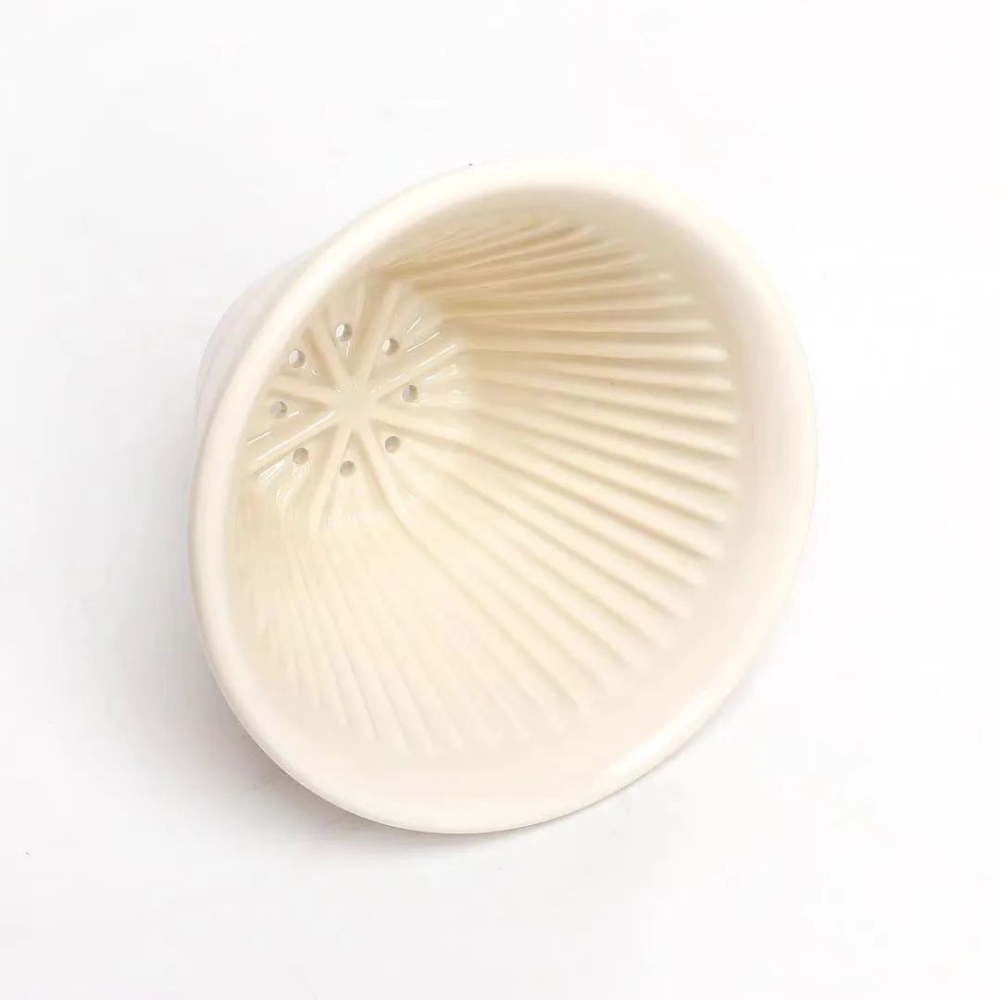
Another example is the Lili dripper, which evolved from Germany's Melitta 101 design. Though flat-bottomed, its interior carries 48 guide ribs running top to bottom to speed up flow, with 8 drainage holes arranged in a circle at the base — built to prevent blockage and stagnation during extraction.
One caveat: because flat-bottom drippers are typically used with wave (crimped-edge) filters, only the outward-folded edges actually touch the dripper wall to create water retention/drainage. Compared with conical drippers, where the filter paper fits snugly against the wall, the rib drainage effect of flat-bottom drippers is relatively weaker.
Modern High-Flow Flat-Bottom Drippers
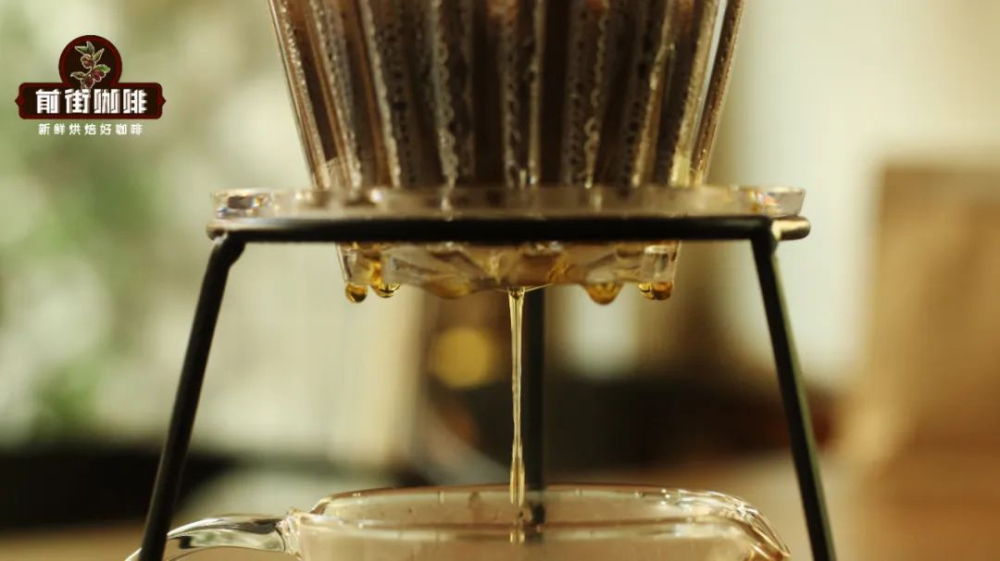
Of course, beyond these classic small-hole designs, recent years — driven by the "fine grind, fast brew" extraction trend — have brought many flat-bottom drippers that emphasize high water flow. Examples include the Ice Tong B75 that FrontStreet Coffee has covered, Japan's Torch donut dripper, and the April Brewer designed by Danish baristas — all of them rework the bottom structure so that more finely ground coffee can achieve a fuller combination of immersion and percolation.
- END -
FrontStreet Coffee
10 Bao'an Qianjie, Yandun Road, Dongshankou, Yuexiu District, Guangzhou, Guangdong Province

FrontStreet Coffee Recommendation
What Beans to Brew in a Flat-Bottom Dripper
For newcomers to pour-over, the gentle, forgiving extraction of a flat-bottom dripper pairs beautifully with approachable light roasts. FrontStreet Coffee's Yirgacheffe Worka (Guodingding) from Ethiopia — the first stop for many coffee lovers entering specialty coffee — carries vivid citrus, berry, and floral notes with a green-tea-like sweetness on the finish. Contrary to the "sour coffee" stereotype, a quality Yirgacheffe's acidity is soft and bright, closer to the natural sweetness of fruit than anything harsh, making it an easy cup to accept.
If You Prefer Fruit-Forward or Fuller-Bodied
Those who want maximum fruit character should try FrontStreet Coffee's Ethiopia Hongjiao (Hua Kui), one of the most successful star products in the specialty market in recent years: standout tropical aromas of strawberry, passion fruit, jackfruit, even lychee, with obvious sweetness, minimal bitterness, and a juicy, silky entrance that many describe as "the coffee that tastes least like coffee." If your tastes run the other way — toward body and depth — the FrontStreet PWN Indonesia Golden Mandheling is a dark-roast classic with low acidity and a long, mellow mouthfeel full of herbs, dark chocolate, and a whisper of earthiness.
A Quick Word on the V60
If you'd rather start with a cone, FrontStreet Coffee's house favorite is the resin Hario V60 — the resin body blocks heat loss effectively, and standardized mass production makes it the most precisely shaped version. The V60's fast, unimpeded flow (that signature single large hole) suits floral-and-fruit coffees beautifully: the classic Yirgacheffe character of Worka, the tropical richness of Hua Kui, and other such beans all shine when their delicate florals, fruit acidity, and tea-like sweetness are given room to express themselves.
Important Notice :
FrontStreet Coffee is a long-established specialty coffee roaster in Guangzhou China, selling freshly roasted beans from its own farm in Yunnan as well as dozens of carefully selected single-origin beans from around the world for both pour-over and espresso. The products deliver consistently excellent quality and great value, with shipping within 24 hours. Guangzhou's FrontStreet Coffee shop is recommended by many coffee lovers, and the beans are now available online at the Tmall 。
FrontStreet Coffee has moved to a new address:
FrontStreet Coffee Address: 315,Donghua East Road,GuangZhou
Tel:020 38364473
 Scan and follow the En Gafei WeChat official account. Please indicate that the reprint comes from "En Gafei".