
Costa Rican Coffee Beans | Introduction to Tarrazú Region Musician Series Bach Coffee Beans
As everyone knows, coffee beans are typically grown in the "Coffee Belt," the equatorial region between the Tropic of Cancer and the Tropic of Capricorn. The equator crosses several continents, and the Americas happen to sit within this belt. Many countries there cultivate coffee, including Guatemala, Panama, Honduras, and Costa Rica. Among them, Costa Rica is renowned as the first country in Central America to grow coffee and bananas commercially.
Costa Rican Coffee Cultivation
Costa Rica is located in Central America, bordered by the Caribbean Sea to the east and the Pacific Ocean to the west. The climate is tropical and subtropical, with numerous towering volcanoes reaching altitudes of 2,000 meters and temperatures ranging between 17°C and 28°C. Influenced by Pacific and Atlantic ocean currents and sea winds that regulate the climate, the year divides into a rainy season from April to December and a dry season from late December to April of the following year, with annual rainfall between 2,000 and 3,000 millimeters. Fertile volcanic soil, high-altitude growing conditions, and abundant rainfall give Costa Rica an exceptionally suitable geographic environment for coffee.
The Tarrazu Growing Region
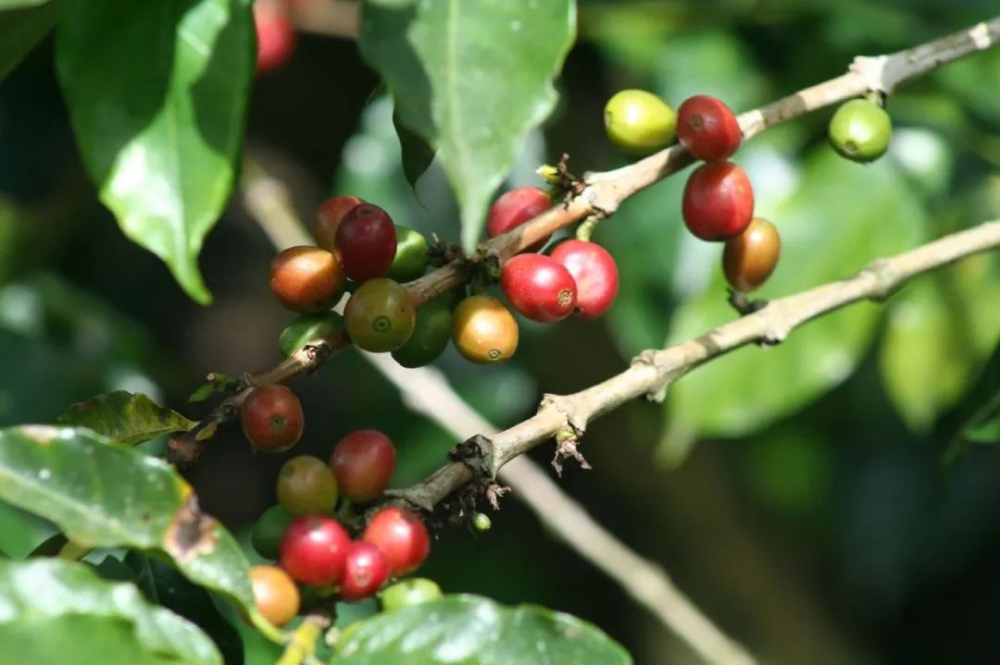
Costa Rica currently cultivates over 400 million coffee trees across eight coffee growing regions: Western Central Valley (Valley Central Occidental), Central Valley (Valley Central), Tarrazu, Tres Rios, Orosi, Brunca, and Turrialba, almost all distributed along the central mountain range.
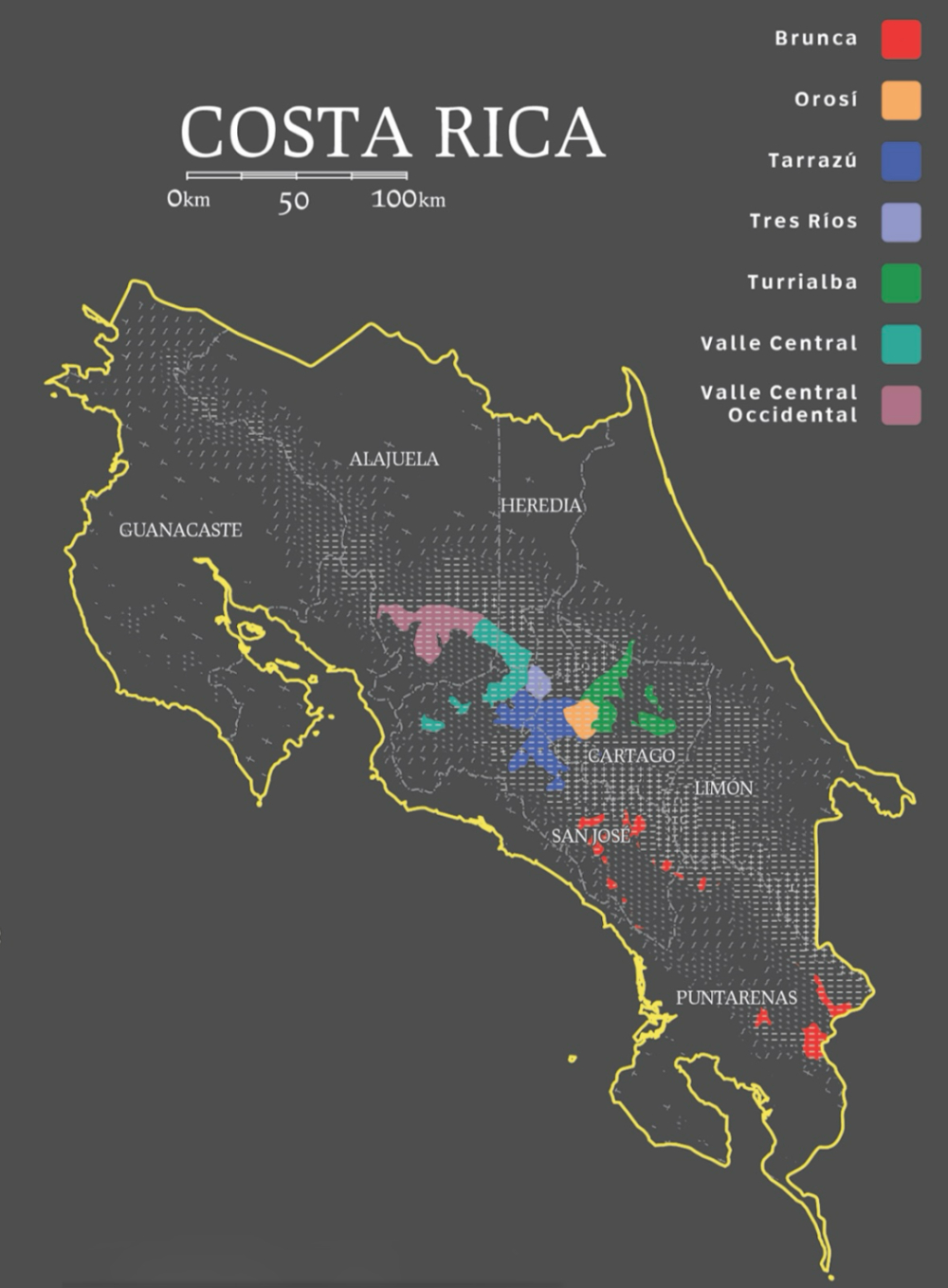
Tarrazu is Costa Rica's largest and most famous coffee-producing region, accounting for nearly 35 percent of total production. Most coffee is grown at altitudes of 1,200-1,900 meters, making Tarrazu the highest-altitude coffee region in the country. Unique climatic conditions, abundant rainfall, and fertile volcanic ash soil under dense forest cover provide an excellent growing environment. Coffee from this region therefore shows pleasant acidity with chocolate, floral, and fruity notes. This reputation led the Costa Rican government to register "Café de Tarrazú" as a coffee designation of origin in 2019, protecting both the Tarrazu region and Tarrazu coffee. FrontStreet Coffee offers a washed Costa Rican Tarrazu as an introductory selection, featuring sweet orange, chocolate, and nutty aromas with a long-lasting caramel aftertaste.
Finca Canet Estate
Finca Canet Estate is located in the San Marcos town of the Tarrazu region, which is also Costa Rica's highest-altitude area with the most intensive fruit cultivation. While Finca Canet primarily grows passion fruit, it keeps a specific area dedicated to coffee grown with special care. The estate is owned by the Robles brothers, Leo, Elian, and Melvin, who also share a small processing plant.

They introduced the Musician Series, consisting of four different beans, each using different varieties to showcase unique characteristics. The naming of this series stems from the Finca Canet estate manager's deep passion for classical music. Tasting a bean, they associate it with the qualities of a similar musician, which is how names such as Bach, Beethoven, Mozart, and Chopin came about. FrontStreet Coffee currently offers both the FrontStreet Mozart and FrontStreet Bach.
The F1 Variety
F1 is the result of coffee variety breeding programs. Unlike a specific variety, F1 does not refer to a single cultivar but to a type or collection of coffee varieties. In 1970, when coffee leaf rust (Hemileia vastatrix), the main pathogen affecting coffee trees, swept across the American continent, a new breeding program was launched to combat the disease. It was jointly launched by the French Agricultural Research Center for International Development (CIRAD) and the Central American Coffee Organization (ROMECAFE), with assistance from the American Agricultural Research Institute (IIAC) and the Tropical Agricultural Research and Higher Education Center (CATIE) in Costa Rica. Through hybrid cultivation, they developed new-generation coffee varieties that are high-yielding, disease-resistant, and possess excellent flavor profiles.
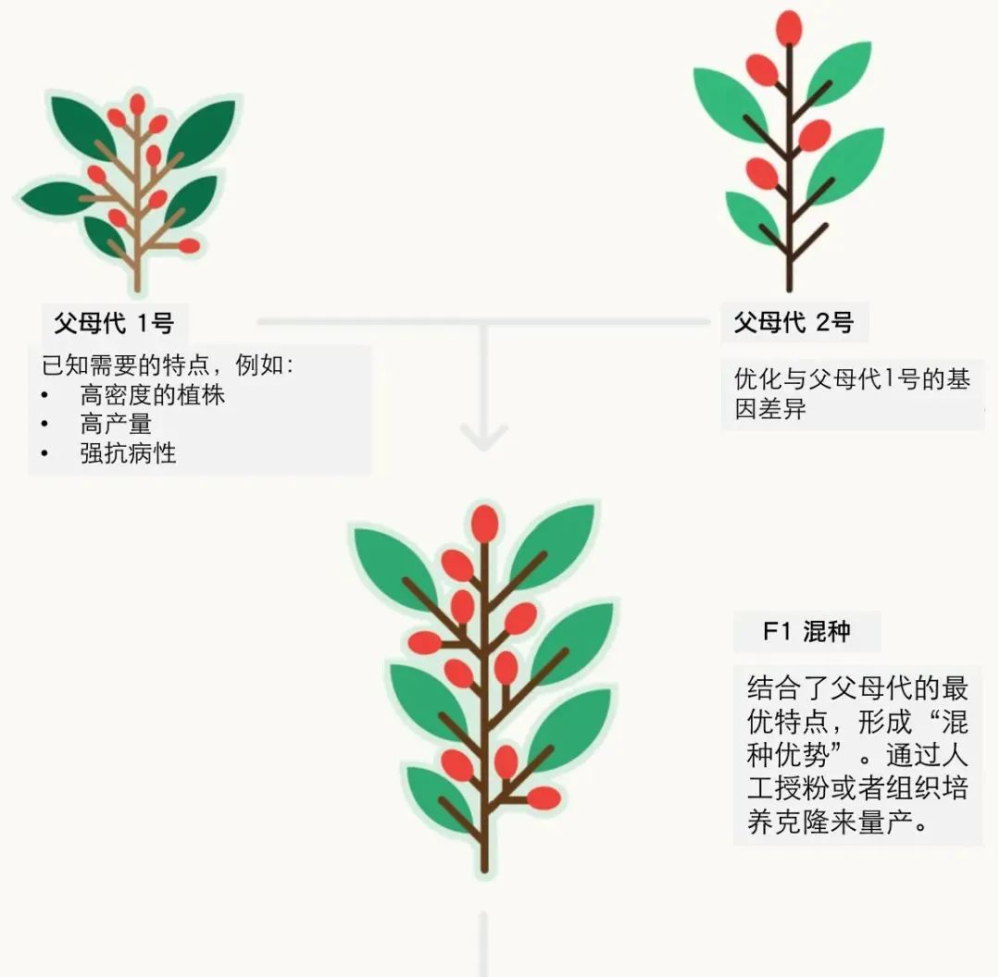
From hundreds of coffee varieties, CATIE selected Caturra, Catuai, Catimor, Sarchimor (a hybrid of Villa Sarchi and Timor), and an ancient African wild variety, Rume Sudan. Using manual pollination, they took pollen from T5296, a descendant of Sarchimor, and applied it to the stigmas of Rume Sudan. After five years of effort, CATIE harvested 100 different new-generation varieties and selected 20 with superior performance for propagation and cultivation. These first-generation F1 varieties are not only more disease-resistant and drought-tolerant but also higher-yielding with excellent flavor. F1 varieties do have a drawback in mass production, however, since hybrid vigor begins to decline in the second generation. Most F1 varieties therefore cannot be propagated through conventional self-pollination and instead require repeated manual pollination or cloning to produce new batches of F1 plants, which is one reason these varieties are commonly called F1.
FrontStreet Coffee Costa Rican Musician Series Bach Coffee Bean
- Region: Tarrazu Region
- Estate/Processing Plant: Finca Canet
- Altitude: 1900 meters
- Variety: F1
- Processing Method: Raisin Honey Process
- Flavor Profile: Fermentation Aroma, Rose Floral Notes, Blueberry, Cream, Caramel
The FrontStreet Costa Rican Bach uses the raisin honey processing method, which produces more intense fermentation aromas and richer, fuller flavor layers. FrontStreet Coffee brews with a V60 at a 1:15 ratio and 92°C water. You will notice mature berry-like fermentation aromas and rose floral notes, with blueberry-like sweet-and-sour flavor on entry, a creamy smooth texture, and a caramel-like aftertaste.

FrontStreet Coffee Recommendation
Costa Rica's honey processes and its neighbor Panama's Geisha are two of Central America's great signatures, and the Geisha lineage is well worth seeking out. If you are tasting Panama's specialty coffee for the first time, FrontStreet Coffee's Boquete Geisha is the coffee to buy: an estate-grade entry Geisha planted at 1,600 meters, where fertile volcanic ash soil feeds a rich aroma, showing the varietal's jasmine, green tea, honey, citrus, and orange notes once brewed.
Panama Geisha is a rare wild variety and a frequent champion of the world's tasting competitions, with slender green beans and roasted beans carrying an unexpected citrus freshness and a finish full of florals and fruit sweetness. FrontStreet Coffee's Butterfly, with half of that Geisha pedigree, is made of Geisha, Caturra, and Catuai planted in Boquete's Baru volcanic area, where ample rainfall, a wide day-night temperature swing, and volcanic rock soil give it notable body, citrus acidity, and Geisha jasmine aromatics. It suits both pour-over and cold brew.
For the highest grade, the Emerald Estate Red Label Geisha is harvested from a single plot of Geisha above 1,700 meters with a cupping score of at least 91, offering a refined orange-blossom honey character. FrontStreet Coffee's Diamond Mountain, in contrast, comes from the Jaramillo and Canas Verdes farms with Caturra and Catuai varieties, delivering rich fruit aroma and sweetness as a popular estate brand beyond Geisha.
Important Notice :
FrontStreet Coffee is a long-established specialty coffee roaster in Guangzhou China, selling freshly roasted beans from its own farm in Yunnan as well as dozens of carefully selected single-origin beans from around the world for both pour-over and espresso. The products deliver consistently excellent quality and great value, with shipping within 24 hours. Guangzhou's FrontStreet Coffee shop is recommended by many coffee lovers, and the beans are now available online at the Tmall 。
FrontStreet Coffee has moved to a new address:
FrontStreet Coffee Address: 315,Donghua East Road,GuangZhou
Tel:020 38364473
 Scan and follow the En Gafei WeChat official account. Please indicate that the reprint comes from "En Gafei".

