The Standard Ratio for Americano: How Much Water and Ice Should You Add to Iced Americano?
The Perfect Iced Americano: Water and Ice Ratios Explained
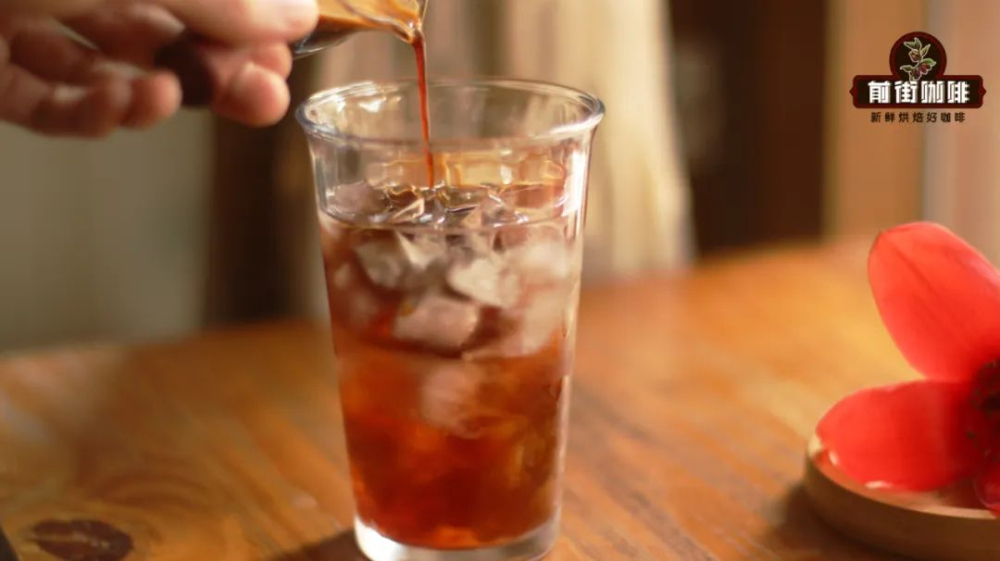
Waking up in the morning, grab a glass, add some ice and a little water, and finally pour in the extracted espresso — a refreshing, energizing iced Americano is ready.

As most people know, adding ice and water dilutes the concentration of espresso and makes the coffee more palatable. Some friends, however, struggle with the question of how much ice to add to an Americano and how much water to mix in. So today, FrontStreet Coffee will discuss how much water and ice to add to espresso, and how to add them properly.
How Much Water to Add?
The flavor of an Americano mainly comes from the beans, so the dilution ratio depends on the flavor profile of the beans. For example, some classic dark-roasted beans with flavors of caramel, nuts, and dark chocolate tend to taste more bitter and concentrated as espresso, so you can use a larger ratio, approximately 1:6 to 1:8 liquid-to-water. For instance, 40 grams of espresso mixed with 240-320 grams of water. If you prefer a lighter taste, use 1:8; if you like it more concentrated, use 1:6.

For relatively lighter-roasted beans such as SOE (Single Origin Espresso), the flavor profile is not just bitterness but also fruit acidity and sweetness, so there is no need to dilute it as much. You can use a ratio of about 1:5, for example 40 grams of coffee liquid mixed with 200 grams of water.
Take FrontStreet Coffee's daily Warm Sun Blend espresso beans as an example. To showcase the beans' unique wine aroma, vanilla, and cream flavors, FrontStreet Coffee chose an extraction plan using 20 grams of coffee beans to extract 40 grams of espresso liquid, with an extraction time of 27-28 seconds. After multiple rounds of testing and comparison, we finally settled on a 1:4.5 Americano water ratio, meaning 40 grams of coffee mixed with 180 grams of water.
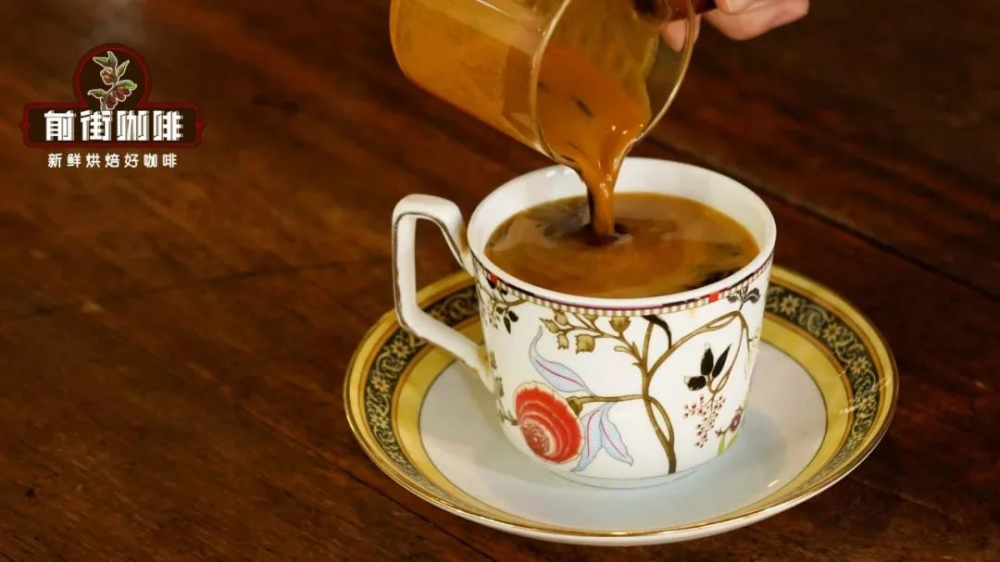
People's preferences for coffee concentration vary widely, so feel free to try several ratio options to find the concentration that best suits your taste, and thereby determine how much water to add to your Americano.
How to Add Water and Ice?
The addition of ice not only quickly cools the drink but also dilutes the concentration of espresso. Therefore, when determining the ice-to-water ratio for an iced Americano, you need to consider the melting speed of the ice at the same time.
Take FrontStreet Coffee's iced Americano as an example. Today's Warm Sun espresso extraction parameters are: 20g of coffee grounds to extract 38g of coffee liquid in 29 seconds, with a coffee-to-ice-water ratio of 1:6.5 and an ice-to-water ratio of approximately 1:1.8. That means 38g of coffee mixed with 90 grams of ice and 160 grams of water.
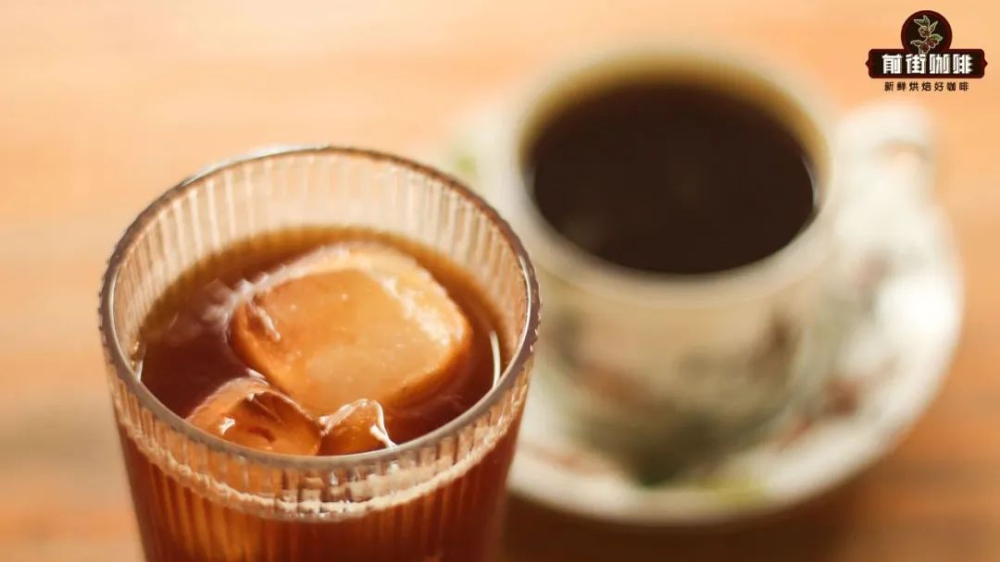
Looking at these ratios, the concentration seems quite diluted. This is because FrontStreet Coffee uses large, hard ice cubes that have been frozen for at least two to three days, each weighing about 30 grams, and pre-chilled ice glasses. The ice therefore melts relatively slowly. About 15 minutes after serving, you can still see chunky ice particles, and some customers who drink quickly may still have nearly intact ice cubes in their glasses.
So while the concentration appears lower, it does not actually affect the tasting of the coffee's flavor, while also maintaining the low temperature of the iced Americano (Warm Sun does not taste good at room temperature). Therefore, when we determine the ratio between ice and water in our daily iced Americano preparation, we also need to consider the melting speed of the ice used.
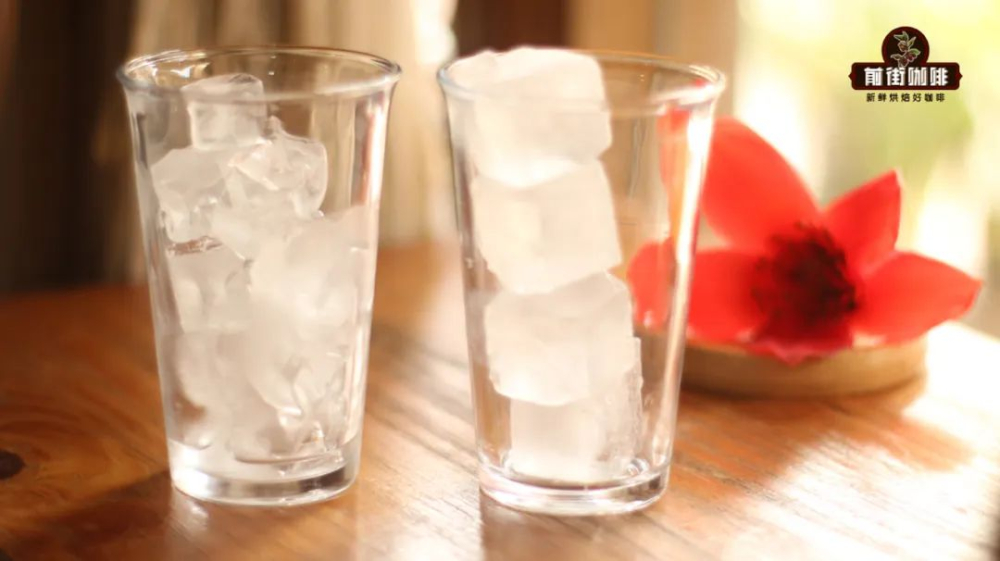
If you are using smaller ice cubes that have not been frozen for long, we suggest appropriately increasing the proportion of ice. For example, FrontStreet Coffee's ice-to-water ratio is 1:1.8, but you could increase it to 1:1. That means 40 grams of espresso mixed with 100 grams of water and 100 grams of ice, ensuring the coffee stays diluted while maintaining a low temperature for a better drinking experience.
A Simple Tip
Some friends might be unsure about the melting speed of their ice cubes, unable to control exactly how much ice and water to add, and not wanting to do too much calculation. FrontStreet Coffee has an additional simple tip to share.
Take your regular iced Americano glass, fill it completely with ice, then add water to about 80% full, and finally pour in the espresso and stir well, trying to pour the coffee over the ice cubes. If you find it too concentrated after tasting, use less ice and more water next time; if you find it too weak and lacking flavor, use less water next time.
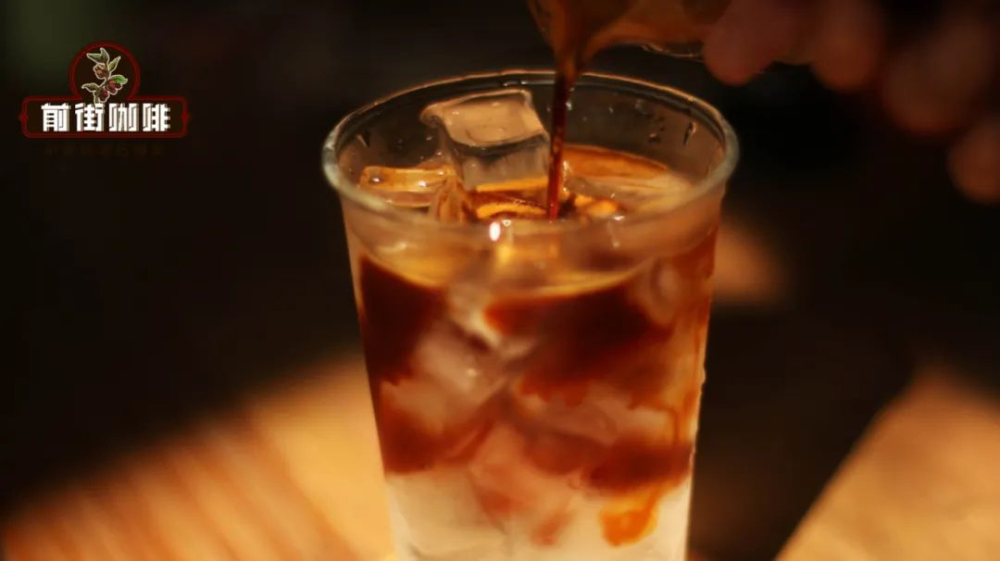
Of course, Americano originally evolved because Americans were not accustomed to drinking overly concentrated espresso and added water to dilute it, so there is no fixed standard. Moreover, diluted espresso at low temperatures is highly compatible: as long as the extracted espresso tastes good, being slightly more concentrated or slightly diluted will not increase or decrease the original flavors of the coffee. Therefore, you still need to combine your own dietary habits, try more based on the flavor characteristics of the beans, and find the ratio and concentration you like best — that is where the charming appeal of coffee lies.
FrontStreet Coffee Recommendation
Since Americano exposes the bean's original flavor so directly, the beans you choose matter more than anything. For a traditional Italian style, FrontStreet Classic Blend Americano Beans are built from Indonesian Mandheling, Brazilian red bourbon, and Vietnamese washed coffee. The recipe keeps the low-acid, mellow, herbal and woody character of Asian coffee while retaining the balanced, smooth, creamy quality of American coffee; extraction yields butter, nut, spice, and dark chocolate aromas, and its wild tone and abundant crema are its greatest signature, for Americano or latte alike.
For value, FrontStreet Black Cocoa Base Blend Americano Beans combine Yunnan small-bean coffee with Brazilian Cerrado. The Americano shows nuts, chocolate, and cream with the acidity of ripe Sanhua plum, a soft overall body, and a friendly price — adaptable enough for home use and a first choice for cafés. When you tire of deep-roasted Italian coffee, FrontStreet Strawberry Candy Espresso Blend offers a medium roast with very high sweetness. Unlike traditional blends, it brings together single-origin Arabicas from three famous regions — Colombia, Costa Rica, and Ethiopia — and uses washed, natural, and honey processing to lift the aroma. Beyond its rose character and low bitterness with slight acidity, its Americano and latte show grape, dried blueberry, sweet orange, and fruit candy, with a rich layering and a distinctive almond finish.
For a fruitier SOE Americano, FrontStreet Ethiopia Huakui SOE is a natural coffee from the Hambela area of Sidama, Ethiopia, processed at the Buku Abel station. As a pour-over it offers creamy strawberry, guava, dried mango, black tea, and citrus; made into an espresso and diluted with water, the Huakui SOE Americano has no bitterness, a bright sweet-sourness, and a rich tropical fruit aroma. FrontStreet Ethiopia Granada Estate Geisha SOE offers the distinct character of native Geisha at high value, with noticeable yellow florals, bright bergamot, and a fresh strawberry finish; its Americano shows a clean lime note, a fermented black grape sweetness, and a medium body.
Important Notice :
FrontStreet Coffee is a long-established specialty coffee roaster in Guangzhou China, selling freshly roasted beans from its own farm in Yunnan as well as dozens of carefully selected single-origin beans from around the world for both pour-over and espresso. The products deliver consistently excellent quality and great value, with shipping within 24 hours. Guangzhou's FrontStreet Coffee shop is recommended by many coffee lovers, and the beans are now available online at the Tmall 。
FrontStreet Coffee has moved to a new address:
FrontStreet Coffee Address: 315,Donghua East Road,GuangZhou
Tel:020 38364473
 Scan and follow the En Gafei WeChat official account. Please indicate that the reprint comes from "En Gafei".