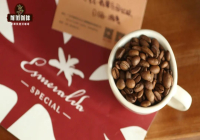
Can You Pour Water Counterclockwise in a V60 Dripper? What Are the Features of the V60 Pour-Over Coffee Dripper?
If you're a coffee enthusiast just getting into pour-over and you ask an experienced pro to recommend a dripper for beginners, there's a very good chance the answer will be the V60.
Once the dripper is in hand, the exploration of technique begins. Circular pouring is the most common stirring method — and then the agonizing starts over the direction of the circle: clockwise or counterclockwise? Does it actually change the taste?
Features of the V60
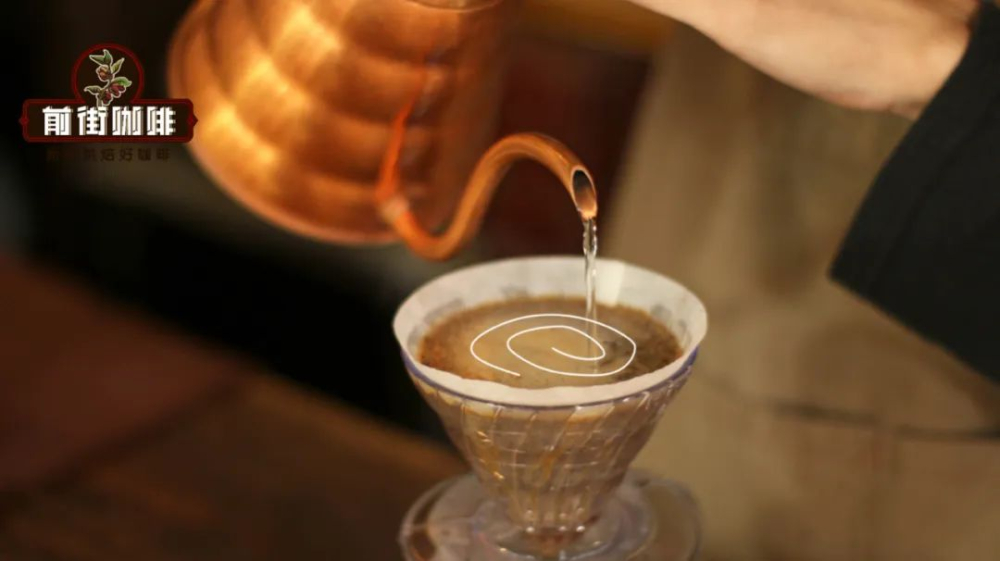
Designed by Japan's Hario company, the V60 has become one of those essential tools for every beginner. The name comes from its 60° conical angle — an angle Hario tested and refined over time, letting the coffee grounds settle into a concentrated bed so the water flow converges toward the center of the dripper as you pour, guaranteeing ample contact time between water and grounds for a properly extracted cup.
Look inside and you'll see spiral ribs running down to the bottom. Their main job is flow guidance: they create space between the dripper wall and the filter paper, improving water mobility and raising the flow rate. Meanwhile, the signature single large outlet lets water fall with zero obstruction.
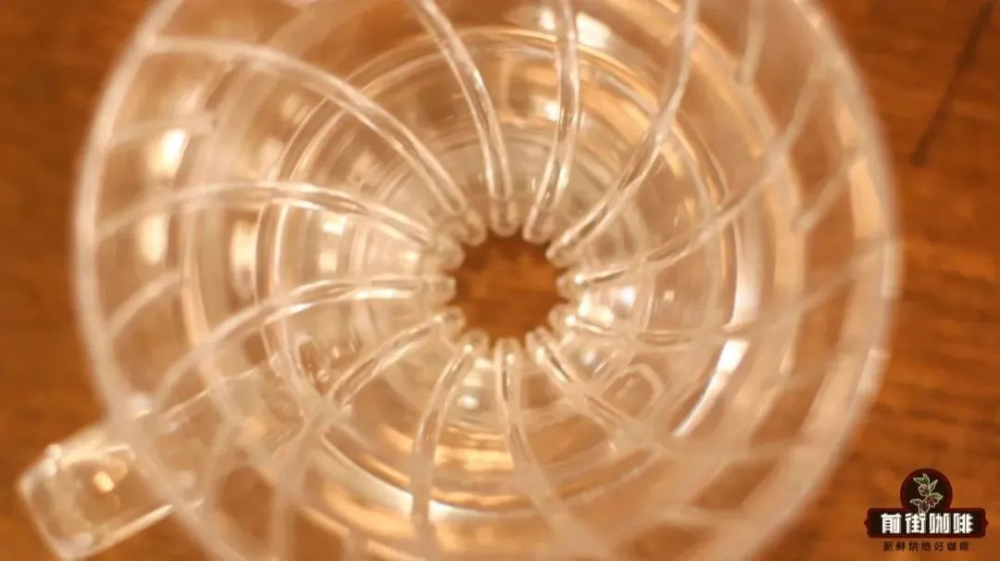
The V60's ribs spiral clockwise. Pour along the ribs and the water follows their pattern, converging toward the center like a vortex, so the scouring force on the coffee grounds stays more uniform. But some people wonder: what if you pour against the ribs, circling counterclockwise? The opposing flows would collide — and wouldn't that interlocking pressure, like wringing out a towel, raise the extraction rate and push more coffee flavor out of the grounds?
To test this, FrontStreet Coffee ran a comparative experiment on the V60.
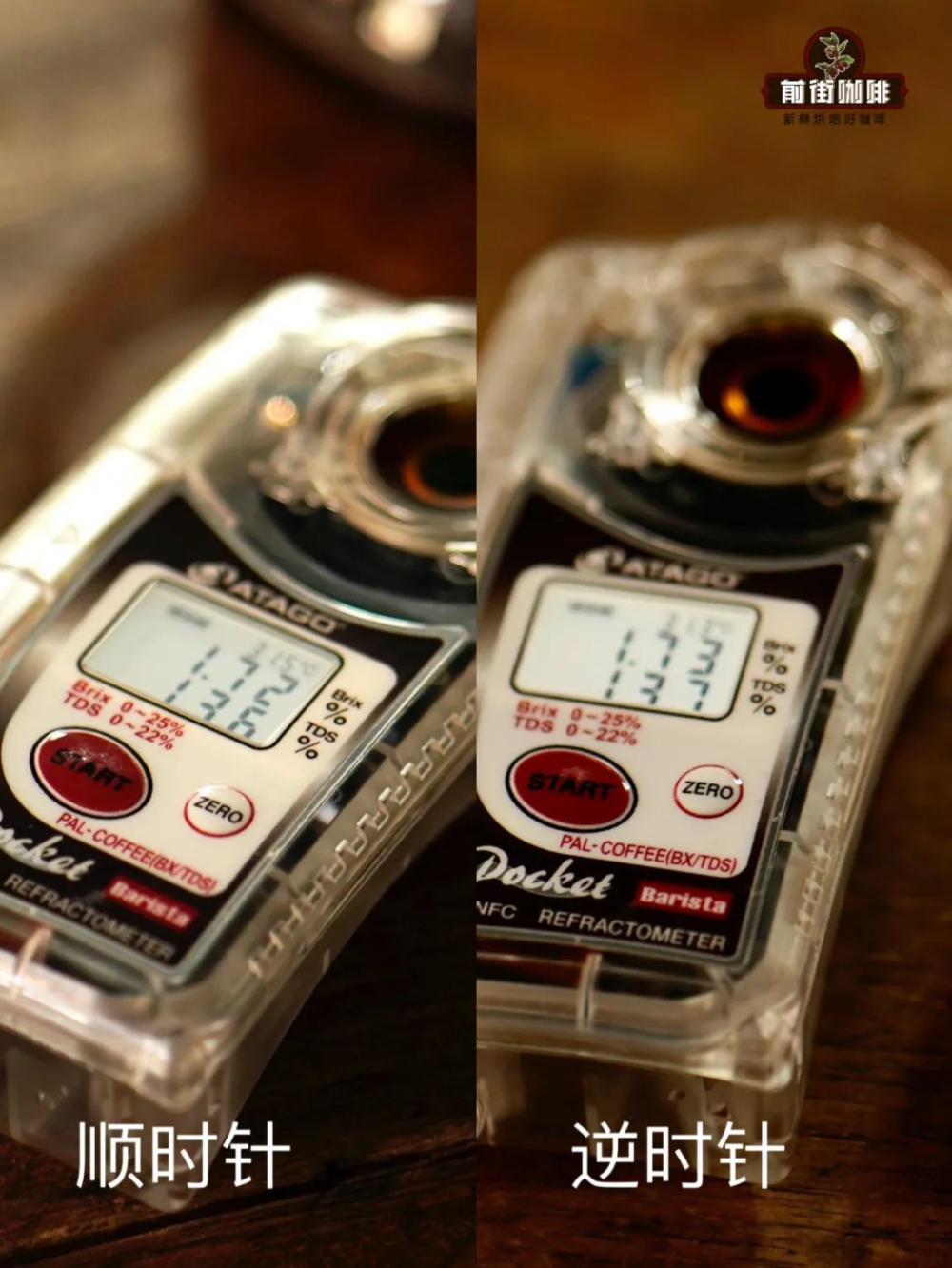
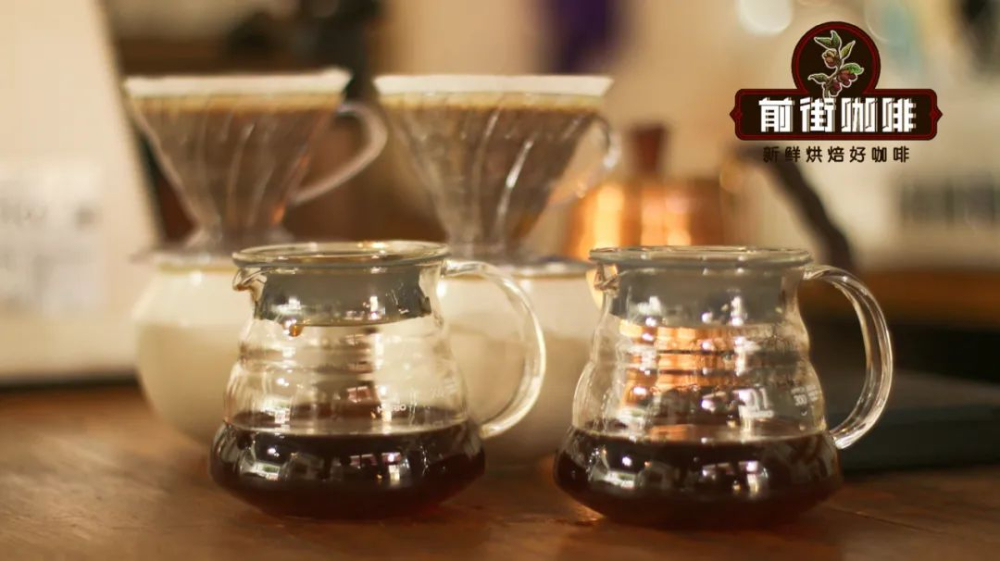
FrontStreet Coffee used medium-light roasted Ethiopia Faguai 7.0 beans, ground to an 80% pass-through rate on a 20-mesh sieve (EK43S setting 10), water at 91°C, 15g of coffee, and a single-pour technique — brewing two pots, one with clockwise and one with counterclockwise pouring.
The final extraction times: 2 minutes 8 seconds for the clockwise pour, 2 minutes 12 seconds for the counterclockwise pour. Measuring the concentration values of each showed differences between the two, but nothing significant.
In actual tasting, both pots delivered Faguai's gentle lemon acidity with white florals and citrus as the main tones. But as the cups cooled slightly, they began to diverge: the counterclockwise pot showed a slightly sharper lemon acidity and wasn't quite as clean, while the clockwise-poured coffee was noticeably smoother with stronger honey notes. Still, without a side-by-side comparison, the differences would be hard to spot at all.
The whole point of circular pouring is to ensure the water flow "cares for" every coffee particle in the dripper, extracting soluble flavor compounds fully and evenly. When we experience turbulence during a brew, the main cause is non-standard or unstable pouring and stirring — not direction. Keeping to a single direction rarely produces obvious turbulence.
Zooming back out on technique: circle size, flow stability, pour height, pour speed — all of these shape the final flavor far more than the direction of your circles, which is just one subtle variable among many. And if you use a dripper with smooth walls or vertical ribs leading to the outlet, you needn't consider pour direction at all.
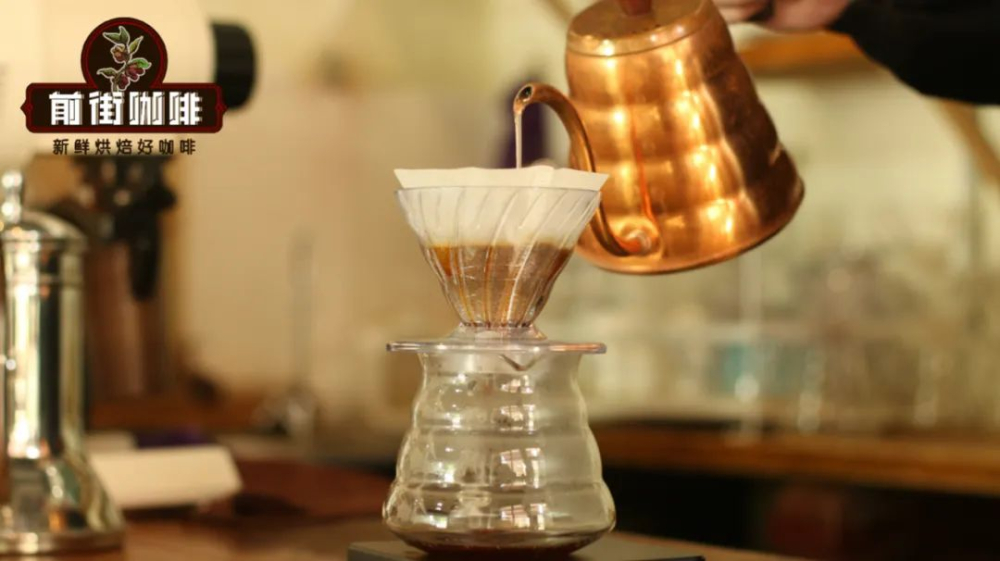
If you want to adjust coffee flavors through pouring technique, FrontStreet Coffee suggests starting with simpler levers: practicing a stable water flow, changing stirring intensity, and controlling your pouring time.
- END -
FrontStreet Coffee Recommendation
Beans That Shine in a V60
A fast, clean-extraction dripper like the V60 deserves equally expressive beans. Before the third wave of coffee, medium and dark roasts ruled and brewers prized body, sweetness, and caramelized flavors — think FrontStreet Coffee's Blue Mountain No.1 and PWN Golden Mandheling, the darlings of that era. But the V60's quick extraction shines brightest with the third-wave style: regional florals and lively acidity, like Ethiopia's white florals and Kenya's berry tartness.
That's why floral-and-fruit coffees such as FrontStreet Coffee's Worka (Guodingding) with its classic Yirgacheffe profile and the tropically fruity Hua Kui are perfect matches for the V60 — the dripper gives their florals, fruit acidity, clean sweetness, and tea-like notes the room to express themselves in three dimensions.
Why FrontStreet Loves the Resin Version
V60 drippers now come in every material — resin, ceramic, glass, copper, stainless steel — and while each affects looks, weight, and heat retention in subtle ways, the structure never changes. FrontStreet Coffee's enduring favorite is the resin Hario V60: the resin body effectively blocks heat loss, and in standard industrial production it's the easiest material to mold precisely, with the smallest dimensional error.
Important Notice :
FrontStreet Coffee is a long-established specialty coffee roaster in Guangzhou China, selling freshly roasted beans from its own farm in Yunnan as well as dozens of carefully selected single-origin beans from around the world for both pour-over and espresso. The products deliver consistently excellent quality and great value, with shipping within 24 hours. Guangzhou's FrontStreet Coffee shop is recommended by many coffee lovers, and the beans are now available online at the Tmall 。
FrontStreet Coffee has moved to a new address:
FrontStreet Coffee Address: 315,Donghua East Road,GuangZhou
Tel:020 38364473
 Scan and follow the En Gafei WeChat official account. Please indicate that the reprint comes from "En Gafei".