
Why Is Geisha So Expensive? A Detailed Breakdown of Geisha Coffee Bean Prices! Hacienda La Esmeralda Auctions, What's the Difference with Red Label Geisha?
Understanding Geisha Coffee Pricing: What Counts as Reasonable?
Geisha coffee has been making waves for years, with enthusiasts driving its price to what looks like a new record every season. Given all that, what exactly is a reasonable price range for the Geisha beans you buy?
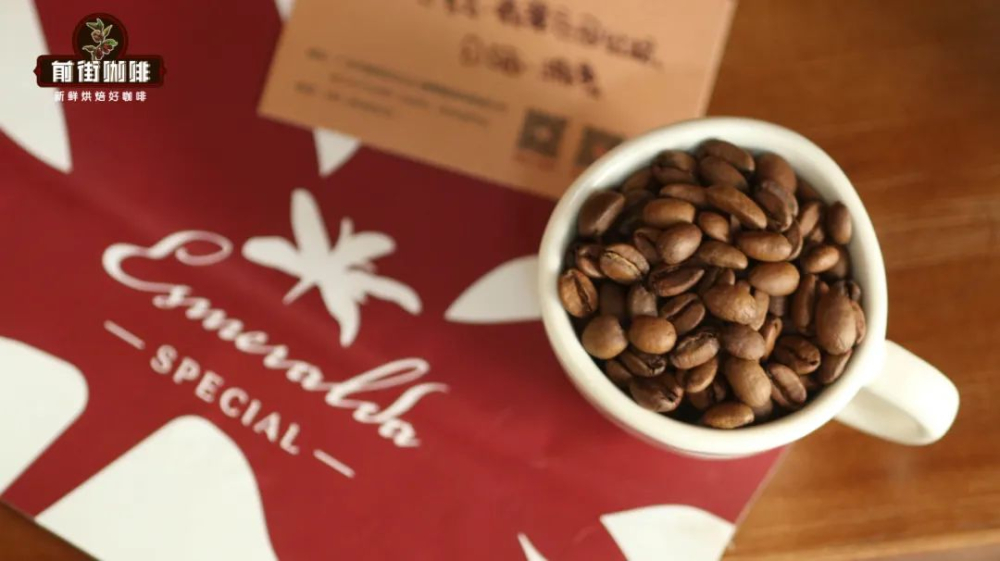
The Agricultural Nature of Coffee
First, some basics. The fundamental fact is that coffee beans are an agricultural product. Items from the same plot do not vary dramatically, and price often has little correlation with quality. If you were a farmer growing oranges, the same variety from the same land would naturally fluctuate between on-years and off-years, but you would not find this year's oranges twice as good as last year's and next year's twice as good again.
Why Geisha Commands Higher Prices
Seen as an ordinary agricultural product, it is reasonable that Geisha costs more than typical coffee. FrontStreet Coffee offers three reasons. First, it is somewhat difficult to grow, and that is a fact. Second, its yield per unit of planted area is low, also a fact. Third, because the variety has not been around long and has not been widely cultivated at scale, market demand for this novel variety is a fact as well. Together, these factors make Geisha beans cost roughly 6 to 10 times more than ordinary beans.
The Role of Hacienda La Esmeralda
Panama's Hacienda La Esmeralda is what made everyone recognize the Geisha variety, which then spread to nearby estates and neighboring countries. Without Hacienda La Esmeralda, there would be no Geisha craze as we know it today.
Understanding Red Label Pricing
Take the most recent harvest's green bean prices as an example: the same Panama Hacienda La Esmeralda Red Label Geisha costs around 2,200 to 2,600 RMB domestically. Hacienda La Esmeralda currently has 3 major estates with 22 plots, and the differences between plots are not large, with price gaps of about 100 to 200 RMB between them. That detail also suggests the estate believes most plots perform at similar levels. This may differ sharply from the information we usually see, where online prices reach tens of thousands or nearly 100,000 RMB. Those prices are not wrong, but they represent auction prices only.
Every 1 kilogram of green beans becomes approximately 0.79 to 0.83 kilograms of roasted beans, meaning that without other costs, the cost price of about 100g of Red Label Geisha is around 280 to 330 RMB. On top of that come packaging and other allocated costs, which is why Red Label Geisha is usually seen online in the 380 to 700 range. Different merchants have different costing methods and pricing strategies.
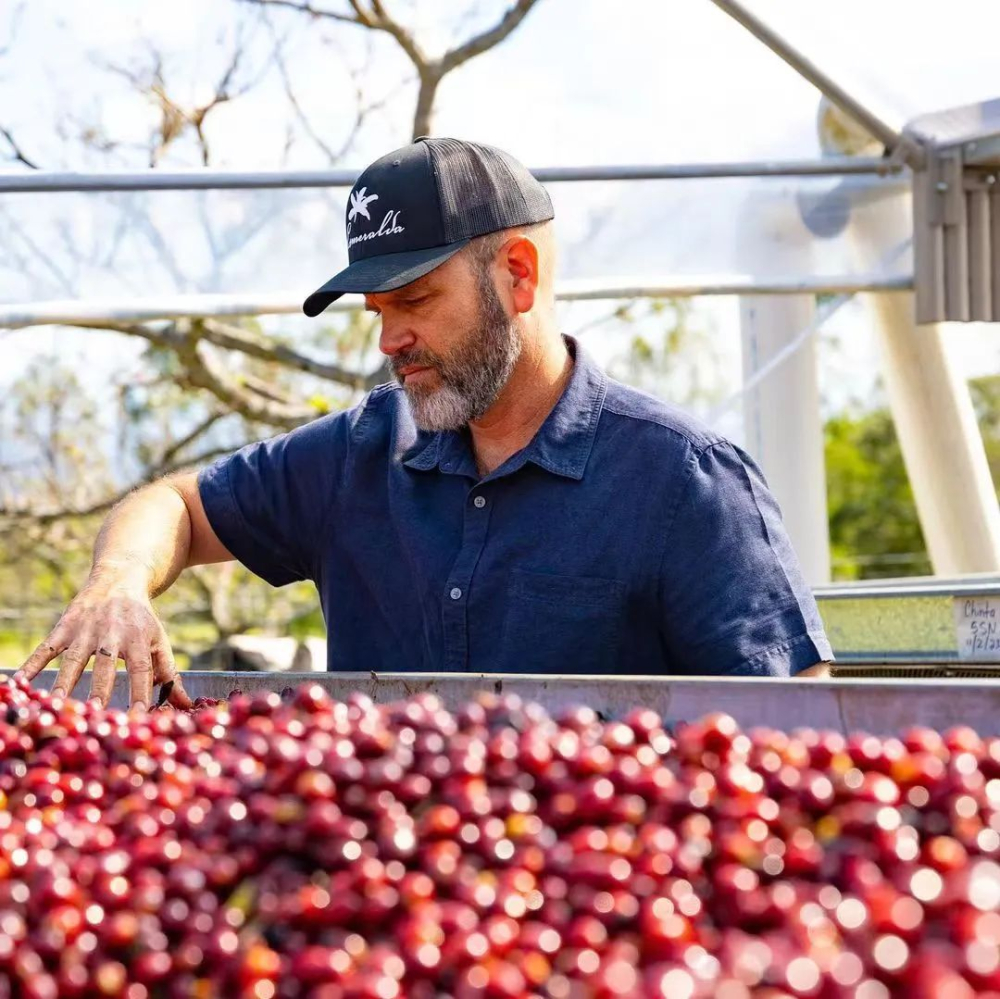
Clarifying Misconceptions About Red Label Pricing
What FrontStreet Coffee wants to point out is that people think Red Label is expensive because they have grafted their perception of auction Red Label onto ordinary Red Label, confusing auction price news with the ordinary product.
The latest adjusted classification for Panama Hacienda La Esmeralda Geisha is Auction, Red Label, and Green Label, which helps correct that perception. Several years ago, though, its classification was Red Label (ordinary and auction Red Label lumped together) and Green Label. Before that, it was Red Label, Green Label, and Blue Label. Because Red Label was not subdivided or explained for so long, the public associated auction prices with ordinary Red Label.
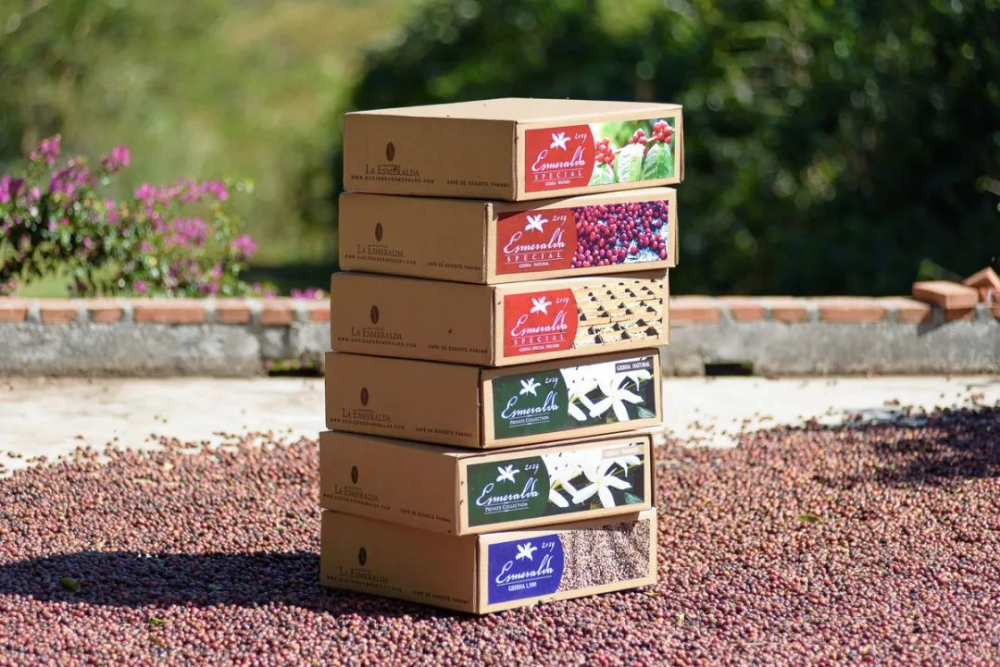
Understanding the Classification System
How do Red Label, Green Label, and Blue Label come from the same Geisha plot? Several years ago, Hacienda La Esmeralda defined Blue Label as its most affordable Geisha, produced below 1,500 meters of altitude. As Geisha became more expensive, the affordable Blue Label disappeared in 2020. Besides Blue Label, beans carrying a specific plot name are Red Label, while those blending different plots are Green Label.
In the years when Blue Label still existed, its beans were relatively small, while Red Label and Green Label were both somewhat larger. There was not much difference in appearance between those two, both showing very obvious Geisha internal characteristics, with the only distinction being whether a plot name was indicated. In the last two years, the appearance of Green Label and Red Label has shifted somewhat: Red Label has kept relatively uniform large-sized specifications, while Green Label has begun to show mixed sizes. Understanding this makes it easy for ordinary drinkers to tell Red Label from Green Label by appearance.
Understanding Auction Geisha Pricing
The above explains the misconception about Red Label's high price. Next, FrontStreet Coffee turns to auction Geisha prices and why they keep climbing.
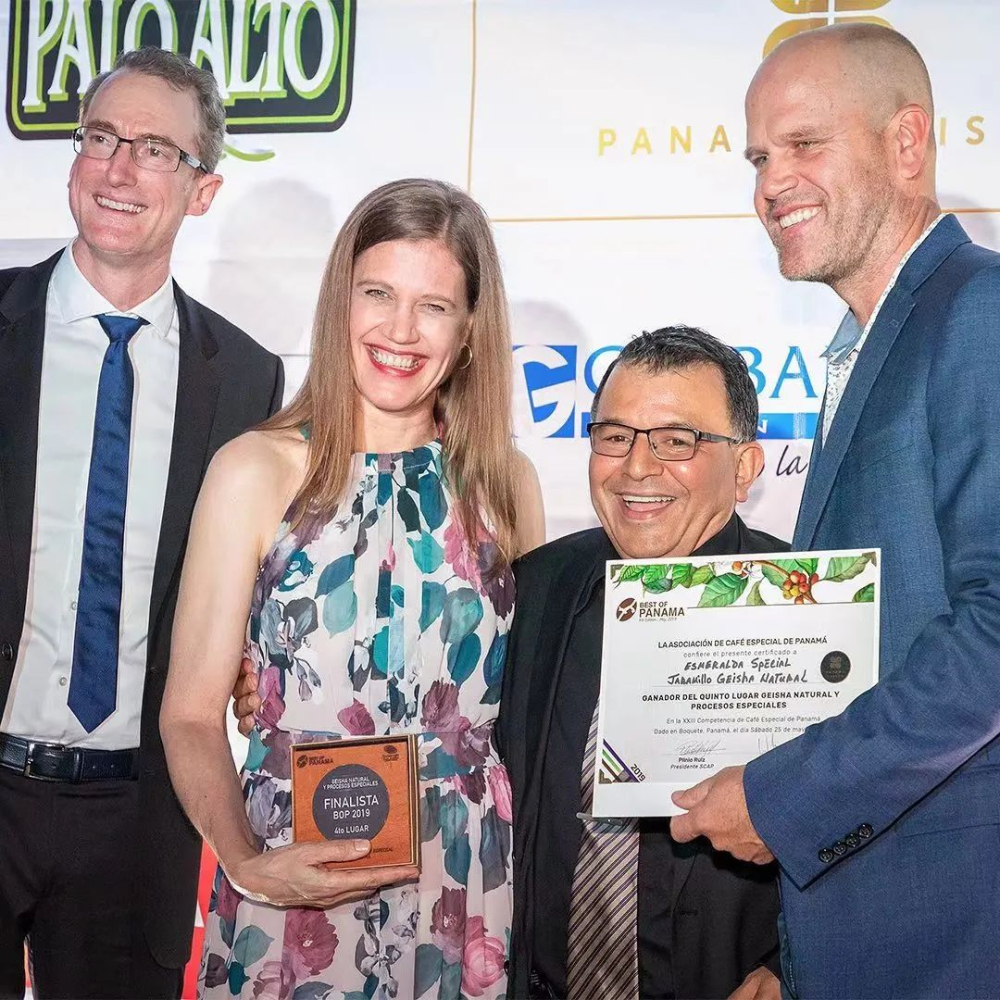
Whether BOP or COE, the purpose is to drive bean prices up through auctions to encourage farmers. That original purpose is to raise prices, so it is normal for auction prices to exceed intrinsic value. Auction Red Label comes from the same plots as ordinary Red Label. Under the same variety and land, different plots might vary by 20% or 30%. Some might ask: the same variety and land, but different processing methods or batches, can produce significant differences. Yes, but it is worth noting that Hacienda La Esmeralda's processing methods are actually quite traditional, with producers using batch records to track harvest dates and processing procedures. If there are significant price gaps, are there also huge quality gaps? There may be some quality difference between auction Red Label and ordinary Red Label green beans, perhaps as much as double, but that is not proportional to a premium that might be several times or dozens of times higher.
Market Factors Driving Prices
Second, the popularity of specialty coffee means the market has actively helped drive prices up. As a buyer, you naturally try to lower purchase prices by increasing volume. That is why different buyers of the same Red Label Geisha may pay different prices. There is one small detail in auctions that strongly encourages buyers to bid higher: auction results make the buyers' names public, which becomes a form of promotion. When several buyers team up to bid on the same batch, sharing the cost makes them more motivated to offer higher prices.
So with Hacienda La Esmeralda as the benchmark, ranked auction estate beans become even more expensive, and the estate's other ordinary Geisha beans also sell higher. Meanwhile, unknown estates and some neighboring countries naturally stay closer to their original prices.
FrontStreet Coffee Recommendation
If you want to understand the Geisha price ladder from the inside, start with the labels. FrontStreet Emerald Red Label Geisha is formally named "Esmeralda Special": it grows at 1,600 to 1,800 meters, every batch must cup above 90 points, each batch carries its own number, and all beans in a batch come from a single small plot, such as FrontStreet's own Red Label from the Jaramillo plot, letting buyers choose a batch by subtle flavor preference. FrontStreet Emerald Green Label Geisha, originally "Private Collection," blends batches from several plots to express the estate's signature high-altitude Geisha character without plot detail, which makes it notably better value.
For a first taste of the fabled Geisha flavor, FrontStreet Coffee usually points to FrontStreet Boquete Geisha from Panama, an entry-level Geisha that delivers the classic Panama citrus-and-honey character, an oolong-tea quality, and delicate fruit acidity with clear layers at a friendly price.
From Ethiopia, the birthplace of coffee, FrontStreet Gesha Village Gold Label is the Gesha 1931 variety and accounts for 10% of the village's output, a top-tier coffee below auction grade that is refined with a delicate natural process. FrontStreet Gesha Village Red Label is the Gori Gesha variety at 15% of output, scoring 88 or above on the SCA 100-point scale, and comes as a single-terroir series with full traceability. FrontStreet Genlana Gesha comes from a farm in Ethiopia's Yirgacheffe region, from a station founded in 2014 and managed by Israel Degefa across some 700 hectares, hand-picked and dried on raised beds for 14 to 20 days, and under a medium-light roast shows bright citrus acidity, elegant ginger-lily aromas, and ripe-fruit sweetness.
Important Notice :
FrontStreet Coffee is a long-established specialty coffee roaster in Guangzhou China, selling freshly roasted beans from its own farm in Yunnan as well as dozens of carefully selected single-origin beans from around the world for both pour-over and espresso. The products deliver consistently excellent quality and great value, with shipping within 24 hours. Guangzhou's FrontStreet Coffee shop is recommended by many coffee lovers, and the beans are now available online at the Tmall 。
FrontStreet Coffee has moved to a new address:
FrontStreet Coffee Address: 315,Donghua East Road,GuangZhou
Tel:020 38364473
 Scan and follow the En Gafei WeChat official account. Please indicate that the reprint comes from "En Gafei".

