How to Practice Water Flow Control in Pour-Over Coffee? What's the Difference Between Large and Small Water Flow?
The quality of a pour-over is not decided by the shape of the grounds left in the filter. What matters is whether your parameters suit the beans and equipment in front of you, and whether you can control the water flow during the brew.
The Impact of Water Flow Control
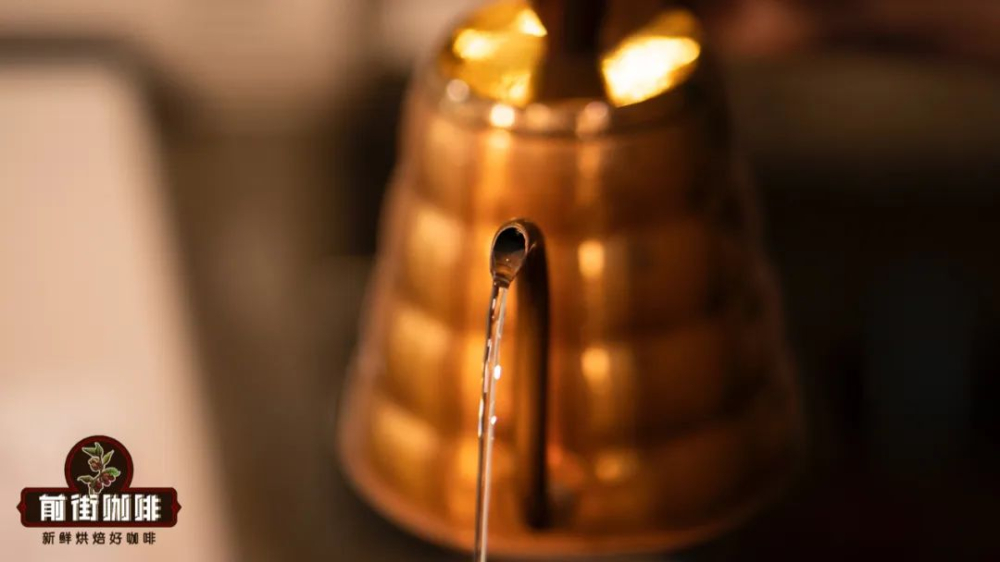
Small and large flows affect a brew differently. When you cannot keep the water steady, the flow will not only swing between fast and slow but also throw off where the water lands. These slip-ups easily lead to problems such as excessive bypass water and uneven extraction. So what FrontStreet Coffee wants to share today is how to improve your "water flow control."
Things to Settle Before Practicing
Before practicing water control, choose one pour-over kettle and stick with it. Different kettles behave differently, and switching between them during practice will noticeably slow your progress.
The reason to stay consistent comes down mainly to the spout. Different spout types produce streams with different characteristics: narrow-spouted kettles pour a smaller stream, while wide-spouted kettles pour a larger one. Water control with a narrow spout is therefore usually easier than with a wide spout, and the learning period is very short.
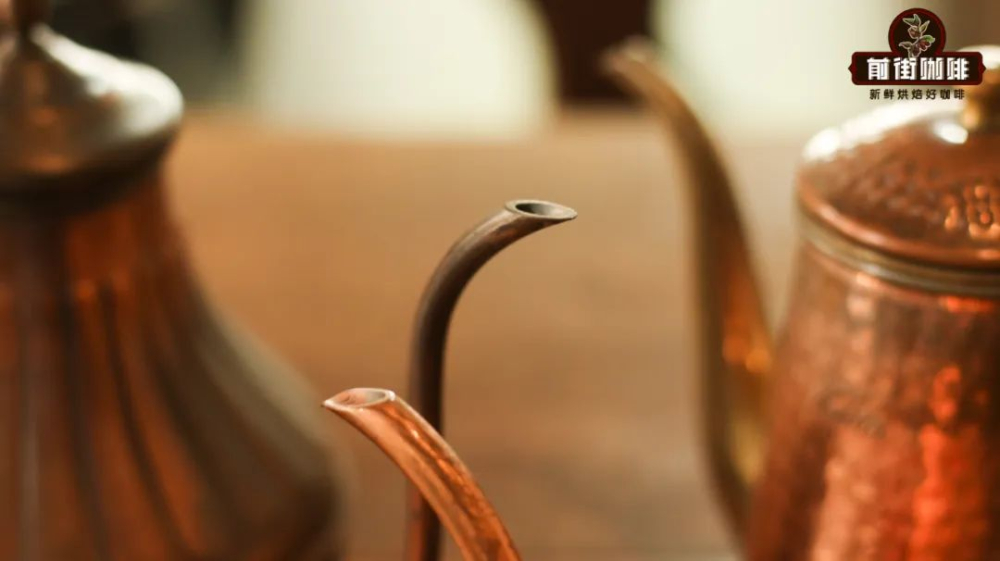
The downside is just as obvious. Skill that comes without much practice only works on narrow-spouted kettles and is hard to apply to wide-spouted ones.
Because wide-spouted kettles are harder to master, they demand more proficiency. Their learning period is longer, but once you have it, other pour-over kettles become easy. So FrontStreet Coffee suggests choosing according to your needs: if you want to get started quickly, pick a narrow-spouted kettle; if you want to build stronger water control, pick a wide-spouted one.
Now, on to the practice itself.
How to Practice
1. Fixed-Point, Even Pouring
This drill is tedious, but it is also the foundation of water control. Only with a solid base can the more advanced skills follow.
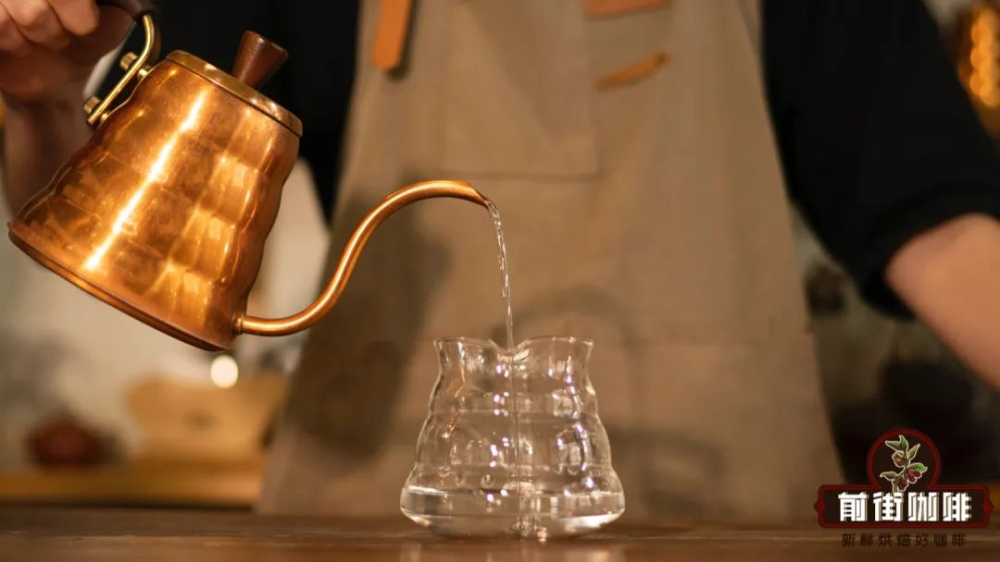
Fill the kettle two-thirds full, then hold the position and pour a steady vertical stream, over and over. Start with a small flow, then practice with a large one.
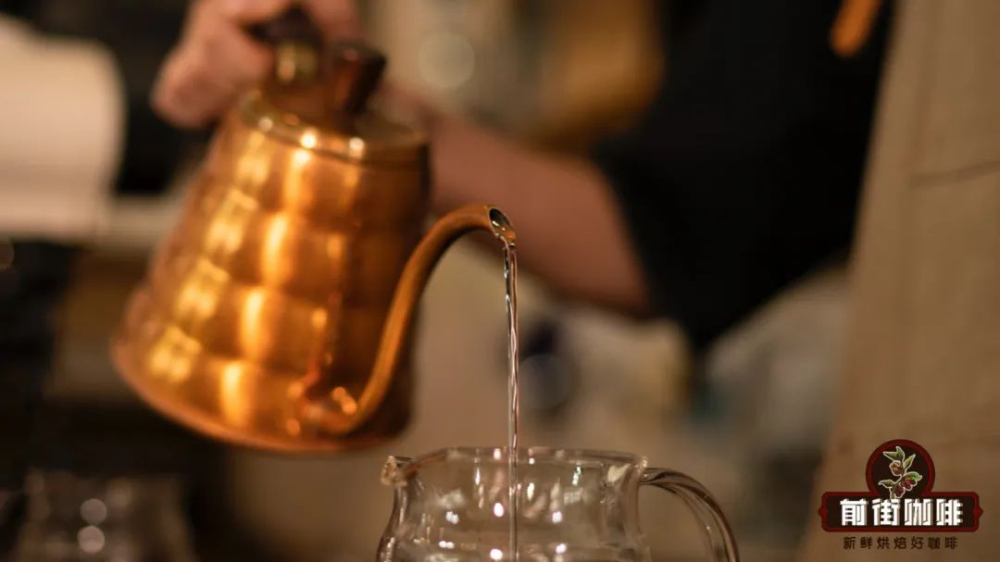
It looks simple, but it is not that easy. As the water in the kettle drops, the weight keeps changing, so you have to adjust continuously to keep the poured stream even from start to finish.
Repeat, repeat, repeat until muscle memory takes over, and you can pour an even stream by reflex. Then move on to the next stage.
2. Circular, Even Pouring
The previous drill is the groundwork for circular pouring. We circle continuously during a brew to stir the grounds and get higher extraction efficiency - and circling is exactly what makes the flow surge and falter.
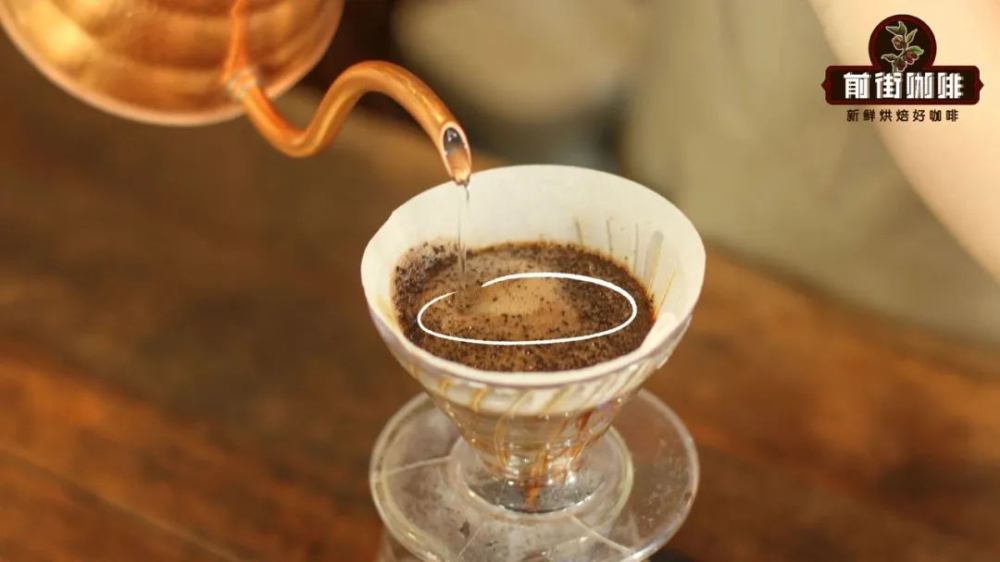
Whether the circles are actually round matters less than how you circle and how you keep the flow steady and even - that is the top priority. Many people use wrist strength to pour in circles. Circling with the wrist tilts the kettle through a range of angles, which is what makes the flow swing between fast and slow.
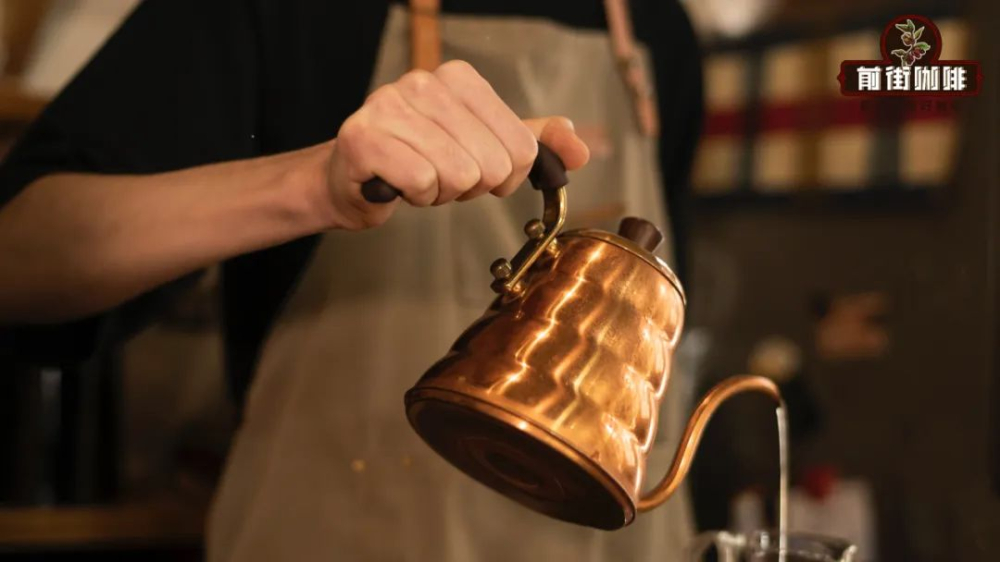
So the goal of circular pouring practice is not to circle with the wrist but to drive the circling with your body. In practice: steady your base (your lower body), keep your arms still, control the kettle angle with your wrist, and rotate your body to carry the kettle around the circle. That way the flow stays continuous and even even while circling.
You can also circle with wrist strength at a constant speed, but that is much harder to practice - holding the kettle angle steady while circling is far more difficult than rotating your body. So FrontStreet Coffee recommends learning to circle with the body.
Start with slow circular movements, and once you can pour a steady stream, increase the speed and the difficulty gradually. When you can control the speed and the flow at will, congratulations - you have graduated.
Conclusion
- END -

FrontStreet Coffee Recommendation
A steady pour shows up most clearly with light, aromatic beans, and the V60 is the classic dripper for the job: its 60-degree cone keeps water and coffee in contact longer, and its single large hole lets the flow rate follow your hand. FrontStreet Coffee's Yirgacheffe Gudingding is a natural starting point, with vivid citrus, berry, and floral notes, a green-tea-like finish, and a soft, bright acidity.
To put your new control to the test, try FrontStreet Coffee's Ethiopia Huakui. Its tropical-fruit aroma of strawberry, passion fruit, jackfruit, and lychee, its clear sweetness, and its low bitterness and smooth, juicy body reward an even, well-paced pour - and its character shifts noticeably when the flow wobbles. For a floral, Geisha-like cup, FrontStreet Coffee's Strawberry Candy and raisin-toned Mozart also suit the V60's fast extraction, bringing out layered aroma and lively acidity.
Important Notice :
FrontStreet Coffee is a long-established specialty coffee roaster in Guangzhou China, selling freshly roasted beans from its own farm in Yunnan as well as dozens of carefully selected single-origin beans from around the world for both pour-over and espresso. The products deliver consistently excellent quality and great value, with shipping within 24 hours. Guangzhou's FrontStreet Coffee shop is recommended by many coffee lovers, and the beans are now available online at the Tmall 。
FrontStreet Coffee has moved to a new address:
FrontStreet Coffee Address: 315,Donghua East Road,GuangZhou
Tel:020 38364473
 Scan and follow the En Gafei WeChat official account. Please indicate that the reprint comes from "En Gafei".