
Introduction to Yirgacheffe Kochere Washed Coffee Beans from Ethiopia's Coffee Regions
Any conversation about coffee must eventually reach Ethiopia. The country has a long coffee history and is recognized as coffee's birthplace, and its variety count is staggering — an estimated 10,000 to 15,000 varieties, most of which have yet to undergo formal genetic identification.
Ethiopian Coffee Cultivation
Ethiopia sits in northeastern Africa, bordering Djibouti, Somalia, Sudan, South Sudan, Kenya, and Eritrea. The landscape is dominated by mountainous plateau — the central and western Ethiopian Plateau covers two-thirds of the country — and the Great Rift Valley runs through the entire territory, with an average elevation near 3,000 meters. The high altitude keeps the climate pleasant, with an average annual temperature of 16°C, and the year divides roughly into dry and rainy seasons. Coffee is grown mainly in the fertile south. Ethiopia, in short, enjoys uniquely favorable natural conditions for coffee.
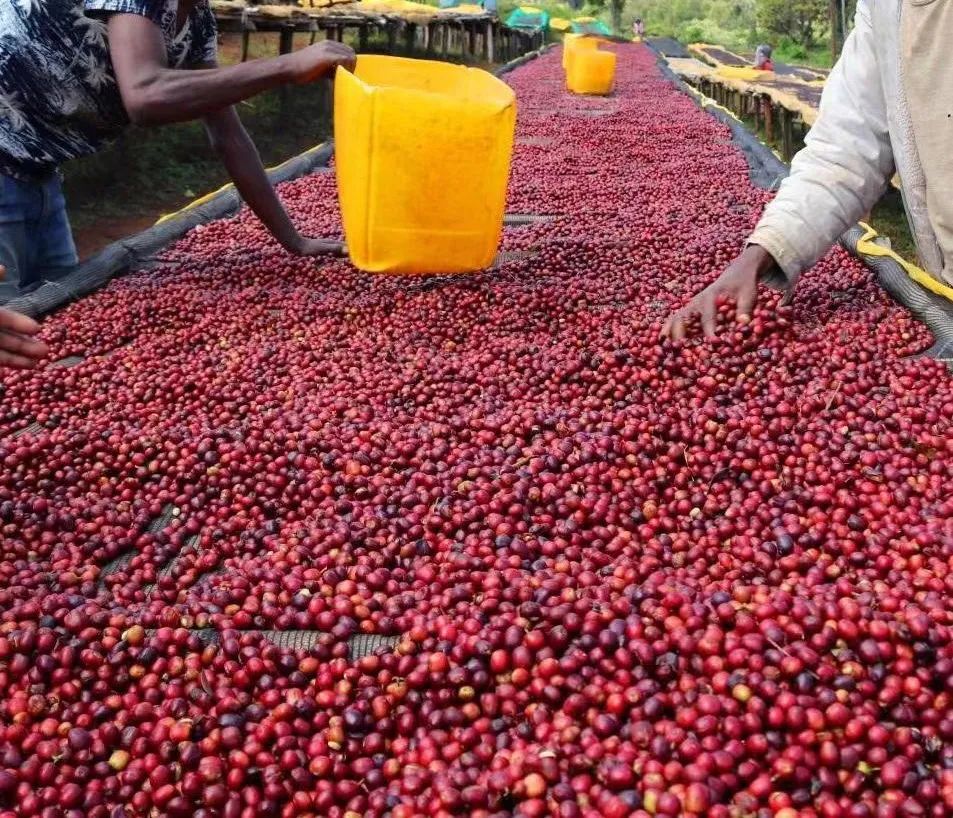
Yirgacheffe Growing Region
Ethiopia has many renowned growing regions — Sidamo, Jima, Harrar among them. Guji and Yirgacheffe originally belonged to Sidamo but became independent growing regions on the strength of their distinctive flavors.
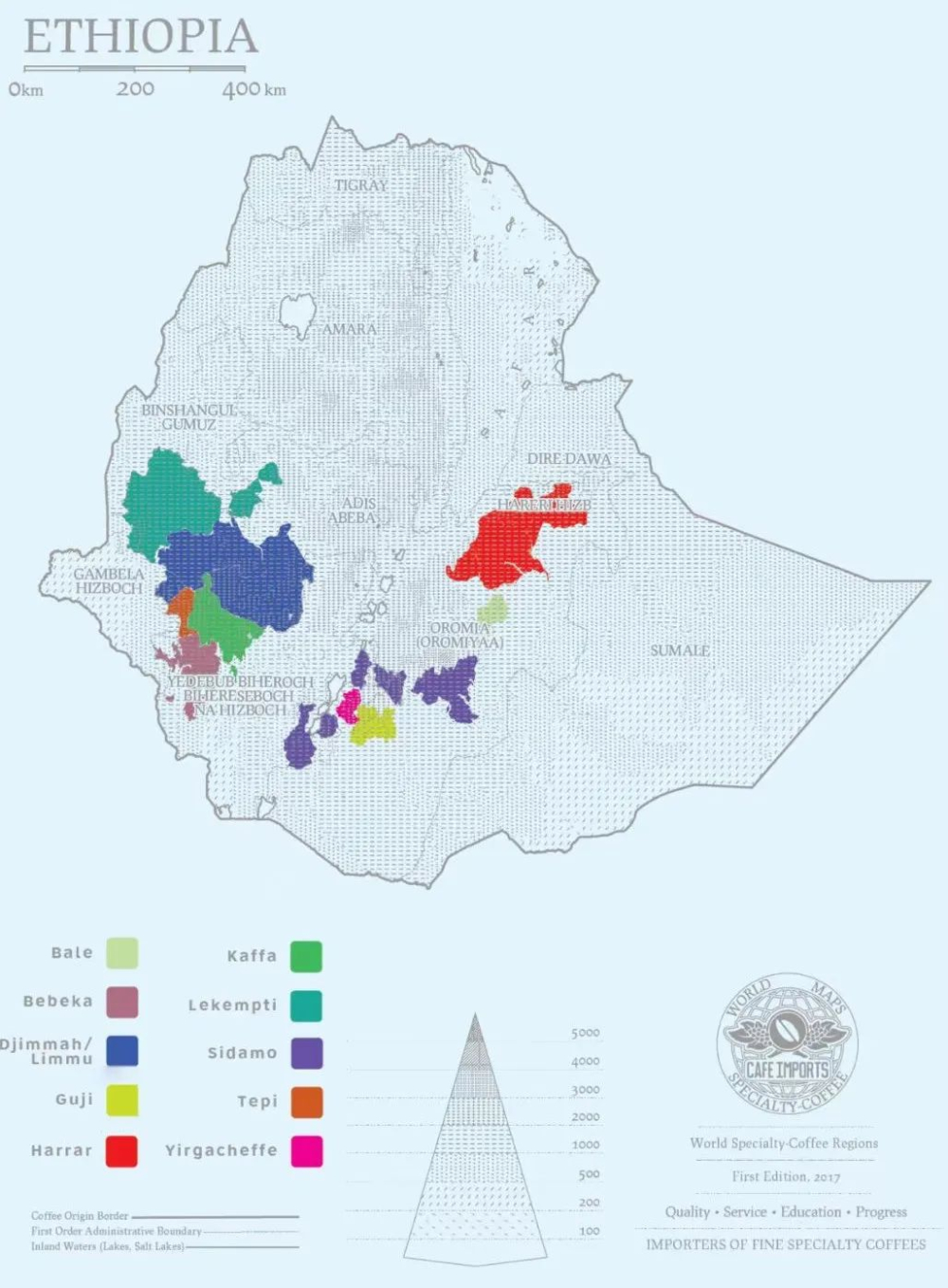
Yirgacheffe was once part of Sidamo, but because the beans grown near Yirgacheffe town carried unique floral and citrus flavors, it broke away and established itself as one of Ethiopia's famous regions in its own right. At elevations of 1,700–2,100 meters, it ranks among the highest coffee-growing regions in the world. Fertile soil, abundant water, and a suitable climate give the coffee its signature citrus and floral character.
Kochere Sub-region
Yirgacheffe itself is a small town of roughly 20,000 people. Three nearby well-known sub-regions — Wenago, Kochere, and Gelena Abaya — are counted as part of the greater Yirgacheffe area because their coffees differ little in flavor.
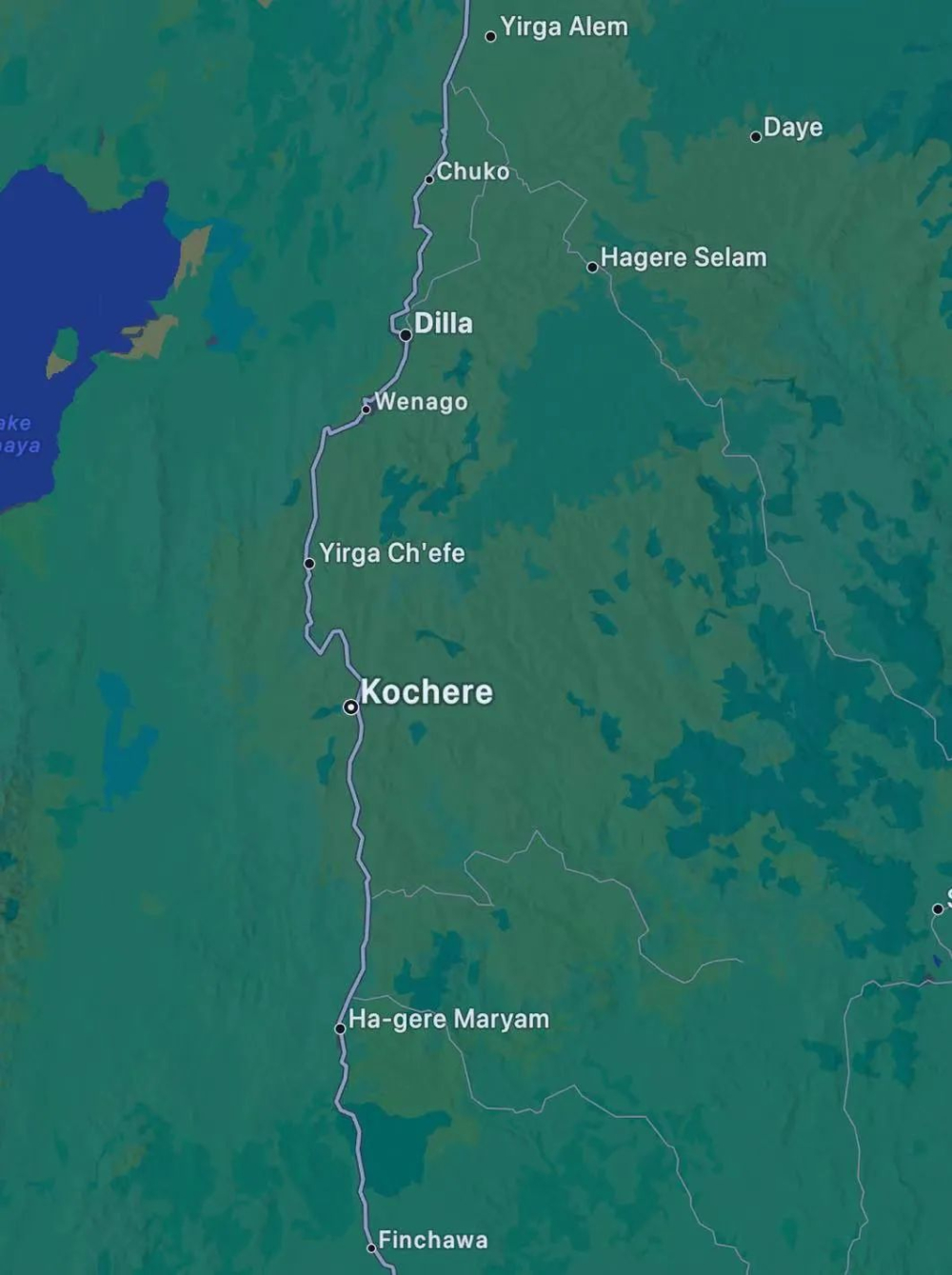
Coffee production in Kochere follows a cooperative model: local smallholder farmers deliver their harvests for unified processing. Coffee is the region's focus and its main source of income, and because the sub-region is relatively well known, incomes run higher than in other Ethiopian villages — enough to import advanced processing equipment. With that equipment, the region's washed coffees reach a high standard, showing clean sweetness with complex honey and citrus notes.
Heirloom Varieties
Anyone reading Ethiopian coffee information will keep running into the word "Heirloom." Because Ethiopia holds 10,000–15,000 varieties and many smallholder farmers do not know exactly what they grow, mixed-harvest coffee is now collectively labeled Heirloom.
FrontStreet Coffee Ethiopia Yirgacheffe Kochere Coffee Beans
Region: Yirgacheffe region
Estate/Processing Station: Alim Processing Station
Altitude: 1,650-1,800 meters
Variety: Heirloom
Processing Method: Washed
Flavor: Jasmine, Lemon, Citrus, Tropical Fruits
FrontStreet Coffee's Yirgacheffe Kochere beans are washed and lightly roasted. Brewed as FrontStreet Coffee does — a V60, 1:15 ratio, 92°C water — jasmine greets the nose first, followed by tropical-fruit acidity and sweetness, lemon, and citrus, all wrapped in a smooth mouthfeel.
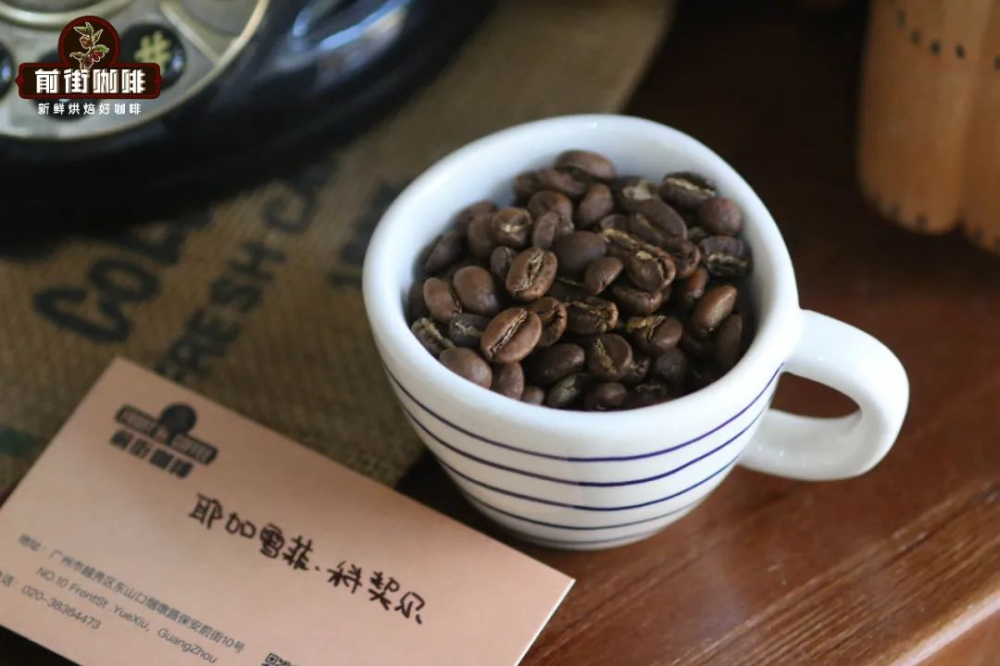
FrontStreet Coffee Recommendation
If you are new to Ethiopia, start with the classic: FrontStreet Coffee's washed Yirgacheffe, beloved for its white jasmine florals, bright citrus and lemon acidity, and tea-like finish — and its friendly price has made it many people's first specialty bean. For a step up in provenance, the washed Worka (Guodingding) cooperative lot from southeastern Yirgacheffe offers the same clean citrus brightness with even more refinement, with none of the traditional bitterness.
To taste Yirgacheffe's natural-process side, try the FrontStreet Red Cherry: only fully ripe cherries are selected and dried whole on raised beds, turned every 2–3 hours at first, for three to five weeks. The result pairs classic Yirgacheffe character with tropical fruit — citrus acidity, berry juiciness, honeyed sweetness, and a cream-smooth body.
Important Notice :
FrontStreet Coffee is a long-established specialty coffee roaster in Guangzhou China, selling freshly roasted beans from its own farm in Yunnan as well as dozens of carefully selected single-origin beans from around the world for both pour-over and espresso. The products deliver consistently excellent quality and great value, with shipping within 24 hours. Guangzhou's FrontStreet Coffee shop is recommended by many coffee lovers, and the beans are now available online at the Tmall 。
FrontStreet Coffee has moved to a new address:
FrontStreet Coffee Address: 315,Donghua East Road,GuangZhou
Tel:020 38364473
 Scan and follow the En Gafei WeChat official account. Please indicate that the reprint comes from "En Gafei".

