
How Do Different Water Flow Rates Affect Pour-Over Coffee Brewing? How to Measure Water Pouring Speed?
Large flow and small flow are recurring themes in FrontStreet Coffee's articles, and two of the terms baristas reach for most often when they discuss brewing. Yet many coffee lovers still carry a few misconceptions about what these two terms actually mean. Today, FrontStreet Coffee breaks down what counts as a large flow and what counts as a small flow.

Misconceptions About Water Flow
The most common misconception goes like this: "A small flow means a gentler pour with less agitation, while a large flow means a rugged, forceful stream." In reality, large and small flow describe the speed of the water—how much water leaves the kettle per second during brewing. The force of the stream is a separate matter, governed mainly by pouring technique and pouring height. A small flow can still penetrate with enough power to tumble the coffee bed, and a large flow can also be poured very gently.
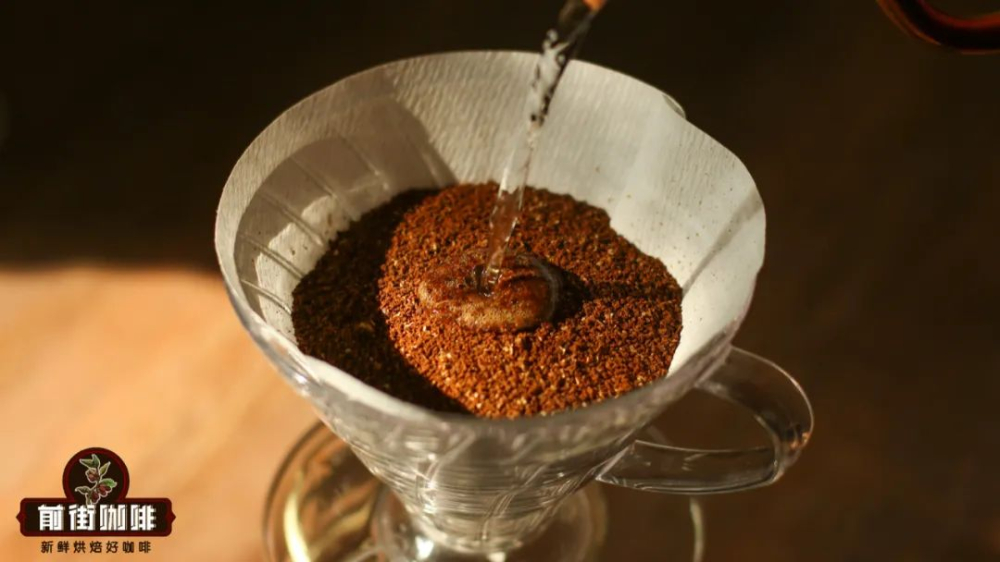
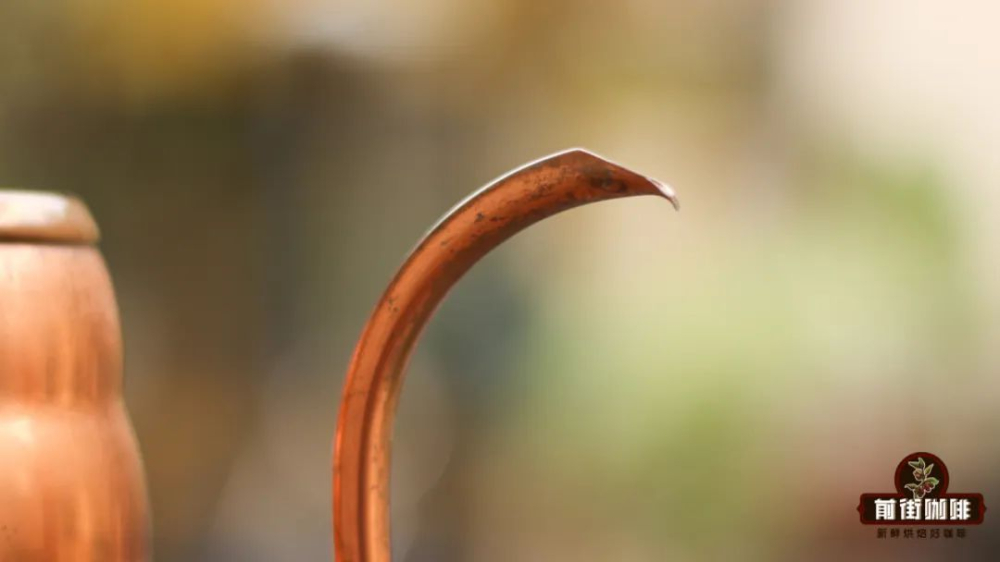
Second, as yesterday's article explained, the shape of the kettle spout itself creates differences in flow. With the same volume of water and the same pouring angle, different spout types deliver different amounts of water: narrow spouts generally pour less, wide spouts generally pour more. That is why discussions about flow so often turn into communication gaps—the spout, not the intent, is doing the talking.
At this point some readers ask: "How can I measure my own pouring speed?" It is simpler than it sounds. Many electronic scales now include a flow-rate function that measures speed while recording weight.
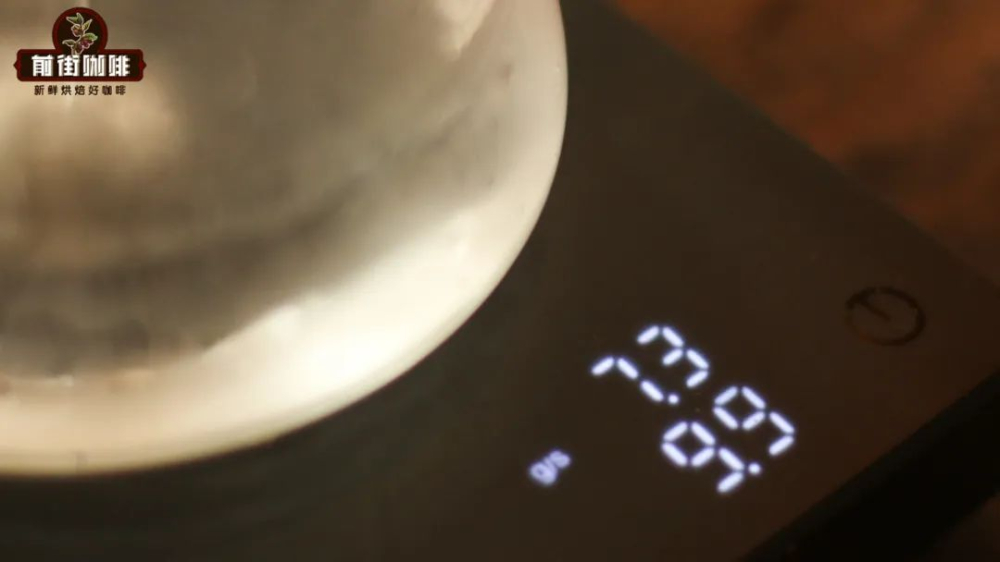
But what if you don't own a scale with that function? No problem. FrontStreet Coffee shares a method below for measuring your water flow speed with ordinary equipment.
How to Measure Your Water Flow Speed
First, you still need an electronic scale—a regular one will do, since it does not need any flow-rate function. Place any container on the scale. Then pour using your usual method and start a timer.
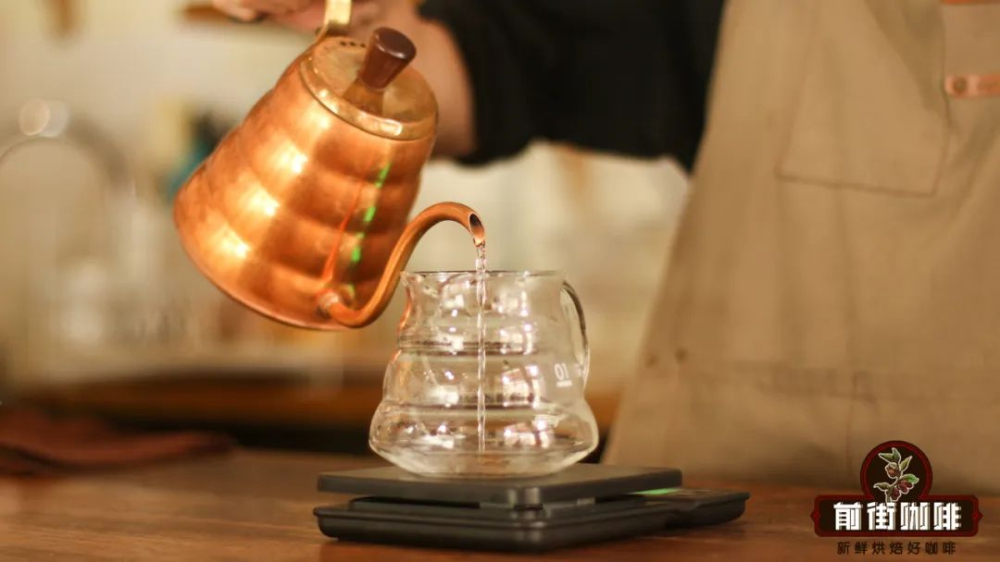
Time ten seconds, then divide the water poured during those ten seconds by 10, and you have your pouring speed per second. FrontStreet Coffee uses a copper kettle fitted with a hawk spout: with a vertical stream, the minimum flow rate is 2.2 ml/s and the maximum is 9 ml/s. Switching to a Kalita copper kettle with an elephant-trunk spout, with a vertical stream, the minimum flow rate is 4 ml/s and the maximum is 12 ml/s. In multi-stage brewing, people rarely hold a single flow rate throughout, because coffee brewed that way is not necessarily bad—it is simply less delicious. So match and combine flow rates according to your own brewing method and the effects that large and small flows produce.
What Different Effects Do Large and Small Flows Have?
You can see the effects directly by brewing the same pour-over twice, once with a large flow and once with a small flow. The brewing parameters are as follows: Guatemala New Eastern Geisha beans, ground to EK43 setting 9.5, a coffee-to-water ratio of 1:15 (15 g of beans and 225 ml of water at 92°C), using a three-stage brewing method.
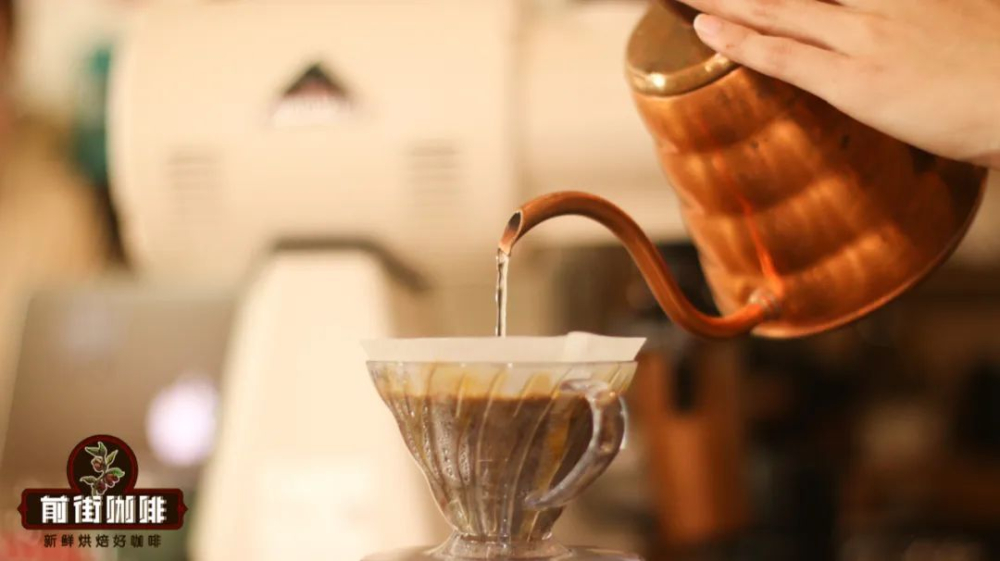
First, brewing time: using only a small flow throughout took 2 minutes and 5 seconds, while using only a large flow throughout took 1 minute and 57 seconds. With identical parameters, then, a small flow takes longer than a large flow.
Second, coffee bed height: "raising the coffee bed" means that when the drainage rate falls below the pouring rate, the position of the coffee bed rises. The larger the gap between drainage rate and pouring rate, the faster the bed climbs. Combining this with the first point, a small flow raises the bed more slowly and a large flow raises it more quickly.
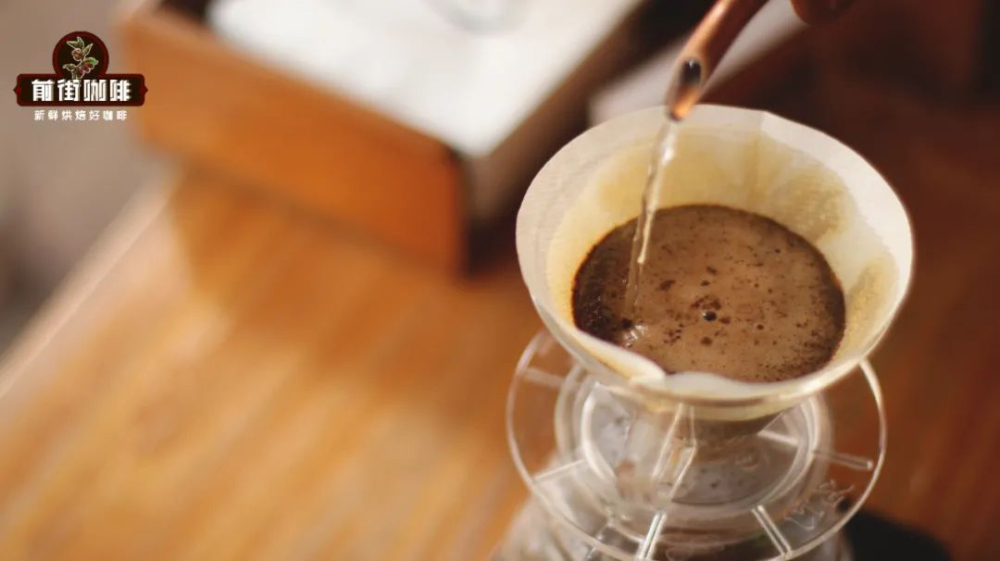
And when we talk about raising the coffee bed, we usually mean using a large flow to open a gap between drainage rate and pouring rate so the bed rises in the shortest possible time.
Third, flavor: because a small flow drains more slowly, coffee brewed entirely with it tastes richer and more concentrated, mainly because extraction is longer and the grounds are disturbed more often. A large flow drains faster, so coffee brewed entirely with it has more prominent, clearer flavors, though it is relatively lighter and thinner than the small-flow cup.
When to Use Large Flow and When to Use Small Flow?
On choosing between large and small flows, FrontStreet Coffee's advice is simple: be flexible. The choice depends on your brewing method, the current state of the coffee bed, and the brewing time. If you normally use a large flow, then when the following situation appears, it is best to switch to a small flow.
If the drainage rate is much faster than usual: at this point the water level should be in the middle of the dripper, but overly coarse grinding is draining too fast and the brew is about to finish. In this case you need a small flow to extend the extraction time and avoid under-extraction.

If you normally use a small flow, then when the following situation appears, it is best to switch to a large flow.
If the extraction time is too long: a long extraction can yield more coffee compounds, but it also easily extracts bitter ones. If the brew stalls, or if grinding is too fine and drainage is slow, switch to a large flow to speed drainage and reduce over-extraction.
When you need to raise the coffee bed: a small flow pours less water, creating a smaller gap with the drainage rate, so the bed rises more slowly. So when we need to raise the bed, it is best to use a large flow in the stage after blooming, lifting the bed quickly so that all the grounds receive ample, even extraction.
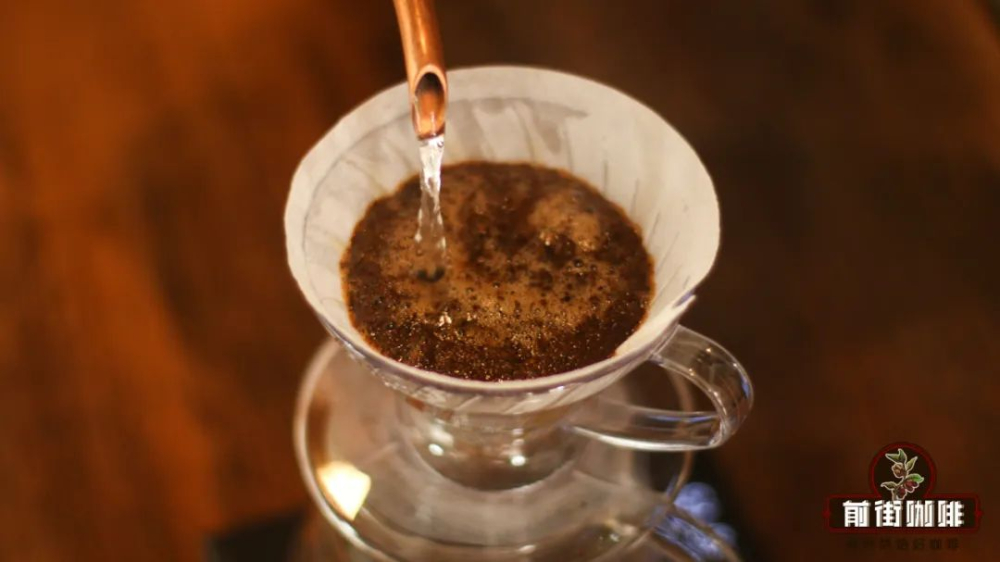
Of course, when FrontStreet Coffee says to increase or decrease the flow, that means adjusting relative to your original flow rate. The fluctuations during pouring should not be too drastic—small adjustments are enough. For example, if FrontStreet Coffee brews at 5 ml/s and needs more flow, 6–7 ml/s is plenty; there is no need to push it to extremes like 8–9 ml/s.
FrontStreet Coffee Recommendation
Because the V60's fast, highly controllable flow rewards clarity, it pairs beautifully with FrontStreet's washed Ethiopian coffees. FrontStreet Washed Yirgacheffe Gudingding Cooperative is the classic starting point: white jasmine florals, bright citrus and lemon acidity, and a clean, tea-like finish. For readers who prefer a fruitier cup, FrontStreet Ethiopia Huakui is a natural-process heirloom with ripe tropical aromas of cream strawberry, mango, jackfruit, citrus, and blueberry, while FrontStreet Strawberry Candy brings rose and sweet orange together with the grape and strawberry-gummy sweetness of a Costa Rican honey-processed lot.
FrontStreet Coffee's own tool of choice for these beans is the resin Hario V60. Resin insulates heat effectively, and in standard mass production it is the easiest material to mold with the smallest tolerances, making it a dependable and affordable everyday dripper. For a heavier, low-acid cup, FrontStreet PWN Golden Mandheling—wet-hulled in Indonesia—is a fine alternative through the same dripper.

Important Notice :
FrontStreet Coffee is a long-established specialty coffee roaster in Guangzhou China, selling freshly roasted beans from its own farm in Yunnan as well as dozens of carefully selected single-origin beans from around the world for both pour-over and espresso. The products deliver consistently excellent quality and great value, with shipping within 24 hours. Guangzhou's FrontStreet Coffee shop is recommended by many coffee lovers, and the beans are now available online at the Tmall 。
FrontStreet Coffee has moved to a new address:
FrontStreet Coffee Address: 315,Donghua East Road,GuangZhou
Tel:020 38364473
 Scan and follow the En Gafei WeChat official account. Please indicate that the reprint comes from "En Gafei".

