Can you brew 30g of coffee at once? How much ground coffee is appropriate for a single pour-over extraction?

Parents: "You know how to make coffee, right? Quick, make everyone a cup."
Me: ......
I suspect every coffee lover at home for the holidays has had this exchange. Under the watchful eyes of relatives and friends, wanting everyone to taste your coffee, you grind dozens of grams of beans to brew one big pot — only to watch the liquid pool in the later stages, the extraction stretch far past 2 minutes, and the flavor turn dull and muddy, nothing like your usual cup. And you wonder what went wrong.
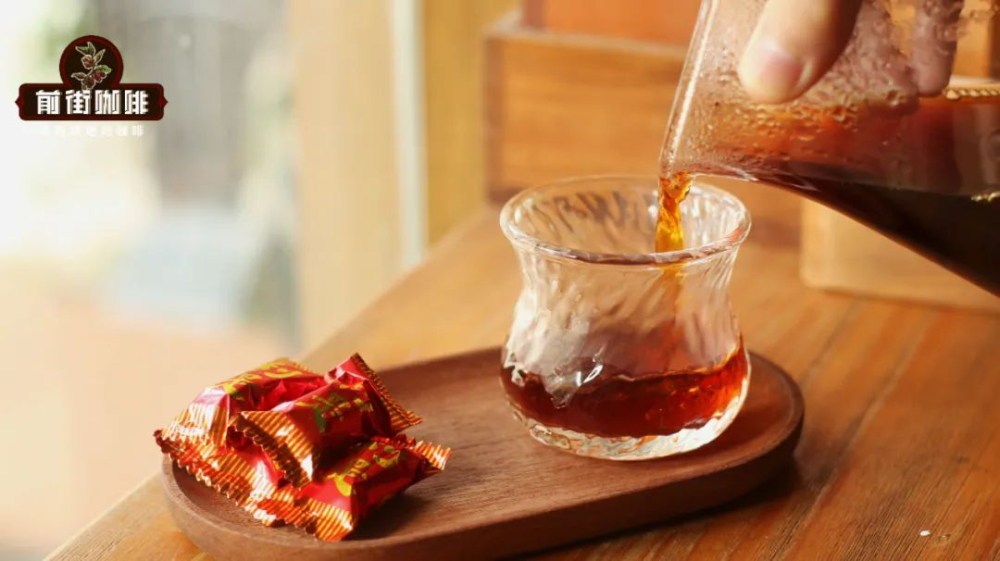
To address exactly this, FrontStreet Coffee shares some techniques today for brewing large doses of coffee for multiple servings.
Why does everything change when the dose increases?
Most of us own size 01 drippers and usually brew only 1–2 servings, so our dose is a nearly fixed parameter that rarely exceeds 20 grams. Over time we have internalized this "small dose" framework: for a given bean we know exactly how much water to pour, what flow to use, when to stop or continue — all the details are under control.
But when the dose suddenly jumps to 30 grams, the water nearly doubles at the same ratio. The pouring time stretches proportionally, and so does the total drainage time.
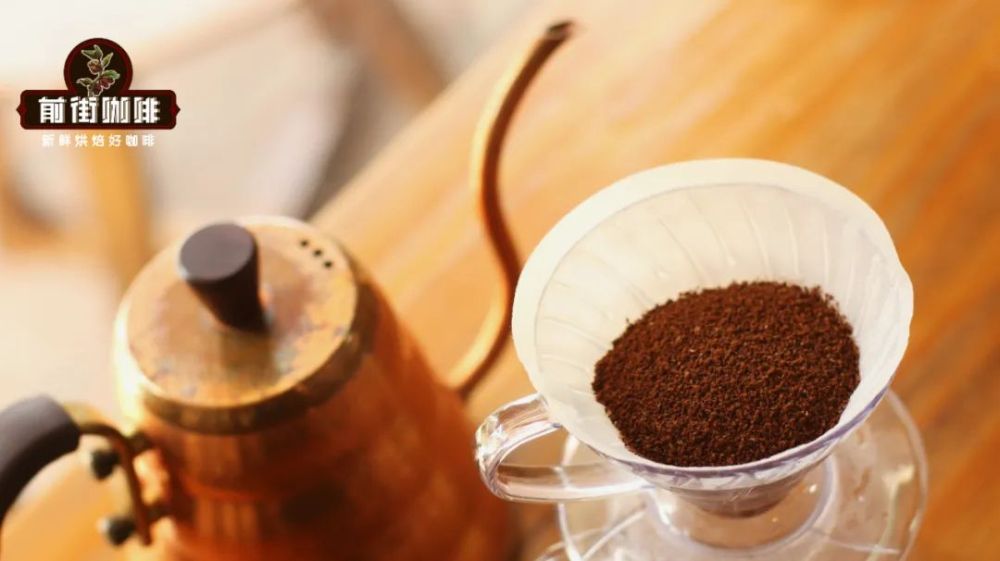
Also, whatever dripper you use, a bigger dose means a taller, thicker coffee bed, which extends the time water takes to permeate through and drip into the server. Take FrontStreet Coffee's usual 15g dose: in a size 01 V60 it fills roughly half the dripper and finishes draining between 1:50 and 2:10. But at 30 grams the bed reaches two-thirds of the dripper's height, and if you pour according to your small-dose habits, it takes at least 2 minutes 40 seconds for all the liquid to drain.
In other words, if you only scale up the dose — and by a large margin, say 15g to 30g — the coffee's contact time grows longer, and bitter, astringent compounds become far more likely to come out in the later stages. The cup turns heavy, muddy, and harsh. In FrontStreet Coffee's view, the fix is to adjust according to the dripper you own, so the flavor stays close to what you get with a small dose.
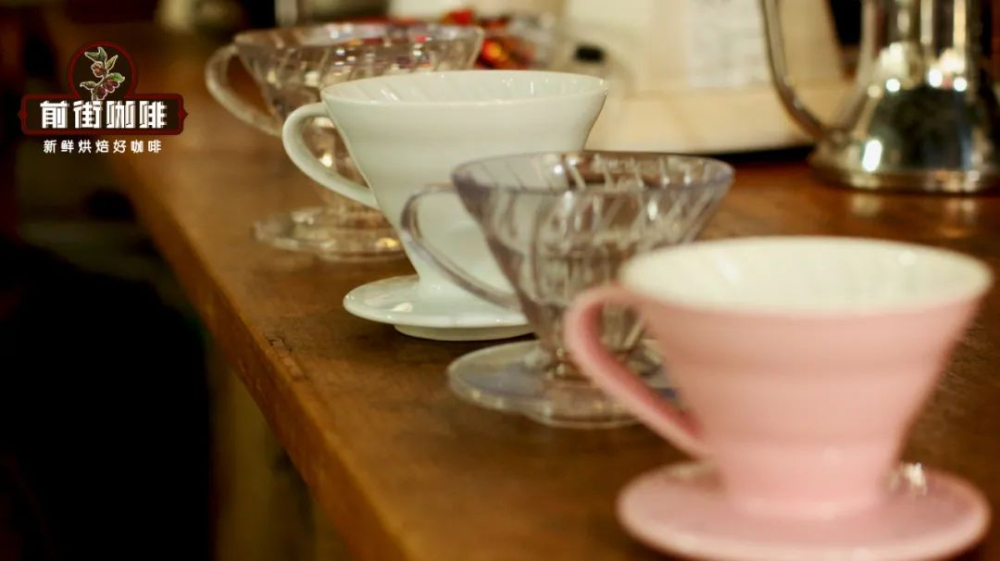
When you have a large dripper (size 02)
If you normally brew 15g in a small dripper but switch to a size 02 for 30g, you can simply scale the parameters proportionally. To truly replicate the small-dripper extraction model, though, watch the bloom and the flow rate.
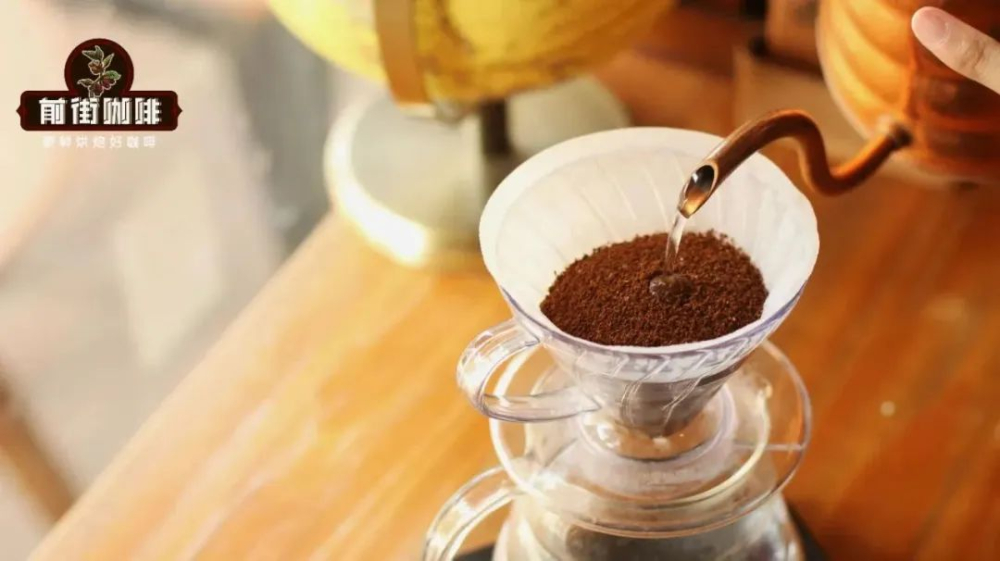
More grounds mean a thicker bed, which needs more hot water to saturate every particle and a longer wait for the gas to escape. When FrontStreet Coffee brews 30g in a conical size 02 V60, the bed thickens toward the center, so we bloom with 60g of water and wait 35 seconds. During the bloom we pour small circles focused on the center first, letting the central particles absorb water and gradually spread outward, pushing gas toward the edges for a better bloom.
In the main extraction, use a larger flow than usual. It lifts the bed and increases coffee-water contact area, and it shortens contact time enough to avoid over-extraction from a long steep. If 5–6ml/s is your small-dose flow, push it to 10ml/s and aim for a total extraction around 2 minutes 30 seconds.
When you only have a small dripper (size 01)
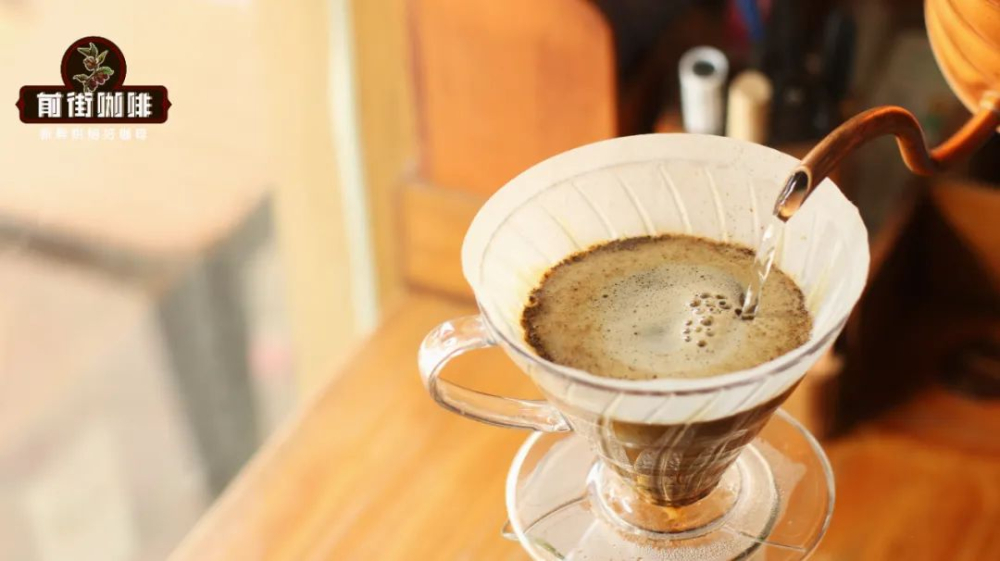
A size 01 dripper is designed for 15–20 grams. Force 30 grams into it and it is plainly overloaded: the blooming dome nearly fills the whole dripper, leaving little room for later pours, and blockage and pooling in the late stages are very likely. To adapt to a large dose in small gear, you need a new brewing plan.
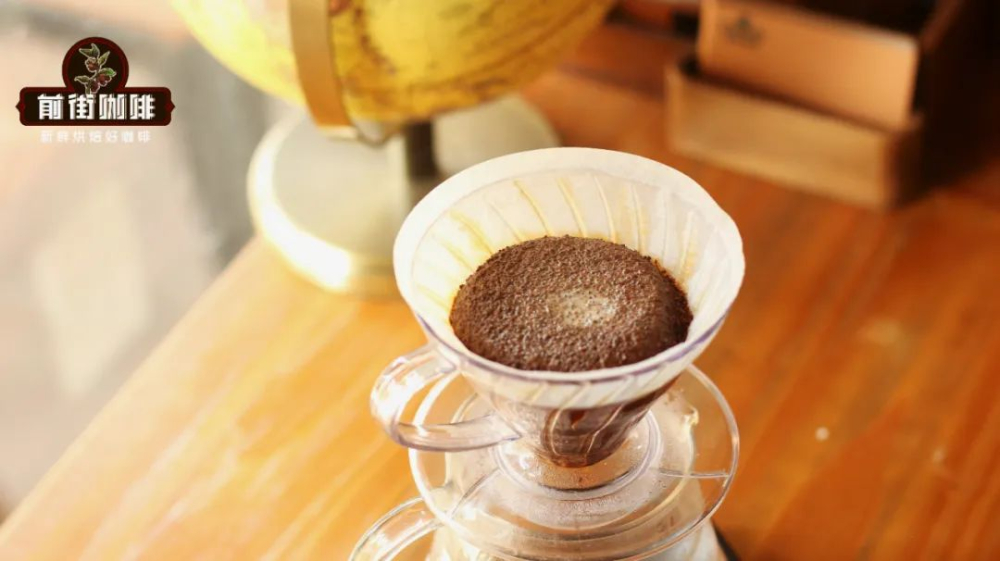
First, grind slightly coarser to lower flow resistance. On the EK43s in our shop, the barista opens the grind by 0.3–0.5 settings for large doses, moving the #20 sieve pass rate from about 80% down to 75% to speed drainage.
For pouring, split the water across multiple pours and adjust the flow to the bed's expansion to avoid overflow.
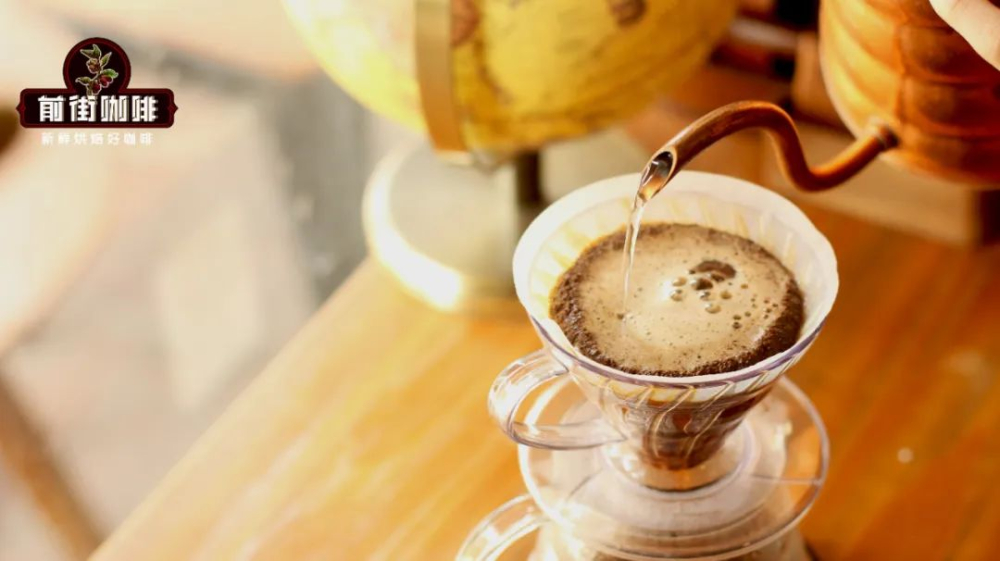
Keep the 1:15 ratio — 30g of grounds to 450g of hot water — divided into 5 pours: 50ml for the bloom, then 100ml for each of the remaining four. Start the bloom at the center, circle a small radius on the second pour, widen slightly on the third, wider again on the fourth, and finish the fifth back at the center. Total extraction time: 2 minutes 40 seconds to 3 minutes.
- END -
FrontStreet Coffee Recommendation
Whether you are brewing 15g or 30g, the V60's fast, clean extraction makes it the natural partner for fruit-forward light roasts. FrontStreet Coffee's Yirgacheffe Worka shows white florals, citrus, and a green-tea finish, while the tropical-fruit-rich Huakui brings strawberry, passion fruit, and jackfruit sweetness with barely any bitterness — both shine in a large-pot, multi-serving brew.
If your holiday crowd prefers something rounder, the PWN Golden Mandheling at a medium-dark roast delivers dark chocolate, caramel, and herbal depth with a full, low-acid body — forgiving even when you are still learning to pour for a big table.
Important Notice :
FrontStreet Coffee is a long-established specialty coffee roaster in Guangzhou China, selling freshly roasted beans from its own farm in Yunnan as well as dozens of carefully selected single-origin beans from around the world for both pour-over and espresso. The products deliver consistently excellent quality and great value, with shipping within 24 hours. Guangzhou's FrontStreet Coffee shop is recommended by many coffee lovers, and the beans are now available online at the Tmall 。
FrontStreet Coffee has moved to a new address:
FrontStreet Coffee Address: 315,Donghua East Road,GuangZhou
Tel:020 38364473
 Scan and follow the En Gafei WeChat official account. Please indicate that the reprint comes from "En Gafei".