Tanzania Coffee Regions Introduction: Flavor Characteristics of Mount Kilimanjaro Typica Variety Coffee

Africa is home to many celebrated coffee producers — Ethiopia, Kenya, and Rwanda among them — but a few other countries deserve far more attention than they get. Tanzania is one of the three giants of African coffee, and Europeans once affectionately called it the "coffee gentleman."
Tanzania
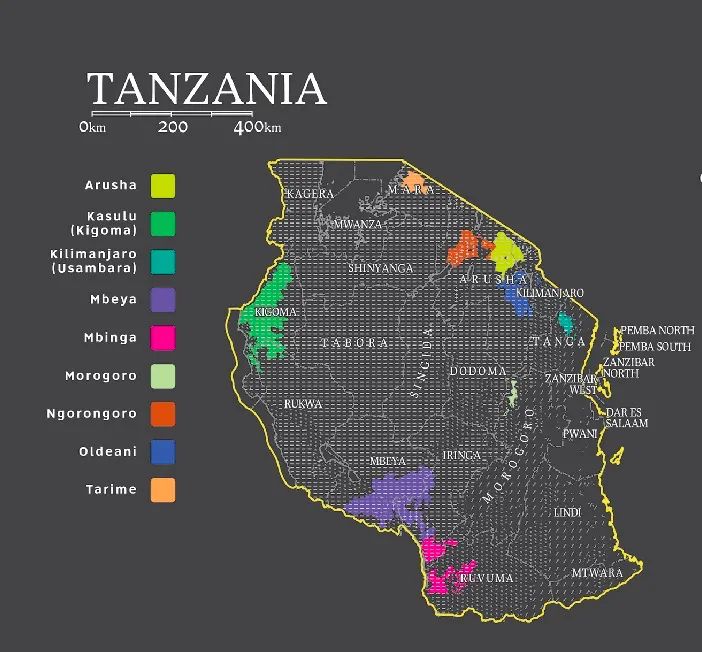
Tanzania sits in eastern Africa, south of the equator, with both a coastline and a vast interior. The Indian Ocean lies to its east, and it shares borders with eight countries including Kenya and Uganda. The terrain is higher in the northwest and lower in the southeast, stepping down overall, while the East African Rift Valley runs north–south in two branches from Lake Malawi. In the northeast, Kibo Peak on Mount Kilimanjaro climbs to 5,895 meters — the highest point on the continent.

The eastern coast and inland lowlands have a tropical savanna climate, while the western plateau has a tropical mountain climate, with average annual temperatures between 21°C and 26°C. Coffee is grown mainly around Mount Kilimanjaro and in the south. Kilimanjaro is a high, extinct volcano, and it gives FrontStreet Coffee's Tanzanian beans their rich texture, moderate acidity, and intense aroma. Compared with neighboring Kenya, the acidity is less dazzling but gentler and sweeter, with a pronounced winey fragrance.
Coffee Development
Some coffee histories hold that coffee reached Tanzania from Ethiopia in the 16th century, and by the German colonial period it was already an established economic crop. Today the country grows Typica, Bourbon, and Kent, along with locally developed disease- and drought-resistant varieties.

In 1925, the first cooperative (KNRA) was founded, giving producers more freedom to sell directly to London. Then in 2001, the Tanzanian Coffee Research Institute (TaCRI) was established as a non-profit, with the goal of revitalizing the country's coffee industry and raising the international profile of Tanzanian coffee.
Mount Kilimanjaro
Tanzanian coffee is grown mainly on Mount Kilimanjaro and in the southern regions, with 85% produced by small farms. Kilimanjaro is snow-capped year-round and is the highest mountain in Africa; coffee grows between 1,050 and 2,500 meters, where the high altitude, volcanic soil, and pure meltwater create the country's most favorable coffee conditions. The harvest runs from July to December each year, with Bourbon, Typica, and Kent as the main varieties.
Typica
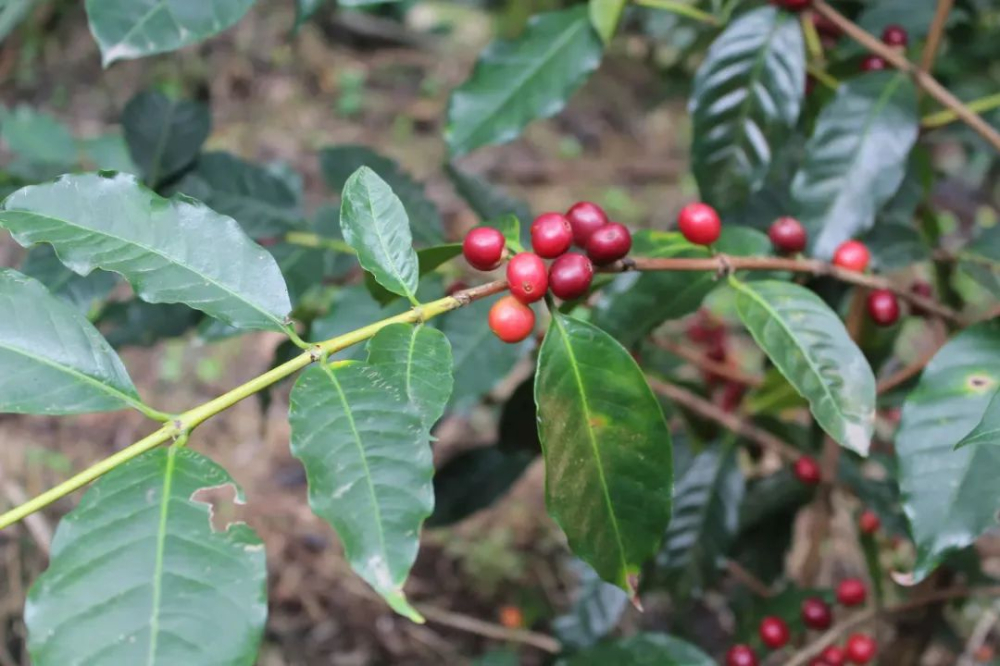
Typica is one of the most genetically important Arabica varieties in the world. The plants are relatively tall, yield modestly, and are susceptible to major diseases — yet they produce outstanding coffee, and they thrive at high altitudes, where quality rises with elevation. Because of the low yields and disease vulnerability, Typica has been gradually replaced across much of the Americas, but it is still grown in Peru, the Dominican Republic, and Jamaica — where it made its name as the variety behind Jamaican Blue Mountain.
Washed Processing
Since most coffee here comes from small farms, farmers deliver their harvested cherries to nearby processing centers. The cherries are first poured into large water tanks for flotation, then run through a pulper to strip away the skin and fruit — leaving beans still coated in a slippery layer of mucilage.

The mucilage-covered beans rest in fermentation tanks for 16 to 36 hours while microorganisms break the mucilage down. After fermentation, plenty of clean water washes away any residue, and the beans are finally dried in the sun. Washed processing like this yields coffee with both gentle and bright acidity, appropriate body, and sweet, spice-laced aromas.

FrontStreet Coffee Tanzanian Kilimanjaro Coffee Beans
Region: Kilimanjaro
Altitude: 1,300-2,000 meters
Variety: Typica
Processing: Washed
Flavor: Citrus, Honey, Berries, Nuts, Tea-like sensation
FrontStreet Coffee carries this Tanzanian bean from the Kilimanjaro region, washed processed. We brew it on a V60 at a 1:15 ratio with 92°C water: gentle acidity with citrus, berry, honey, and nut flavors, a smooth, tea-like mouthfeel, and a beautifully balanced overall profile.
FrontStreet Coffee Recommendation
If this gentle, tea-like take on African washed coffee suits your palate, FrontStreet Coffee's Washed Yirgacheffe is the natural next step — jasmine florals and bright citrus acidity over a light, elegant body that drinks like a clean lemon tea, and one of the best-value entry points into East African specialty coffee.
For something juicier from the same continent, FrontStreet Coffee's Natural Red Cherry layers peach, cocoa, honey, and lemon over a full sun-dried fruitiness — a lovely contrast to Kilimanjaro's restraint, and equally rewarding through a V60.
Important Notice :
FrontStreet Coffee is a long-established specialty coffee roaster in Guangzhou China, selling freshly roasted beans from its own farm in Yunnan as well as dozens of carefully selected single-origin beans from around the world for both pour-over and espresso. The products deliver consistently excellent quality and great value, with shipping within 24 hours. Guangzhou's FrontStreet Coffee shop is recommended by many coffee lovers, and the beans are now available online at the Tmall 。
FrontStreet Coffee has moved to a new address:
FrontStreet Coffee Address: 315,Donghua East Road,GuangZhou
Tel:020 38364473
 Scan and follow the En Gafei WeChat official account. Please indicate that the reprint comes from "En Gafei".