
Panama Coffee Cultivation: Introduction to Boquete Region's Mariposa Coffee Beans
Panamanian coffee enjoys high recognition in the global coffee market, and the Geisha variety above all. In 2005, Hacienda La Esmeralda turned in outstanding results at the Best of Panama (BOP) competition and auction, where Geisha broke the existing coffee auction record and made both the estate and the variety famous worldwide.
Panama sits in Central America, bordered by Colombia and Costa Rica, with the Pacific to the south and the Caribbean to the north — an S-shaped land bridge joining North and South America. Its terrain is rolling and cut through with valleys and ravines; aside from the coastal plains north and south, most of the country is mountain. Near the equator, Panama has a tropical maritime climate of humid days and cool nights, with average annual temperatures of 23-27°C. The year splits into a dry season and a rainy season, and annual precipitation reaches 1500-2500 millimeters. Together with volcanic soil, all of this gives Panama outstanding conditions for growing coffee.
Panamanian Coffee Development
Coffee seedlings reached Panama in the 19th century with the first European colonists, but back then nobody spoke of specialty coffee — yield was what mattered. Even so, Panama's production amounted to only a tenth of neighboring Costa Rica's. Growers began to see the potential of specialty coffee, which led to the founding of the Specialty Coffee Association of Panama (SCAP), and fame followed as the country entered coffee competitions. Once international attention arrived, the Best of Panama (BOP) competition and auction were created, quickly building Panama's reputation — and its foundation for producing high-quality beans. Geisha rode that wave to stardom, repeatedly setting new records in international green-coffee bidding.

The Boquete Growing Region
Panama's main coffee regions are Boquete, Volcán-Candela, and Renacimiento, all clustered around three of the country's volcanoes: Volcán Barú, El Valle, and La Yeguada.
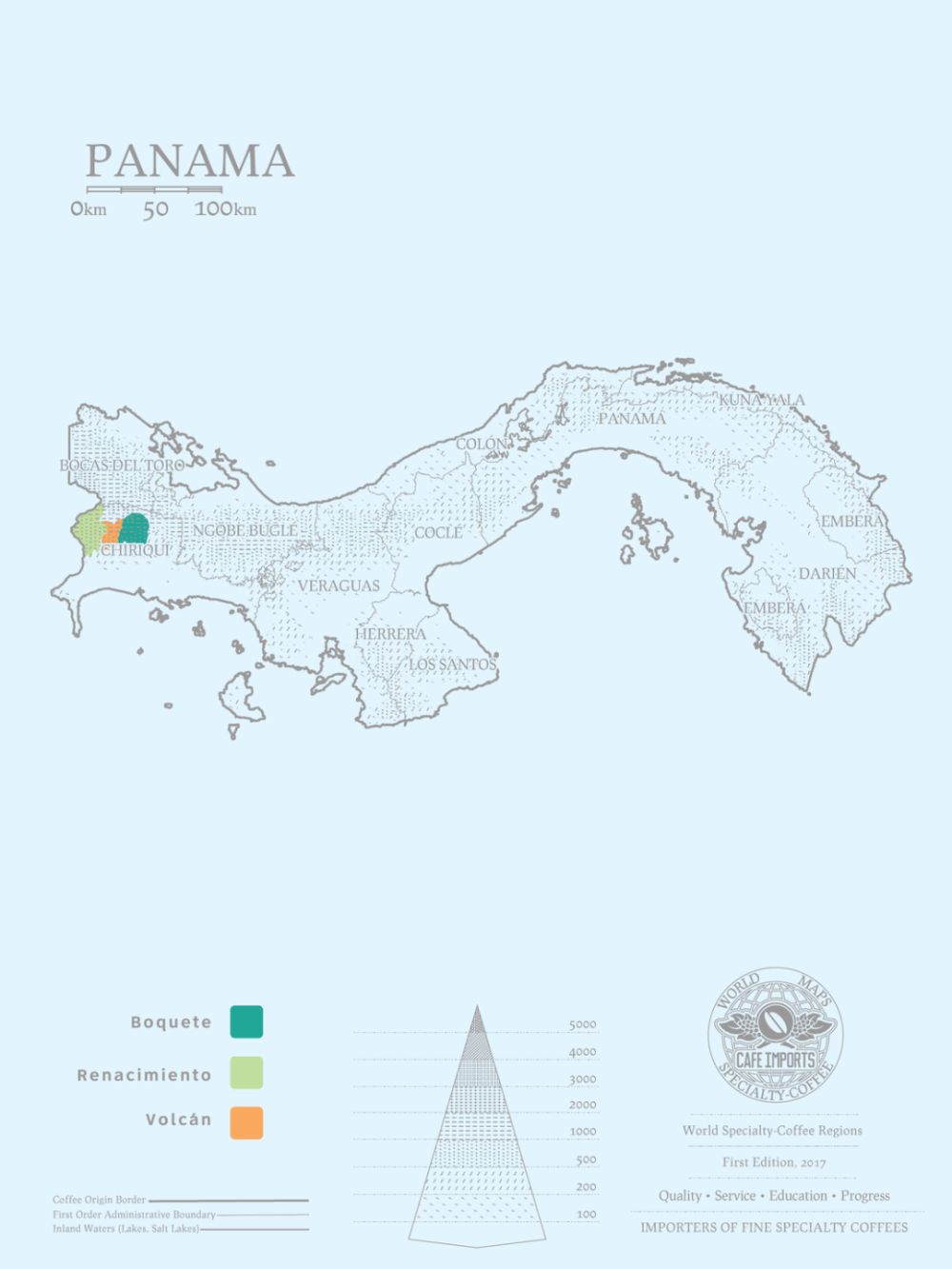
Boquete is the most famous of them, spread across the eastern slopes of the Barú volcano, where the mountain terrain weaves one microclimate after another. Coffee is cultivated between 1,200 and 2,000 meters, where temperatures run 11-27°C. That wide day-night swing, combined with the altitude, the microclimates, and the volcanic soil, produces coffee of exceptional flavor richness. The region also hosts many renowned estates — Hacienda La Esmeralda and Elida Estate among them.
Geisha, Caturra, Catuai
Besides Geisha, Panama also grows varieties such as Caturra, Catimor, and Typica.
FrontStreet Coffee carries one particularly special Panamanian bean: Flor de Mayo, composed of three varieties — Geisha, Caturra, and Catuai. Our research into the lot revealed the story behind it: growers once planted Geisha interspersed with Caturra and Catuai to push yields higher, but picking Geisha on its own proved impractical, so the cherries were harvested together. Later, to let Geisha's character shine, growers painstakingly picked the three varieties separately — only to blend them again for export. Yields across the three are moderate and they are vulnerable to leaf rust, yet they take beautifully to high-altitude cultivation: the higher the farm, the better the flavor.
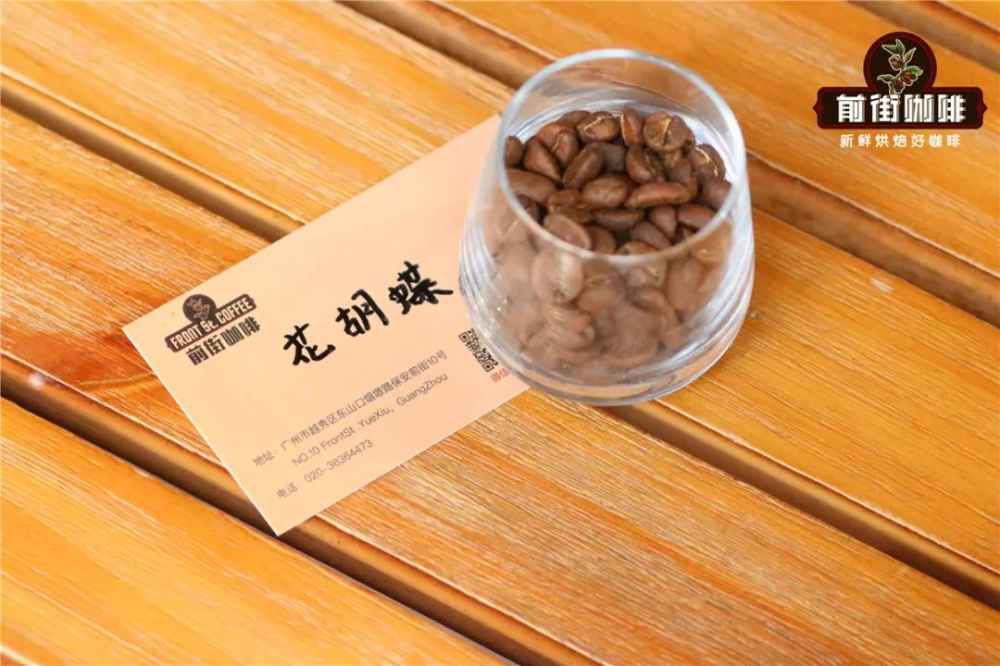
FrontStreet Coffee Panama Boquete Flor de Mayo Coffee Beans
Region: Boquete
Altitude: 1400-1700 meters
Varieties: Geisha, Caturra, Catuai
Processing: Washed
Flavor Notes: White floral notes, lemon, berry, hazelnut, honey
FrontStreet Coffee's Flor de Mayo from Panama's Boquete region is washed and roasted to a medium-light level. We brew it as a V60 pour-over at a 1:15 ratio with 92°C water. The cup opens with white floral aromas; on tasting you find lemon-like acidity along with berry and grape flavors, wrapped up in a hazelnut aftertaste, with a mouthfeel as smooth and delicate as honey.
FrontStreet Coffee Recommendation
If Flor de Mayo wets your appetite for Panama, the country's flagship is of course Hacienda La Esmeralda Geisha. FrontStreet Coffee offers both grades of the estate's line: the Red Label "Esmeralda Special," grown at 1600-1800 meters, cupped above 90 points per batch, and traceable to a single plot per lot; and the Green Label "Private Collection," a blend of lots across the estate's plots that captures Esmeralda's signature high-altitude Geisha character at a more accessible price. Both reveal the variety's hallmark orange-blossom honeyed sweetness, fragrant florals, and juicy fruit acidity.
Prefer an easier on-ramp to Panamanian Geisha? FrontStreet Coffee's Boquete Geisha is our go-to entry-level lot — an affordable way to taste the classic Panama profile, with its orange-honey sweetness, oolong-tea feel, and refined fruity acidity in distinct, well-defined layers.
Important Notice :
FrontStreet Coffee is a long-established specialty coffee roaster in Guangzhou China, selling freshly roasted beans from its own farm in Yunnan as well as dozens of carefully selected single-origin beans from around the world for both pour-over and espresso. The products deliver consistently excellent quality and great value, with shipping within 24 hours. Guangzhou's FrontStreet Coffee shop is recommended by many coffee lovers, and the beans are now available online at the Tmall 。
FrontStreet Coffee has moved to a new address:
FrontStreet Coffee Address: 315,Donghua East Road,GuangZhou
Tel:020 38364473
 Scan and follow the En Gafei WeChat official account. Please indicate that the reprint comes from "En Gafei".

