
What is Pour-Over Coffee with Milk Called? What is Café au Lait? How to Make It Delicious?
With the Chinese New Year approaching, everyone has no doubt stocked up on coffee beans for the holiday. And for those of you heading back to your hometowns, luggage space is probably tight — meaning the pour-over kit makes the cut while the espresso machine stays home, and milk coffee suddenly becomes a luxury. That's exactly why FrontStreet Coffee wants to share how to make pour-over coffee with milk that actually tastes great.
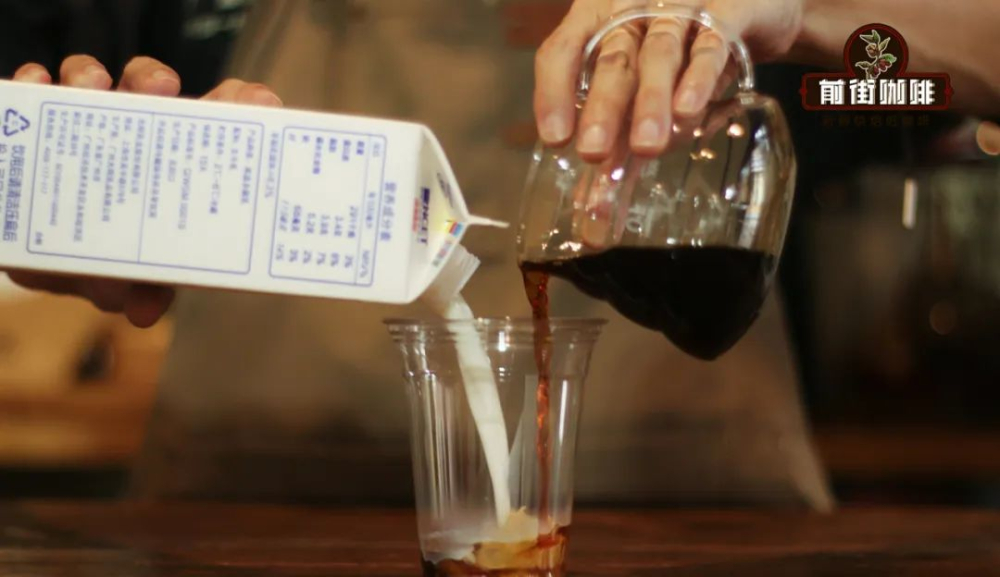
Pour-Over Coffee + Milk = Café Au Lait?
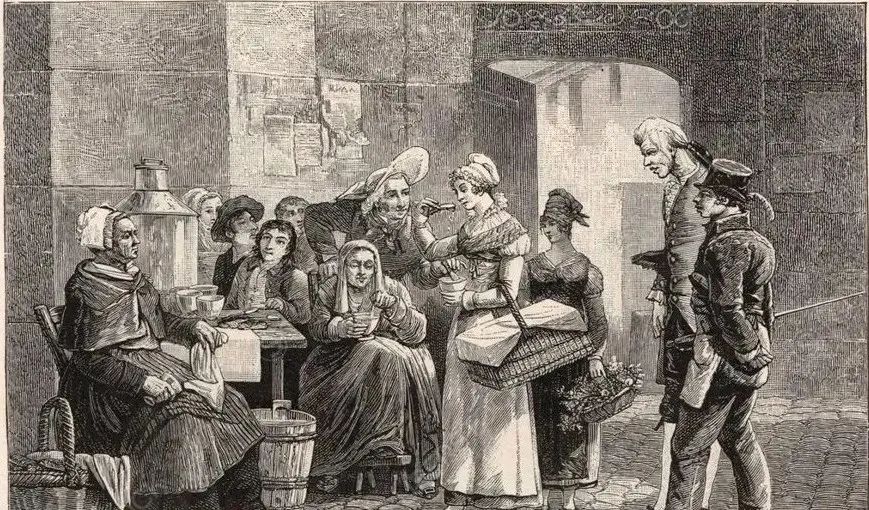
Most of us are familiar with adding milk to espresso to make lattes, cappuccinos, and the like. But long before espresso existed, Europeans were already stirring milk into black coffee. The drink is called "Café Au Lait," French for "coffee with milk." Back then, the mainstream European extraction methods were drip brewing (similar to flannel pour-over) and immersion (similar to the French press), so the original Café Au Lait was made by adding milk to black coffee brewed one of those two ways.
After centuries of evolution, the definition of Café Au Lait has grown more inclusive: it now refers to any coffee drink made by adding milk to black coffee. So no — adding milk to pour-over coffee is not some modern heresy. It has centuries of precedent.
Which Coffee Beans Work Best?
Compared with espresso extracted under high temperature and pressure, drip-brewed coffee is far less concentrated, and tasted on its own, pour-over coffee comes across as noticeably lighter in body. Since pour-over is an extraction method designed to showcase a bean's flavor character, those flavors are easily swamped once milk goes in. Making a good Café Au Lait therefore starts with careful bean selection.

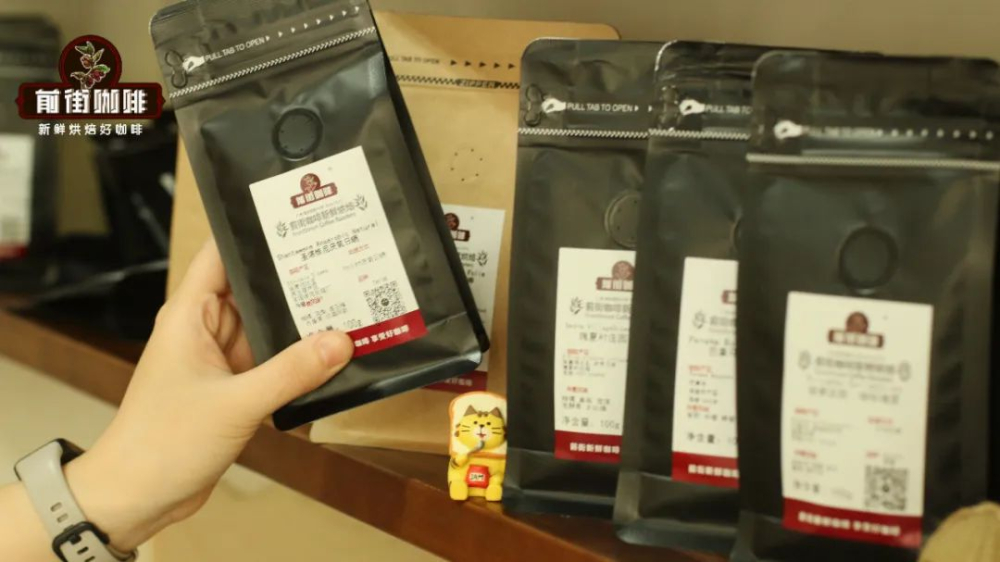
You may already have guessed the answer: FrontStreet Coffee recommends medium to dark roast beans. Darker roasts intensify the coffee's flavor, so even a small amount of milk leaves the cup smooth while the milky aroma still comes through. If you're not sure about the roast level, look for flavor notes like chocolate, nuts, cream, or cocoa. From FrontStreet Coffee's own lineup, Brazil Queen Estate, Mandheling, Tian Tuan Niao, and Yunnan Xiao Li are all excellent fits.
Medium-light roasts with floral and fruity acidity can work too. In FrontStreet Coffee's trials, though, traditionally processed pour-over coffee with a little fresh milk added became extremely hard to distinguish — it basically tasted like diluted milk. Interestingly, beans with fermentation or wine-like tasting notes stayed relatively harmonious and still recognizable when a small amount of milk was added. From FrontStreet Coffee's range, Colombia Chiroso and Honduras Sherry are great picks for this route.
What Changes in the Brewing?
To keep the coffee flavor perceptible after the milk goes in — rather than lost in dilution — the concentration of the pour-over "base" has to be raised, and the milk added in a modest, restrained amount.
Lower the Coffee-to-Water Ratio
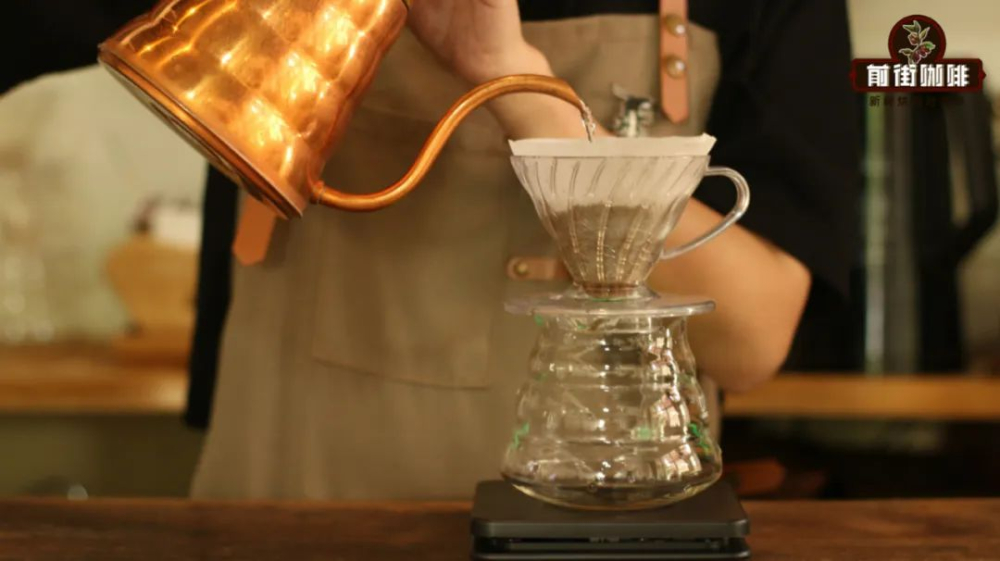
To pull a pour-over with rich flavor and full layers, you need to tighten the coffee-to-water ratio to draw out the core aromatic compounds. In FrontStreet Coffee's trials, a ratio between 1:8 and 1:10 works well. Using 15g of coffee to brew one to two servings as a reference, a 1:10 ratio calls for 150g of hot water.
Grind Finer
Because the ratio has come down, the grind should go finer to stretch out the extraction time. A finer grind slows the water flow, which lengthens contact time. FrontStreet Coffee suggests a #20 sieve with 80% pass rate (setting 10 on the shop's EK43s) for medium-dark roasts, and roughly 85% pass rate on a #20 sieve (setting 9 on the shop's EK43s) for medium-light beans.
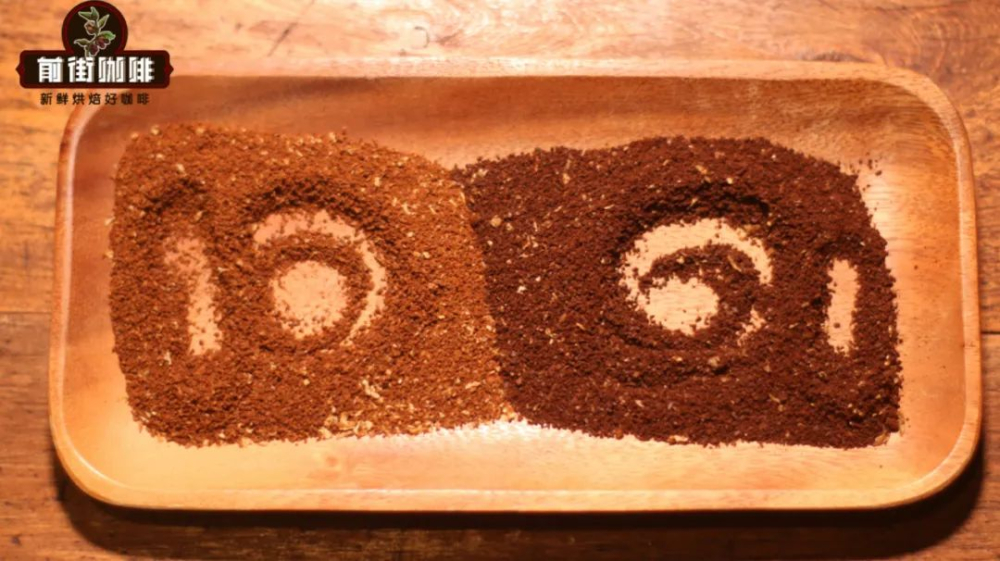
(Left: EK43s setting 9 grind, Right: EK43s setting 10 grind)
Multi-Stage Pouring
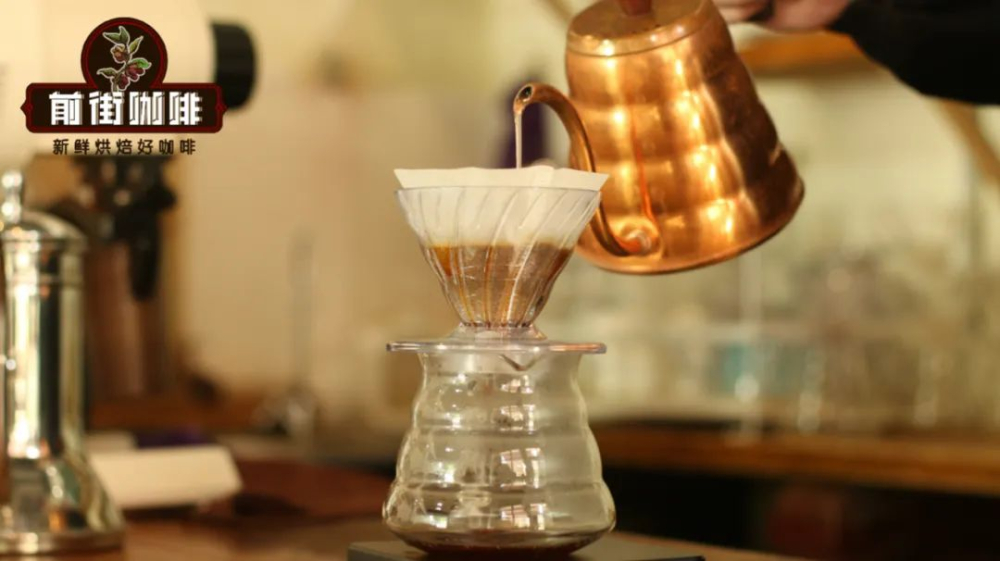
At the same coffee-to-water ratio, more pouring stages mean more agitation and washing of the grounds, which releases more aromatic compounds. To extract the flavor compounds more completely, FrontStreet Coffee recommends a three-stage pour.
Which Milk, and How Much?
For milk, FrontStreet Coffee prefers whole fresh milk: it pairs harmoniously with the aroma of medium-dark roast beans and gives the coffee a richer, fuller mouthfeel. (We also had a few bottles of oat milk left over from earlier experiments. After multiple attempts, we found oat milk's aroma hard to blend harmoniously with coffee — we haven't quite cracked it. If you're curious, or lactose intolerant, give it a try and let FrontStreet Coffee know how it goes.)
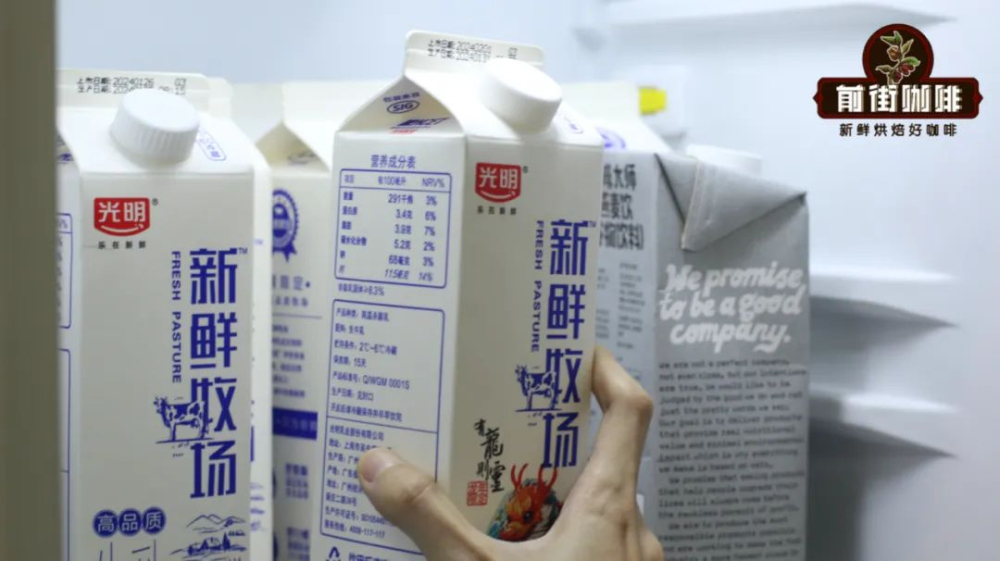
How much milk to add ultimately comes down to personal taste. When FrontStreet Coffee brewed the beans above — 15g of coffee at a 1:10 ratio, yielding roughly 130g of brewed coffee — adding about 60–80g of milk kept the two in balance: fresh, sweet milk on the palate with the coffee aroma still clearly present.


FrontStreet Coffee Recommendation
If you'd rather skip the guesswork, here are two FrontStreet Coffee beans that shine with milk — and, fittingly, both brew beautifully in a French press, the easiest coffee gear of all. A French press is a full-immersion brewer with a metal mesh filter: because the water steeps directly with the grounds, the finished coffee carries richer oils and a heavier, fuller body. Its simplicity is exactly why bean choice matters — immersion extraction suits medium to dark roasts best, which express sweetness and caramel-like flavors far better than light roasts.
If you prefer a bright, fragrant cup, go with FrontStreet Coffee's Strawberry Candy. This Gesha blend combines a Costa Rican honey-process coffee with a custom Panamanian washed Gesha, uniting the finest flavor traits of Central American coffee. Steeped in a French press, it releases aromas of rose, citrus, grape, and dried blueberry — and paired with milk, it turns into something like strawberry gummy candy, a perfect match for a homemade Café Au Lait.
If you're after a low-acid black coffee with a full, oily body, the first pick is FrontStreet Coffee's PWN Golden Mandheling. One of Asia's most famous specialty coffees, it undergoes three rounds of hand sorting plus one machine sorting, leaving the beans uniform and bright. Roasted medium-dark, the large beans carry intense aromas of spice, caramel, cedar, and dark chocolate; brewed in a French press it delivers a mellow, full-bodied cup with a pleasing layer of oil.
A few French press parameters from FrontStreet Coffee to get you started: grind to a coarse-sugar texture (setting 10.5 on an EK43s, or 26 clicks on a typical hand grinder) — like small gravel rather than fine sand, so fines don't slip through the metal mesh. Use a 1:15 ratio (15g of coffee to 225g of water), which lands the brew strength around 1.1–1.2%. For water temperature, aim for about 90°C — if you don't have a thermometer, let boiled water rest for 2–3 minutes; since a French press adds no agitation during the steep, running 1–2°C warmer than your usual pour-over temperature helps make up the extraction. Finally, steep for about 4 minutes to start: 5 minutes can turn a dark roast bitter and astringent, while 3 minutes may be too short for a light roast to show its flavors.
Important Notice :
FrontStreet Coffee is a long-established specialty coffee roaster in Guangzhou China, selling freshly roasted beans from its own farm in Yunnan as well as dozens of carefully selected single-origin beans from around the world for both pour-over and espresso. The products deliver consistently excellent quality and great value, with shipping within 24 hours. Guangzhou's FrontStreet Coffee shop is recommended by many coffee lovers, and the beans are now available online at the Tmall 。
FrontStreet Coffee has moved to a new address:
FrontStreet Coffee Address: 315,Donghua East Road,GuangZhou
Tel:020 38364473
 Scan and follow the En Gafei WeChat official account. Please indicate that the reprint comes from "En Gafei".

