
The Development of Jamaican Coffee, Blue Mountain Coffee, and Jamaica Blue Mountain No. 1 Coffee
Jamaica is an island nation in the Caribbean — the third-largest island in the region. Its coastal areas are plains, the central and western parts are hills and limestone plateaus, and the east is mountainous, home to the Blue Mountains. The island has a tropical rainforest climate with rainy seasons from May to June and September to November, and an average annual temperature of 27°C. With the Blue Mountains rising between 1,000 and 1,700 meters, volcanic soil, and year-round rain and fog, this environment has made coffee from Jamaica's Blue Mountain region world-renowned — and one of the most expensive coffees on earth.
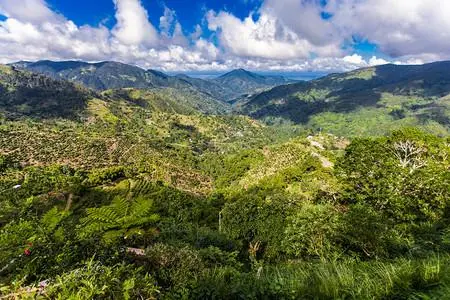
A Brief History of Jamaican Coffee
Coffee's history on the island began in 1728, during the British colonial period, when Governor Sir Nicholas Lawes received a coffee seedling as a gift from the governor of Martinique. Coffee was first cultivated in Saint Andrew Parish in southeastern Jamaica, but output was limited. By the late 18th century, cultivation had spread from Saint Andrew into the Blue Mountains, and by 1800 the island had 686 coffee plantations.
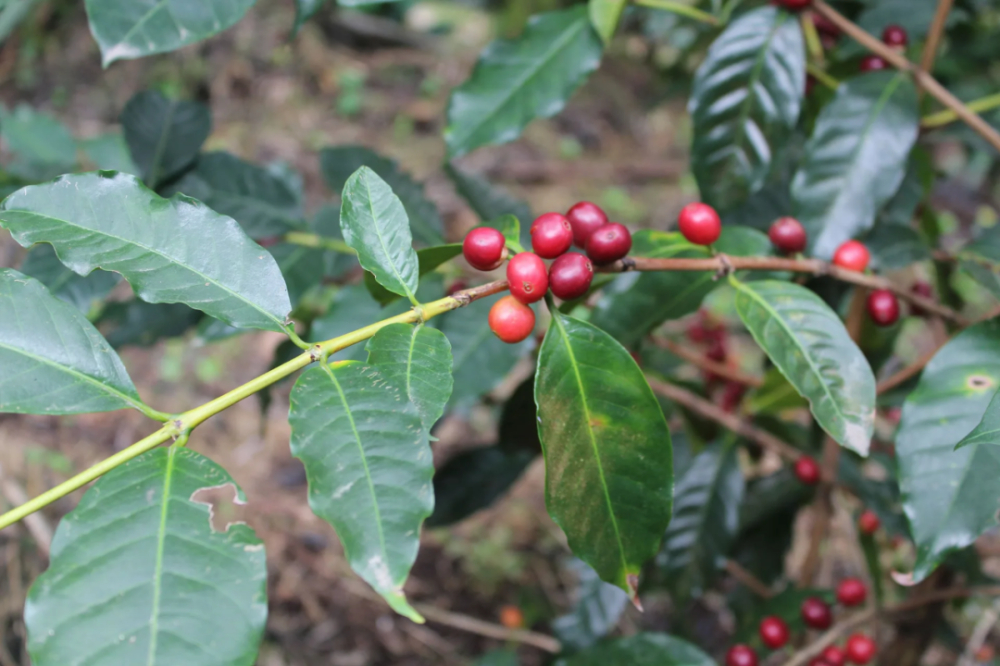
The industry then went into decline. Slavery was effectively abolished in 1838, leaving plantations short of labor; poor management and the loss of Britain's colonial trade privileges compounded the damage, and by the 19th century only 180 plantations remained. Cultivation quality was poor as well, so in 1891 the government passed legislation to teach growers coffee cultivation and improve basic equipment. In 1944 the Central Coffee Clearing House was established, with authority over all coffee exported for sale, and in 1950 the Jamaica Coffee Industry Board followed — a body that in 2018 merged with other Jamaican commercial organizations to form the Jamaica Agricultural Commodities Regulatory Authority (JACRA). At its founding the "Coffee Industry Supervision Law" was enacted, designating the official "Blue Mountain Coffee Growing Area," and today every barrel of Blue Mountain coffee beans must pass JACRA's quality supervision.
What Counts as Blue Mountain Coffee?
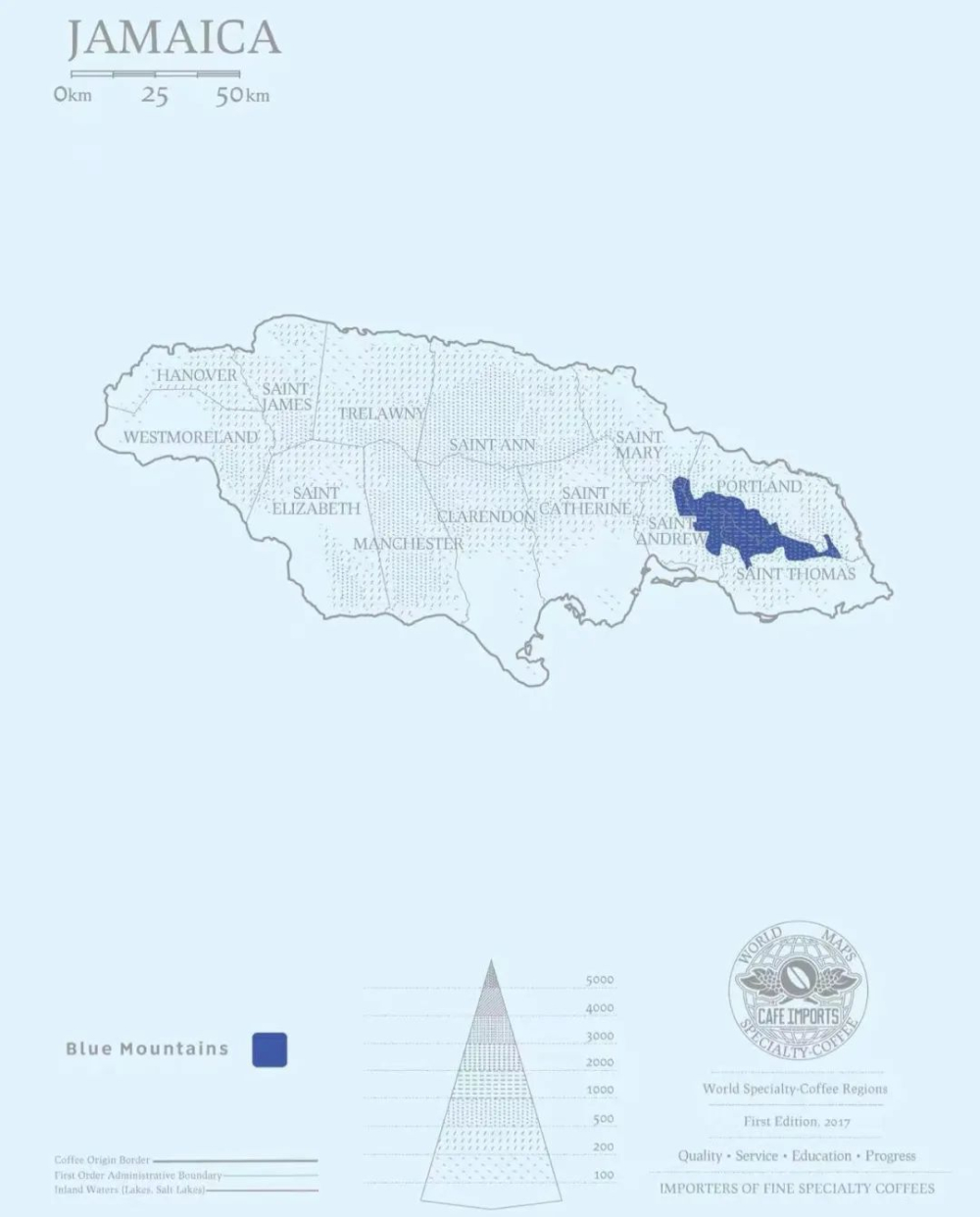
Under that law, the Blue Mountain growing area spans four parishes — Saint Andrew, Saint Thomas, Portland, and Saint Mary. Only Typica coffee grown there at altitudes between 915 and 1700 meters may be called Jamaica Blue Mountain Coffee. Typica was introduced to the Blue Mountains in the 18th century and is one of the oldest coffee varieties; frail and disease-prone, it is no longer widely planted elsewhere. But the Blue Mountain Typica has adapted beautifully to the local climate and soil, evolving stronger disease resistance — an achievement inseparable from Jamaica's decades of careful, deliberate cultivation of the variety.
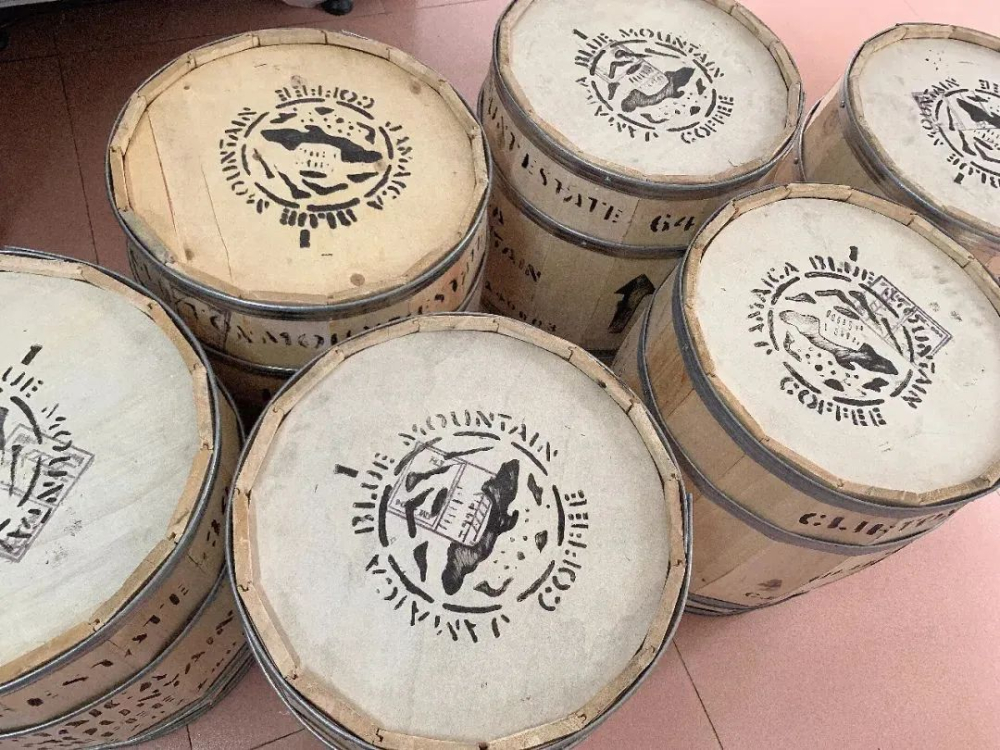
Blue Mountain coffee is also the only coffee in the world packaged and exported in wooden barrels. Only Jamaica Blue Mountain (No. 1, No. 2, No. 3, and PB) and Jamaica High Mountain (High Mountain Supreme and High Mountain PB) may use this packaging, in 70kg, 30kg, and 15kg sizes. The top grade, Blue Mountain No. 1, must meet strict specifications: screen size 17 or larger, defective beans not exceeding 2%, and moisture content around 10–12.5%. All other grades of Jamaican coffee ship in 60kg jute bags.
FrontStreet Coffee Clifton Estate Blue Mountain No. 1 Coffee Beans
Origin: Blue Mountain Region
Estate: Clifton Estate
Altitude: 1310 meters
Variety: Blue Mountain Typica
Processing: Washed
Flavor: Light citrus acidity, nut and chocolate flavors, silky texture, overall balance
FrontStreet Coffee selects Blue Mountain No. 1 produced by Clifton Farm — the oldest coffee-producing area in Jamaica still operating today, planting and producing coffee since the mid-18th century. The washed processing FrontStreet Coffee chooses for this lot gives Blue Mountain No. 1 a clearer flavor profile and higher cleanliness while keeping quality stable. A medium-dark roast delivers a rich body while preserving a touch of fruit acidity. Brewed on a KONO dripper at a 1:15 ratio, it opens with a light floral aroma, followed by gentle citrus acidity, nut and cocoa flavors, a silky texture, and an overall balanced cup.
FrontStreet Coffee Recommendation
Genuine Blue Mountain is easier to verify than its reputation suggests. FrontStreet Coffee's Jamaica Blue Mountain No. 1 comes from the historic Clifton Estate — planting since around 1750, at an average 4,300 feet (about 1310 meters) — and ships with full Jamaican certification and origin documents, alongside the estate's original wooden shipping barrels, each printed with detailed batch information. Real Blue Mountain green beans are uniform, plump, slightly upturned at both ends, and green in color; the cup is dense, fragrant, and impeccably clean, with none of the off-notes of counterfeits.
Roasted within five days of shipping in the traditional medium-dark style, FrontStreet Coffee's Blue Mountain No. 1 shows nuts, dark chocolate, and creamy caramel with soft, balanced acidity and a lasting fruity finish. Rest the beans 4–7 days from the roast date, brew on a KONO at 1:15 with 87–88°C water and a grind slightly coarser than for light roasts (about the texture of white sugar), and you'll taste why this coffee has reigned for decades.
Important Notice :
FrontStreet Coffee is a long-established specialty coffee roaster in Guangzhou China, selling freshly roasted beans from its own farm in Yunnan as well as dozens of carefully selected single-origin beans from around the world for both pour-over and espresso. The products deliver consistently excellent quality and great value, with shipping within 24 hours. Guangzhou's FrontStreet Coffee shop is recommended by many coffee lovers, and the beans are now available online at the Tmall 。
FrontStreet Coffee has moved to a new address:
FrontStreet Coffee Address: 315,Donghua East Road,GuangZhou
Tel:020 38364473
 Scan and follow the En Gafei WeChat official account. Please indicate that the reprint comes from "En Gafei".

