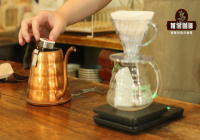
Ice Pupil B75: A Dripper That Can "Extract" Sweetness

Last month FrontStreet Coffee introduced a cone-shaped Ice Pupil dripper for those who appreciate good design, with a groove structure that lets the filter paper fit perfectly and yields a rich, mellow cup. Today let us meet its "distant relative," the Ice Pupil B75 dripper.
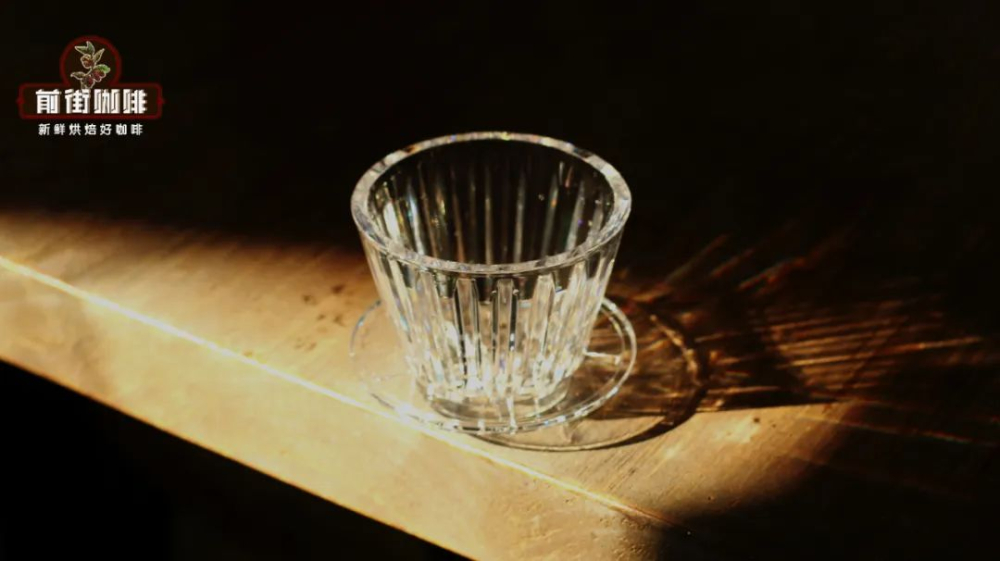
The Ice Pupil B75 is a dripper designed by competitor Li Jinlong to express coffee's "sweet and clean" character while achieving stable extraction through simpler methods. Co-designed with TIMEMORE and launched in 2022, it takes the name "B75" because "B" stands for "Basket," the English term for flat-bottom drippers, and "75" represents its 75° tilt angle.
FrontStreet Coffee's version of the Ice Pupil B75 is made of lightweight resin, with a clean, transparent look and equally impressive aesthetics.
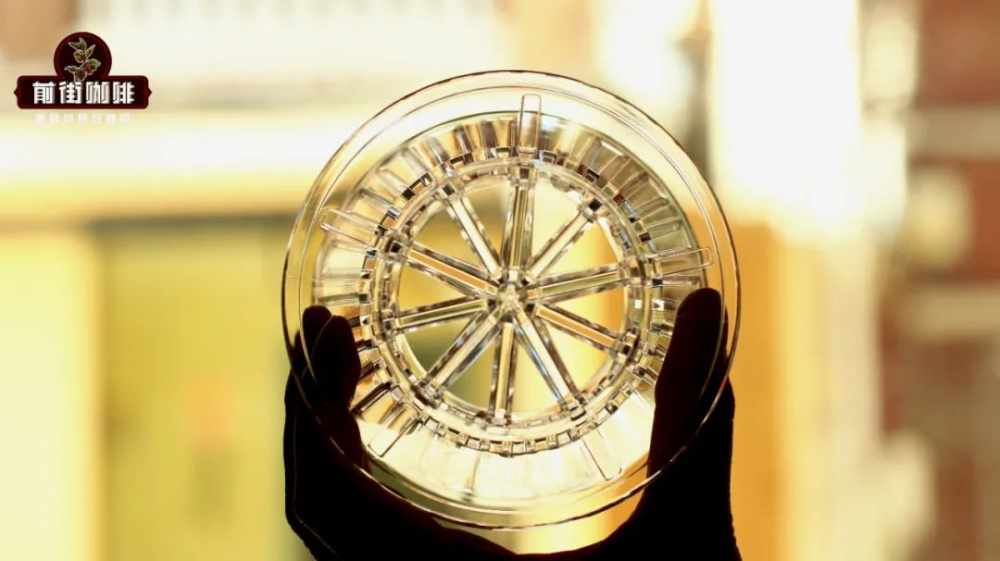
Unlike other flat-bottom drippers, the Ice Pupil B75 has an extra-large drainage hole measuring 5cm in diameter at its base. Ten staggered ribs support the filter paper and keep it from slipping during pouring. Apart from these supporting ribs, the rest of the bottom is completely open, letting coffee flow through more quickly.
The dripper walls are 0.5cm thick, which retains heat better around the coffee bed and enables more efficient extraction. The angle between the rim and the base forms a 75° angle, more vertical than typical drippers, producing a coffee bed that is closer to a "cylindrical" shape.
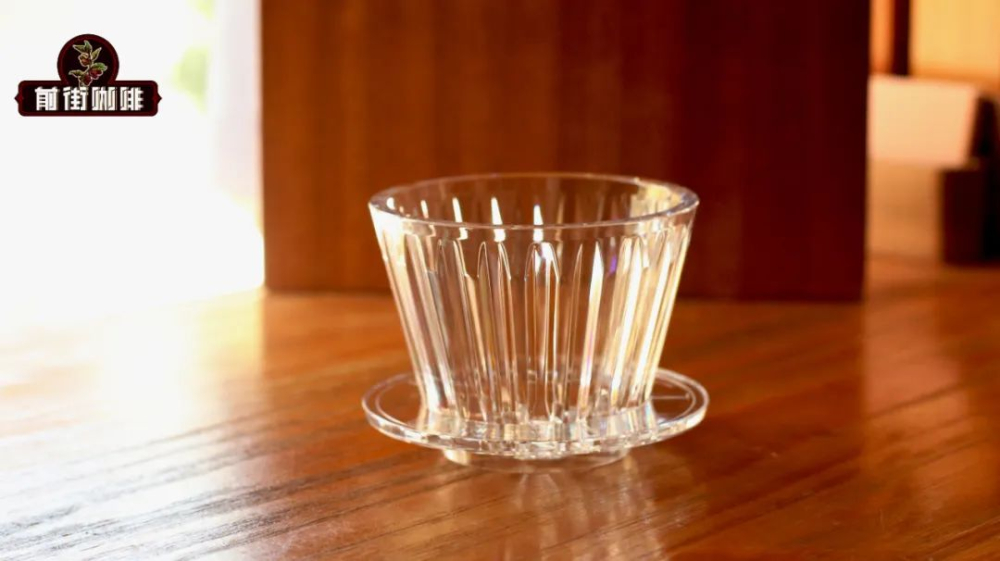
The rim also features 20 vertical internal flow channels that shorten the water's path and ensure smoother drainage. Used with basket-shaped filter papers, the thick coffee cake lets each particle receive the hot water more evenly, improving overall extraction uniformity.
Comparative Extraction Analysis
To understand the extraction performance of the Ice Pupil B75 and how it differs from the cone-shaped Ice Pupil, FrontStreet Coffee brewed Ethiopia's 74158 Santa Weni with identical parameters on both the Ice Pupil B75 and the cone-shaped Ice Pupil, then compared the flavor profiles.
Brewing Parameters:
Coffee beans: 15g
Water ratio: 1:15
Water temperature: 92°C
Grind size: EK43s setting 9.5 (82% passing through a #20 standard sieve)
Three-stage pour: 30g bloom for 30 seconds; the second stage pours 85g of water in circles from the inside out; wait until the liquid level drops to 1/3 of the coffee bed (roughly 1:05-1:10), then pour the remaining 110g of water.
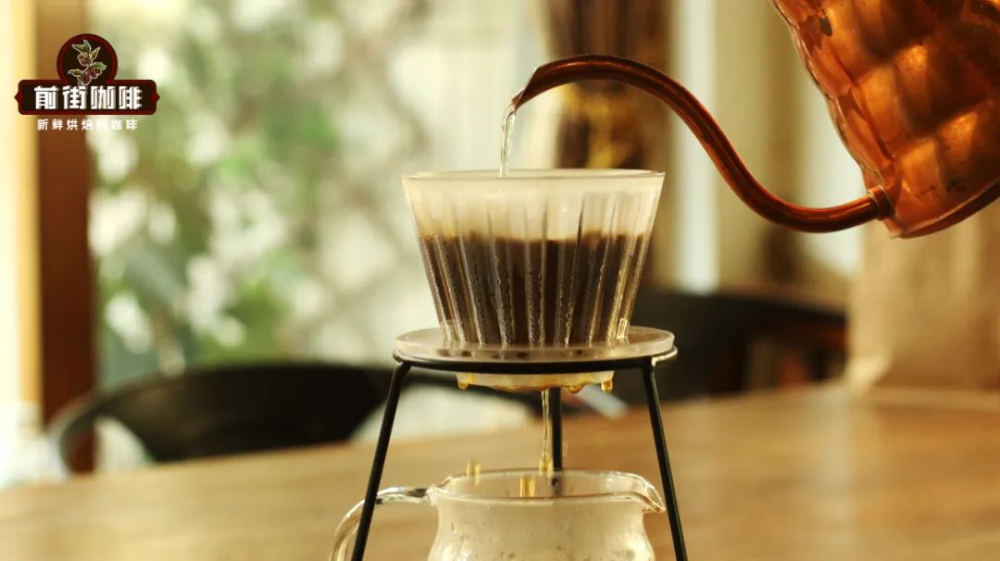
Cone-shaped Ice Pupil Dripper: the coffee flows faster in the early to middle stages and slows in the later stages, with a total drip time of 2 minutes 15 seconds. The cup is led by tropical fruit, raspberry, and light floral notes, with bright lemon acidity when cooled, a light texture, and full fruit acidity. Once completely cool, it shows more tea-like notes, with moderate aroma and a slightly cloudy mouthfeel.
Ice Pupil B75 Dripper: the flow remains smooth and stable throughout, finishing at 2 minutes 9 seconds. The coffee opens with dried mango, strawberry, and black tea, with prominent sweetness. As the temperature drops slightly, a noticeable orange-like juice sensation emerges along with a relatively short finish. Even fully cooled, the fruit flavors stay prominent with almost no bitterness, making for a very pleasant palate.
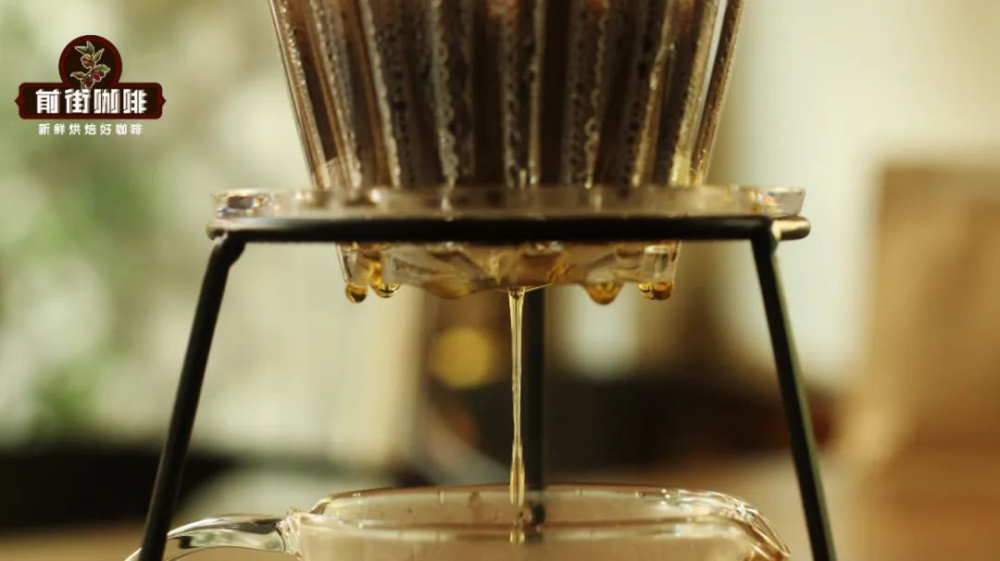
Compared with cone-shaped drippers, the B75's extra-large hole allows faster flow and prevents over-extraction. That in turn permits a finer grind to raise the overall extraction rate, drawing out more of the coffee's premium flavors. Based on the comparison above, FrontStreet Coffee believes that high-sweetness beans paired with the Ice Pupil B75 dripper can fully maximize their advantages.
Beginner-Friendly Design
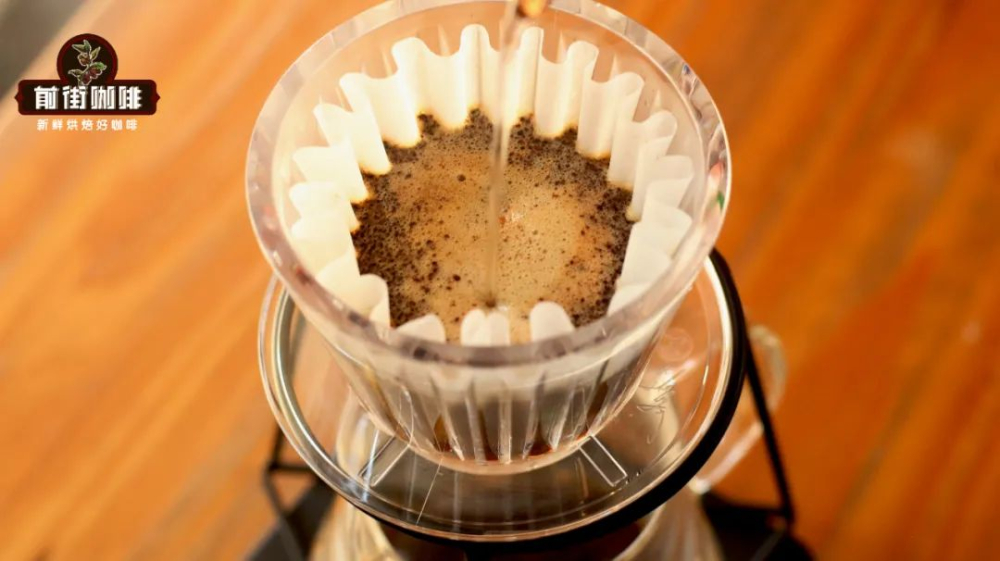
During the brewing experiments, FrontStreet Coffee also found that the B75's flat bottom and 75° angle create a thinner coffee bed with a trapezoidal shape, slightly wider at the top and narrower at the bottom. The water level stays horizontal throughout and is not easily disturbed by pouring technique. This means that even if the flow is not perfectly controlled, all the water eventually takes part in extraction. That trait is very friendly to beginners who have not yet mastered flow control, making the dripper more intuitive to use.
Cold Brew Testing
Finally, FrontStreet Coffee wanted to try cold brewing with the B75. Since this dripper was designed by Li Jinlong to express coffee's cleanliness and sweetness, we selected another washed coffee: Jiaming Green Label Geisha.
Cold Brew Parameters:
Coffee beans: 15g
Water ratio: 1:15
Water temperature: 92°C
Grind size: EK43s setting 9 (85% passing through a #20 standard sieve)
Three-stage pour: 30g, 70g, 50g
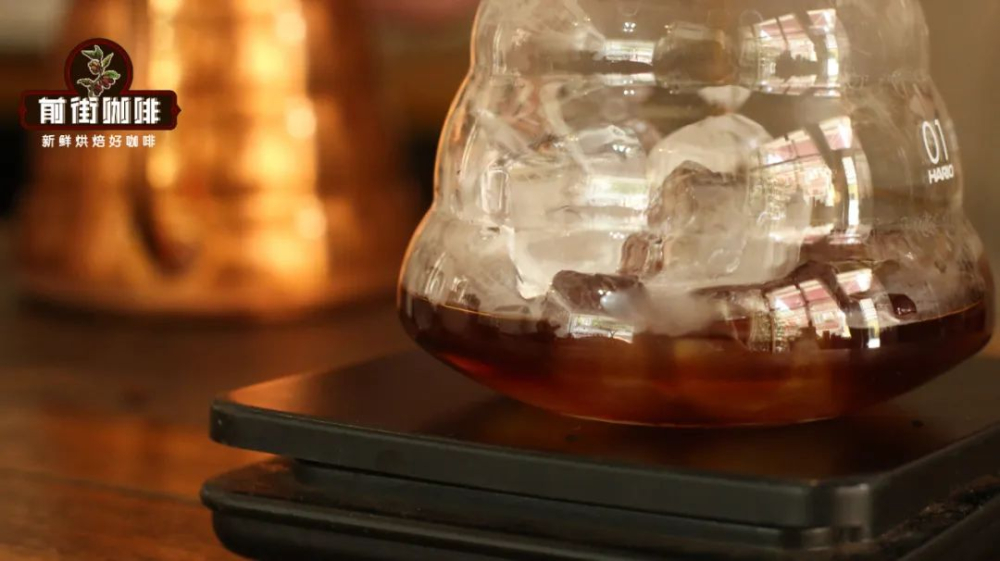
The washed Green Label Geisha cold brew extracted with the Ice Pupil B75 initially presents honey, cream, and honey-orange aromas. The mouthfeel resembles chilled pomelo green tea; while it is not as layered as a hot pour-over, the juice sensation is remarkably balanced, leaving you wanting more after each sip.
- END -
FrontStreet Coffee Recommendation
If you want to chase sweetness the way the B75 dripper does, FrontStreet's high-sweetness lots are a natural match. The FrontStreet Costa Rica Black Honey, from a high-altitude single origin, is processed as black honey, the style closest to natural processing because it retains the most mucilage and ferments most deeply; a medium-light roast brings out sweet florals, grape, sweet orange, and liqueur-chocolate. The FrontStreet Brazil Queen Estate is a medium roast built for sweetness and balance, with roasted-peanut and dark-chocolate depth that fades into a lasting, gently sweet finish; brewed on a Moka pot or espresso machine it shows fine crema and a full, sweet body. The FrontStreet Strawberry Candy Geisha blend marries a Costa Rican honey process with an Ethiopian washed lot, giving rose, strawberry-fudge, and dried-blueberry aromas with a moderate grape-and-citrus sweetness and an almond aftertaste, and it works for pour-over, cold brew, and espresso alike.
Important Notice :
FrontStreet Coffee is a long-established specialty coffee roaster in Guangzhou China, selling freshly roasted beans from its own farm in Yunnan as well as dozens of carefully selected single-origin beans from around the world for both pour-over and espresso. The products deliver consistently excellent quality and great value, with shipping within 24 hours. Guangzhou's FrontStreet Coffee shop is recommended by many coffee lovers, and the beans are now available online at the Tmall 。
FrontStreet Coffee has moved to a new address:
FrontStreet Coffee Address: 315,Donghua East Road,GuangZhou
Tel:020 38364473
 Scan and follow the En Gafei WeChat official account. Please indicate that the reprint comes from "En Gafei".