Guatemala Coffee Cultivation, Coffee Development History, Coffee Varieties, and Introduction to Antigua Flower Goddess Coffee Beans
Guatemala's Coffee Heritage
Guatemala, in southern North America, has tropical rainforest, volcanic soil, and a web of microclimates - natural conditions tailor-made for growing coffee.
By the popular account, Jesuit missionaries brought coffee to the city of Antigua in the mid-18th century to decorate their monasteries. By the early 19th century there are records of Guatemalans drinking coffee. At the time the country's chief export crop was a plant-based indigo dye, but locust plagues and the arrival of synthetic dyes gutted that trade. To revive the economy, the government began encouraging other crops, coffee among them. Coffee became a truly important Guatemalan crop only after 1856. Later, in 1960, the National Coffee Association (ANACAFE) was founded to strengthen the national economy through coffee production and export.
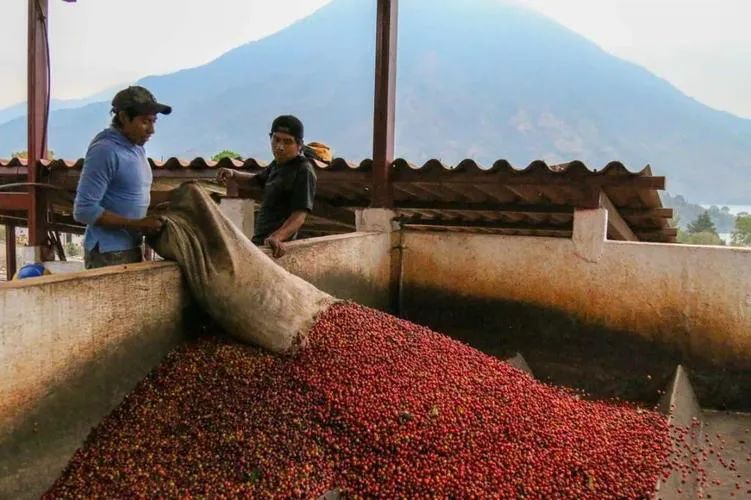
Today Guatemala grows many varieties - Bourbon, Typica, Caturra, Catuai, Gesha, and more - plus a few distinctive local variants.
Pache
Pache is a natural Typica mutation, driven by a single gene that dwarfs the plant. The compact size allows denser planting and higher yields, though disease resistance is relatively poor. The variety was discovered in 1949 at Hacienda Brito in Santa Cruz Naranjo, Santa Rosa, Guatemala. It grows best above 1,200 meters in areas with annual rainfall under 2,500 millimeters, and it is now planted across Guatemala on a large scale.
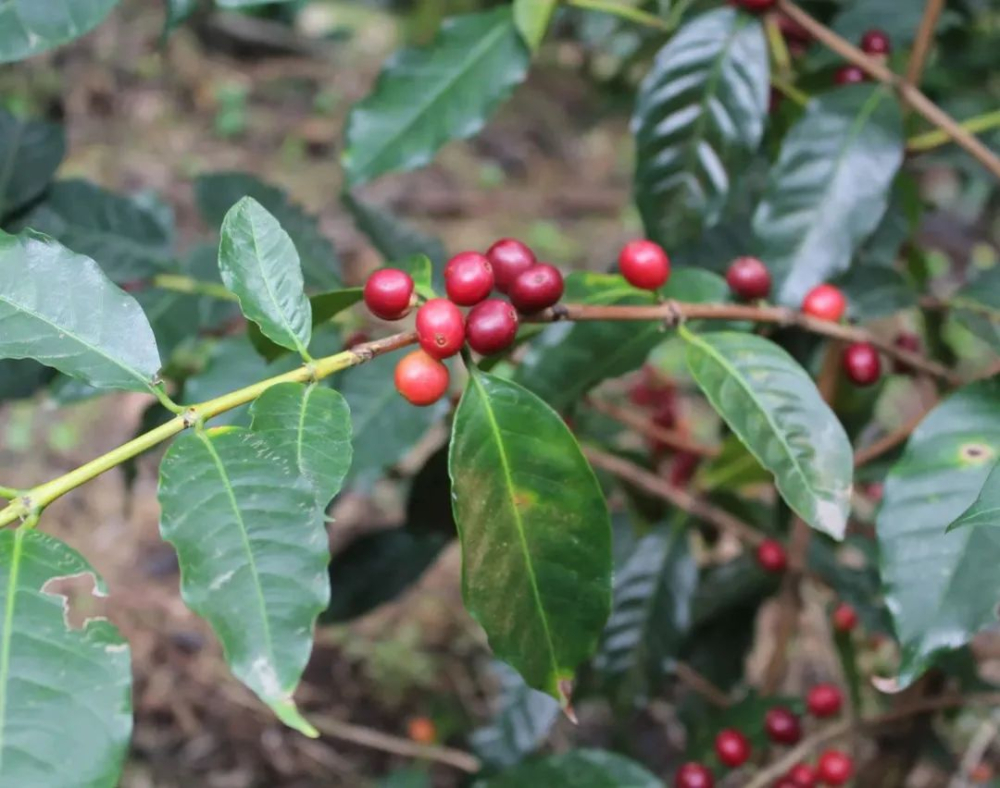
Tekisic
Tekisic is a Bourbon selection developed by the Salvadoran Coffee Research Institute (ISIC) beginning in 1949 and released in 1977. Its "mass selection" process picked out individuals for superior performance, repeating the cycle until a group emerged with excellent quality potential and higher yields than unselected Bourbon. The name means "work" in Nahuatl. The variety has no resistance to major diseases such as coffee leaf rust. It was later introduced into Guatemala, where it became one of the country's main varieties.
Mibirizi
Mibirizi may be Rwanda's oldest variety, carried there from Guatemala in 1910 by the German colonial government. It is likely tied to Typica, since Guatemala was growing 100% Typica at the time. The variety offers good quality and drought tolerance but is susceptible to major diseases; recent genetic testing has confirmed its Typica lineage.
FrontStreet Coffee's Guatemalan Selection
FrontStreet Coffee also offers Guatemalan beans: the Flor de cafe from the La Minita estate in Antigua, Bourbon and Caturra varieties, washed processed. Brewed on a V60 at a 1:15 ratio, it shows citrus and subtle chocolate, berry-like acidity, rich layers, and a smooth mouthfeel.
FrontStreet Coffee Recommendation
If Guatemalan history whets your appetite for great varieties, few names carry more weight than Geisha. FrontStreet Coffee's Genji (Genlana) Estate Geisha comes from a washing station on the border of Kochere and the Genlana Abaya area in Yirgacheffe, Ethiopia, established in 2014 and run by Mr. Israel Degefa, with some 700 hectares of coffee - much of it unculled, fertile, and shaded by forest trees. Fully ripe cherries are hand-picked and dried on raised beds for 14-20 days depending on the weather. Roasted medium-light, it pours bright citrus acidity, elegant ginger-flower aroma, the full sweetness of ripe fruit, and a silky body with Geisha's signature refined finish.
For estate-level exploration, FrontStreet Coffee also recommends the Gesha Village Gold Label - the Geisha 1931 variety, just 10% of the estate's output, natural-processed and often chosen by competition baristas - and the Gesha Village Red Label, a Gori Gesha single-terroir lot scoring 88 or above on the SCA 100-point scale with full traceability from block name to processing date.
Important Notice :
FrontStreet Coffee is a long-established specialty coffee roaster in Guangzhou China, selling freshly roasted beans from its own farm in Yunnan as well as dozens of carefully selected single-origin beans from around the world for both pour-over and espresso. The products deliver consistently excellent quality and great value, with shipping within 24 hours. Guangzhou's FrontStreet Coffee shop is recommended by many coffee lovers, and the beans are now available online at the Tmall 。
FrontStreet Coffee has moved to a new address:
FrontStreet Coffee Address: 315,Donghua East Road,GuangZhou
Tel:020 38364473
 Scan and follow the En Gafei WeChat official account. Please indicate that the reprint comes from "En Gafei".