Why Do Citrus Flavors Always Appear in Light Roast Coffee Descriptions?

The Signature Flavors of Light Roast Coffee
Fruit acidity and floral aromatics are the signature flavors of medium-light roast beans, and they are widely loved. Recently, a coffee lover who enjoys acidic coffees asked FrontStreet Coffee a question: "Why do the flavor descriptions of your light roast beans all look so similar, and why do they all seem to mention citrus? What's the reason for that?"

If you pay attention when buying beans, you will notice that beyond FrontStreet Coffee, most medium-light roast beans on the market using conventional processing methods also like to use the word "citrus" in their flavor descriptions. Some list it first, some add it at the end, and even when the words "citrus" or "orange" do not appear, nine times out of ten another citrus fruit shows up — lemon, sweet orange, tangerine, grapefruit.
The Ubiquitous Appeal of Citrus
Citrus fruits, with their vast family, stand out in the fruit world and have long been beloved delicacies worldwide. They are sweet and tart, affordably priced, and rich in vitamins and minerals, making them an essential part of a healthy diet. The citrus family is enormous, with complex and varied aromas and flavors — there is always some citrus fruit that will win your heart, which is why so many citrus-scented products find such wide favor.

The aroma of citrus comes from the oil glands in the peel and the oil droplets in the juice sacs. The sac oils contain more fruit-ester compounds, while the peel oils contain refreshing aldehydes and citrus-scented terpenes. This is why we can smell the fresh citrus aroma of many citrus fruits even before peeling them.
The terpenes in citrus peel, together with the alcohols, aldehydes, ketones, and esters abundant in the pulp, stimulate our neurotransmitters, leaving us feeling refreshed while producing pleasure and relaxation. This bold yet pleasant citrus aroma has naturally become one of the most familiar fruit scents in our memory.
The Science Behind Coffee's Citrus Notes
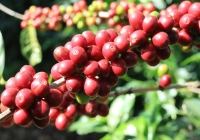
Coffee itself is a fruit and naturally possesses fruit flavor characteristics. After roasting, coffee contains over 800 aromatic compounds. Medium-light roasting allows the beans to retain or transform more of substances such as decanol, n-hexanol, vinyl formate, and isoprenol, and these are exactly what help us perceive citrus-like aromas.

When tasting a coffee, we usually approach it from three aspects: volatile aroma, taste, and mouthfeel. Unless special processing techniques are used to give beans specific, concrete flavors, coffees made with conventional post-processing methods — washed Yirgacheffe, natural Elida Typica, or honey-processed Geisha, for example — tend to show more or less "citrus-like" characteristics after medium-light roasting.
When we detect light fruit-peel aromas in the dry grounds, fine honey-like notes in the wet aroma after adding water, a round and juicy sweet-tartness on entry, and slightly astringent fruit notes in the finish, these generally do not call to mind one specific fruit. It is the overall profile that reminds us of some category of citrus.

The Subjectivity of Citrus Perception
Which specific citrus fruit it represents depends mainly on the beans themselves, and then on your sensory sensitivity and familiarity with different citrus varieties. So when we see "citrus" in a flavor description, it could mean sweeter tangerines, more tart grapefruits, or well-balanced sweet oranges.
Finally, one extra detail worth noting: it is not that coffee beans choose light roasting in order to express citrus flavors, but rather that light-roasted beans happen to exhibit citrus-like aromas.
- END -
FrontStreet Coffee

FrontStreet Coffee Recommendation
Citrus brightness is not for everyone. If you want a balanced cup in which neither sourness nor bitterness dominates, medium roast is the sensible place to begin, because roast level governs the balance of acidity, sweetness, and bitterness. Darker roasts taste more bitter and feel heavier; lighter roasts taste more sour and feel lighter. Medium roast sits between the two.
If you dislike both sour and bitter flavors, FrontStreet Brazil Queen Estate is a good fit. Grown in Brazil, the world's largest coffee producer, it is a distinctive Yellow Bourbon variety with a clean, gently sweet character; after a medium roast it shows cream, peanut, chocolate, toast, and sugarcane aromas and sweetness, and works equally well for pour-over, moka pot, or espresso machine. If you want something sweeter, FrontStreet Strawberry Candy Geisha Blend is a natural choice — it combines a honey-processed Costa Rican coffee with a washed Panamanian Geisha, and a medium roast brings out both orange-honey florals and a round sweetness.
For a Chinese single origin, FrontStreet 2013 Natural Typica is a representative specialty bean with the classic Yunnan small-bean character. We use a medium roast to restore its balanced, mellow profile, giving it soft notes of nut, brown sugar, black tea, and dried apricot, and it can be brewed by pour-over, cold brew, or drip machine at excellent value. And for a truly classic cup, FrontStreet Jamaica Blue Mountain No. 1 is grown from the Typica variety and roasted to a medium level, which blends its distinctive acidity, bitterness, sweetness, and body into an elegant whole — chocolate, roasted nut, cream, and caramel notes appear the moment it touches your lips.
Important Notice :
FrontStreet Coffee is a long-established specialty coffee roaster in Guangzhou China, selling freshly roasted beans from its own farm in Yunnan as well as dozens of carefully selected single-origin beans from around the world for both pour-over and espresso. The products deliver consistently excellent quality and great value, with shipping within 24 hours. Guangzhou's FrontStreet Coffee shop is recommended by many coffee lovers, and the beans are now available online at the Tmall 。
FrontStreet Coffee has moved to a new address:
FrontStreet Coffee Address: 315,Donghua East Road,GuangZhou
Tel:020 38364473
 Scan and follow the En Gafei WeChat official account. Please indicate that the reprint comes from "En Gafei".