Want Stronger Coffee? Why Not Just Extract Longer?

In day-to-day operations, FrontStreet Coffee regularly meets customers who prefer a stronger coffee flavor, and most simply ask for an extra shot. But one customer, when asking for a more concentrated coffee, said, "Could you just extract the coffee for longer?"
By that customer's logic, the longer the extraction, the more coffee liquid you collect, and the higher the concentration in the cup. Is that actually true? Let's not rush to judgment — start with a small experiment.
FrontStreet Coffee took that day's standard parameters, held the grind setting and dose constant, and ran three extractions at different time points to collect the corresponding espresso weights. We then measured the concentration of each group and tasted them. (Experimental premise: espresso is measured by weight in grams, not by volume.)
Coffee beans: FrontStreet Coffee · Sunflower Warm Sunshine Espresso Blend
Grind setting: Galileo Q18, setting 2.0
Dose: 20 grams
Extraction times: 30 seconds, 35 seconds, 40 seconds
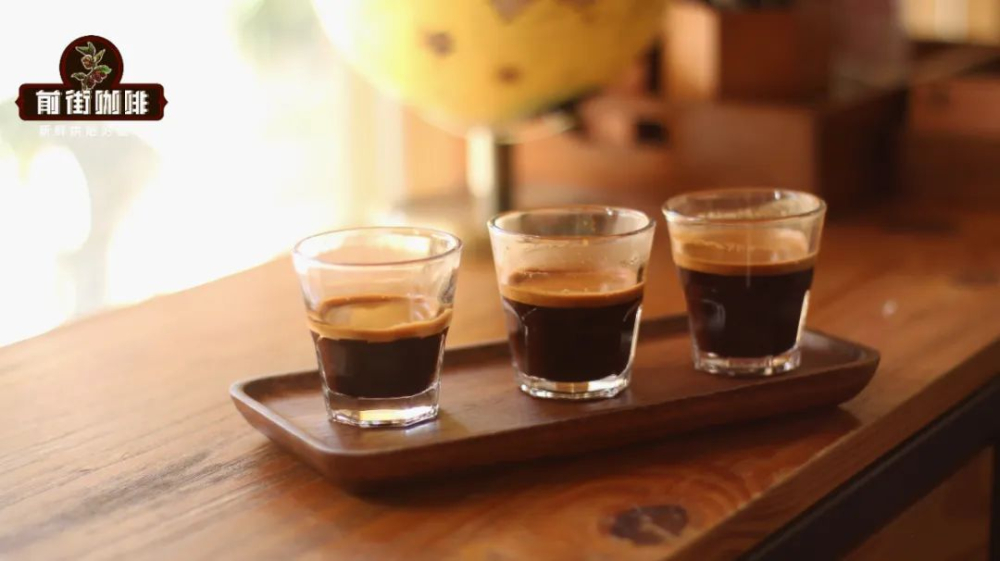
Group 1: 30-second extraction yielding 35g of coffee liquid, TDS 12.11%
The flavor profile is led by berry acidity and fermented wine notes, accompanied by the mellow bitterness of cocoa, finishing with vanilla and nutty roasted aromas.
Group 2: 35-second extraction yielding 46g of coffee liquid, TDS 8.83%
The flavor is mostly caramel, cocoa, and a faint winey note, with unremarkable acidity and an almond-like bitter aftertaste.
Group 3: 40-second extraction yielding 55g of coffee liquid, TDS 7.80%
The lowest mouthfeel viscosity of the three groups, with an unappealing profile dominated by barley tea and woody notes, almost no acidity, and a slight irritant sensation after swallowing.
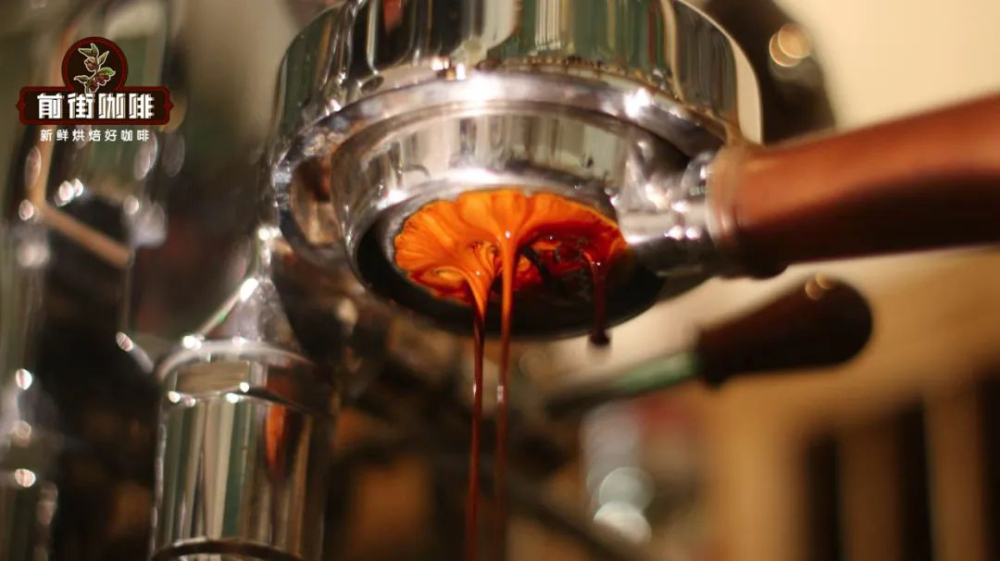
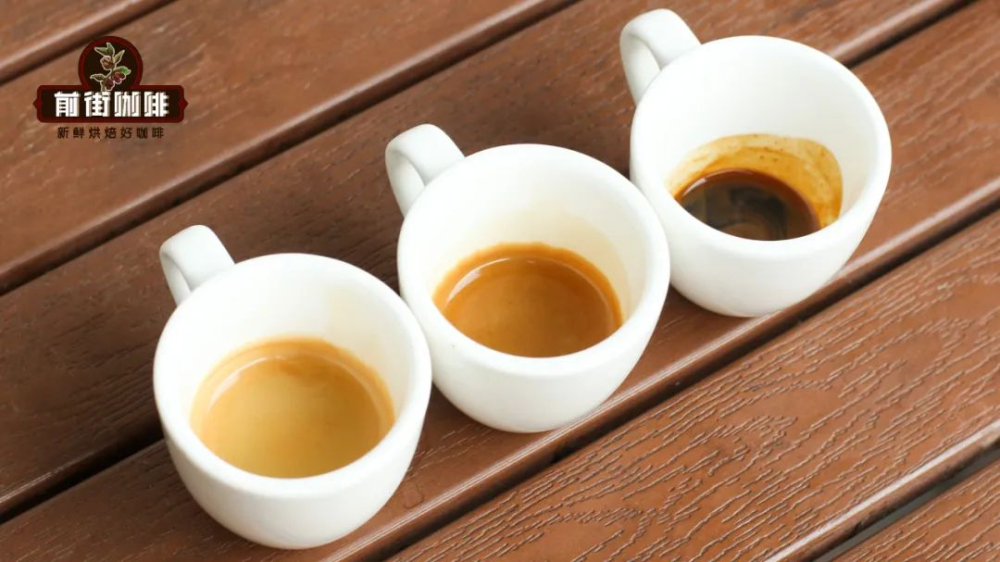
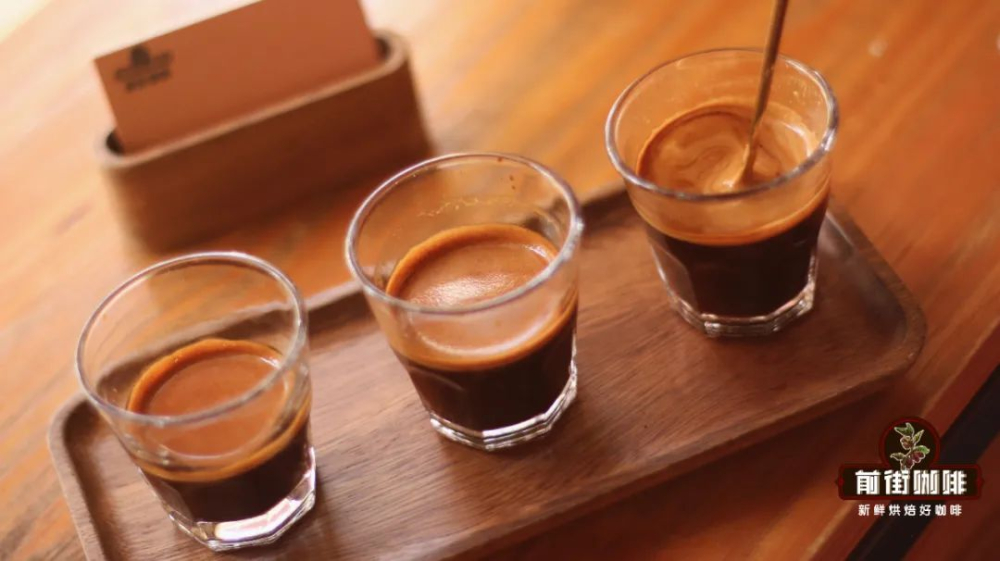
Next, let's watch a complete extraction closely to see how the espresso's state changes, collecting the early, middle, and late segments into three separate cups.
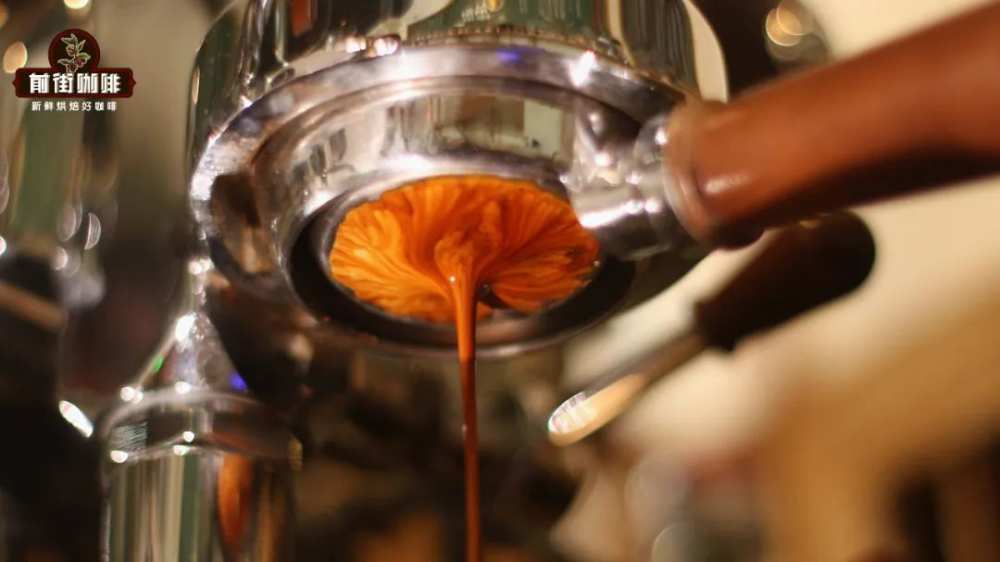
From the very first drop, the espresso flows as thick as hot chocolate, dark brown and at its most concentrated; tasted alone it is sharply acidic. The color then lightens to golden yellow, the flow speeds up, the concentration drops below the first cup's, and the taste becomes more balanced. Once the scale passes 35 grams, the liquid has turned fully yellow and the crema begins to whiten and break apart. The late-stage espresso tastes mildly bitter and faintly sweet, with the weakest aroma of all.
Similar to the coffee-to-water ratio often cited in pour-over brewing, a delicious coffee requires proper extraction — neither under- nor over-extracted. But because the water output of an espresso machine is hard to measure directly, the industry more commonly uses the coffee-to-liquid ratio to judge and gauge espresso extraction.
The coffee-to-liquid ratio depends on two factors: dose and liquid weight. The generally recommended range is 1:1.5 to 1:2.5, with 1:2 the most common. For example, FrontStreet Coffee's original standard recipe uses 20g of grounds to extract 40g of liquid, whereas experimental groups 2 and 3 ran ratios of 1:2.3 and 1:2.75 — well above the original.
In theory, a delicious cup contains a moderate amount of soluble aromatic compounds drawn out by hot water. The Golden Cup Standard holds that coffee tastes best when extraction yield falls within 18-22%. When the crema starts turning yellow and then white, the coffee is telling you that all its flavorful compounds have been released and extraction should stop. If hot water keeps flowing through the bed at that point, only undesirable bitter macromolecules remain, and they ride straight into the cup.
Put this together with the experimental data and the conclusion is clear: with grind and dose fixed, once the liquid weight exceeds the upper limit of the original coffee-to-liquid ratio (for good taste), a longer extraction means more hot water has passed through the grounds, dissolving more soluble material and pushing the extraction yield higher. But more water also means more dilution — so concentration drops, and fewer of the coffee's positive flavors survive.
For that reason, if you want a rich, flavorful, more robust espresso base, asking the barista to pull more liquid is clearly not the way. And if you'd rather not add another shot, ask whether they can substitute a Ristretto for the Espresso — yes, the very Ristretto FrontStreet Coffee covered yesterday.
FrontStreet Coffee Recommendation
Espresso beans generally come in two camps: the blends most cafés reach for first, and single-origin espresso (SOE) chosen for a specific flavor profile. Blends exist because a roaster or barista mixes beans from different origins to build a more balanced cup — if one bean is smooth but lacks aroma, another aromatic bean is added to combine their strengths, so the purpose of blending is simply to make the coffee better.
FrontStreet Coffee Classic Blend / Commercial Blend: For a traditional-style Americano or latte, go with the Classic Blend or FrontStreet Coffee's Commercial Blend. Both add a small proportion of Robusta to a classic Italian-style recipe, so the shot carries aromas of butter, nuts, spices, dark chocolate, and toast, with a wild, thick body and a burst of golden crema that makes latte art easy.
FrontStreet Coffee Signature Blend / Black Cocoa Blend: If you love espresso with nutty aromatics — almond, walnut, cashew — the Signature Blend and FrontStreet Coffee's Black Cocoa Blend are the picks, since both contain a large share of Brazilian coffee for a comfortable sweet-bitter balance and a creamy peanut smoothness. The Signature Blend brings the nut, chocolate, and caramel aromas and gentle acidity typical of Colombian coffee; FrontStreet Coffee's Black Cocoa Blend pairs the ripe-plum acidity of Yunnan arabica with a creamy chocolate aroma when ground. Balanced and versatile, it shines in lattes and Americanos as well as specialty coffee drinks — the ideal partner for any café.
FrontStreet Coffee Natural Huajuan SOE: For those drawn to African florals and fruit, this natural-process Huajuan from Guji Hambela, Ethiopia — grown at altitudes up to 2,300 meters — delivers a signature creamy strawberry flavor over elegant florals, with cream, cocoa, berries, light florals, and a black-tea finish at a medium roast.
FrontStreet Coffee Brazil Fazenda Rainha SOE: Low acidity, a soft mouthfeel, and an approachable price make Brazilian coffee a first choice for many espresso programs, and its balanced profile helps extraction stay stable. This unusual Yellow Bourbon shows a quiet, gentle sweetness; roasted medium-dark, it pulls beautifully with the milky character of butter cookies, macadamia, and toasted bread.
Important Notice :
FrontStreet Coffee is a long-established specialty coffee roaster in Guangzhou China, selling freshly roasted beans from its own farm in Yunnan as well as dozens of carefully selected single-origin beans from around the world for both pour-over and espresso. The products deliver consistently excellent quality and great value, with shipping within 24 hours. Guangzhou's FrontStreet Coffee shop is recommended by many coffee lovers, and the beans are now available online at the Tmall 。
FrontStreet Coffee has moved to a new address:
FrontStreet Coffee Address: 315,Donghua East Road,GuangZhou
Tel:020 38364473
 Scan and follow the En Gafei WeChat official account. Please indicate that the reprint comes from "En Gafei".